
Subcontractor hub
Trade packages and interfaces
Understand how each trade is commercially structured, how its crews deliver the work and which questions expose the real risk before you let the package.
Search the package index, then open a dedicated trade dossier. Each profile tests the subcontractor’s real commercial and delivery position.
Choose a priority, then narrow by stage or package type. Long lead flags identify items to investigate early; confirm current lead times and delivery dates with the proposed subcontractor.
Showing all 55 packages and supply arrangements
 01Demolition and strip-outEnabling and Early WorksOpen full Trade Smarts
Trade dossier 01
Demolition and strip out
Demolition is an investigation, isolation, temporary stability, recovery and disposal business disguised as a removal package. The subcontractor can only price what can be identified. Existing buildings regularly contain undocumented structures, live services, hazardous materials, concealed voids and materials whose disposal route costs more than their removal.
01
Typical design complaints
The recurring problem is not a lack of demolition drawings. It is that the existing asset has not been investigated enough for the drawings to be reliable.
Existing information treated as fact
- Archive drawings do not match alterations made during the life of the building.
- Structural framing, slab thicknesses, reinforcement, post tensioning and load paths are assumed rather than verified.
- Services shown as redundant remain live, while live services are omitted or misidentified.
- The demolition set describes the desired void but not the safe sequence required to create it.
Retained work is poorly defined
- No marked survey records the condition of retained floors, facades, ceilings, waterproofing and finishes before work starts.
- Cut lines, termination points and making good standards are not dimensioned.
- Temporary weatherproofing, propping and security are left between the demolition contractor and builder.
- The design relies on existing elements without confirming their capacity after adjoining work is removed.
Hazardous materials are under scoped
- The hazardous materials register is desktop based, old, inaccessible or limited to sampled rooms.
- Destructive investigation has not tested risers, plant rooms, fire doors, backing boards, mastics, lagging, soil or concealed cavities.
- The price assumes asbestos, lead, silica, mould, refrigerants and contaminated residues are absent unless expressly scheduled.
- Clearance, air monitoring, hygiene facilities, transport and disposal are not aligned with the demolition sequence.
Waste and salvage assumptions are invisible
- A single waste allowance hides separate concrete, steel, timber, plasterboard, regulated waste and mixed waste streams.
- The tender relies on salvage value without identifying ownership, quantity, condition or market.
- Tipping locations and acceptance criteria are not nominated.
- The design does not provide enough space for sorting, bins, stockpiles, truck loading and clean circulation.
02
Typical design wins
Good information lets the contractor remove uncertainty before it becomes a variation and lets the project team choose the safest, cheapest sequence rather than merely the cheapest tender.
A verified existing condition model
- Survey control, measured drawings, service locating, scanning, openings and intrusive investigations are coordinated.
- Demolition boundaries are coded as remove, retain, protect, temporarily support, disconnect, cap, relocate and make good.
- The structural engineer states load paths, stability assumptions, propping requirements and hold points.
- The team distinguishes information that is verified from information that remains an allowance.
A buildable sequence
- The method proceeds from soft strip and isolation through hazardous removal, structural demolition, processing and final trimming.
- Each floor or zone has a defined access route, plant limit, debris route, exclusion zone and emergency route.
- Openings, edge protection, temporary roofs and waterproofing are installed before the permanent protection is lost.
- The sequence releases following trades in useful work fronts instead of leaving a site full of half completed areas.
A real waste strategy
- Each material stream has an estimated quantity, container method, licensed receiver where required and evidence standard.
- Reuse and salvage decisions are made before items are damaged during removal.
- Truck size, loading point, axle load, road permits, booking windows and street cleaning are tested.
- Regulated waste tracking responsibilities are written into the package and checked against the selected facilities.
Known neighbour and operational constraints
- Noise, vibration, dust, access, shutdown and working hour constraints are converted into methodology and programme allowances.
- Occupied areas have separation, pressure, monitoring, cleaning and communication arrangements.
- Dilapidation surveys and vibration thresholds are agreed before high energy work starts.
- Complaints have an owner, response time and evidence trail.
03
What success looks like
Success is not the fastest disappearance of the building. It is a controlled release of safe, clean, verified work fronts without transferring hidden damage, waste or service risk to the next trade.
| Perspective | Success looks like | Evidence to review |
|---|---|---|
| Subcontractor | Plant and labour stay on a planned sequence. Waste leaves through accepted routes. Unknowns are isolated quickly and genuine change is instructed before cost is incurred. | Daily labour and plant, zone completion, truck and disposal dockets, delay register, photographs and signed change records. |
| Builder | No unplanned collapse, service strike, contamination event or neighbour shutdown. Retained work survives. Following trades receive areas on the agreed dates. | Isolation register, engineer hold points, survey, inspections, work front handovers, programme status and forecast final cost. |
| Client | The retained asset and surrounding operations remain protected. Compliance evidence is complete. Reuse targets and environmental commitments are credible. | Approvals, notifications, waste records, clearance certificates, dilapidation closeout and sustainability reporting. |
| Following trades | The area is structurally safe, dry where required, free of debris, accurately cut and ready for set out without rediscovering live services or hidden demolition. | Joint inspection, marked up drawings, cap and termination register, survey and defect list closed before access is transferred. |
Crew structure
- A project manager controls commitments, approvals and commercial issues.
- A demolition supervisor owns the live sequence and coordinates operators, labourers, spotters and truck loading.
- Competent operators perform machine demolition and material processing. Their output varies sharply with judgement, attachment selection and ability to read the structure.
- Soft strip gangs separate fixtures, ceilings, partitions and recoverable items ahead of heavy plant.
- Licensed asbestos removalists, hygienists, electricians, plumbers, refrigeration technicians and scaffold crews enter as planned specialists, not invisible extras.
Production measures
- Measure completed zones or verified tonnes and cubic metres by waste stream, not simply labour hours.
- Track truck cycle, bin turnaround, plant utilisation, floor loading restrictions and time lost waiting for isolation or engineering decisions.
- Compare tender production with actual conditions after the first representative area.
- Record rehandling. Material moved twice is usually evidence that the logistics plan or release sequence has failed.
- Forecast remaining quantity and disposal cost weekly using actual dockets and observed composition.
Where money is made
- Clear access, repeatable zones, competent operators, early sorting and quick truck turns.
- Salvage agreed before removal and credited transparently.
- Plant matched to structure and floor capacity, with attachments available when required.
- Prompt release of inspected areas and a single decision path for unforeseen conditions.
Where money is lost
- Repeated mobilisation, isolated small work faces, hand demolition where machine access was assumed and material double handling.
- Mixed or rejected loads, changed waste classification, long queues and rising gate fees.
- Standby while services, structural advice, permits or occupied area access are resolved.
- Damage to retained finishes, water ingress, uncontrolled dust and rework at ragged interfaces.
04
Onsite interfaces
The package touches almost every enabling discipline. The project team must assign the seam to the party best placed to control it, not simply push every unknown into the demolition price.
| Interface | Decision required | Common failure |
|---|---|---|
| Client operations and neighbours | Possession, shutdown, noisy work windows, emergency routes, monitoring and complaint protocol. | The crew is mobilised but cannot use the planned method or hours. |
| Structural engineer | Demolition sequence, temporary stability, propping, plant loads, cut locations and inspection hold points. | The building is weakened before alternate load paths are established. |
| Electrical and hydraulic services | Trace, isolate, prove dead, drain, purge, cap, label and record every service by zone. | A drawing or verbal assurance is treated as proof of isolation. |
| Asbestos and hazardous materials | Register, destructive survey, removal control plan, enclosure, monitoring, clearance and waste route. | Unexpected material stops the whole front because no isolation response is ready. |
| Earthworks and civil | Below ground slabs, footings, pits, tanks, redundant services, backfill and final reduced levels. | Demolition ends at an unclear level and the civil contractor prices removal again. |
| Facade and waterproofing | Temporary closure, weathering, retained edges, membranes and permanent making good. | The strip out opens the asset to rain before a closure detail is ready. |
| Waste and logistics | Bins, stockpiles, cranes, hoists, chutes, loading zones, truck routes, road cleaning and receivers. | Output is set by unavailable bins or blocked truck access rather than demolition capacity. |
05
What must be agreed, checked and when
Close the package in a timed sequence. Late questions are not equivalent to early investigations because plant, crews, receivers and shutdowns may already be committed.
| When | Agree and check | Commercial evidence |
|---|---|---|
| Before tender | Demolition drawings, structural report, intrusive survey, hazardous materials information, retained areas, service status, work hours, access and waste goals. | Tender information register and explicit schedule of unverified assumptions. |
| During tender | Named management, direct labour, regular lower tiers, proposed plant, attachments, floor loads, sequence, production, waste quantities, receiver quotes and salvage credits. | Priced build up by zone and waste stream, programme, crew histogram and plant schedule. |
| Before award | Scope boundary, exclusions, provisional quantities, disposal rate basis, change rates, daywork rules, shutdowns, notifications, permits and design responsibility. | Clarification schedule incorporated into the subcontract without contradictory qualifications. |
| Before mobilisation | Approved method, engineer releases, isolation register, service proving, asbestos notifications, neighbour controls, traffic plan, environmental controls and emergency arrangements. | Signed readiness review with accountable names and dates. |
| Daily | People, plant, work front, isolations, hold points, output, dockets, unexpected conditions, damage, complaints and tomorrow readiness. | Daily report linked to zone photographs and disposal records. |
| Weekly | Actual versus planned production, remaining waste, final cost, programme releases, changes, lower tier payments and recovery action. | Reconciled forecast rather than a percentage complete opinion. |
Variation interrogation
- Identify the instruction and exact changed physical condition.
- Separate quantity growth from changed classification, changed method, restricted hours and loss of productivity.
- Check who carried the original risk and whether the contractor gave notice before proceeding.
- Use plant telemetry, labour records, dockets and photographs to test actual impact.
- Credit omitted removal, avoided transport, retained salvage, reused material and plant no longer required.
- Do not apply a full disruption rate to every person on site when only one work face was affected.
Questions that expose capability
- Show the last comparable occupied, structural or high risk demolition project and the named supervisor who delivered it.
- Who in the proposed crew can read the structure and stop the sequence before instability develops?
- Which plant is owned, leased or hired and what replacement is available within 24 or 48 hours?
- Which disposal facilities have accepted the assumed materials and how long are the quotes valid?
- What happens when suspected asbestos is found at 10 am?
- How will the crew protect the live client while still achieving the priced output?
06
What will stop the trade
Some stoppages are legitimate controls. The commercial discipline is to distinguish foreseeable package risk from a changed condition and builder caused prevention.
Immediate safety stops
- A service cannot be positively proved isolated.
- The observed structure differs from the engineered sequence or shows distress.
- Exclusion zones, edge protection, propping, access or emergency routes are not maintained.
- Suspected asbestos or another hazardous material is disturbed outside the approved control.
- Plant operates outside verified floor loading, reach or attachment limits.
Environmental and regulatory stops
- Required demolition or asbestos notification has not matured.
- Noise, vibration, dust or working hour limits are exceeded.
- Waste cannot be classified, tracked or accepted by the intended receiver.
- Runoff, wash water, slurry or debris can leave the controlled site.
- Council, regulator, client or adjacent operator withdraws access after a control failure.
Production stops
- Bins, trucks, crane, hoist or loading zone are unavailable.
- The next zone lacks isolation, engineer release or hazardous material clearance.
- A breakdown has no attachment, fitter or replacement plan.
- The builder releases scattered fragments rather than a workable front.
- Unexpected construction requires hand work or a different machine.
Commercial friction
- The contractor wants standby while the builder expects redeployment elsewhere.
- A hired machine continues to incur a daily cost while an owned machine has a different exposure.
- The contractor moves plant to another project during a shutdown and cannot return on demand.
- Daywork is signed without output, location or instruction evidence.
- Salvage value and waste credits are retained by both parties in their calculations.
07
Great handover
Handover is a verified transfer of risk. A swept area is not complete if services, structure, waste evidence or retained boundaries remain uncertain.
Physical completion
- All scheduled removals are complete to the correct lines and levels.
- Retained work is undamaged or repaired to the agreed standard.
- Temporary stability, edges, openings and weatherproofing are safe and documented.
- Debris, fixings, sharp projections, dust, slurry and loose material are removed.
- Pits, penetrations and below ground voids are exposed, filled or protected as agreed.
Evidence completion
- As built survey and marked up demolition drawings.
- Service isolation, cap, termination and retained service register.
- Structural inspections, temporary works records and release certificates.
- Waste dockets, regulated waste tracking, recycling and salvage reconciliation.
- Asbestos clearance and air monitoring records where applicable.
- Dilapidation closeout, complaint closeout and final photographs.
Commercial completion
- Original and final quantities reconcile by material stream.
- All instructed changes show entitlement, cause, valuation and agreed credits.
- Hire off dates, plant removal, bin removal and final disposal are confirmed.
- Damage, incomplete work and backcharges are jointly inspected rather than discovered after demobilisation.
- The final account reflects salvage, omissions and unused allowances.
Great release to the next trade
- The next contractor walks the area with the demolition supervisor and builder.
- Known residual risks are physically marked and recorded.
- Survey control remains intact and accessible.
- The work front is large enough to start productive work.
- Ownership of remaining temporary works and protection is formally transferred.
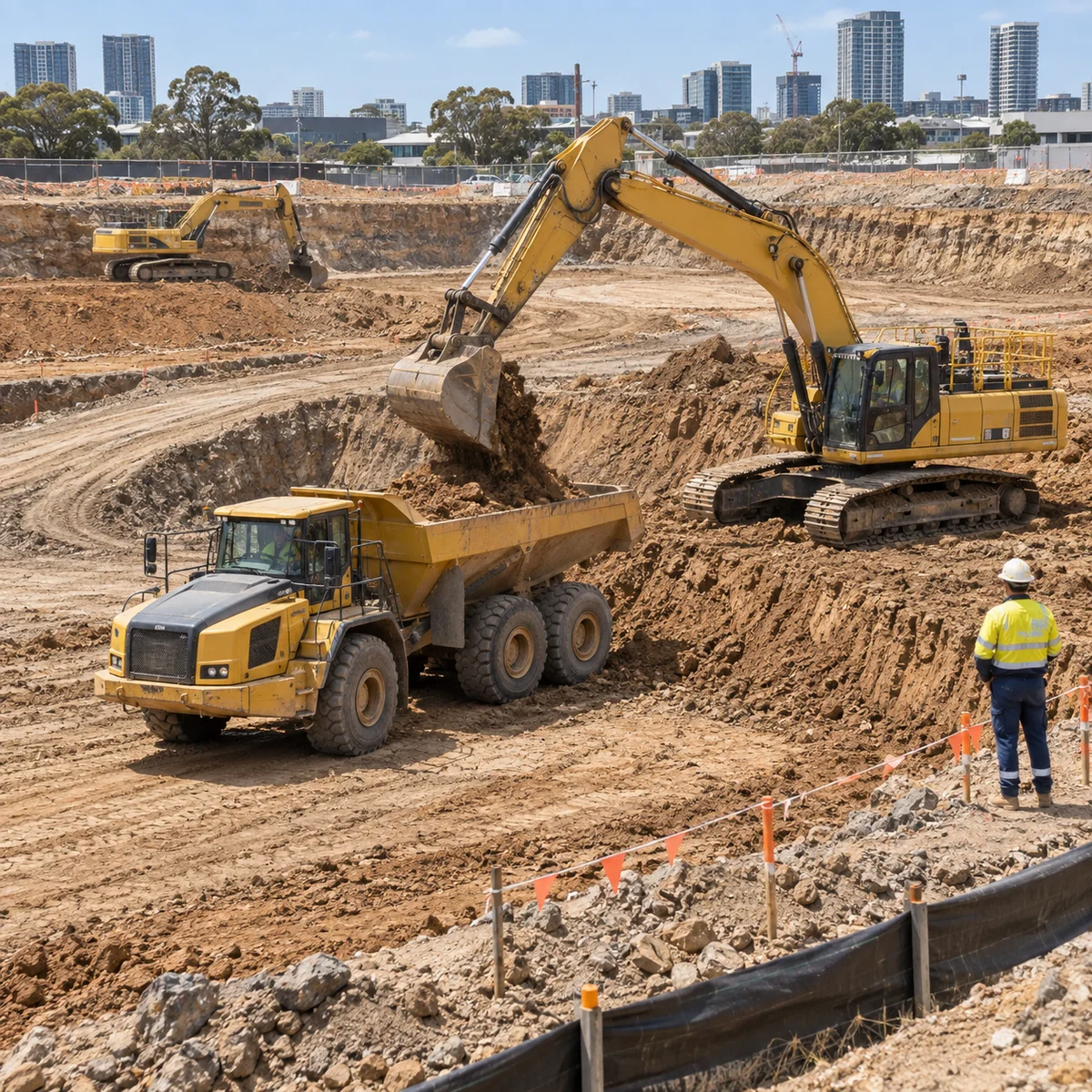 02Bulk earthworks and civil worksEnabling and Early WorksOpen full Trade Smarts
Trade dossier 02
Bulk earthworks and civil works
The price is driven by the material balance, the haul strategy and whether the proposed plant spread can stay productive. A cheap bulk earthworks number can disappear quickly if the tender relies on selling clean spoil, short haul cycles, dry ground or services that are not where the drawings say they are.
Can the contractor explain where every cubic metre goes, how every truck moves and what happens when the ground or weather differs from the tender assumption?
01
Understand the commercial model
Bulk earthworks is not simply excavation multiplied by a cubic metre rate. The business earns money by keeping an appropriately balanced plant spread moving and by controlling the value or cost of every material stream.
What they actually sell
Production capacity: excavation, loading, hauling, placement, conditioning, compaction, trimming and verified completion. Some contractors self perform drainage, retaining or pavement layers. Others manage these through smaller civil subcontractors.
Where the margin sits
Accurate cut and fill balance, short loaded haul cycles, productive excavators, suitable material reused once, clean spoil placed or sold at low cost, and minimal waiting at gates, stockpiles, testing points and disposal facilities.
Where the job is lost
Unclassified spoil, water, contamination, rock, soft ground, unrecorded services, underutilised plant, trucks queued on or off site, repeated handling, restricted hours, wet weather recovery and uncontrolled scope growth into detailed civil works.
Never compare earthworks tenders until each bidder is priced against the same material balance, disposal destinations, haul routes, ground assumptions, plant spread, production rates and civil scope boundary.
02
Define the package boundary properly
Resolve the boundary line by line. “Bulk earthworks complete” is not a scope definition.
| Workstream | Clarify before award | Typical interface |
|---|---|---|
| Survey and existing conditions | Prestart survey, cadastral control, benchmarks, original surface model, dilapidation, clearing limits and agreed quantity model. | Surveyor, civil engineer, demolition and builder. |
| Clearing and stripping | Vegetation, grubbing, topsoil depth, unsuitable surface material, reuse, stockpile locations and legal disposal. | Arborist, demolition, environmental consultant and landscaping. |
| Cut and excavation | Bulk cut, detailed excavation, batters, benches, temporary slopes, rock definition, ripping and hammering criteria. | Geotechnical engineer, structural works, piling and hydraulic services. |
| Fill and compaction | Material classes, layer thickness, moisture conditioning, proof rolling, compaction standard, testing frequency and failed test treatment. | Geotechnical testing, slabs, pavements and retaining structures. |
| Material movement | Internal haul, stockpiles, double handling, imported fill, exported spoil, sale credits, disposal fees, truck types and dockets. | Traffic management, neighbours, road authority and receiving facilities. |
| Water | Surface water diversion, groundwater, perched water, springs, dewatering, treatment, discharge approvals and wet material handling. | Environmental consultant, hydraulic contractor and temporary works. |
| Temporary access | Haul roads, ramps, working platforms, crane pads, piling platforms, maintenance, wheel wash, street cleaning and final removal. | Builder, piling, cranes, deliveries and following trades. |
| Civil works | Stormwater, sewer, water, conduits, pits, headwalls, culverts, subsoil drainage, kerbs, pavements and service trenches. | Hydraulic, electrical, authority, landscaper and pavement contractor. |
| Environmental controls | Erosion and sediment controls, dust, vibration, noise, contaminated material, acid sulfate soil, weeds and water quality. | Environmental consultant, certifier, council and principal. |
| Completion | Finished surface model, tolerances, as builts, test results, disposal records, clean down, stabilisation and handover protection. | Surveyor, geotechnical engineer, slabs, pavements and landscaping. |
03
Build a real material balance
The tender must identify what is won, what is reusable, what needs treatment, what is imported and where every excess material stream will lawfully go.
Material won on site
- Reconcile survey cut volumes to bulking, shrinkage, compaction and waste factors. Bank cubic metres are not the same as loose trucked cubic metres or compacted fill cubic metres.
- Separate topsoil, structural fill, general fill, landscape fill, unsuitable material, rock and suspect material. One blended rate hides different handling and disposal costs.
- Confirm whether won material satisfies the engineering specification. “Looks like fill” is not acceptance for structural platforms, pavements or slabs.
- Identify when material is available relative to when it is needed. A theoretical balance can still require double handling, stockpiling or imported fill if the sequence does not align.
- Include moisture conditioning, screening, crushing, blending, stabilisation and testing needed to convert won material into usable fill.
Export and disposal
- If the price relies on selling clean material, identify the buyer or receiving site, acceptance criteria, quantity, timing, gate hours, haul route and who carries rejection risk.
- Do not treat clean appearance as proof of lawful reuse. Confirm classification, approvals and the receiving site’s authority to accept the material.
- For dirty, suspect or regulated material, nominate the disposal or treatment facility and obtain current acceptance criteria, gate fees, transport requirements and waste tracking obligations.
- Test whether one nominated destination has enough capacity for the programme. Identify an alternate facility and the cost and haul impact if the preferred destination closes or rejects loads.
- Separate loading, haul, tip fee, levy, testing, handling, stockpiling and administration. A single disposal rate makes later verification almost impossible.
Evidence required before relying on a spoil credit
- Sampling plan and classification aligned with the likely excavation zones and depths.
- Written acceptance or credible market evidence from the proposed buyer or receiving site.
- Quantity and programme check showing that the destination can take the daily truck volume when excavation occurs.
- Approved heavy vehicle route, site entry and exit geometry, operating hours and neighbourhood constraints.
- Fallback destination with a priced delta for haul distance, gate fee and truck cycle.
- Clear contractual ownership of any sale revenue, avoided disposal cost, rejection cost and changed classification risk.
04
Interrogate ground and latent condition risk
The geotechnical report is an investigation sample, not a complete picture of the site. Tie each risk to an observable trigger, an owner, a response and contemporaneous records.
Unknown and abandoned services
Review utility searches, survey, potholing, demolition records and signs of former occupation. Allow for non destructive excavation around likely corridors. Define who carries delay and repair risk where old services are absent from records.
Watch for:Unexplained pits, redundant buildings, patched pavements, private services, old fuel systems and undocumented diversions.
Groundwater, springs and underground creeks
Check bore logs, monitoring dates, seasonal levels, perched water, seepage paths and historical drainage. Establish dewatering method, standby plant, treatment and lawful discharge route before excavation reaches the level.
Watch for:Wet seams, flowing sand, pumping from nearby sites, old creek alignments, water appearing after rain and fill over natural gullies.
Contamination and asbestos fragments
Relate the site history to likely contaminants and hot spots. Confirm who stops work, samples, classifies, segregates, covers, tracks and approves recommencement. Price separate pathways rather than one undefined contaminated material allowance.
Watch for:Odour, staining, ash, buried drums, demolition rubble, fibro fragments, imported fill, workshops, fuel storage and historical industrial use.
Acid sulfate soil
Determine whether potential or actual acid sulfate soil is plausible at the excavation level. Resolve sampling, separation, treatment pad, neutralisation, validation, water management and final placement before allowing bulk excavation to expose material.
Watch for:Low lying coastal ground, estuarine deposits, pyritic material, acidic water and excavations that lower the water table.
Rock and obstructions
Define rock by measurable excavation method or agreed refusal criteria, not visual opinion. Distinguish rippable rock, hammer rock, boulders, concrete, buried foundations and service obstructions. Agree survey and records before removal.
Watch for:Widely spaced boreholes, shallow refusal, old retaining walls, undocumented slabs and variable weathered rock profiles.
Soft, uncontrolled or collapsing ground
Plan proof rolling, undercut limits, bridging, geofabric, stabilisation and replacement fill. Clarify whether the tender includes ordinary local treatment or assumes the entire platform is suitable after stripping.
Watch for:Buried topsoil, rubbish fill, saturated pockets, deep uncontrolled fill, pumping subgrade and slope instability.
Weather and wet material
Ask what happens after 20, 50 and 100 millimetres of rain. Define pumping, drainage, drying, aeration, lime or cement treatment, access restoration, rework and when the site is considered unavailable.
Watch for:No fall to temporary drains, low stockpiles, clay haul roads, inadequate pumps and a programme with no drying or recovery allowance.
Neighbour and road constraints
Check noise, vibration, dust, mud tracking, school or peak hour restrictions, approved haul routes, bridge limits, queuing and complaint response. One restricted turn can change the truck cycle and the required fleet.
Watch for:Narrow entries, no truck stacking, steep driveways, soft verges, overhead services, pedestrian conflict and reliance on reversing into public roads.
05
Understand the crew, plant spread and work fronts
Headcount alone is meaningless. The test is whether the proposed plant and people form a balanced production system for the site geometry and haul strategy.
| Function | Typical people and plant | What to test |
|---|---|---|
| Control and set out | Project manager, earthworks supervisor, surveyor and leading hand. | Who owns daily levels, quantity reconciliation, workfront release and coordination with testing and design? |
| Excavate and load | Excavator operators, dozer operator, loader operator and spotters. | Can the loading unit keep the nominated truck fleet productive without excessive truck or excavator waiting? |
| Internal haul | Dump trucks, articulated dump trucks, scrapers or site trucks. | Are routes, grades, crossings, turning areas and dump points realistic in each stage? |
| External haul | Rigid trucks, truck and dog combinations, semitrailers where suitable, drivers and gate control. | Are public routes approved, entry geometry workable, queue space available and destinations open for the required hours and daily volume? |
| Place and compact | Dozer or grader, padfoot roller, smooth drum roller, water cart, stabiliser and labour support. | Does the spread match layer thickness, material type, moisture demand, test frequency and daily fill target? |
| Trim and finish | Grader, GPS dozer, excavator, roller, survey and labour. | Are tolerances, batters, benches, drains and handover levels included, or has the tender allowed only bulk production? |
| Water and environment | Pumps, settlement or treatment plant, water cart, street sweeper and environmental support. | Is this dedicated capacity or assumed to be borrowed from productive plant when conditions deteriorate? |
| Maintenance and recovery | Fitters, service vehicles, spare attachments, backup pumps and access to replacement plant. | What breaks the production chain and how quickly can the contractor replace it? |
Test against material type, dig depth, swing angle, loading position and truck presentation.
Include loading, travel, queue, tip, return and breaks. Do not use travel time alone.
Test water, mixing, grader and roller capacity as well as test hold points.
06
Define what success looks like
Success must be expressed as accepted finished production, not machines on site, operator hours or material touched. The benchmark is agreed at tender and reset only when the workfront, material, haul route or risk allocation genuinely changes.
Daily production success
The planned bank cubic metres are excavated, the required loose material is hauled, and the planned compacted cubic metres are placed, tested and accepted without transferring a hidden shortfall to tomorrow.
Commercial success
Survey quantities, truck movements, disposal dockets, imported material, plant hours and accepted fill reconcile. Forecast final cost and material balance move with the physical work.
Delivery success
The next workfront, destination, route, plant spread, test coverage and weather response are known before the shift. Constraints are removed before productive plant waits.
| Daily measure | Target agreed before work | Success evidence | Failure signal |
|---|---|---|---|
| Bulk cut | Bank cubic metres by excavation zone and material class. | Progress survey and reconciled load movements. | High machine hours with low measured reduction. |
| Export | Tonnes or loose cubic metres, loads per hour and loads per shift by destination. | Payloads, gate times, dockets and stockpile movement. | Trucks queue, loads are rejected or the destination cannot accept the forecast volume. |
| Fill placement | Compacted cubic metres and completed layers by zone. | Layer records, survey, moisture results and accepted tests. | Material is moved but not converted into accepted fill. |
| Truck cycle | Loading, travel, queue, tipping and return minutes. | Timestamp sample across the whole fleet. | The assumed cycle is achieved only outside peak periods or on one favourable run. |
| Plant utilisation | Productive hours and cycles for the controlling plant item. | Telematics, operator record and observed cycle study. | More plant is added without removing the actual bottleneck. |
| Quality conversion | First pass acceptance and retest limits. | Test register, failed locations and rework closeout. | Daily production excludes failed or unfinished layers. |
| Tomorrow readiness | Released workfront, destination, survey, test and access. | End of shift plan agreed by supervisor and builder. | The crew starts each morning waiting for a decision. |
Record bank cubic metres for excavation, loose cubic metres or tonnes for haulage, and compacted cubic metres for accepted fill. Never compare these numbers without the agreed density, bulking, shrinkage and compaction factors.
07
Set operator and plant targets properly
There is no honest universal cubic metre target for an excavator. Output changes with machine size, bucket, material, face height, swing angle, truck presentation, haul cycle, operator ability, site congestion and productive hours. The subcontractor must build a project specific target that can be tested on site.
How to set the daily cubic metre target
- Nominate the controlling excavator, bucket size, expected bucket fill and material class for each workfront.
- Observe or demonstrate a safe representative cycle with the actual operator, swing angle and truck position.
- Separate gross shift hours from productive hours. Allow for prestart, refuelling, breaks, survey, testing, truck changeover and ordinary servicing.
- Convert bucket cycles to bank volume using the agreed material factors, then cross check against truck payloads and survey.
- Set separate targets for bulk loading, internal cut to fill, detailed excavation, rock, trimming and wet material. One blended target conceals poor performance.
- Record the tender target, demonstrated target and rolling actual target. Investigate the reason before changing the baseline.
Worked planning example
If the planned result is 1,200 bank cubic metres in a shift and only eight hours are genuinely productive, the spread must average 150 bank cubic metres per productive hour.
If the exported material averages 1.8 tonnes per bank cubic metre, that is 2,160 tonnes. At an average 30 tonne payload, the haul plan needs about 72 loaded trips during the shift, or nine completed truck cycles per productive hour across the fleet.
The example is not a benchmark. It demonstrates how the excavation target, payload, truck count, destination and cycle time must reconcile.
| Role or plant | Target to agree | What changes the result | How to verify |
|---|---|---|---|
| Production excavator operator | Safe cycles per hour, effective bucket fill and truck loading time. | Experience, smooth controls, face management, swing angle, truck positioning and ability to read the material. | Representative cycle study plus truck payload and survey reconciliation. |
| Dozer operator | Volume or area spread, push distance, layer control and support time. | Push distance, underfoot condition, GPS competence, material behaviour and interference from trucks. | Layer area and thickness, machine data and survey. |
| Grader operator | Area trimmed to tolerance and accepted per shift. | Operator finishing skill, survey control, material consistency, repeated level changes and traffic damage. | Survey tolerance and first pass acceptance, not hours grading. |
| Roller operator | Layer area, pass pattern, speed and first pass test result. | Material type, moisture, layer thickness, roller selection and disciplined coverage. | Compaction records, GPS where available and test results. |
| Loader operator | Payload consistency, load time and stockpile control. | Bucket selection, material segregation, truck presentation and operator judgement. | Payload data, cycle times and contamination or mixing events. |
| Rock breaker operator | Measured broken and loadable rock by shift. | Rock strength, fracture, breaker match, operator technique, access and exclusion requirements. | Survey, trucked quantity, hammer hours and inspected condition. |
| Truck fleet | Payload, full cycle time, trips per shift and queue limit. | Route, traffic, gate, loading, tipping, destination hours and driver consistency. | Timestamped dockets, GPS data and spot cycle checks. |
A strong operator adds value
- Keeps the bucket full without abusing the machine.
- Presents and manages the face to reduce double handling.
- Positions trucks and limits swing safely.
- Reads changing ground before production collapses.
- Works smoothly with survey, testing and the following plant.
- Produces the required finish without another machine repairing the work.
Do not hide operator weakness
- Do not accept an OEM production chart as the project target without an operator and site adjustment.
- Do not treat all operator hours as interchangeable.
- Do not add trucks when slow loading is the constraint.
- Do not add an excavator when destination queues control the cycle.
- Do not measure only material moved if it must be moved again.
- Do not allow a key tender operator to be replaced quietly with a materially less capable resource.
Name the key operators and identify the work they are competent to perform. If a contractor relies on a high performing operator to support its programme, that operator is part of the proposed methodology, not an invisible interchangeable labour allowance.
08
Manage rain, stand down and machine relocation
Rainfall alone does not establish entitlement or lost production. Record what fell on the site, which workfront became unsafe or unproductive, why it could not be mitigated, and whether the event affected the wider market or only this project.
| Condition | Commercial and delivery test | Reasonable response |
|---|---|---|
| SEQ wide severe event | Comparable sites, roads, disposal facilities and haul routes are broadly affected. Available weather evidence supports the event. | Stand down safely, protect works, maintain critical pumps and agree the earliest credible return. Test entitlement under the subcontract. |
| Localised rain over the project | The site gauge and observed conditions differ from the wider region. Identify the actual unavailable workfront. | Resequence to dry or protected work where possible. Record why alternate work was not available. |
| Site remains wet after nearby sites restart | Test temporary drainage, haul road construction, pumping, material selection and recovery effort. | Separate genuine ground response from inadequate preparation or mitigation by the subcontractor or builder. |
| Groundwater or seepage continues without rain | This is a dewatering and ground condition issue, not automatically inclement weather. | Apply the agreed dewatering responsibility, standby capacity, treatment and changed condition process. |
| Builder closes the workfront | Determine whether the plant is retained exclusively and whether it can be used elsewhere without compromising return. | Agree release, off hire, relocation or genuine standby. Do not allow uncertainty to run for days. |
| Contractor elects to move plant | Check notice, remobilisation time and the date the site can restart. | Mitigation is welcome, but the contractor must maintain the agreed return commitment and cannot automatically transfer self created remobilisation delay. |
Stand down decision record
- Onsite rainfall and reliable nearby weather data.
- Photographs and inspection of each workfront, haul road, stockpile, batter and discharge point.
- Plant and activities that can continue safely.
- Pumps, drains, drying, stabilisation or alternate sequence available.
- Decision time, attendees, next review time and restart criteria.
- Plant released, retained, moved, off hired or maintained on standby.
- Actual return time and any delay caused by remobilisation.
Commercial principles
- Owned plant is not free, but ownership cost is not the same as the full operating rate.
- Dry hire cost may continue during a stand down, but actual cost pressure does not itself create entitlement.
- Exclude fuel, wear, production consumables and operators who were not incurred during genuine idle time.
- Require mitigation through off hire, redeployment or supplier relief where reasonably available.
- If the builder requires plant to remain available exclusively, define the standby rate and response time in advance.
- Avoid paying both standby and full remobilisation for the same retained resource without a clear causal basis.
09
Understand ownership, maintenance and breakdown exposure
The same machine can create very different behaviour depending on whether it is owned outright, financed, leased, dry hired, wet hired or cross hired from another contractor.
| Plant position | What the contractor still pays when idle | What to test commercially |
|---|---|---|
| Owned outright | Depreciation, registration, insurance, storage, servicing and opportunity cost. | Do not assume nil cost. Equally, do not accept a full operating rate with fuel, wear and production labour during idle time. |
| Financed or leased | Finance or lease payment plus fixed ownership costs. | Understand the daily exposure and whether the machine can be redeployed. Financing choice does not rewrite the subcontract. |
| Dry hire | Daily or weekly hire, insurance and often transport, with the subcontractor supplying operator and fuel. | Check off hire rights, minimum period, damage rules, rain relief and replacement obligations in the hire agreement. |
| Wet hire | Usually an hourly or shift charge including operator, subject to minimums and cancellation terms. | Confirm minimum hours, standby, mobilisation and whether nonproductive hours were actually charged. |
| Cross hire or borrowed plant | Commercial arrangement with another contractor and possible recall risk. | Confirm priority, availability, competency, insurance and replacement if the lending contractor needs the machine back. |
Maintenance must be in the programme
- Planned servicing hours, location and service support are identified before mobilisation.
- Ordinary maintenance is included in the tender production model rather than later presented as delay.
- Daily prestarts identify leaks, tracks, tyres, cutting edges, hoses, buckets, attachments and safety systems before failure stops the spread.
- Wear parts and common hoses, teeth, edges, filters and fittings are held locally for critical production plant.
- Fuel, AdBlue, lubrication and service vehicles can reach the plant without stopping haul routes.
- Major service and repair records are reviewed where ageing or heavily utilised plant is proposed.
Breakdown response questions
- Who diagnoses the fault and how quickly can a fitter attend?
- What common parts and attachments are held on site or locally?
- Which machine is the genuine replacement and where is it currently located?
- Does replacement require a float, permit, escort, operator or attachment change?
- Can the remaining spread be rebalanced, or will trucks and downstream plant also stand?
- When does an attempted repair become a mandatory replacement decision?
| Indicative project service level | Response expectation | Qualification |
|---|---|---|
| Critical dewatering pump | Duty and standby arrangement allows same shift recovery. | Use automatic backup or an immediately available pump where flooding would damage work or close the site. |
| Common excavator, loader, dozer or roller | Diagnosis in the same shift and replacement or credible recovery plan within 24 hours. | Metro expectations may be tighter. Confirm transport and attachment availability. |
| Large or specialist production plant | Preagreed contingency with a target commonly within 24 to 48 hours where replacement exists. | Do not invent a promise. Identify the actual alternate machine and mobilisation path at tender. |
| Highly specialised or scarce plant | Project specific response, alternate methodology and programme contingency agreed before award. | A 48 hour replacement promise is meaningless if no equivalent machine is available in the region. |
| GPS or machine control | Manual control or replacement equipment prevents the entire spread stopping unnecessarily. | Confirm whether survey support can sustain safe reduced production. |
The subcontract must define ordinary maintenance risk, breakdown risk, notice, mitigation, replacement expectations and valuation. The critical question is whether the proposed contingency was physically credible when the package was let.
10
Close the dewatering interface
Bulk earthworks frequently depends on dewatering but the responsibility is left between the earthworks contractor, dewatering specialist, hydraulic contractor, environmental consultant and builder.
| Function | Question to resolve | Typical evidence |
|---|---|---|
| Surface water exclusion | Who constructs and maintains diversion drains, bunds, sumps, covers and temporary falls? | Temporary drainage plan and daily inspection. |
| Local sump pumping | Is ordinary rainwater and seepage pumping included in earthworks, and to what capacity and duration? | Pump schedule, hoses, fuel, power and standby unit. |
| Groundwater drawdown | Who designs, installs, monitors and removes wellpoints, wells or specialist systems? | Dewatering design, monitoring trigger levels and settlement assessment. |
| Water quality and treatment | Who samples, treats and approves discharge for sediment, pH, contamination or acid sulfate soil impacts? | Water quality plan, results, treatment records and release approval. |
| Discharge route | Where can water lawfully go, at what flow, and what happens if the outlet or authority approval is unavailable? | Approval, connection detail, receiving capacity and fallback storage. |
| Operation and maintenance | Who checks pumps after hours, refuels, clears strainers, maintains generators and responds to alarms? | Roster, alarm response, service record and escalation contacts. |
| Failure consequence | Which excavation, batter, platform, neighbouring property or completed work is exposed if pumping stops? | Contingency plan, standby capacity and emergency response. |
| Commercial boundary | What is ordinary included pumping, what is a changed condition and what records establish the difference? | Tender assumptions, groundwater information, pump hours and measured inflow. |
The excavation remains workable, discharge stays compliant, the duty system can be maintained without stopping productive plant, and a foreseeable pump failure does not flood the work before the backup responds.
11
Treat erosion and sediment control as a production system
Sediment control is not a silt fence at the boundary and it is not an environmental note to revisit after rain. It controls when clearing can start, how much ground can be exposed, where trucks can move, whether water can leave the site and whether the next shift can proceed. A failed system can bring council attention, rectification directions, enforcement action, penalties and programme stoppage while the site is made compliant.
The earthworks contractor commonly installs, moves and maintains much of the physical system because it owns the plant and changes the ground. The builder still needs one coordinated site system, approved documents, inspection discipline and authority to stop work. Define who designs, certifies, installs, inspects, maintains, treats, discharges, responds after hours and pays. A line in the earthworks scope does not resolve those duties.
Control erosion at the source
Limit the area and duration of exposed soil, stage clearing, preserve vegetation where possible, stabilise completed surfaces early and protect steep batters and concentrated flow paths. Sediment controls are the backup after erosion controls, not a substitute for them.
Separate clean and dirty water
Divert clean upslope water around disturbed areas. Collect dirty runoff through stable drains, bunds and sumps and direct it to a correctly sized treatment measure. Every unnecessary clean catchment sent through the dirty system consumes capacity.
Keep controls working
Controls must suit the current levels, catchments and construction stage. Inspect them, remove accumulated sediment, repair damage and preserve access for maintenance. A control that exists on a drawing but is buried, bypassed, full or inaccessible is not a control.
| Function | Lead responsibility to nominate | Earthworks role to define | Evidence |
|---|---|---|---|
| ESC strategy, staging and design | Builder with civil or suitably qualified ESC designer. | Review constructability, plant access, temporary levels and how the design changes through each cut and fill stage. | Current certified plan where required, calculations, staging markups and design change register. |
| Prestart approval and documents | Builder or principal contractor. | Do not clear or disturb ground until the released work area and required initial controls are confirmed. | Approvals, certificates, prestart record, site copy and hold point release. |
| Initial installation | Named package owner, often earthworks. | Install diversions, access controls, drains, bunds, basins, traps and stabilisation before the disturbance they protect. | Inspection, photographs, survey where relevant and designer acceptance. |
| Daily operation and relocation | Earthworks supervisor for its workfront, coordinated by site management. | Maintain temporary falls, keep clean and dirty water separated and move controls before the catchment changes. | Prestart record, marked plan, daily diary and closed corrective actions. |
| Whole site inspection | Builder and competent environmental or ESC representative. | Attend inspections, rectify assigned items and report conditions outside the package boundary. | Inspection register with owner, due time, completion photo and verification. |
| Basin and water treatment | Named competent operator under the approved plan. | Provide agreed plant, access, sediment cleanout and support. Do not pump untreated water merely to recover earthworks capacity. | Water level, treatment record, sampling results, discharge approval and release log. |
| Road and entry cleanliness | Builder gate control with earthworks or logistics package. | Maintain stabilised access, wheel wash or rumble control, prevent tracking and supply agreed sweeping response. | Gate inspection, sweeper record, photographs and complaint closeout. |
| Damage by other trades | Builder coordinates responsibility. | Make the site safe and contain runoff immediately, then preserve evidence of cause for cost allocation. | Instruction, before and after photographs, labour and plant record. |
| Rain and after hours response | Builder incident lead with named subcontract response resources. | Secure the workfront, protect plant, clear flow paths and provide the agreed pump or machine response within the nominated time. | Forecast review, roster, call log, rainfall record and incident report. |
| Final stabilisation and removal | Builder, civil and landscape team. | Maintain temporary controls until the contributing area is permanently stabilised and formal removal is authorised. | Stabilisation inspection, handover record and release to remove. |
Build the control train for the actual site
No single device fixes the problem. The plan needs a connected treatment train from the top of the catchment to the lawful discharge point, with capacity and access that survive the construction sequence.
| Control layer | What good looks like | Common failure |
|---|---|---|
| Disturbance limit | Only the workfront needed for the near term programme is open. Clearing is staged and completed areas are progressively stabilised. | The whole site is stripped for convenience, creating a catchment the temporary system was never sized to manage. |
| Clean water diversion | Upslope runoff bypasses disturbed soil through stable, non erosive drains or pipes with a safe outlet. | A diversion is cut at the wrong level, overtops, erodes, or discharges onto a batter and becomes a new source of sediment. |
| Dirty water collection | Temporary grades, catch drains, bunds, check structures and sumps direct runoff to treatment without uncontrolled low points. | Water follows the latest cut instead of the plan, ponds at excavation edges or escapes through a service trench. |
| Sediment basin or trap | Catchment, storage, settling zone, inlet, outlet, spillway and cleanout access remain suited to the current stage. | The basin is undersized, full of sediment, used as general storage, isolated by fill or bypassed by the new haul road. |
| Water treatment and release | Water is treated, sampled and released only through the authorised route and decision process. | A pump is started to save the excavation without checking quality, outlet capacity or approval. |
| Site entry and haul roads | The entry is stable, long enough for the vehicles using it and supported by wheel cleaning and rapid street sweeping. | A token rock pad fills with fines, truck tyres bridge over it and mud is tracked into the gutter. |
| Stockpiles and spoil | Stockpiles sit outside flow paths, are bunded where required and are covered or stabilised for the exposure period. | Loose material is placed beside an inlet, on the low boundary or where runoff cuts through the pile. |
| Inlets, batters and outlets | Drainage inlets are protected without creating upstream flooding. Batters and outlets receive erosion protection appropriate to velocity and slope. | Inlet protection blocks the road, concentrated flow scours a batter, or an outlet transfers damage beyond the boundary. |
| Perimeter sediment controls | They intercept shallow sheet flow, are trenched and returned correctly, and have a defined maintenance trigger. | Silt fence is treated as the principal system, placed across concentrated flow or left flattened and full. |
Stage the plan with the earthworks
- Overlay each bulk cut, fill zone, haul road, stockpile, platform, service trench and permanent drainage release onto the ESC plan.
- Calculate where water will run at the temporary levels, not only at final design levels.
- Define a hold point before any existing control is removed or buried. Its replacement must be operating first.
- Keep basin, sump and drain cleanout routes available to the required excavator, loader and trucks.
- Review the contributing catchment whenever a bund is opened, a road is cut, a trench crosses a divide or a platform changes level.
- Use permanent drainage early only where the design, protection and cleaning responsibilities have been agreed.
- Show how the system hands over to civil drainage, landscaping and permanent stabilisation.
Protect the system from the programme
- Do not place site sheds, cranes, laydown, waste bins or stored materials in basin footprints, cleanout access or flow paths.
- Allow physical space for treatment equipment, flocculant or other approved treatment, pumps, generators, sampling and safe access.
- Coordinate service penetrations through bunds and reinstate them before the workfront is left.
- Protect controls from concrete washout, slurry, fuel, plaster, paint and other pollutants that a sediment basin is not designed to treat.
- Carry enough emergency materials on site to repair the foreseeable failure points before rain arrives.
- Make every supervisor and trade responsible for reporting damage. The environmental adviser cannot see every excavator bucket or delivery vehicle.
Rain readiness and inspection rhythm
The project plan, approval and competent designer set the required inspection frequency. The minimum operating rhythm must also respond to forecast rain and every physical change to the catchment.
| Trigger | Required field check | Decision |
|---|---|---|
| Daily prestart and active shift | Current workfront, disturbed area, temporary falls, drains, sumps, entry, street, basin access and damaged controls. | Release the planned disturbance, change the sequence or rectify before production starts. |
| Forecast rain | Site specific forecast, catchment condition, basin capacity, pump and treatment readiness, stockpiles, batters, outlets and emergency resources. | Continue, reduce disturbance, stabilise, install extra protection or stop early enough to secure the site. |
| During prolonged rain, when safe | Overtopping, bypass, scour, blocked inlets, road tracking, pump operation and receiving water observations. | Escalate and intervene without exposing people to unsafe water or unstable ground. |
| Immediately after runoff | High water marks, damage, sediment accumulation, discharge evidence, road and drainage condition and remaining storage. | Contain, clean, repair, record and formally release affected work before recommencing. |
| Catchment or stage change | New low points, altered flow direction, larger contributing area and controls being removed, crossed or buried. | Revise the staging markup or obtain a design update before changing the ground. |
| Complaint, incident or authority visit | Source, pathway, receiving point, current controls, records and immediate containment. | Follow the incident and regulatory response plan. Preserve evidence and allocate corrective actions. |
| Practical completion of an area | Permanent cover, vegetation establishment, stable drainage and no continuing sediment source. | Keep temporary controls until the authorised release criteria are met. |
Pre rain readiness test
- What rainfall is forecast at this site, and when is the last safe time to install, repair or clean controls?
- How much usable capacity and freeboard remains in each basin, sump and temporary storage area?
- Are clean water diversions continuous, stable and clear of spoil, crossings and damage?
- Can dirty water reach treatment without passing through an uncontrolled low point, open trench or neighbouring property?
- Are pumps fuelled or powered, suction and discharge lines secure, alarms operating and backup equipment physically available?
- Are stockpiles, exposed batters, drainage lines, outlets and incomplete landscape areas protected?
- Can trucks exit without tracking mud, and is a sweeper available during the event rather than tomorrow?
- Are treatment materials, geofabric, aggregate, bags, pipe, stakes and repair plant on site?
- Who is on the after hours roster, what can they authorise and how quickly can they attend?
- Which earthworks activity must stop now so the crew has time to leave the site compliant?
Define success and intervene early
Measure the system while it is still possible to correct it. “No complaint received” is not a performance measure.
| Measure | Success standard to agree | Early warning |
|---|---|---|
| Uncontrolled discharge | No visible bypass from disturbed areas and no unauthorised release. | Flow approaching low boundaries, pits, gates or service trenches outside the treatment train. |
| Offsite tracking | Entry and adjacent road remain clean, with any tracking removed promptly. | Rock pad sealed with fines, wash water escaping or sweeping response repeatedly late. |
| Control readiness | Required measures are operating before disturbance and before forecast rain. | Materials are still being ordered after the forecast or controls appear only after runoff. |
| Basin readiness | Required working capacity, safe access and treatment resources remain available. | Accumulated sediment, high water, blocked inlet, damaged spillway or no cleanout route. |
| Exposed area | Open area remains within the staged plan and agreed project limit. | Clearing runs ahead of cut, fill, drainage or stabilisation capacity. |
| Progressive stabilisation | Completed and inactive areas are stabilised within the project requirement. | Finished batters and stockpiles remain bare because another trade may return later. |
| Corrective action | Critical failures are contained immediately and all items close within assigned risk based timeframes. | The same damaged control appears on successive inspections. |
| Records | Plans, inspections, rainfall, treatment, discharge, photographs and closeout are current and retrievable. | Records are reconstructed after a complaint or council visit. |
Failure patterns that stop jobs
- Controls are installed after clearing instead of before it.
- Silt fence is expected to contain concentrated flow or replace a basin.
- Clean water and dirty water are mixed, overwhelming treatment and pumping capacity.
- A basin is too small, full of sediment, bypassed or pumped down without the required treatment and release decision.
- Temporary drains terminate at a batter, road or neighbouring boundary without a stable outlet.
- Inlet protection prevents sediment but creates unsafe flooding elsewhere.
- Stockpiles and loose spoil sit in flow paths or beside stormwater inlets.
- Truck and dog movements spread mud beyond an ineffective site entry.
- Utilities and other trades cut bunds or flatten controls and nobody owns reinstatement.
- No one can respond overnight or on weekends, even though pumps and storage require attention.
What a credible contractor brings
- A supervisor who can read the current catchment and challenge an unbuildable staging plan.
- Plant and labour allocated to maintenance rather than assuming production equipment will always be free.
- A proposed sequence that limits exposed ground and preserves control access.
- Real basin cleanout, water treatment, pump backup and street cleaning arrangements.
- A rain response tied to forecast, lead time and safe shutdown rather than waiting for runoff.
- Clear evidence of inspections, quantities, photos, maintenance, treatment and discharge decisions.
- Commercial allowances that distinguish routine maintenance from genuine design or scope change.
Questions to drill into at tender and prestart
Ask the proposed project supervisor, not only the estimator. Require them to mark up the plan and explain the physical response.
Plan and staging
- Which ESC documents, approvals, certificates and prestart hold points apply to this site?
- Who prepared the plan and who can approve a field change when actual levels differ?
- Walk through the clean and dirty water paths at each major earthworks stage.
- What is the maximum disturbed area assumed and how does the programme keep within it?
- Which control must be installed before the first clearing, cut, fill, road or stockpile activity?
- Where will basins and drains move as the permanent civil works are installed?
Capacity and operation
- What catchment and design assumptions sit behind each basin, diversion and outlet?
- How is usable capacity checked and what sediment or water level triggers cleanout or treatment?
- Which excavator, loader and trucks can access the basin without compromising other controls?
- Who operates treatment, takes samples and authorises a release?
- What is the lawful discharge route and what storage or production response applies when release is unavailable?
- How are concrete washout, slurry, fuel and other non sediment pollutants kept out of the system?
Rain response
- Who reviews the site forecast and at what lead time is a readiness inspection triggered?
- What activities stop first so the crew can secure the site before rain?
- Which pumps are duty, standby and emergency, and how quickly can the backup operate?
- Who attends after hours and on weekends, and what plant can they mobilise?
- What rainfall, storage or field condition triggers escalation to the builder and designer?
- How will the team record local site rain, runoff, decisions, damage and recovery?
People and maintenance
- Which named supervisor owns earthworks ESC each shift and what training or experience do they have?
- How many labour and plant hours per week are allowed for ordinary inspection, cleanout and repair?
- Who supplies and stocks replacement fence, aggregate, pipe, geofabric, stabilisation and treatment material?
- How quickly are critical failures contained and lower risk defects closed?
- How are controls handed over, protected and reinstated when another trade enters the area?
- Who maintains access, wheel cleaning and street sweeping during peak truck movements?
Price and scope
- Show the quantities and rates allowed for initial controls, stage changes, maintenance and final removal.
- Which drains, bunds, basins, pumps, treatment, sampling, sweeping and stabilisation are included?
- What ordinary rainfall, sediment cleanout and maintenance has been priced?
- Are standby, after hours attendance, emergency callout and replacement pump costs included or scheduled?
- Who pays where another trade damages a control or a builder directed sequence increases the catchment?
- Which provisional quantities or agreed rates will value genuine changes without reopening the whole package?
Evidence and enforcement response
- Who keeps the current plan, certificates, inspections, photographs, rainfall, treatment and discharge records?
- What is the immediate response if sediment leaves the site or a control fails?
- Who contacts the principal, environmental adviser and relevant authority when required?
- How are directions, corrective actions, responsibilities and release to restart recorded?
- How will downtime distinguish the original failure, authority response, rectification and contractor recovery?
- What previous enforcement or serious ESC failure has the team experienced and what changed afterwards?
Respond to a failure or council inspection
The first priority is to stop the source and prevent further harm. The commercial argument comes after containment, evidence and a controlled response.
Immediate field response
- Stop the activity causing or worsening the release and make the area safe.
- Contain the source, protect receiving drains and deploy emergency controls without creating a new hazard.
- Notify the builder’s incident lead and environmental or ESC adviser. Follow project and legal notification requirements.
- Photograph the source, pathway, receiving point, weather, controls and response. Preserve samples and records where directed.
- Clean affected roads and drains using an approved method. Do not wash sediment farther into the stormwater system.
- Comply with lawful directions, allocate every corrective item and verify closeout.
- Restart the affected work only when the builder and any required authority or certifier release conditions are satisfied.
Programme and commercial recovery
- Record when production stopped, which workfronts were affected and which alternative work remained available.
- Separate the time needed to contain the event, repair the system, obtain review or approval and remobilise production.
- Identify whether the cause was missing maintenance, noncompliant work, damage by others, changed staging, design inadequacy or an instructed change.
- Track actual labour, plant, materials, testing, cleaning and disposal. Do not rely on a percentage allowance reconstructed later.
- Issue and close a recovery programme with rain readiness, revised controls and a responsible person for every action.
- Do not assume the builder can recover all regulatory or delay cost from earthworks merely because the physical controls sat in that package. Apply the contract and the proven cause.
Assess sediment control variations properly
| Event | Commercial test | Likely treatment |
|---|---|---|
| Routine cleanout, repair and relocation within the tender staging | Was the activity visible, reasonably foreseeable and included in the maintenance allowance? | Usually base scope unless a stated quantity or threshold has been exceeded. |
| Builder changes sequence or expands disturbed catchment | Does the direction require larger, additional or repeated controls beyond the priced staging? | Potential variation, valued from the changed quantities and proven effect with base allowances credited. |
| Certified design or authority requirement changes | What new physical work, treatment, testing or delay arises and was it caused by contractor noncompliance? | Potential variation if not correcting contractor failure and if contract notice requirements are met. |
| Control damaged by another trade | Who caused it, what immediate response was reasonable and what evidence exists? | Builder coordinates urgent repair and allocates cost under the relevant subcontract. |
| Unexpected contaminated or chemically affected water | Does it differ from disclosed information and ordinary sediment laden runoff? | Assess as a changed condition or separate environmental scope, including treatment and disposal pathway. |
| Failure to install or maintain included controls | Did the contractor miss the plan, inspection item or reasonable response? | Rectification is not a variation. Assess consequential allocation under the contract and proven causation. |
| Rain exceeds an assumed event or causes prolonged storage | What did the contract assume, did the system remain compliant and was mitigation reasonable? | Weather entitlement, ESC maintenance and water management are separate questions. Do not bundle them into one standby claim. |
A valid assessment needs the original ESC allowance, current plan, instruction, cause, measured quantities, labour and plant records, rainfall, photographs, inspection history, treatment and discharge records, corrective action closeout and credits for work already included.
12
Questions to ask at tender
Require the estimator and proposed delivery lead to answer together. The objective is to expose whether the programme and price describe the same methodology.
Quantities and design
- Which survey surface and drawing revision produced the cut and fill quantities?
- Show the bank, loose and compacted volume conversions used in the price.
- What topsoil, unsuitable material, rock and detailed excavation quantities are carried?
- Are batters, retaining interfaces, temporary slopes and working platforms designed and priced?
- Which finished tolerances and survey deliverables define completion?
Material pathways
- Provide the material balance by classification and by project stage.
- Which won materials are assumed suitable for structural fill and who has confirmed that assumption?
- If spoil will be sold, name the receiving party, acceptance criteria, quantity and programme window.
- Name the primary and backup disposal facilities for unsuitable or contaminated material.
- Who owns sale revenue, disposal credits, rejected loads, changed classifications and additional testing?
Ground and water
- Which bore logs, contamination reports, groundwater readings and site history documents were reviewed?
- How are unknown services and abandoned infrastructure located before bulk excavation?
- What rock definition, refusal test and measurement method are allowed?
- What dewatering, treatment and discharge capacity is carried in the base price?
- What is the response if acid sulfate soil, asbestos fragments, odour or staining is encountered?
Plant and productivity
- List each major item of plant, ownership or hire status, mobilisation date and backup source.
- Show daily output by workfront and identify the plant item that controls each output.
- How many direct operators are available and which positions rely on labour hire?
- Which plant is dedicated to drainage, access and wet weather recovery rather than base production?
- What production loss is assumed for testing, survey, service crossings, truck changes and refuelling?
Trucks and logistics
- Which truck types are proposed and can truck and dog combinations physically enter, turn, tip and exit each stage?
- Show the external haul route, restrictions, operating hours and full truck cycle used in the rate.
- Where will trucks queue without blocking the public road or internal construction traffic?
- How are mud tracking, wheel wash, street sweeping, dust and neighbour complaints controlled?
- What happens to output if the destination queue adds 20 minutes to every cycle?
Business and contingency
- Name the proposed supervisor and confirm the other projects competing for that person.
- Which work is self performed and which drainage, haulage, stabilisation or testing businesses sit below the contractor?
- How many regular owner drivers or haulage partners are committed and what portion is spot hire?
- What is the recovery plan after heavy rain, plant failure, disposal rejection or delayed design?
- What cash exposure arises from fuel, haulage, tip fees and imported material before progress payments are received?
13
Control performance before the milestone is missed
Measure the production system daily and reconcile the commercial position weekly.
| Measure | Daily evidence | What the trend tells you |
|---|---|---|
| Cut, haul and fill quantities | Survey progress, load counts, payloads, disposal and import dockets. | Whether production and remaining quantities support the programme and forecast cost. |
| Plant utilisation | Operating, waiting, breakdown and idle hours by plant item. | Whether the spread is balanced or the builder is paying for ineffective capacity. |
| Truck cycle | Load, gate out, tip, gate in and queue times. | Whether destination, traffic or site circulation is limiting excavation output. |
| Fill acceptance | Layers placed, moisture results, roller passes, tests, failures and rework. | Whether placed quantity is becoming accepted finished work. |
| Material classification | Excavation zone, sample results, stockpile register and destination. | Whether the original material balance and disposal forecast remain valid. |
| Weather impact | Rainfall, affected workfronts, pumps, access condition, lost hours and recovery work. | Whether claimed delay is tied to actual critical work and whether mitigation is working. |
| Interface readiness | Design release, service clearance, survey, test and preceding work status. | Which party is constraining production and what must be escalated. |
Healthy signals
- Tomorrow’s workfront and destination are known today.
- Survey, dockets and plant records reconcile.
- The supervisor can explain output loss without blaming everything on others.
- Fill testing follows the work rather than holding it up.
- Forecast quantities and disposal cost are updated before the monthly claim.
Early warning signals
- More plant arrives without a clear production constraint being removed.
- Trucks queue while the excavator or disposal facility waits.
- Material is stockpiled “for later” without classification or a destination.
- The proposed supervisor is rarely present and the estimator’s methodology is not understood on site.
- Daily records report hours but not quantities, locations, cause or output.
14
Assess variations and claims properly
Work through entitlement, causation, valuation and evidence. Do not pay a new cubic metre rate merely because the actual pathway was more expensive than the tender assumption.
Evidence that should exist
- Written instruction or identified change to information, condition or quantity.
- Before and after survey tied to the agreed measurement model.
- Material classification, photographs, excavation location and stockpile register.
- Truck dockets, destination receipts, gate times, tip fees and waste tracking records.
- Plant and labour records identifying productive, waiting and rework hours.
- Programme analysis showing the affected activity, available float, mitigation and actual delay.
- Original tender build up so the base allowance, qualification and risk allocation can be identified.
Challenges to make
- Was the condition actually different from the information and risk allocated at tender?
- Did the changed condition cause the claimed plant, labour, haul or programme effect?
- Could material have been reused, treated, sold or sent to a closer approved destination?
- Was the whole spread affected or only one excavator, truck group or workfront?
- Does the claimed rate include mobilisation, supervision or plant already recovered elsewhere?
- What omitted work, avoided disposal, saved import, resale value or original allowance must be credited?
- Are standby and disruption supported by actual records rather than reconstructed percentages?
Value the changed pathway. Separate excavation, treatment, loading, haul, disposal, imported replacement material, extra handling and genuine programme effect. Apply credits and avoid duplicating preliminaries, mobilisation or margin already recovered in the subcontract.
15
Interfaces that must be closed early
Demolition
Below ground structures, redundant services, contaminated rubble, backfill standards and final demolition levels.
Piling and foundations
Working platform design, certification, maintenance, piling mat removal, spoil handling and reduced level.
Hydraulic and civil services
Trench excavation, shoring, bedding, spoil, backfill, compaction, testing, dewatering and temporary drainage.
Structural works
Footing excavations, blinding, crane pads, slab subgrade, tolerances, access and protection of completed platforms.
Pavements
Subgrade acceptance, proof rolling, capping, stabilisation, pavement materials, trimming and level responsibility.
Landscaping
Topsoil stripping, testing, stockpiling, amelioration, reuse, finished profiles and erosion stabilisation.
Senior review
Can the delivery team answer these eleven questions?
- What is the current cut and fill balance by material class?
- Where will every excess material class go and what is the backup destination?
- What quantity and haul cycle does the programme require each day?
- Can the proposed trucks enter, circulate, queue, tip and leave safely at every stage?
- Which plant item controls output and what is its credible backup?
- What ground and groundwater assumptions are priced and what evidence supports them?
- What happens operationally and commercially after significant rain?
- Does the current ESC system match today’s catchments, and is it ready for the forecast rain?
- Which old services or site history risks remain unresolved?
- Which adjoining trade owns every excavation, backfill, platform and temporary drainage seam?
- What daily evidence will distinguish changed conditions from poor productivity?
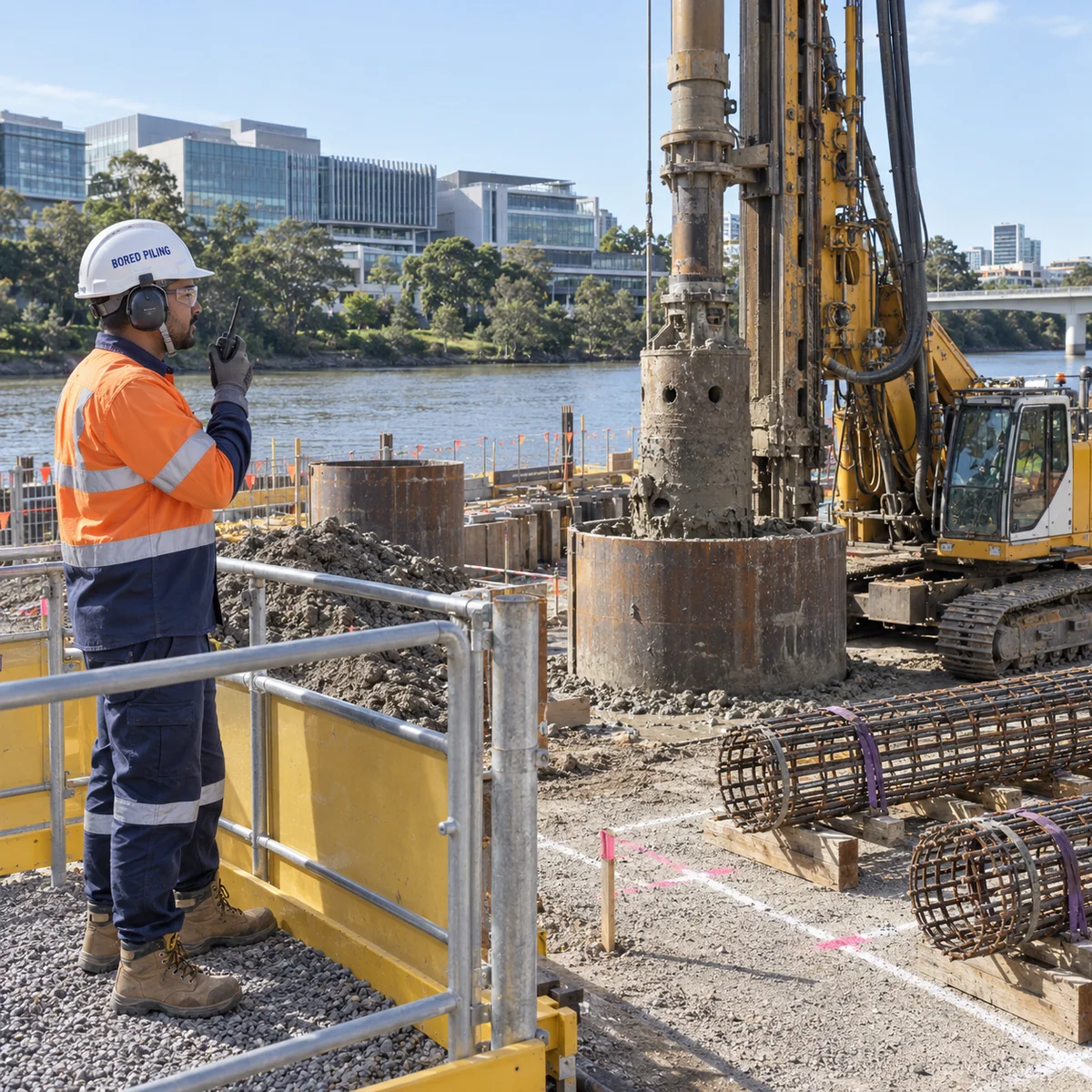 03Piling, shoring and retentionEnabling and Early WorksOpen full Trade Smarts
Trade dossier 03
Piling, shoring and retention
This package converts uncertain ground into reliable structural capacity and temporary stability. Its price depends on what the rig actually encounters, how the chosen system responds, whether the working platform and spoil route keep the rig productive, and whether records prove that every installed element meets the design intent.
01
Typical design complaints
Foundation drawings often look resolved while the information that controls installation cost and performance remains provisional.
Ground model gaps
- Boreholes miss local rock shelves, buried obstructions, old foundations, uncontrolled fill and abrupt changes between test locations.
- Groundwater levels are treated as fixed even though rain, tides, excavation and adjacent pumping change them.
- The report describes materials but does not convert them into practical drilling, driving, support fluid, spoil or casing assumptions.
- Acid sulfate soil, contamination, aggressive groundwater and disposal constraints are separated from the piling design.
Design is not installation ready
- Pile loads, founding criteria, cut off levels and tolerances change after tender.
- Reinforcement cages cannot be fabricated, transported, lifted or lowered in the shown lengths.
- Caps, ground beams, columns, plunge columns, couplers and starter bars clash or exceed practical tolerances.
- The temporary retention sequence, anchors, props, walers and excavation stages are not coordinated as one system.
Temporary works are invisible
- No designer has accepted the rig working platform for actual track loads and operating configurations.
- Platform drainage, edges, ramps, penetrations, underground services and maintenance are ignored.
- Cranage for cages, casings, tremie and spoil is assumed available but not allocated.
- The design relies on unsupported open bores or excavation stages that the contractor will not accept.
Testing is added late
- Trial piles, load tests, integrity tests, sonic tubes and concrete testing are specified after production starts.
- Acceptance criteria and the process for investigating anomalies are not agreed.
- Test timing blocks excavation or pile caps because strength and access requirements were not programmed.
- The design does not say who interprets results or carries redesign and remediation risk.
02
Typical design wins
A strong design package narrows uncertainty without pretending the ground is perfectly known. It sets measurable acceptance rules and creates a fast path for decisions when actual conditions vary.
A coherent basis of design
- Geotechnical parameters, pile loads, settlement limits, durability, design life, lateral loads and construction tolerances align.
- The designer identifies which assumptions must be verified during installation and what evidence is acceptable.
- Pile type is selected against access, noise, vibration, spoil, groundwater, contamination, adjacent structures and programme.
- Alternative pile types are compared on whole project impact, not pile rate alone.
Installable details
- Cage lengths, laps, couplers, centralisers, cover, lifting points and sonic tubes are coordinated.
- Cut off level includes overpour, contaminated head removal and safe access for cropping.
- Pile cap geometry accommodates realistic positional and vertical tolerances.
- Retention details show the actual sequence of wall, capping beam, anchors or props, excavation and waterproofing.
Designed working platform and logistics
- The platform designer receives the rig manufacturer loads, lifting configurations, travel paths and crane loads.
- The platform has defined material, thickness, drainage, inspection, repair and exclusion requirements.
- Concrete trucks, spoil trucks, cages, casing and support fluid plant can circulate without entering unsafe rig zones.
- The platform certificate and handover process remain live when trenches or excavations alter it.
Clear verification plan
- Trial installation tests the method before full production.
- Pile records capture depth, strata, penetration or drilling response, concrete volume, reinforcement and founding acceptance.
- Testing frequency, timing, acceptance, anomaly escalation and remediation authority are agreed.
- Survey links pile identity, installed location, cut off and test result into one register.
03
What success looks like
Success combines reliable foundation performance with predictable production. A rig that installs metres quickly but produces unaccepted piles is not productive.
| Perspective | Success looks like | Evidence to review |
|---|---|---|
| Subcontractor | The selected rig and tooling suit the ground. The working platform stays serviceable. Cages, concrete and trucks arrive to the rig rhythm. Founding decisions are prompt. | Rig logs, cycle times, tooling records, concrete deliveries, spoil movements, downtime codes and approved hold points. |
| Builder | The package releases caps or excavation to programme with no surprise remediation, platform incident, uncontrolled spoil or unresolved testing backlog. | Pile register, look ahead, accepted results, survey, variation register, platform inspections and forecast completion. |
| Designer | Installation records demonstrate the assumed geotechnical response and structural element quality. Departures are escalated while options remain open. | Founding records, drilling parameters, driving records, concrete curves, integrity tests, load tests and design dispositions. |
| Client | Settlement, capacity, durability, neighbour impact and permanent retention performance meet the project requirements with traceable evidence. | Design certificates, verification report, monitoring results, warranties and complete foundation data set. |
Typical crew
- A project manager and site engineer control design queries, records, resources and commercial commitments.
- A piling supervisor controls the platform, sequence, exclusion zones and interfaces.
- The rig operator is the production centre. Experience reading spoil, rig response, verticality and tooling behaviour materially changes output and quality.
- A rig attendant or offsider manages tooling, casing, cleaning, spoil and safe connection work.
- A banksman or spotter controls movement. Crane operators, doggers and riggers handle cages, casing and tremie.
- Welders, cage crews, pump operators, support fluid technicians, surveyors and testers join at defined points.
Useful daily targets
- Track accepted piles or wall panels and accepted metres by diameter and ground class.
- Split the cycle into set up, drill or drive, clean or found, inspect, cage, concrete or install, withdraw casing, relocate and delay.
- Compare theoretical and actual concrete volume. Investigate material under use and unexplained over break.
- Record penetration, torque, crowd, revolutions, blows or extraction parameters appropriate to the system.
- Measure spoil removed, cage availability, concrete truck interval and time awaiting founding approval.
- Use the first representative production to reset the forecast with the designer and commercial team.
Where money is made
- Continuous work fronts, a stable platform, repeatable ground, quick founding decisions and supply matched to cycle.
- Competent operators choose tooling early and avoid unnecessary redrilling.
- Cages and concrete are available before the bore becomes vulnerable.
- Testing follows production and results clear before downstream work.
Where money is lost
- Obstructions, hard bands, unstable bores, groundwater, tool wear, lost casing and concrete overbreak.
- Rig standby while survey, design, cages, concrete, permits or platform repairs are resolved.
- Scattered pile release and frequent rig moves.
- Rejected piles, anomaly investigation, extra testing, remediation and delayed caps.
- Owned specialist plant sitting idle has opportunity cost. Hired plant creates direct daily exposure and pressure to remobilise elsewhere.
04
Onsite interfaces
Piling is an interface package. The rig can only perform when the project team coordinates design, platform, survey, materials, spoil, water, testing and following structure as one production system.
| Interface | Decision required | Failure pattern |
|---|---|---|
| Bulk earthworks | Platform level, material, proof, drainage, ramps, maintenance, spoil stockpile and final removal. | The platform is accepted once, then weakened by rain, trenches or edge excavation. |
| Survey | Grid, offsets, pile set out, casing checks, as built position, cut off and retained control. | Control is destroyed by rig traffic or pile locations are released piecemeal. |
| Geotechnical and structural design | Founding criteria, design changes, installation records, tolerance, testing and anomaly decisions. | The crew waits while consultants debate who may accept the founding condition. |
| Reinforcement supply and fixing | Schedules, cage fabrication, transport, lift weight, laps, centralisers, couplers, starter bars and test tubes. | A cage arrives late, distorted or impossible to lower through casing. |
| Concrete supply | Mix performance, truck interval, pump, washout, contingency volume and rejection protocol. | A continuous pile pour is interrupted by traffic, batching delay or unsuitable concrete. |
| Dewatering and environment | Groundwater, support fluid, displaced water, slurry, spoil classification, treatment and discharge. | Water or spoil is generated without storage, treatment or an accepted destination. |
| Neighbours and authorities | Noise, vibration, settlement, movement, work hours, monitoring, rail or road protection and complaints. | A threshold exceedance stops production because escalation rules were never agreed. |
| Following structure | Pile head treatment, cut off, caps, waterproofing, starter bars, survey release and temporary wall ownership. | Excavation exposes heads before test results and design acceptance are complete. |
05
What must be agreed, checked and when
The strongest commercial control is a common pile register that links design, installation, records, testing, acceptance, remediation and payment.
| When | Agree and check | Evidence |
|---|---|---|
| Before tender | Geotechnical model, contamination, groundwater, loads, pile types, retention sequence, access, overhead limits, working hours, monitoring and test requirements. | Tender data schedule showing which ground risks are defined, shared, provisional or excluded. |
| During tender | Named rig and operator, tooling, platform loads, crew, lower tiers, pile cycle, productivity by ground type, concrete demand, cage logistics, spoil route and contingency plant. | Method, programme, pile schedule, rig data, production build up and supplier confirmations. |
| Before award | Measurement rules, founding depth risk, rock and obstruction rates, concrete overbreak, casing, support fluid, standby, remobilisation, test failures, redesign and delay responsibility. | Commercial schedule tied to observable records rather than ambiguous metre rates. |
| Before mobilisation | Issued design, platform design and certificate, survey control, service clearance, permits, monitoring baseline, cage approvals, concrete trials, spoil acceptance and emergency plan. | Signed readiness review and first week look ahead. |
| Per element | Set out, platform condition, founding criteria, bore or drive record, cage, concrete or product installation, cut off, location, testing and acceptance status. | One uniquely identified record completed contemporaneously. |
| Weekly | Actual accepted output, remaining ground risk, design changes, test backlog, platform status, spoil and concrete reconciliation, delay causes and forecast final cost. | Jointly reviewed production dashboard and current pile register. |
Variation interrogation
- Identify whether the event changes quantity, depth, diameter, ground class, method, sequence or access.
- Compare actual ground evidence with the contractual geotechnical baseline and stated tender assumptions.
- Separate productive rig time, genuine standby, maintenance, breakdown and contractor inefficiency.
- Check whether alternate tooling or sequence should reasonably have reduced the impact.
- Reconcile concrete overbreak against theoretical volume, delivery dockets and pile records.
- Credit omitted piles, reduced depth, unused casing, recovered steel, avoided tests and released plant.
- For delay, test whether the event actually controlled the rig or downstream critical path.
Capability questions
- Which named operator will run the rig and what comparable ground has that operator delivered?
- Is the rig owned, financed, leased or hired, and what credible replacement can arrive within 24 or 48 hours?
- Which tooling and spare wear parts will be held locally?
- Who has authority to accept founding and how quickly will that person respond?
- How many cages can be held ahead without damage or blocking access?
- What is the maximum concrete demand per pile and what is the supply interruption plan?
- Which work is subcontracted again and how are specialist payments and availability controlled?
- Show a previous pile register, nonconformance and remediation closeout.
06
What will stop the trade
Stops must be planned because a short interruption during an open bore, cage lift or tremie pour can create a permanent defect rather than ordinary lost time.
Platform and plant stops
- The working platform is uncertified, damaged, saturated, excavated, undermined or outside the approved configuration.
- Rig safety devices, ropes, tooling, casing or lifting accessories fail inspection.
- Wind, lightning, visibility or exclusion control makes lifting unsafe.
- An unplanned service, void or edge condition enters the rig travel path.
- Breakdown support or a critical spare cannot meet the agreed response time.
Ground and bore stops
- Founding material does not meet the acceptance criteria.
- The bore collapses, groundwater inflow exceeds the method or support fluid leaves tolerance.
- An obstruction, lost tool, buried foundation or contamination changes the safe method.
- Spoil cannot be classified, stored, treated or removed.
- Acid sulfate soil or contaminated groundwater controls are not available.
Supply and quality stops
- The approved cage, casing, pile product, grout or concrete is not ready.
- Concrete delivery cannot support a continuous pour.
- Slump flow, workability, temperature, age or other acceptance property is outside the approved requirement.
- The tremie arrangement cannot remain controlled through the planned pour.
- Required test equipment, tubes, hold point release or inspector is unavailable.
External and industrial stops
- Noise or vibration limits, monitoring alarms, rail protection or authority conditions require cessation.
- Neighbour movement or damage indicators exceed the agreed trigger.
- A union, enterprise agreement, fatigue, competency or access issue prevents the proposed crew or hours.
- Rain affecting one platform is distinguished from a regional event. The contractor must not automatically move the rig and later claim unavoidable remobilisation.
- The subcontract must state reasonable stand down, plant security and return obligations for short and extended interruptions.
07
Great handover
Great handover means the structure team can excavate, crop and build with confidence because every installed element has a known location, verified status and closed design disposition.
Physical handover
- All piles, wall elements, anchors, props and capping works are complete to the agreed stage.
- Pile heads are safely exposed or protected and cut off levels are verified.
- Cages, starter bars, couplers and plunge elements are undamaged and within tolerance.
- Spoil, slurry, support fluid, washout and redundant platform material are removed as agreed.
- Temporary retention ownership, inspection and load restrictions are transferred in writing.
Technical evidence
- Final pile schedule and uniquely identified installation records.
- Surveyed position, verticality where required, cut off and wall alignment.
- Concrete, grout, steel, pile product and welding records.
- Integrity, load, sonic, anchor and other specified test reports.
- Designer review of anomalies, deviations, remediation and final acceptance.
- Working platform records and evidence relevant to permanent works quality.
Commercial closeout
- Designed, instructed and installed quantities reconcile.
- Rock, obstructions, casing, overbreak, support fluid, spoil and standby are supported by contemporaneous records.
- All provisional items, omissions, recovered materials and unused tests are credited.
- Plant off hire and demobilisation are confirmed.
- Remaining test or warranty obligations have an owner, date and retained security.
Release to caps and excavation
- The builder, piling supervisor, surveyor and following contractor inspect together.
- No area is released with unresolved integrity results hidden in a general test report.
- Cropping method protects reinforcement and accepted concrete.
- Waterproofing and retention details are coordinated before access becomes constrained.
- The as built model is issued in a form the structure team can actually set out from.
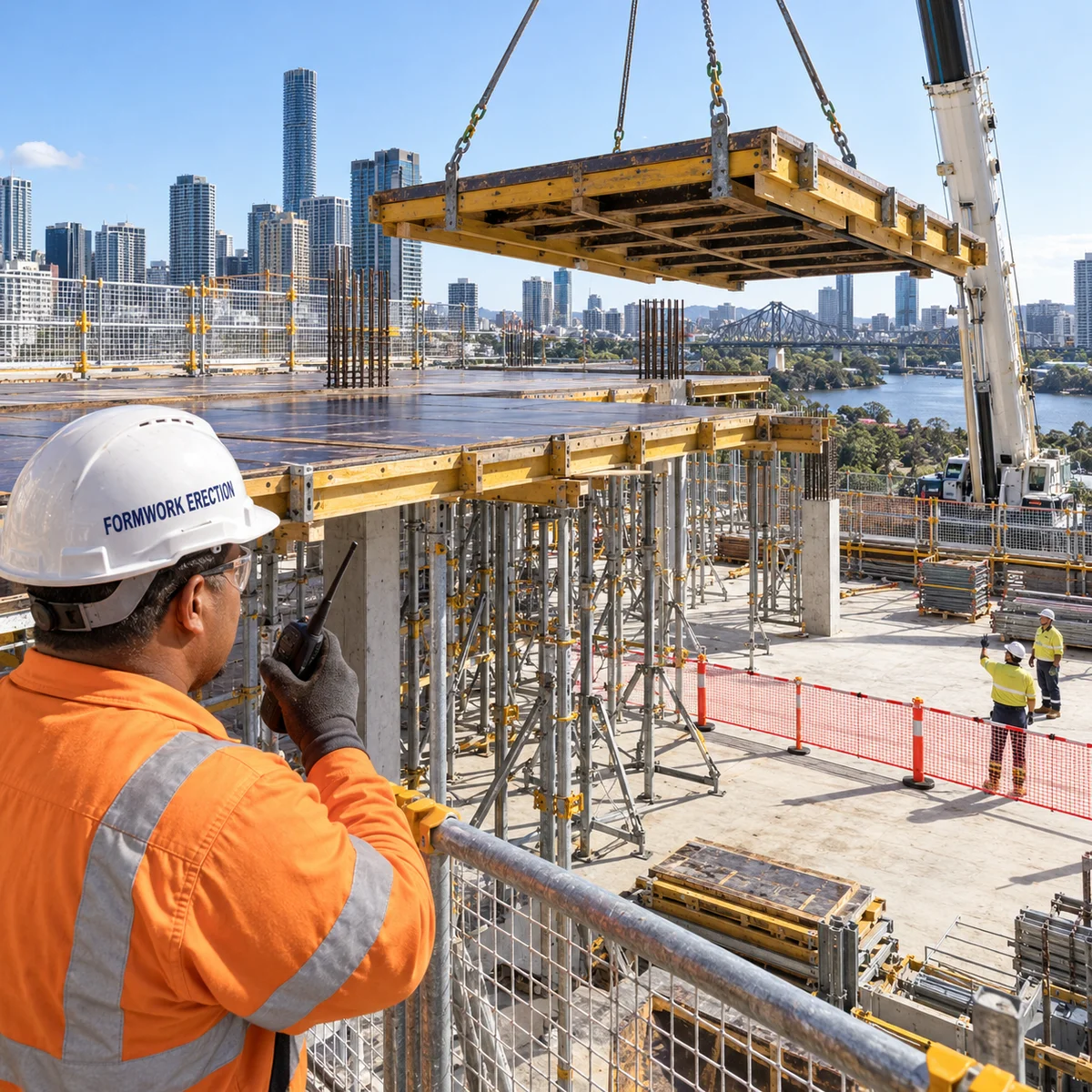 04FormworkStructureOpen full Trade Smarts
Trade dossier 04
Formwork
Formwork is a temporary works, labour and cycle business. The subcontractor earns money when a repeatable system moves through large, ready work fronts and loses it through redesign, fragmented pours, excessive make up work, late penetrations and stripping constraints.
01
Typical design complaints
These are the design conditions that most often convert an apparently simple package into labour loss, redesign, delay or transferred scope.
Geometry and set out
- Slab edges, steps, falls, rebates, hobs and thickenings conflict between architectural and structural drawings.
- Columns and walls do not align through levels, creating make up formwork and transfer details.
- Set down dimensions are insufficient for waterproofing, screeds, doors and facade interfaces.
- The structural grid and survey control do not give the crew stable points for repeated set out.
Temporary works gaps
- Loads, pour rates, construction sequence and backpropping assumptions are not stated.
- The permanent designer assumes continuity that does not exist during stripping.
- Screens, jumpforms, falsework, edge protection and loading platforms are designed separately.
- No one owns modifications after services and access trades alter the system.
Congested embeds
- Cast ins, sleeves, conduits, puddle flanges and anchors arrive after shutters are closed.
- Penetration zones conflict with beams, tendons and reinforcement.
- Facade anchors and edge details are issued after table forms are fabricated.
- The tolerance required by following trades is tighter than the formed concrete specification.
Finish not defined
- Class of surface, tie pattern, joint line, patching and colour expectations are described subjectively.
- Exposed concrete samples do not represent corners, joints, penetrations or repairs.
- Release agent, form liner and reuse cycles are not agreed.
- The contractor prices ordinary structural finish while the architect expects a premium architectural result.
02
Typical design wins
Good design does more than satisfy the final structure. It lets the trade plan a safe repeatable method, price the real work and preserve productive flow.
Cycle led design
- Bays, wall lifts and table sizes repeat across levels.
- Pour breaks align with crew capacity, crane access and concrete supply.
- Stripping and backpropping are designed around the actual programme.
- Make up zones are concentrated rather than scattered through every bay.
Resolved temporary works
- The engineer receives actual system data, pour pressure and construction loads.
- Screens, edges, platforms and formwork share coordinated support zones.
- Alteration approval and inspection responsibility are clear.
- Backpropping plans show load paths through all affected floors.
Closed embeds
- A coordinated cast in register freezes before fabrication and closing shutters.
- Services inspect their own cast ins before the formwork hold point.
- Survey checks critical edges, cores, columns and openings before concrete.
- Late additions use an approved controlled process rather than improvised cutting.
Objective finish
- A benchmark panel establishes joints, ties, corners, colour, blowholes and repair limits.
- Form facing selection and reuse are matched to the accepted finish.
- Inspection happens immediately after stripping while responsibility is visible.
- Repair materials and approval steps are agreed before the first pour.
03
What success looks like
Success must be visible from four perspectives and measured in accepted output, not headcount or optimistic percentage complete.
| Perspective | Success looks like | Evidence |
|---|---|---|
| Subcontractor | The proposed crew, plant and supply chain achieve measurable accepted output without repeated mobilisation or hidden support. | Daily output, labour, deliveries, downtime, defects and forecast remaining work. |
| Builder | The trade releases complete work fronts to programme and exposes emerging cost or design risk before it controls the job. | Look ahead, inspections, accepted quantities, delay codes, changes and final cost forecast. |
| Designer | Installed work demonstrates the design intent and departures are resolved before they are concealed or repeated. | Hold points, surveys, test results, marked drawings and dispositions. |
| Client | The finished structure performs, is maintainable and carries complete traceable evidence. | Certificates, as built information, warranties, defects and handover records. |
Crew and delivery
- Project manager controls engineering, system supply, labour and commercial commitments.
- Site manager or supervisor owns cycle planning and coordinates crane, reinforcement and concrete.
- Leading hands set out, plumb and close the critical wall, column and deck zones.
- Carpenters assemble panels, decks, shutters, penetrations, edges and make up work.
- Labourers move material, clean, oil, strip and stack under direction.
- System scaffolders, screen crews and engineers attend as specialist lower tiers.
Production controls
- Deck square metres completed and released per shift by zone.
- Linear metres or square metres of walls and columns closed and accepted.
- Crew hours per square metre separated between repetitive deck and complex make up work.
- Planned cycle days versus actual cycle days with delay coded by cause.
- Crane hours consumed by tables, panels, screens and material movements.
- Defects after stripping, survey variance and first inspection acceptance.
Where money is made
- Repetition, large released fronts and stable crews.
- Owned systems cycling without idle hire periods.
- Early embed coordination and predictable crane slots.
- Quick stripping, cleaning and reuse with low damage.
Where money is lost
- Late drawings and fragmented pours.
- Excessive stop ends, steps, hobs and one off details.
- Crane waiting, material double handling and storage damage.
- Rework for line, level, finish or missed cast ins.
Delivery systems and production logic
The selected system changes the crew, plant, programme, interfaces and commercial exposure. Confirm which system is actually priced.
| System or method | Commercial and delivery reality |
|---|---|
| Conventional timber and ply | Flexible for irregular geometry but labour intensive. Test facing reuse, propping density, skilled carpenter numbers, make up allowance and waste. |
| Table or flying forms | Efficient on repeated slabs when crane time, landing areas, perimeter screens and make up strips are planned as one cycle. |
| Panel wall systems | Fast when wall lengths, tie patterns, corners and crane access repeat. Check pour pressure, plumbing method, access and architectural tie requirements. |
| Jumpform and self climbing systems | Critical design and logistics package for cores. Test hydraulic cycle, embedded anchors, trailing platforms, reinforcement access and recovery from survey drift. |
| Falsework and transfer structures | High consequence temporary works. Confirm foundation capacity, load paths, settlement monitoring, staged loading and controlled stripping. |
| Permanent formwork | Moves labour between packages rather than removing risk. Confirm support, joints, propping, fire, durability, penetrations and who repairs damage. |
04
Onsite interfaces
Map the seams before award. The package should sit with the party best able to control the work, while every dependency has a named provider and acceptance point.
| Interface | Decision required | Common failure |
|---|---|---|
| Survey | Control, offsets, pre pour checks and as built tolerances. | Experienced setters are diverted and the whole crew waits on unclear control. |
| Reinforcement | Deck release, chairs, congestion, shutters, starter bars and inspection order. | Steel loads or workers damage deck and edges before the pour. |
| Post tensioning | Anchorage pockets, tendon profiles, stressing access and backpropping. | Anchors or tendons clash with shutters and slab steps. |
| Services | Cast ins, penetrations, conduits, puddle flanges and final inspection. | Late service work prevents closing or creates uncontrolled penetrations. |
| Concrete | Pour size, rate, pressure, access, vibration, finish and stripping strength. | The pour exceeds the designed pressure or concrete supply breaks the cycle. |
| Facade | Slab edges, rebates, anchors, tolerances and screen ties. | Edge deviation transfers expensive make good to the facade. |
| Builder logistics | Crane, storage, loading platforms, lighting, access and waste. | System material cannot be moved when the planned cycle requires it. |
05
What must be agreed, checked and when
Commercial clarity comes from resolving the same questions at the right time and preserving the evidence needed to distinguish genuine change from ordinary delivery risk.
| When | Agree and check | Evidence |
|---|---|---|
| Before tender | Issued design, scope boundaries, tolerances, finish, access, work hours, testing and known constraints. | Tender information register and explicit assumptions. |
| During tender | Named management, direct labour, labour hire, lower tiers, plant, material sources, productivity, sequence and competing projects. | Crew build up, programme, procurement schedule and rate basis. |
| Before award | Inclusions, exclusions, quantities, design duties, temporary works, change rates, daywork, standby, escalation and delay rules. | Clarifications incorporated into the subcontract. |
| Before mobilisation | Approved method, permits, access, survey, predecessor acceptance, materials, plant, inspections and emergency response. | Signed readiness review with owners and dates. |
| Daily | People, work front, output, deliveries, hold points, defects, delay reason and tomorrow readiness. | Contemporaneous daily record with photographs. |
| Weekly | Accepted production, remaining quantities, design status, resources, procurement, changes, recovery and forecast final cost. | Joint forecast based on evidence rather than opinion. |
Commercial build up
Use this matrix to expose which risks are genuinely included and which have only been hidden inside a broad rate.
| Price component | What to test |
|---|---|
| Area rates | Separate flat deck, walls, columns, beams, edges and make up. One blended rate hides complexity. |
| System hire | Identify owned, leased and hired components, minimum periods, damage, cleaning and off hire rules. |
| Labour | Show supervisors, leading hands, carpenters and labourers by cycle activity, not one total crew. |
| Crane | Price planned lifts and the consequence of missing slots. Clarify tower crane versus mobile crane responsibility. |
| Temporary works | Include design, independent check, inspections, alterations, monitoring and certification. |
| Changes | Agree rates for small shutters, steps, hobs, penetrations, stop ends, redesign and broken cycles. |
Detailed pre award interrogation
Do not accept yes or no answers. Require the proposed manager and site supervisor to explain the people, quantities, sequence and evidence behind each response.
Business and crew capacity
- Who will manage the project and which named supervisor and leading hands will attend?
- How many direct employees are genuinely available and how many are labour hire or regular contractors?
- Which other projects compete for the same people, plant, design and suppliers?
- What portion will be subcontracted again and how is lower tier performance controlled?
- What measurable output supports the programme allowance?
- What is the 24 hour and 48 hour response when a key person, plant item or supplier fails?
- Show a comparable project, its production records and a real nonconformance closeout.
- Which proposed roles are employees, regular contractors or agency labour?
- Who can make a binding resource decision when output falls behind?
Programme credibility
- Break every milestone into work fronts, quantities, crew numbers, shifts and measurable daily output.
- Which one activity controls the production cycle and how is its output verified?
- What minimum clear work front is required to use the proposed gang efficiently?
- Which predecessor release dates are assumptions rather than current commitments?
- What float, alternative sequence or spare capacity exists?
- What recovery action is available before extra shifts simply add congestion?
- Which design, material or inspection dates must be achieved to protect the first three weeks?
- Show how the proposed output compares with a completed similar project.
Price build up
- Explain each component of the formwork price using the commercial matrix below.
- Identify measured quantities, allowances, provisional quantities and exclusions.
- State the productivity rate and the exact site conditions supporting it.
- Show supervision, engineering, testing, access, waste, freight and indirect costs.
- Identify every builder supplied item, shared resource and free issue material relied upon.
- State which assets are owned, leased or hired and their real daily exposure.
- Explain credits, reuse, salvage and unused material assumptions.
- Confirm whether tender rates genuinely apply to small, disrupted or out of sequence work.
Design and interfaces
- Walk each boundary through design, supply, install, support, protect, inspect, test, make good and warrant.
- Which temporary works and construction stage checks sit inside the package?
- Which drawing or model currently controls manufacture or installation?
- Which unresolved interface could change the selected method?
- What tolerance is required from the preceding trade and by the following trade?
- Who accepts a departure and how quickly can that person decide?
- Which details have caused loss on previous projects?
- Which work is physically best placed with another party despite a neat commercial package preference?
Performance control
- What will be measured each shift before the milestone is missed?
- Who records labour by gang, plant, installed quantity, deliveries, delays and defects?
- How will competent leading hands or operators be distinguished from extra labour numbers?
- What threshold triggers recovery and who can authorise it?
- How will builder disruption be separated from poor contractor productivity?
- What does the contractor need ready tomorrow and who confirms it today?
- How often will remaining quantities and final cost be recalculated?
- What evidence will show the following trade has received a genuinely usable work front?
Commercial discipline
- Identify the exact instruction or physical condition and the contractual risk allocation.
- Separate changed quantity from changed method, sequence, access and productivity.
- Test the claimed labour against the affected crew and work front, not the total site headcount.
- Check whether competent supervision, alternative sequence or reasonable mitigation should have reduced the impact.
- Use daily records, survey, deliveries, plant data, inspections and photographs.
- Credit omissions, unused materials, avoided plant, recovered value and productivity benefits.
- Do not value disrupted small work using a broad production rate without testing the changed circumstances.
- What notices and approvals are required before additional work proceeds?
- How will daywork record instruction, exact location, named resources and quantity achieved?
- What evidence supports standby, remobilisation, disruption, escalation and delay?
06
What will stop the trade
Agree objective stop conditions and response times. This prevents unsafe pressure to continue and prevents every ordinary interruption becoming a standby claim.
Safety and stability
- Temporary works design or inspection is incomplete.
- Backpropping differs from the approved load path.
- Edges, penetrations, screens or access are unsafe.
- Wind prevents panel, table or screen lifts.
- A damaged component has not been quarantined or assessed.
Readiness
- Survey control or issued dimensions are missing.
- Reinforcement and embeds are not ready for shutters to close.
- Crane access or lifting gear is unavailable.
- Concrete strength does not permit stripping.
- The next work front is too fragmented to use the planned crew.
Commercial and industrial friction
- A hired asset continues to incur cost while an owned asset carries opportunity cost.
- The subcontractor shifts scarce labour or plant to another project during a short stand down.
- Union, enterprise agreement, competency or fatigue requirements invalidate the proposed hours or crew.
- The builder releases fragments rather than the minimum productive work front.
- Daywork proceeds without instruction, affected resources, output or mitigation records.
Weather and protection
- Rain, wind, heat or lightning affects safety, quality or access beyond the agreed threshold.
- A local site condition is distinguished from a genuine regional shutdown.
- Fresh or incomplete work cannot be protected.
- Recovery resources and return timing are not agreed.
- Weather records do not establish actual effect on the controlling activity.
07
Great handover
Handover is the transfer of complete, accepted work and usable evidence. It is not the point at which the crew leaves site.
Physical completion
- Formed dimensions and levels are surveyed where critical.
- Surface finish and defects are jointly inspected after stripping.
- All ties, nails, debris and temporary materials are removed or identified.
- Backpropping and temporary works ownership is transferred in writing.
- Penetrations, cast ins and edge protection are complete and recorded.
- Repairs are closed before finishes conceal responsibility.
Evidence completion
- Temporary works designs, checks, inspections and alteration approvals.
- Pour and stripping records including concrete strength evidence.
- Survey reports, benchmark approvals and deviation dispositions.
- Formwork pre pour inspections and services sign offs.
- Finish inspections, repair approvals and closeout photographs.
Commercial completion
- Installed, omitted and changed quantities reconcile.
- All changes show entitlement, cause, valuation and applicable credits.
- Defects, damage and incomplete work are jointly recorded before demobilisation.
- Plant and hire off dates are confirmed.
- Remaining obligations have an owner, due date and retained security.
Release to the next trade
- The builder, trade supervisor and following contractor inspect together.
- Access, tolerance, loading, protection and residual risks are explained.
- No unresolved defect is hidden by following work.
- Survey control and marked information remain usable.
- Ownership of temporary support and protection transfers in writing.
 05Reinforcement fixingStructureOpen full Trade Smarts
Trade dossier 05
Reinforcement fixing
Reinforcement fixing is a labour productivity and material flow business. Tonnes alone can mislead because small bars, congestion, couplers, prefabricated cages, distribution distance and drawing complexity can multiply the hours required for the same weight.
01
Typical design complaints
These are the design conditions that most often convert an apparently simple package into labour loss, redesign, delay or transferred scope.
Schedules and drawings
- Bar schedules do not match the latest structural drawings.
- Revisions change bars after scheduling, cutting or delivery.
- Congested nodes cannot be assembled in the sequence shown.
- Couplers, starter bars and laps conflict with formwork and access.
Constructability
- Bars are detailed in lengths that cannot be transported or lifted.
- Cover, bend radii and clear spacing cannot all be achieved.
- Meshes and top bars leave no safe access for concrete placement.
- Prefabricated cages lack lifting design or become unstable during handling.
Interfaces
- Post tensioning, services and cast ins compete for the same depth.
- Formwork shutters close before reinforcement is inspected.
- Concrete finish requirements are incompatible with chairs and supports.
- Waterproofing zones are punctured by uncoordinated starters.
Supply assumptions
- The fixing contractor assumes builder supplied steel will arrive sorted by pour.
- Delivery labels do not match site zone names.
- Storage capacity and crane unloading are not planned.
- Small bars, mesh, accessories and couplers are treated as incidental despite high handling effort.
02
Typical design wins
Good design does more than satisfy the final structure. It lets the trade plan a safe repeatable method, price the real work and preserve productive flow.
Buildable detailing
- Congested nodes are modelled and sequenced before steel is cut.
- Bar lengths suit transport, cranage and safe installation.
- Couplers and prefabricated cages are used where they genuinely reduce labour and risk.
- Access for fixing, inspection and concrete vibration is preserved.
Controlled schedules
- One approved revision controls scheduling, fabrication and installation.
- Every delivery is labelled by pour, zone and placing sequence.
- Changes identify affected bars rather than relying on clouded drawings alone.
- The site can quarantine superseded steel without losing the full delivery.
Reliable production flow
- Steel is held one or two pours ahead without blocking the deck.
- Crane slots align with unloading and distribution.
- Leading hands receive complete packs and resolve queries before the gang stops.
- Prefabrication occurs in a stable area with lifting points approved.
Clear inspection sequence
- Bottom steel, services, top steel and final cover checks have planned hold points.
- The engineer can access critical zones before they are buried.
- Photographs and marked drawings record hidden reinforcement.
- Defects are corrected before the concrete crew mobilises.
03
What success looks like
Success must be visible from four perspectives and measured in accepted output, not headcount or optimistic percentage complete.
| Perspective | Success looks like | Evidence |
|---|---|---|
| Subcontractor | The proposed crew, plant and supply chain achieve measurable accepted output without repeated mobilisation or hidden support. | Daily output, labour, deliveries, downtime, defects and forecast remaining work. |
| Builder | The trade releases complete work fronts to programme and exposes emerging cost or design risk before it controls the job. | Look ahead, inspections, accepted quantities, delay codes, changes and final cost forecast. |
| Designer | Installed work demonstrates the design intent and departures are resolved before they are concealed or repeated. | Hold points, surveys, test results, marked drawings and dispositions. |
| Client | The finished structure performs, is maintainable and carries complete traceable evidence. | Certificates, as built information, warranties, defects and handover records. |
Crew and delivery
- A project manager coordinates labour, schedules, deliveries and variations.
- A site supervisor allocates fixing gangs and controls inspection readiness.
- Leading hands read drawings and set the fixing sequence. Labour numbers without competent drawing readers do not create output.
- Fixers tie, splice, install couplers and build bars into the work front.
- Distribution labour unloads, sorts and places bundles close to use.
- Specialist welders or prefabrication crews assemble cages where specified.
Production controls
- Tonnes fixed and accepted per gang shift, separated by element type.
- Crew hours per tonne adjusted for bar diameter, spacing and congestion.
- Number of couplers completed and tested where required.
- Pours held by missing bars, drawing queries or failed inspection.
- Steel delivered, installed, superseded and remaining by schedule.
- Rework hours and first inspection acceptance by leading hand.
Where money is made
- Large repetitive mats with sequenced deliveries.
- Competent leading hands and stable gangs.
- Efficient crane distribution and minimal sorting.
- Prefabrication that reduces work at height or in congestion.
Where money is lost
- Small diameter bars and high tie density priced at a broad tonne rate.
- Late revisions, missing bars and delivery resorting.
- Working around services or formwork out of sequence.
- Repeated inspections, inaccessible defects and overtime before pours.
Delivery systems and production logic
The selected system changes the crew, plant, programme, interfaces and commercial exposure. Confirm which system is actually priced.
| System or method | Commercial and delivery reality |
|---|---|
| Loose bar fixing | Flexible but sensitive to bar mix, congestion, distribution distance and competent drawing readers. |
| Mesh installation | Fast in open areas but laps, sheet weights, crane handling, penetrations and top layer support control real output. |
| Prefabricated cages | Reduces work at the final location when lifting design, transport, stiffness, splice and tolerance are resolved. |
| Mechanical couplers | Useful for congestion and staged work. Check type, preparation, installation torque or procedure, inspection and supply availability. |
| Threaded or welded assemblies | Specialist process requiring traceability and qualified procedures. Do not assume ordinary fixing labour can deliver it. |
| Supply separate from fixing | Can expose the builder to scheduling, quantity, tagging, delivery, waste and shortage risk that was hidden in a combined trade rate. |
04
Onsite interfaces
Map the seams before award. The package should sit with the party best able to control the work, while every dependency has a named provider and acceptance point.
| Interface | Decision required | Common failure |
|---|---|---|
| Reinforcement supplier | Schedules, cutting, bending, tags, delivery lots and credits. | Incorrect or superseded bars arrive mixed with current work. |
| Formwork | Access, shutters, starters, chairs, loads and release sequence. | The fixing gang loses a continuous front or damages incomplete formwork. |
| Post tensioning | Profiles, anchors, bursting steel and sequence. | Tendons and bars compete for depth and clear spacing. |
| Services | Cast ins, conduits, penetrations and no cut zones. | Services displace bars without design approval. |
| Concrete | Access, cover, stability, vibration routes and pour timing. | Bars move during placing or the pour starts before defects close. |
| Engineer | Queries, hold points, substitutions and acceptance. | Verbal changes are not reflected in schedules or records. |
| Crane and logistics | Unloading windows, bundle weights, storage and distribution. | The crew spends productive hours dragging and sorting steel. |
05
What must be agreed, checked and when
Commercial clarity comes from resolving the same questions at the right time and preserving the evidence needed to distinguish genuine change from ordinary delivery risk.
| When | Agree and check | Evidence |
|---|---|---|
| Before tender | Issued design, scope boundaries, tolerances, finish, access, work hours, testing and known constraints. | Tender information register and explicit assumptions. |
| During tender | Named management, direct labour, labour hire, lower tiers, plant, material sources, productivity, sequence and competing projects. | Crew build up, programme, procurement schedule and rate basis. |
| Before award | Inclusions, exclusions, quantities, design duties, temporary works, change rates, daywork, standby, escalation and delay rules. | Clarifications incorporated into the subcontract. |
| Before mobilisation | Approved method, permits, access, survey, predecessor acceptance, materials, plant, inspections and emergency response. | Signed readiness review with owners and dates. |
| Daily | People, work front, output, deliveries, hold points, defects, delay reason and tomorrow readiness. | Contemporaneous daily record with photographs. |
| Weekly | Accepted production, remaining quantities, design status, resources, procurement, changes, recovery and forecast final cost. | Joint forecast based on evidence rather than opinion. |
Commercial build up
Use this matrix to expose which risks are genuinely included and which have only been hidden inside a broad rate.
| Price component | What to test |
|---|---|
| Tonne rates | Separate bar diameters, element types, congestion and small bars. Weight does not equal labour. |
| Mesh | Price sheets, laps, cutting, penetrations, multiple layers and distribution separately where material. |
| Couplers | Define supply, bar preparation, installation, testing and rejected connections. |
| Prefabrication | Identify fabrication area, lifting, transport, temporary stiffening and splice work. |
| Distribution | Allocate unloading, crane, telehandler, storage, sorting and internal movements. |
| Changes | Use affected bar type, location and sequence rather than automatically applying a broad tonne rate. |
Detailed pre award interrogation
Do not accept yes or no answers. Require the proposed manager and site supervisor to explain the people, quantities, sequence and evidence behind each response.
Business and crew capacity
- Who will manage the project and which named supervisor and leading hands will attend?
- How many direct employees are genuinely available and how many are labour hire or regular contractors?
- Which other projects compete for the same people, plant, design and suppliers?
- What portion will be subcontracted again and how is lower tier performance controlled?
- What measurable output supports the programme allowance?
- What is the 24 hour and 48 hour response when a key person, plant item or supplier fails?
- Show a comparable project, its production records and a real nonconformance closeout.
- Which proposed roles are employees, regular contractors or agency labour?
- Who can make a binding resource decision when output falls behind?
Programme credibility
- Break every milestone into work fronts, quantities, crew numbers, shifts and measurable daily output.
- Which one activity controls the production cycle and how is its output verified?
- What minimum clear work front is required to use the proposed gang efficiently?
- Which predecessor release dates are assumptions rather than current commitments?
- What float, alternative sequence or spare capacity exists?
- What recovery action is available before extra shifts simply add congestion?
- Which design, material or inspection dates must be achieved to protect the first three weeks?
- Show how the proposed output compares with a completed similar project.
Price build up
- Explain each component of the reinforcement fixing price using the commercial matrix below.
- Identify measured quantities, allowances, provisional quantities and exclusions.
- State the productivity rate and the exact site conditions supporting it.
- Show supervision, engineering, testing, access, waste, freight and indirect costs.
- Identify every builder supplied item, shared resource and free issue material relied upon.
- State which assets are owned, leased or hired and their real daily exposure.
- Explain credits, reuse, salvage and unused material assumptions.
- Confirm whether tender rates genuinely apply to small, disrupted or out of sequence work.
Design and interfaces
- Walk each boundary through design, supply, install, support, protect, inspect, test, make good and warrant.
- Which temporary works and construction stage checks sit inside the package?
- Which drawing or model currently controls manufacture or installation?
- Which unresolved interface could change the selected method?
- What tolerance is required from the preceding trade and by the following trade?
- Who accepts a departure and how quickly can that person decide?
- Which details have caused loss on previous projects?
- Which work is physically best placed with another party despite a neat commercial package preference?
Performance control
- What will be measured each shift before the milestone is missed?
- Who records labour by gang, plant, installed quantity, deliveries, delays and defects?
- How will competent leading hands or operators be distinguished from extra labour numbers?
- What threshold triggers recovery and who can authorise it?
- How will builder disruption be separated from poor contractor productivity?
- What does the contractor need ready tomorrow and who confirms it today?
- How often will remaining quantities and final cost be recalculated?
- What evidence will show the following trade has received a genuinely usable work front?
Commercial discipline
- Identify the exact instruction or physical condition and the contractual risk allocation.
- Separate changed quantity from changed method, sequence, access and productivity.
- Test the claimed labour against the affected crew and work front, not the total site headcount.
- Check whether competent supervision, alternative sequence or reasonable mitigation should have reduced the impact.
- Use daily records, survey, deliveries, plant data, inspections and photographs.
- Credit omissions, unused materials, avoided plant, recovered value and productivity benefits.
- Do not value disrupted small work using a broad production rate without testing the changed circumstances.
- What notices and approvals are required before additional work proceeds?
- How will daywork record instruction, exact location, named resources and quantity achieved?
- What evidence supports standby, remobilisation, disruption, escalation and delay?
06
What will stop the trade
Agree objective stop conditions and response times. This prevents unsafe pressure to continue and prevents every ordinary interruption becoming a standby claim.
Safety and access
- Unstable cages or bundles lack designed lifting points.
- Formwork, edges or access cannot support the fixing work.
- Crane exclusion or lifting limits prevent distribution.
- Sharp starters and impalement risks are uncontrolled.
- Heat, fatigue or congestion prevents safe manual handling.
Information and supply
- Approved schedules or drawings are unavailable.
- Critical bars, couplers, chairs or accessories are missing.
- A revision changes completed work.
- The engineer cannot resolve congestion or substitution.
- The released work front is smaller than the priced gang requires.
Commercial and industrial friction
- A hired asset continues to incur cost while an owned asset carries opportunity cost.
- The subcontractor shifts scarce labour or plant to another project during a short stand down.
- Union, enterprise agreement, competency or fatigue requirements invalidate the proposed hours or crew.
- The builder releases fragments rather than the minimum productive work front.
- Daywork proceeds without instruction, affected resources, output or mitigation records.
Weather and protection
- Rain, wind, heat or lightning affects safety, quality or access beyond the agreed threshold.
- A local site condition is distinguished from a genuine regional shutdown.
- Fresh or incomplete work cannot be protected.
- Recovery resources and return timing are not agreed.
- Weather records do not establish actual effect on the controlling activity.
07
Great handover
Handover is the transfer of complete, accepted work and usable evidence. It is not the point at which the crew leaves site.
Physical completion
- All bars, mesh, laps, couplers, starters and accessories match the accepted drawings.
- Cover, supports and stability remain correct under concrete placing loads.
- Loose wire, offcuts and trip hazards are removed.
- Services changes affecting reinforcement have written acceptance.
- Engineer inspections and identified defects are closed.
- The concrete crew receives clear access without moving reinforcement.
Evidence completion
- Final bar schedules and delivery reconciliation.
- Inspection requests, engineer approvals and marked drawings.
- Coupler certificates and test records where required.
- Material certificates linked to delivery lots.
- Photographic records of congested and concealed zones.
Commercial completion
- Installed, omitted and changed quantities reconcile.
- All changes show entitlement, cause, valuation and applicable credits.
- Defects, damage and incomplete work are jointly recorded before demobilisation.
- Plant and hire off dates are confirmed.
- Remaining obligations have an owner, due date and retained security.
Release to the next trade
- The builder, trade supervisor and following contractor inspect together.
- Access, tolerance, loading, protection and residual risks are explained.
- No unresolved defect is hidden by following work.
- Survey control and marked information remain usable.
- Ownership of temporary support and protection transfers in writing.
 06Concrete placement and finishingStructureOpen full Trade Smarts
Trade dossier 06
Concrete placement and finishing
Concrete placement is a perishable production event. The placing contractor must convert a continuous supply of compliant concrete into accepted structure before the material loses workability, while managing pump output, labour balance, vibration, screeding, finishing, curing and weather.
01
Typical design complaints
These are the design conditions that most often convert an apparently simple package into labour loss, redesign, delay or transferred scope.
Pour geometry
- Falls, set downs, joints, rebates and finish zones are not coordinated.
- Large pours exceed realistic supply, labour or finishing capacity.
- Pump positions and hose routes are shown after access is blocked.
- Construction joints are chosen for programme convenience without structural or finish approval.
Specification conflict
- Strength, exposure, shrinkage, workability, finish and placing requirements pull the mix in different directions.
- Special finishes are described without measurable acceptance criteria.
- Tolerances do not distinguish structural slabs from direct applied finishes.
- Curing requirements conflict with following trade access or coating systems.
Weather ignored
- Hot weather, wind, rain and evaporation controls are absent from the pour plan.
- There is no decision time for cancelling a pour before trucks are batched.
- Rain protection is insufficient for the actual slab area.
- Cold joints and surface damage are treated as defects after the event rather than planned risks.
Interface overload
- Reinforcement and services leave no route for pump hoses or vibrators.
- Formwork leakage and movement are not assigned.
- Flooring contractors expect moisture and flatness outcomes not included in the structural pour.
- Saw cutting, curing, protection and grinding are split without a single owner.
02
Typical design wins
Good design does more than satisfy the final structure. It lets the trade plan a safe repeatable method, price the real work and preserve productive flow.
Pour designed as a production event
- Volume, truck interval, pump rate, crew positions and finishing windows form one plan.
- Backup plant and concrete supply are credible for the critical pour.
- Access and washout are ready before the first truck.
- Hold points close early enough to avoid keeping batched concrete waiting.
Measurable finishes
- Samples establish texture, sheen, edge, joint and repair expectations.
- Flatness, level and tolerance measurement methods are agreed.
- Direct applied finishes receive the substrate they actually need.
- Exposed concrete repair responsibility is agreed before pouring.
Weather controls
- Forecast, evaporation risk, slab temperature and wind are reviewed at agreed gates.
- Shade, wind breaks, fogging, covers and curing resources match the slab.
- Rain protection and runoff routes do not contaminate completed work.
- The superintendent and contractor know who can cancel and when.
Closed sequence
- Reinforcement, services, formwork and survey sign off before mobilisation.
- Concrete supply confirms mix, volume and truck spacing.
- Curing and protection begin as part of the pour rather than the next day.
- Saw cuts occur at the planned time and depth with redundant equipment.
03
What success looks like
Success must be visible from four perspectives and measured in accepted output, not headcount or optimistic percentage complete.
| Perspective | Success looks like | Evidence |
|---|---|---|
| Subcontractor | The proposed crew, plant and supply chain achieve measurable accepted output without repeated mobilisation or hidden support. | Daily output, labour, deliveries, downtime, defects and forecast remaining work. |
| Builder | The trade releases complete work fronts to programme and exposes emerging cost or design risk before it controls the job. | Look ahead, inspections, accepted quantities, delay codes, changes and final cost forecast. |
| Designer | Installed work demonstrates the design intent and departures are resolved before they are concealed or repeated. | Hold points, surveys, test results, marked drawings and dispositions. |
| Client | The finished structure performs, is maintainable and carries complete traceable evidence. | Certificates, as built information, warranties, defects and handover records. |
Crew and delivery
- A pour supervisor controls trucks, pump, work front, weather and stop decisions.
- Pump operator and hose hands maintain safe continuous placement.
- Placers spread concrete and protect reinforcement and embeds.
- Vibrator operators consolidate without segregation or missed zones.
- Screed crew controls level and initial surface.
- Finishers follow the changing concrete, with dedicated curing and saw cutting resources planned.
Production controls
- Cubic metres placed and accepted per hour against truck and pump plan.
- Truck interval, waiting time, rejected loads and supply interruptions.
- Area screeded and finished within the available finishing window.
- Level and flatness results by pour zone.
- Surface defects, cracking, repairs and first inspection acceptance.
- Actual labour distribution through placing, screeding, finishing, curing and cutting.
Where money is made
- Continuous supply and a balanced crew.
- Large accessible pours with repeatable finish.
- Reliable pump and clear hose movement.
- Early curing and protection with few return visits.
Where money is lost
- Concrete waiting, pump blockage or supply interruption.
- Overtime caused by slow start or late finishing.
- Rain damage, rapid drying and unplanned cold joints.
- Grinding, topping, patching and flooring rectification.
Delivery systems and production logic
The selected system changes the crew, plant, programme, interfaces and commercial exposure. Confirm which system is actually priced.
| System or method | Commercial and delivery reality |
|---|---|
| Boom pump placement | High output with suitable setup and reach. Test outrigger support, hose path, exclusion zones, cleanout and backup response. |
| Line pump placement | Useful where reach is constrained but hose friction, relocation, labour and blockage can reduce output. |
| Crane and kibble | Lower continuous output and high crane dependency. Suitable for small or restricted pours only when hook time is genuinely available. |
| Laser screed floor | High area output on accessible slabs. Test reinforcement trafficability, machine access, pour width, level control and edge finishing. |
| Hand screed and specialist finish | Labour intensive and sensitive to crew balance and weather. Benchmark the finish and realistic area per finishing team. |
| Underwater or tremie placement | Requires continuous controlled delivery, suitable mix and detailed records. Treat interruption and contamination as major quality risks. |
04
Onsite interfaces
Map the seams before award. The package should sit with the party best able to control the work, while every dependency has a named provider and acceptance point.
| Interface | Decision required | Common failure |
|---|---|---|
| Concrete supplier | Mix, volume, truck spacing, testing, washout and contingency. | The placing crew outruns or waits for supply. |
| Formwork | Capacity, leakage, pressure, line, level and access. | Movement or leakage damages the structural and architectural result. |
| Reinforcement and PT | Stability, cover, congestion, access and damage control. | Bars or tendons move as hoses and workers cross the deck. |
| Services | Cast ins, penetrations, conduits and spare sleeves. | Unsecured items float or are buried in the wrong position. |
| Survey | Benchmarks, level control, falls and as built checks. | Finishers chase inconsistent levels across the slab. |
| Flooring and coatings | Flatness, moisture, curing compounds, laitance and preparation. | A structural finish creates major downstream preparation. |
| Logistics and neighbours | Truck route, pump setup, permits, noise and washout. | The pour is interrupted by access or compliance restrictions. |
05
What must be agreed, checked and when
Commercial clarity comes from resolving the same questions at the right time and preserving the evidence needed to distinguish genuine change from ordinary delivery risk.
| When | Agree and check | Evidence |
|---|---|---|
| Before tender | Issued design, scope boundaries, tolerances, finish, access, work hours, testing and known constraints. | Tender information register and explicit assumptions. |
| During tender | Named management, direct labour, labour hire, lower tiers, plant, material sources, productivity, sequence and competing projects. | Crew build up, programme, procurement schedule and rate basis. |
| Before award | Inclusions, exclusions, quantities, design duties, temporary works, change rates, daywork, standby, escalation and delay rules. | Clarifications incorporated into the subcontract. |
| Before mobilisation | Approved method, permits, access, survey, predecessor acceptance, materials, plant, inspections and emergency response. | Signed readiness review with owners and dates. |
| Daily | People, work front, output, deliveries, hold points, defects, delay reason and tomorrow readiness. | Contemporaneous daily record with photographs. |
| Weekly | Accepted production, remaining quantities, design status, resources, procurement, changes, recovery and forecast final cost. | Joint forecast based on evidence rather than opinion. |
Commercial build up
Use this matrix to expose which risks are genuinely included and which have only been hidden inside a broad rate.
| Price component | What to test |
|---|---|
| Volume rates | Define placing method, pour type, thickness, reinforcement congestion, access and output assumption. |
| Pump | Separate setup, metres of line, minimum hire, pumping hours, washout, blockage and standby. |
| Finishing | Price structural, burnished, broom, exposed and special finishes against measurable benchmarks. |
| Labour | Show placing, hose, vibration, screed, finishing, curing and saw cutting teams across the pour duration. |
| Weather | Agree cancellation gates, protection resources, delayed finish, rain damage and heat controls. |
| Rectification | Define grinding, topping, patching, crack treatment and responsibility for substrate requirements. |
Detailed pre award interrogation
Do not accept yes or no answers. Require the proposed manager and site supervisor to explain the people, quantities, sequence and evidence behind each response.
Business and crew capacity
- Who will manage the project and which named supervisor and leading hands will attend?
- How many direct employees are genuinely available and how many are labour hire or regular contractors?
- Which other projects compete for the same people, plant, design and suppliers?
- What portion will be subcontracted again and how is lower tier performance controlled?
- What measurable output supports the programme allowance?
- What is the 24 hour and 48 hour response when a key person, plant item or supplier fails?
- Show a comparable project, its production records and a real nonconformance closeout.
- Which proposed roles are employees, regular contractors or agency labour?
- Who can make a binding resource decision when output falls behind?
Programme credibility
- Break every milestone into work fronts, quantities, crew numbers, shifts and measurable daily output.
- Which one activity controls the production cycle and how is its output verified?
- What minimum clear work front is required to use the proposed gang efficiently?
- Which predecessor release dates are assumptions rather than current commitments?
- What float, alternative sequence or spare capacity exists?
- What recovery action is available before extra shifts simply add congestion?
- Which design, material or inspection dates must be achieved to protect the first three weeks?
- Show how the proposed output compares with a completed similar project.
Price build up
- Explain each component of the concrete placement and finishing price using the commercial matrix below.
- Identify measured quantities, allowances, provisional quantities and exclusions.
- State the productivity rate and the exact site conditions supporting it.
- Show supervision, engineering, testing, access, waste, freight and indirect costs.
- Identify every builder supplied item, shared resource and free issue material relied upon.
- State which assets are owned, leased or hired and their real daily exposure.
- Explain credits, reuse, salvage and unused material assumptions.
- Confirm whether tender rates genuinely apply to small, disrupted or out of sequence work.
Design and interfaces
- Walk each boundary through design, supply, install, support, protect, inspect, test, make good and warrant.
- Which temporary works and construction stage checks sit inside the package?
- Which drawing or model currently controls manufacture or installation?
- Which unresolved interface could change the selected method?
- What tolerance is required from the preceding trade and by the following trade?
- Who accepts a departure and how quickly can that person decide?
- Which details have caused loss on previous projects?
- Which work is physically best placed with another party despite a neat commercial package preference?
Performance control
- What will be measured each shift before the milestone is missed?
- Who records labour by gang, plant, installed quantity, deliveries, delays and defects?
- How will competent leading hands or operators be distinguished from extra labour numbers?
- What threshold triggers recovery and who can authorise it?
- How will builder disruption be separated from poor contractor productivity?
- What does the contractor need ready tomorrow and who confirms it today?
- How often will remaining quantities and final cost be recalculated?
- What evidence will show the following trade has received a genuinely usable work front?
Commercial discipline
- Identify the exact instruction or physical condition and the contractual risk allocation.
- Separate changed quantity from changed method, sequence, access and productivity.
- Test the claimed labour against the affected crew and work front, not the total site headcount.
- Check whether competent supervision, alternative sequence or reasonable mitigation should have reduced the impact.
- Use daily records, survey, deliveries, plant data, inspections and photographs.
- Credit omissions, unused materials, avoided plant, recovered value and productivity benefits.
- Do not value disrupted small work using a broad production rate without testing the changed circumstances.
- What notices and approvals are required before additional work proceeds?
- How will daywork record instruction, exact location, named resources and quantity achieved?
- What evidence supports standby, remobilisation, disruption, escalation and delay?
06
What will stop the trade
Agree objective stop conditions and response times. This prevents unsafe pressure to continue and prevents every ordinary interruption becoming a standby claim.
Before batching
- Formwork, steel, services or survey hold points remain open.
- Weather exceeds the agreed safe or quality limits.
- Pump, backup or washout is not ready.
- The concrete plant cannot hold the required delivery interval.
- Access, lighting or emergency arrangements are incomplete.
During placement
- Concrete is outside acceptance criteria.
- Formwork moves, leaks or shows distress.
- Reinforcement, tendons or embeds move beyond tolerance.
- Supply interruption threatens a cold joint.
- Lightning, rain, heat or wind makes safe quality delivery impossible.
Commercial and industrial friction
- A hired asset continues to incur cost while an owned asset carries opportunity cost.
- The subcontractor shifts scarce labour or plant to another project during a short stand down.
- Union, enterprise agreement, competency or fatigue requirements invalidate the proposed hours or crew.
- The builder releases fragments rather than the minimum productive work front.
- Daywork proceeds without instruction, affected resources, output or mitigation records.
Weather and protection
- Rain, wind, heat or lightning affects safety, quality or access beyond the agreed threshold.
- A local site condition is distinguished from a genuine regional shutdown.
- Fresh or incomplete work cannot be protected.
- Recovery resources and return timing are not agreed.
- Weather records do not establish actual effect on the controlling activity.
07
Great handover
Handover is the transfer of complete, accepted work and usable evidence. It is not the point at which the crew leaves site.
Physical completion
- The pour is finished, cured, protected and safely accessible.
- Levels, falls, flatness and critical dimensions are checked.
- Joints and saw cuts are complete and undamaged.
- Surface defects are mapped before repair.
- Test results and nonconformances are linked to the pour.
- Following trades understand curing, loading and moisture restrictions.
Evidence completion
- Concrete delivery dockets and rejected load register.
- Pre pour inspection and approved pour plan.
- Sampling, strength and other specified test results.
- Weather, evaporation, curing and saw cutting records.
- Survey, flatness, defects and repair approvals.
Commercial completion
- Installed, omitted and changed quantities reconcile.
- All changes show entitlement, cause, valuation and applicable credits.
- Defects, damage and incomplete work are jointly recorded before demobilisation.
- Plant and hire off dates are confirmed.
- Remaining obligations have an owner, due date and retained security.
Release to the next trade
- The builder, trade supervisor and following contractor inspect together.
- Access, tolerance, loading, protection and residual risks are explained.
- No unresolved defect is hidden by following work.
- Survey control and marked information remain usable.
- Ownership of temporary support and protection transfers in writing.
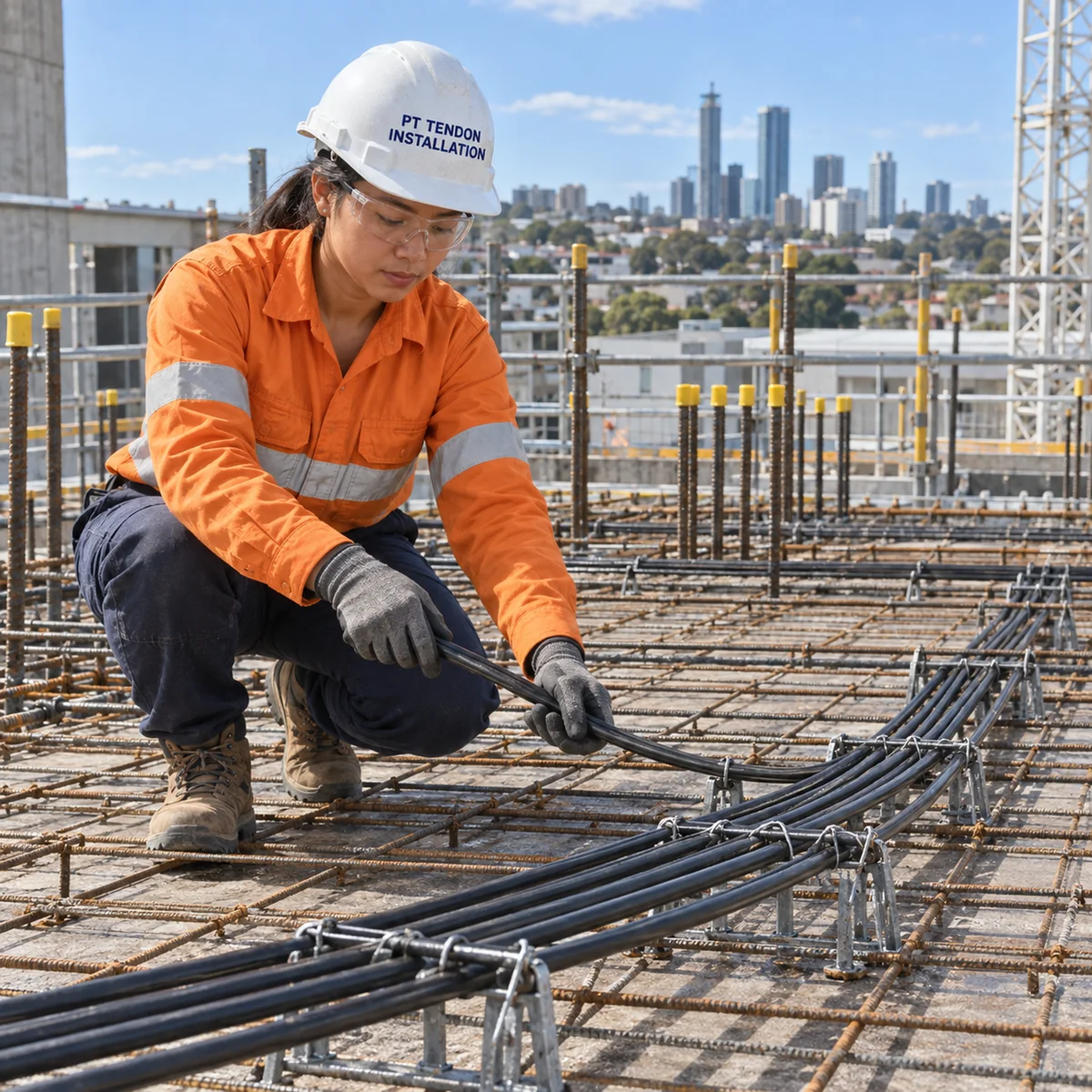 07Post-tensioningStructureOpen full Trade Smarts
Trade dossier 07
Post-tensioning
Post tensioning is a specialist design, supply, installation, stressing and grouting package that controls the structural cycle. The value is not merely steel weight. It lies in coordinated profiles, anchorage zones, stressing sequence, traceable elongations and protecting a live stressed system from later damage.
01
Typical design complaints
These are the design conditions that most often convert an apparently simple package into labour loss, redesign, delay or transferred scope.
Late structural coordination
- Tendon profiles conflict with penetrations, set downs and reinforcement.
- Anchorage pockets lack stressing access or clash with facade edges.
- Pour strips and stressing stages do not align with the construction cycle.
- Transfer beams and local bursting steel are revised after materials are ordered.
Unclear design responsibility
- The permanent designer and specialist designer rely on different loads or sequences.
- Shop drawing approval does not state who accepts departures.
- Temporary stressing conditions and backpropping are not checked.
- Future penetrations and no drill zones are not translated for operations.
Installation detail
- Chair spacing and support do not maintain profile under site traffic.
- Ducts, strands and anchorages cannot be installed through congestion.
- Grout vents, drains and access are omitted.
- Encapsulation and corrosion protection details are incomplete.
Acceptance ambiguity
- Elongation tolerances and resolution steps are not agreed.
- Stressing records are delayed beyond the floor cycle.
- Grout acceptance and void response are unclear.
- Cutting and pocket closure standards vary between drawings and specification.
02
Typical design wins
Good design does more than satisfy the final structure. It lets the trade plan a safe repeatable method, price the real work and preserve productive flow.
Coordinated profiles
- Tendon zones are protected during services coordination.
- Anchors have realistic stressing pockets and safe jack access.
- High and low points are dimensioned to stable references.
- Local reinforcement and tendon installation sequence are buildable.
Closed design chain
- Loads, losses, stressing sequence and construction stages align.
- Shop drawings identify every tendon and pour stage.
- Design departures have a named approver and response time.
- Backpropping and stressing strength requirements match the programme.
Traceable installation
- Materials retain batch identity from delivery to installed location.
- Tendon supports survive reinforcement and concrete activity.
- Pre pour inspection records profile, anchors, vents and damage.
- No tendon is stressed without strength and access release.
Protected completed system
- Elongations are reviewed before strands are cut.
- Ducts are grouted and pockets closed promptly.
- As built tendon maps are issued before drilling begins.
- A controlled penetration process remains for the life of the asset.
03
What success looks like
Success must be visible from four perspectives and measured in accepted output, not headcount or optimistic percentage complete.
| Perspective | Success looks like | Evidence |
|---|---|---|
| Subcontractor | The proposed crew, plant and supply chain achieve measurable accepted output without repeated mobilisation or hidden support. | Daily output, labour, deliveries, downtime, defects and forecast remaining work. |
| Builder | The trade releases complete work fronts to programme and exposes emerging cost or design risk before it controls the job. | Look ahead, inspections, accepted quantities, delay codes, changes and final cost forecast. |
| Designer | Installed work demonstrates the design intent and departures are resolved before they are concealed or repeated. | Hold points, surveys, test results, marked drawings and dispositions. |
| Client | The finished structure performs, is maintainable and carries complete traceable evidence. | Certificates, as built information, warranties, defects and handover records. |
Crew and delivery
- Specialist designer and detailer produce calculations and shop drawings.
- Project manager coordinates supply, inspections, stressing and commercial issues.
- Supervisor controls tendon installation and interfaces on the deck.
- Installation crew lays ducts or strands, anchors, chairs, vents and protection.
- Stressing technician operates calibrated jacks and records force and elongation.
- Grouting crew mixes, tests and injects grout where bonded systems are used.
Production controls
- Tendon lengths or kilograms installed and accepted by pour.
- Anchors, ducts, vents and chairs completed against the pour look ahead.
- First inspection acceptance and defects before concrete.
- Tendons stressed per shift and records reviewed within the cycle.
- Elongation departures and time to engineering disposition.
- Grout volume, tests, completion and pocket closeout.
Where money is made
- Repeated floor plates and stable shop drawings.
- Materials delivered by pour and installed once.
- Clear stressing access and prompt strength release.
- Fast engineering review of elongations.
Where money is lost
- Late penetrations and profile redesign.
- Damaged tendons, anchorages or ducts.
- Repeated mobilisation for scattered stressing.
- Delayed records, grout defects and repair of pockets.
Delivery systems and production logic
The selected system changes the crew, plant, programme, interfaces and commercial exposure. Confirm which system is actually priced.
| System or method | Commercial and delivery reality |
|---|---|
| Unbonded monostrand | Individual greased and sheathed strands allow flexible profiles but demand protection against damage and permanent no drill control. |
| Bonded flat duct | Common in slabs. Duct integrity, vents, grout flow, anchorage access and profile support are critical. |
| Bonded multistrand | Used for heavier members and infrastructure. Requires substantial anchor zones, specialised stressing and controlled grouting. |
| Bar post tensioning | Useful for concentrated loads and temporary applications. Check couplers, corrosion protection, torque or stress control and access. |
| Single end stressing | Simplifies access but changes friction and elongation behaviour. Confirm design length limits and dead end installation. |
| Double end stressing | Reduces friction effects on long tendons but doubles safe access, sequence and record coordination. |
04
Onsite interfaces
Map the seams before award. The package should sit with the party best able to control the work, while every dependency has a named provider and acceptance point.
| Interface | Decision required | Common failure |
|---|---|---|
| Permanent designer | Loads, construction stages, losses and acceptance. | Specialist design is reviewed too late to protect the cycle. |
| Formwork | Anchorage pockets, rebates, edges, stressing access and stripping. | The jack cannot be positioned or the edge cannot resist stressing forces. |
| Reinforcement | Bursting steel, chairs, congestion and installation order. | Bars displace the tendon or make the profile impossible. |
| Services | Penetrations, cast ins and protected tendon corridors. | A late service crosses a live tendon zone. |
| Concrete | Mix, placement, vibration, strength release and damage prevention. | Tendons float, ducts leak or stressing starts without strength. |
| Survey | Set out, profile control and slab movement monitoring. | Critical tendon locations are not recoverable after the pour. |
| Future trades | No drill maps, scanning and penetration permits. | Completed tendons are cut during fitout or defect works. |
05
What must be agreed, checked and when
Commercial clarity comes from resolving the same questions at the right time and preserving the evidence needed to distinguish genuine change from ordinary delivery risk.
| When | Agree and check | Evidence |
|---|---|---|
| Before tender | Issued design, scope boundaries, tolerances, finish, access, work hours, testing and known constraints. | Tender information register and explicit assumptions. |
| During tender | Named management, direct labour, labour hire, lower tiers, plant, material sources, productivity, sequence and competing projects. | Crew build up, programme, procurement schedule and rate basis. |
| Before award | Inclusions, exclusions, quantities, design duties, temporary works, change rates, daywork, standby, escalation and delay rules. | Clarifications incorporated into the subcontract. |
| Before mobilisation | Approved method, permits, access, survey, predecessor acceptance, materials, plant, inspections and emergency response. | Signed readiness review with owners and dates. |
| Daily | People, work front, output, deliveries, hold points, defects, delay reason and tomorrow readiness. | Contemporaneous daily record with photographs. |
| Weekly | Accepted production, remaining quantities, design status, resources, procurement, changes, recovery and forecast final cost. | Joint forecast based on evidence rather than opinion. |
Commercial build up
Use this matrix to expose which risks are genuinely included and which have only been hidden inside a broad rate.
| Price component | What to test |
|---|---|
| Tendon supply | Identify strand, duct, anchors, chairs, vents, grout, freight, waste and escalation. |
| Design | Separate base design, specialist design, revisions, shop drawings, certification and construction stage checks. |
| Installation | Price by tendon length or weight with anchor count, profile complexity, congestion and repeated visits visible. |
| Stressing | Define mobilisation, jack sets, number of ends, records, engineer review and restressing. |
| Grouting | Include plant, testing, vents, grout volume, flushing, weather and investigation of voids. |
| Changes | Distinguish redesign, material already committed, site rework and lost floor cycle. |
Detailed pre award interrogation
Do not accept yes or no answers. Require the proposed manager and site supervisor to explain the people, quantities, sequence and evidence behind each response.
Business and crew capacity
- Who will manage the project and which named supervisor and leading hands will attend?
- How many direct employees are genuinely available and how many are labour hire or regular contractors?
- Which other projects compete for the same people, plant, design and suppliers?
- What portion will be subcontracted again and how is lower tier performance controlled?
- What measurable output supports the programme allowance?
- What is the 24 hour and 48 hour response when a key person, plant item or supplier fails?
- Show a comparable project, its production records and a real nonconformance closeout.
- Which proposed roles are employees, regular contractors or agency labour?
- Who can make a binding resource decision when output falls behind?
Programme credibility
- Break every milestone into work fronts, quantities, crew numbers, shifts and measurable daily output.
- Which one activity controls the production cycle and how is its output verified?
- What minimum clear work front is required to use the proposed gang efficiently?
- Which predecessor release dates are assumptions rather than current commitments?
- What float, alternative sequence or spare capacity exists?
- What recovery action is available before extra shifts simply add congestion?
- Which design, material or inspection dates must be achieved to protect the first three weeks?
- Show how the proposed output compares with a completed similar project.
Price build up
- Explain each component of the post-tensioning price using the commercial matrix below.
- Identify measured quantities, allowances, provisional quantities and exclusions.
- State the productivity rate and the exact site conditions supporting it.
- Show supervision, engineering, testing, access, waste, freight and indirect costs.
- Identify every builder supplied item, shared resource and free issue material relied upon.
- State which assets are owned, leased or hired and their real daily exposure.
- Explain credits, reuse, salvage and unused material assumptions.
- Confirm whether tender rates genuinely apply to small, disrupted or out of sequence work.
Design and interfaces
- Walk each boundary through design, supply, install, support, protect, inspect, test, make good and warrant.
- Which temporary works and construction stage checks sit inside the package?
- Which drawing or model currently controls manufacture or installation?
- Which unresolved interface could change the selected method?
- What tolerance is required from the preceding trade and by the following trade?
- Who accepts a departure and how quickly can that person decide?
- Which details have caused loss on previous projects?
- Which work is physically best placed with another party despite a neat commercial package preference?
Performance control
- What will be measured each shift before the milestone is missed?
- Who records labour by gang, plant, installed quantity, deliveries, delays and defects?
- How will competent leading hands or operators be distinguished from extra labour numbers?
- What threshold triggers recovery and who can authorise it?
- How will builder disruption be separated from poor contractor productivity?
- What does the contractor need ready tomorrow and who confirms it today?
- How often will remaining quantities and final cost be recalculated?
- What evidence will show the following trade has received a genuinely usable work front?
Commercial discipline
- Identify the exact instruction or physical condition and the contractual risk allocation.
- Separate changed quantity from changed method, sequence, access and productivity.
- Test the claimed labour against the affected crew and work front, not the total site headcount.
- Check whether competent supervision, alternative sequence or reasonable mitigation should have reduced the impact.
- Use daily records, survey, deliveries, plant data, inspections and photographs.
- Credit omissions, unused materials, avoided plant, recovered value and productivity benefits.
- Do not value disrupted small work using a broad production rate without testing the changed circumstances.
- What notices and approvals are required before additional work proceeds?
- How will daywork record instruction, exact location, named resources and quantity achieved?
- What evidence supports standby, remobilisation, disruption, escalation and delay?
06
What will stop the trade
Agree objective stop conditions and response times. This prevents unsafe pressure to continue and prevents every ordinary interruption becoming a standby claim.
Installation and safety
- Approved shop drawings or materials are missing.
- Anchors, ducts or strands are damaged or contaminated.
- Working edges and stressing zones are unsafe.
- Profiles cannot be achieved within tolerance.
- Services or reinforcement occupy protected tendon corridors.
Stressing and grouting
- Concrete strength release is absent.
- Jack calibration or competent technician evidence is unavailable.
- Stressing exclusion zones cannot be maintained.
- Elongations fall outside agreed limits without design disposition.
- Grout plant, mix, vents or weather conditions cannot support the procedure.
Commercial and industrial friction
- A hired asset continues to incur cost while an owned asset carries opportunity cost.
- The subcontractor shifts scarce labour or plant to another project during a short stand down.
- Union, enterprise agreement, competency or fatigue requirements invalidate the proposed hours or crew.
- The builder releases fragments rather than the minimum productive work front.
- Daywork proceeds without instruction, affected resources, output or mitigation records.
Weather and protection
- Rain, wind, heat or lightning affects safety, quality or access beyond the agreed threshold.
- A local site condition is distinguished from a genuine regional shutdown.
- Fresh or incomplete work cannot be protected.
- Recovery resources and return timing are not agreed.
- Weather records do not establish actual effect on the controlling activity.
07
Great handover
Handover is the transfer of complete, accepted work and usable evidence. It is not the point at which the crew leaves site.
Physical completion
- Every tendon is identified, stressed, accepted, cut and protected.
- Bonded ducts are grouted and vents closed.
- Anchorage pockets are inspected and repaired.
- No drill zones and tendon routes are issued in usable drawings.
- Outstanding elongation or testing dispositions are closed.
- Operations and fitout teams receive penetration controls.
Evidence completion
- Approved calculations, shop drawings and design certificates.
- Material certificates and tendon traceability.
- Pre pour inspections and concrete strength releases.
- Jack calibration, stressing force and elongation records.
- Grout records, tests, repairs and final as built drawings.
Commercial completion
- Installed, omitted and changed quantities reconcile.
- All changes show entitlement, cause, valuation and applicable credits.
- Defects, damage and incomplete work are jointly recorded before demobilisation.
- Plant and hire off dates are confirmed.
- Remaining obligations have an owner, due date and retained security.
Release to the next trade
- The builder, trade supervisor and following contractor inspect together.
- Access, tolerance, loading, protection and residual risks are explained.
- No unresolved defect is hidden by following work.
- Survey control and marked information remain usable.
- Ownership of temporary support and protection transfers in writing.
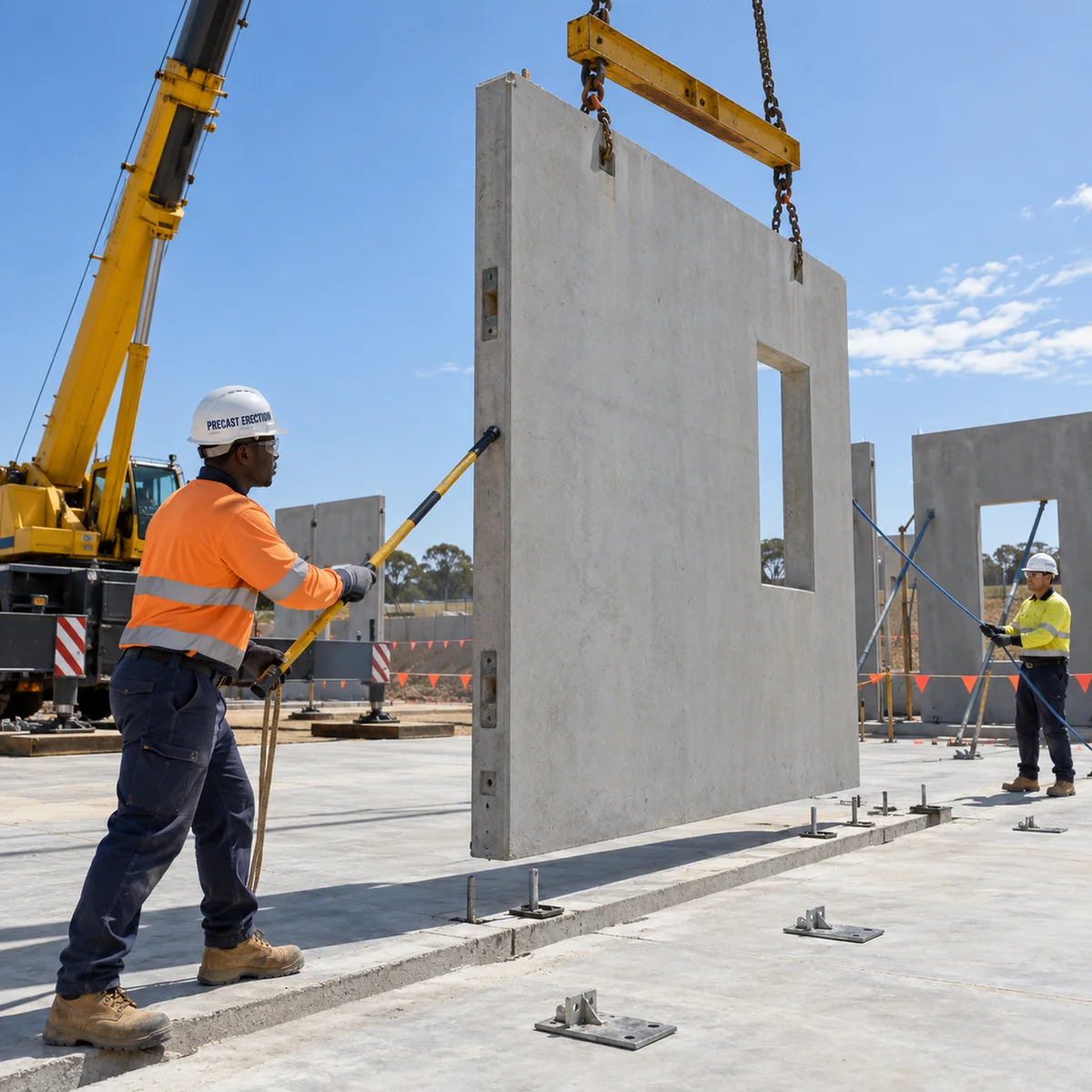 08Precast concrete and tilt-up panelsStructureOpen full Trade Smarts
Trade dossier 08
Precast concrete and tilt-up panels
Precast and tilt up combine design, mould or casting bed production, embedded items, transport, cranage, temporary bracing, erection tolerances and structural connections. The cheapest panel price can create a much larger site cost if the erection sequence, crane radius and temporary stability are unresolved.
01
Typical design complaints
These are the design conditions that most often convert an apparently simple package into labour loss, redesign, delay or transferred scope.
Panelisation
- Panel sizes follow elevations but ignore mould economy, transport and crane capacity.
- Joints clash with architecture, waterproofing and structure.
- Panels cannot be erected in the proposed building sequence.
- Tilt panels occupy casting beds needed for access or later pours.
Embedded items
- Ferrules, plates, lifters, braces, rebates and services are issued late.
- Connection zones are congested or inaccessible for welding and grouting.
- Cast in items lack realistic tolerance adjustment.
- Lifting design does not reflect actual orientation and crane handling.
Temporary stability
- Brace loads and slab capacity are assumed.
- Brace anchors conflict with tendons, services or waterproofing.
- Wind limits and partially completed building stability are not resolved.
- Brace removal criteria are described vaguely.
Finish and tolerance
- Architectural finish expectations exceed the selected mould and production process.
- Panel bow, joint width and edge tolerance do not align with seals and facade finishes.
- Repairs and colour variation lack benchmark acceptance.
- Survey responsibility between manufacture and erection is split.
02
Typical design wins
Good design does more than satisfy the final structure. It lets the trade plan a safe repeatable method, price the real work and preserve productive flow.
Production led panel design
- Panel sizes balance mould reuse, transport, crane and connection efficiency.
- Shop drawings close before reinforcement and embeds are committed.
- Repeatable details reduce fabrication error.
- The erection sequence drives delivery racks and truck order.
Designed lifting and bracing
- Every lift has verified weight, centre of gravity, inserts and orientation.
- Crane study tests radius, capacity, setup and access.
- Braces, anchors and supporting slabs are engineered.
- Temporary stability is checked through every erection stage.
Tolerance strategy
- Survey control, bearing levels, joints and adjustable connections align.
- Manufacture and erection tolerances are not double counted.
- Interface details absorb realistic panel movement and bow.
- Nonconformance authority is present during erection.
Finish control
- A benchmark panel covers face, edges, rebates and repairs.
- Transport frames and lifting avoid visible face damage.
- Patch materials and colour acceptance are agreed.
- Protection remains until high risk following work is complete.
03
What success looks like
Success must be visible from four perspectives and measured in accepted output, not headcount or optimistic percentage complete.
| Perspective | Success looks like | Evidence |
|---|---|---|
| Subcontractor | The proposed crew, plant and supply chain achieve measurable accepted output without repeated mobilisation or hidden support. | Daily output, labour, deliveries, downtime, defects and forecast remaining work. |
| Builder | The trade releases complete work fronts to programme and exposes emerging cost or design risk before it controls the job. | Look ahead, inspections, accepted quantities, delay codes, changes and final cost forecast. |
| Designer | Installed work demonstrates the design intent and departures are resolved before they are concealed or repeated. | Hold points, surveys, test results, marked drawings and dispositions. |
| Client | The finished structure performs, is maintainable and carries complete traceable evidence. | Certificates, as built information, warranties, defects and handover records. |
Crew and delivery
- Design manager coordinates specialist engineering, shop drawings and approvals.
- Factory manager or casting supervisor controls moulds, steel, embeds and curing.
- Erection supervisor owns deliveries, crane sequence, bracing and connections.
- Crane operator, doggers and riggers control lifts.
- Erection crew lands, plumbs, braces and connects panels.
- Welders, grout crews, surveyors and finish repairers close permanent interfaces.
Production controls
- Shop drawings and cast releases achieved against the procurement schedule.
- Panels cast, accepted and stored per production day.
- Panels delivered and safely erected per crane shift.
- Crane cycle time and delays by truck, brace, survey or connection.
- Survey tolerance and panels accepted first inspection.
- Connections, grout and brace releases completed against erection progress.
Where money is made
- Repeated moulds and early design freeze.
- Delivery order exactly matching erection.
- Crane working near efficient radius.
- Adjustable connections and rapid survey acceptance.
Where money is lost
- Mould changes, late embeds and remanufacture.
- Truck waiting, double handling and storage damage.
- Crane standing while braces or connections are resolved.
- Repairs, tolerance correction and extended brace hire.
Delivery systems and production logic
The selected system changes the crew, plant, programme, interfaces and commercial exposure. Confirm which system is actually priced.
| System or method | Commercial and delivery reality |
|---|---|
| Factory precast panels | Controlled production and finish with transport and erection constraints. Verify factory capacity, mould programme and delivery racks. |
| Site cast tilt up | Avoids road transport but consumes slab or casting bed area and depends on concrete strength, lifting inserts and site crane sequence. |
| Precast columns and beams | High structural consequence. Bearings, temporary stability, connections and accumulated tolerance control erection. |
| Hollowcore and planks | Fast floor coverage but sensitive to bearing, camber, temporary restraint, penetrations, topping and edge details. |
| Architectural precast | Finish, colour, joints and repairs may control acceptance more than structural installation. Use representative benchmarks. |
| Hybrid precast and steel | Can accelerate delivery only when shop models, erection sequence, temporary restraint and connection tolerances are integrated. |
04
Onsite interfaces
Map the seams before award. The package should sit with the party best able to control the work, while every dependency has a named provider and acceptance point.
| Interface | Decision required | Common failure |
|---|---|---|
| Design team | Panelisation, loads, fire, durability, finish and connections. | Specialist shop drawings reveal unresolved architecture too late. |
| Concrete and formwork | Casting beds, slabs, brace anchors and pour sequence. | Supporting slabs lack strength or capacity for erection. |
| Structural steel | Cast in plates, welds, cleats, roof restraint and tolerances. | Steel and panel coordinates accumulate incompatible deviation. |
| Crane and logistics | Weights, radii, setup, delivery order, permits and wind. | The selected crane cannot execute the real lift plan. |
| Survey | Control, bearings, plumb, joint width and as built. | Panels are fixed before accumulated error is understood. |
| Waterproofing and sealants | Joints, rebates, flashings, fire and movement. | A structural joint cannot deliver the required weather seal. |
| Safety | Lifters, braces, exclusion zones and temporary stability. | A panel is released from the crane before the designed restraint is complete. |
05
What must be agreed, checked and when
Commercial clarity comes from resolving the same questions at the right time and preserving the evidence needed to distinguish genuine change from ordinary delivery risk.
| When | Agree and check | Evidence |
|---|---|---|
| Before tender | Issued design, scope boundaries, tolerances, finish, access, work hours, testing and known constraints. | Tender information register and explicit assumptions. |
| During tender | Named management, direct labour, labour hire, lower tiers, plant, material sources, productivity, sequence and competing projects. | Crew build up, programme, procurement schedule and rate basis. |
| Before award | Inclusions, exclusions, quantities, design duties, temporary works, change rates, daywork, standby, escalation and delay rules. | Clarifications incorporated into the subcontract. |
| Before mobilisation | Approved method, permits, access, survey, predecessor acceptance, materials, plant, inspections and emergency response. | Signed readiness review with owners and dates. |
| Daily | People, work front, output, deliveries, hold points, defects, delay reason and tomorrow readiness. | Contemporaneous daily record with photographs. |
| Weekly | Accepted production, remaining quantities, design status, resources, procurement, changes, recovery and forecast final cost. | Joint forecast based on evidence rather than opinion. |
Commercial build up
Use this matrix to expose which risks are genuinely included and which have only been hidden inside a broad rate.
| Price component | What to test |
|---|---|
| Panel manufacture | Price mould, reinforcement, embeds, concrete, finish, curing, storage and factory overhead separately. |
| Mould economy | State reuse count and the cost consequence of unique geometry or sequence changes. |
| Transport | Define weights, frames, escorts, permits, route, delivery windows, waiting and return loads. |
| Cranage | Price crane size, setup, rigging, expected lifts, hook cycle, wind and standby. |
| Erection | Show supervision, riggers, braces, welding, grouting, survey and temporary stability. |
| Changes | Separate redesign, mould alteration, recasting, storage, resequencing and site modification. |
Detailed pre award interrogation
Do not accept yes or no answers. Require the proposed manager and site supervisor to explain the people, quantities, sequence and evidence behind each response.
Business and crew capacity
- Who will manage the project and which named supervisor and leading hands will attend?
- How many direct employees are genuinely available and how many are labour hire or regular contractors?
- Which other projects compete for the same people, plant, design and suppliers?
- What portion will be subcontracted again and how is lower tier performance controlled?
- What measurable output supports the programme allowance?
- What is the 24 hour and 48 hour response when a key person, plant item or supplier fails?
- Show a comparable project, its production records and a real nonconformance closeout.
- Which proposed roles are employees, regular contractors or agency labour?
- Who can make a binding resource decision when output falls behind?
Programme credibility
- Break every milestone into work fronts, quantities, crew numbers, shifts and measurable daily output.
- Which one activity controls the production cycle and how is its output verified?
- What minimum clear work front is required to use the proposed gang efficiently?
- Which predecessor release dates are assumptions rather than current commitments?
- What float, alternative sequence or spare capacity exists?
- What recovery action is available before extra shifts simply add congestion?
- Which design, material or inspection dates must be achieved to protect the first three weeks?
- Show how the proposed output compares with a completed similar project.
Price build up
- Explain each component of the precast concrete and tilt-up panels price using the commercial matrix below.
- Identify measured quantities, allowances, provisional quantities and exclusions.
- State the productivity rate and the exact site conditions supporting it.
- Show supervision, engineering, testing, access, waste, freight and indirect costs.
- Identify every builder supplied item, shared resource and free issue material relied upon.
- State which assets are owned, leased or hired and their real daily exposure.
- Explain credits, reuse, salvage and unused material assumptions.
- Confirm whether tender rates genuinely apply to small, disrupted or out of sequence work.
Design and interfaces
- Walk each boundary through design, supply, install, support, protect, inspect, test, make good and warrant.
- Which temporary works and construction stage checks sit inside the package?
- Which drawing or model currently controls manufacture or installation?
- Which unresolved interface could change the selected method?
- What tolerance is required from the preceding trade and by the following trade?
- Who accepts a departure and how quickly can that person decide?
- Which details have caused loss on previous projects?
- Which work is physically best placed with another party despite a neat commercial package preference?
Performance control
- What will be measured each shift before the milestone is missed?
- Who records labour by gang, plant, installed quantity, deliveries, delays and defects?
- How will competent leading hands or operators be distinguished from extra labour numbers?
- What threshold triggers recovery and who can authorise it?
- How will builder disruption be separated from poor contractor productivity?
- What does the contractor need ready tomorrow and who confirms it today?
- How often will remaining quantities and final cost be recalculated?
- What evidence will show the following trade has received a genuinely usable work front?
Commercial discipline
- Identify the exact instruction or physical condition and the contractual risk allocation.
- Separate changed quantity from changed method, sequence, access and productivity.
- Test the claimed labour against the affected crew and work front, not the total site headcount.
- Check whether competent supervision, alternative sequence or reasonable mitigation should have reduced the impact.
- Use daily records, survey, deliveries, plant data, inspections and photographs.
- Credit omissions, unused materials, avoided plant, recovered value and productivity benefits.
- Do not value disrupted small work using a broad production rate without testing the changed circumstances.
- What notices and approvals are required before additional work proceeds?
- How will daywork record instruction, exact location, named resources and quantity achieved?
- What evidence supports standby, remobilisation, disruption, escalation and delay?
06
What will stop the trade
Agree objective stop conditions and response times. This prevents unsafe pressure to continue and prevents every ordinary interruption becoming a standby claim.
Design and manufacture
- Shop drawings, embeds or mould information are not approved.
- Concrete strength does not permit lifting.
- A panel fails dimensional or finish inspection.
- Lifting inserts or reinforcement cannot be verified.
- Transport frame or route does not suit the panel.
Erection
- Crane capacity, ground support or wind is outside the lift plan.
- Brace anchors, braces or supporting structure are not ready.
- Survey control or bearing levels are outside tolerance.
- The truck sequence does not match erection.
- Permanent or temporary stability cannot be achieved before release.
Commercial and industrial friction
- A hired asset continues to incur cost while an owned asset carries opportunity cost.
- The subcontractor shifts scarce labour or plant to another project during a short stand down.
- Union, enterprise agreement, competency or fatigue requirements invalidate the proposed hours or crew.
- The builder releases fragments rather than the minimum productive work front.
- Daywork proceeds without instruction, affected resources, output or mitigation records.
Weather and protection
- Rain, wind, heat or lightning affects safety, quality or access beyond the agreed threshold.
- A local site condition is distinguished from a genuine regional shutdown.
- Fresh or incomplete work cannot be protected.
- Recovery resources and return timing are not agreed.
- Weather records do not establish actual effect on the controlling activity.
07
Great handover
Handover is the transfer of complete, accepted work and usable evidence. It is not the point at which the crew leaves site.
Physical completion
- Panels are erected, plumb, connected and within agreed tolerance.
- Temporary braces remain inspected until written release.
- Connections, welds, bolts and grout are complete.
- Joints are ready for fire, acoustic and weather sealing.
- Damage and repairs are accepted against the benchmark.
- As built panel positions are issued to following trades.
Evidence completion
- Approved shop drawings, engineering and lifting designs.
- Concrete strength, material and production records.
- Panel inspection, weight and lifting insert traceability.
- Crane plans, brace designs and daily erection records.
- Survey, connections, grout, repairs and brace removal approvals.
Commercial completion
- Installed, omitted and changed quantities reconcile.
- All changes show entitlement, cause, valuation and applicable credits.
- Defects, damage and incomplete work are jointly recorded before demobilisation.
- Plant and hire off dates are confirmed.
- Remaining obligations have an owner, due date and retained security.
Release to the next trade
- The builder, trade supervisor and following contractor inspect together.
- Access, tolerance, loading, protection and residual risks are explained.
- No unresolved defect is hidden by following work.
- Survey control and marked information remain usable.
- Ownership of temporary support and protection transfers in writing.
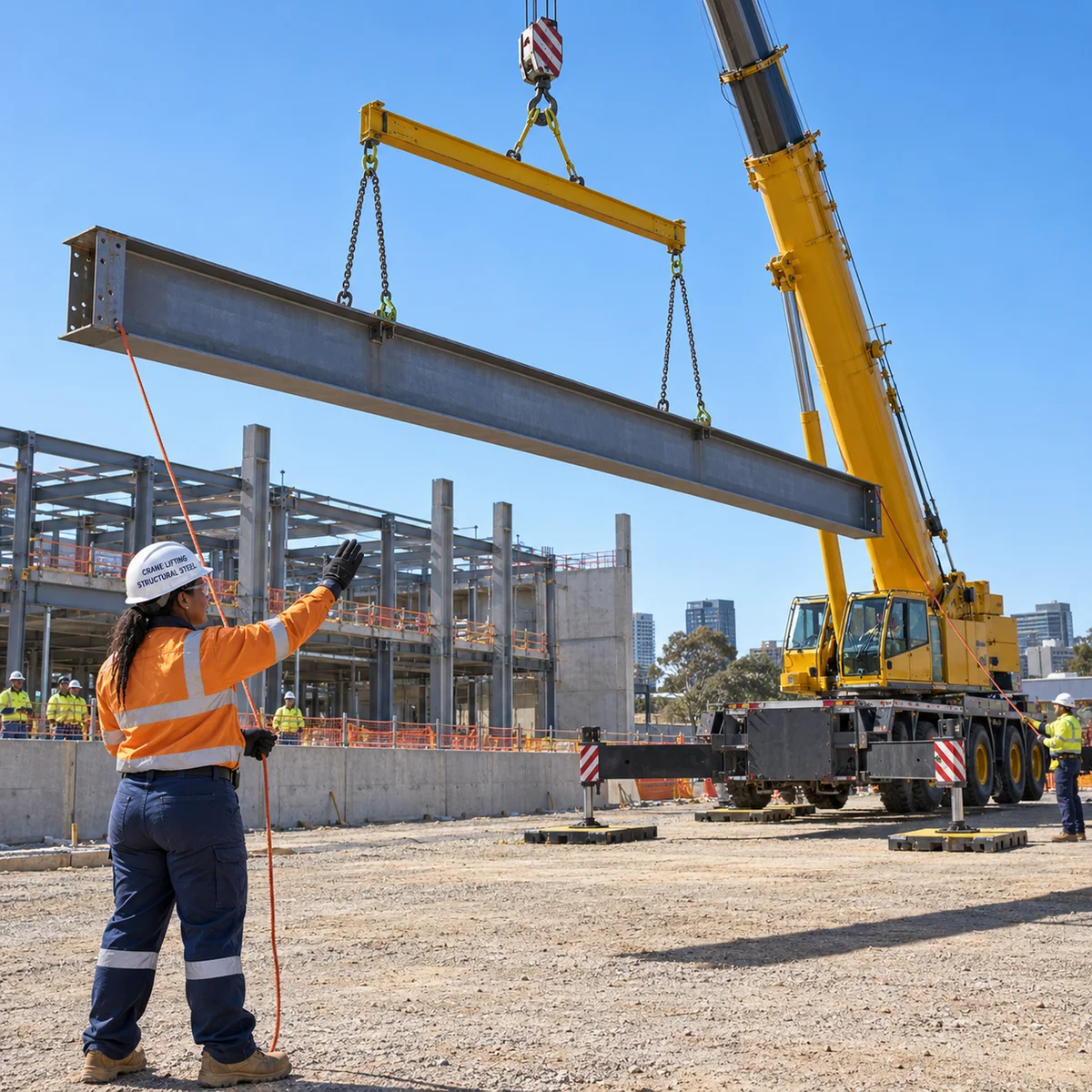 09Structural steelStructureOpen full Trade Smarts
Trade dossier 09
Structural steel
Structural steel is a design completion, procurement, fabrication, coating, logistics and erection business. Fabrication productivity depends on drawing stability and repetition. Site productivity depends on delivery sequence, crane access, temporary stability and connections fitting without uncontrolled modification.
01
Typical design complaints
These are the design conditions that most often convert an apparently simple package into labour loss, redesign, delay or transferred scope.
Incomplete connections
- Design drawings show member forces but not buildable connection geometry.
- Connection design responsibility is split between consultant and fabricator.
- Bolts, plates, weld access and erection clearances clash.
- Temporary erection stability is assumed rather than designed.
Secondary steel gaps
- Supports for facade, roofing, gutters, ceilings, plant and services are not fully detailed.
- The main steel contractor excludes light gauge and nonstructural supports.
- Roofer and cladding trades price only their proprietary system.
- Late secondary steel requires drilling or welding to completed primary members.
Tolerance and interfaces
- Steel grids do not reconcile with concrete cast ins and surveyed reality.
- Base plates lack practical grout gaps or adjustment.
- Facade tolerance is tighter than the structural frame tolerance.
- Precast, timber and services connections are issued after fabrication.
Coating confusion
- Fire, corrosion, galvanising and architectural finish systems overlap.
- Shop coating is damaged by transport and erection without a repair system.
- Hidden connection faces cannot be coated after assembly.
- Weld preparation and coating hold points are inconsistent.
02
Typical design wins
Good design does more than satisfy the final structure. It lets the trade plan a safe repeatable method, price the real work and preserve productive flow.
Fabrication ready design
- Connection loads, geometry and responsibility are frozen early.
- The model contains penetrations, secondary steel and real interfaces.
- Repetitive member and connection families support efficient fabrication.
- Hold points align with procurement and workshop sequence.
Clear secondary steel map
- Every support is allocated to the trade best positioned to design and install it.
- Primary steel receives plates or holes in the workshop rather than uncontrolled site drilling.
- Proprietary system loads and tolerances are issued early.
- Interfaces remain visible in a single register.
Erection led detailing
- Member sizes, splice locations and weights suit transport and crane radius.
- Temporary stability is designed for the actual sequence.
- Bolts and access allow rapid safe connections.
- Deck, precast and roof sequencing is coordinated.
Complete coating strategy
- Environment, design life, fire rating and appearance define the system.
- Shop and site responsibilities are separated clearly.
- Inspection points occur before surfaces become inaccessible.
- Repair products and preparation match the original coating.
03
What success looks like
Success must be visible from four perspectives and measured in accepted output, not headcount or optimistic percentage complete.
| Perspective | Success looks like | Evidence |
|---|---|---|
| Subcontractor | The proposed crew, plant and supply chain achieve measurable accepted output without repeated mobilisation or hidden support. | Daily output, labour, deliveries, downtime, defects and forecast remaining work. |
| Builder | The trade releases complete work fronts to programme and exposes emerging cost or design risk before it controls the job. | Look ahead, inspections, accepted quantities, delay codes, changes and final cost forecast. |
| Designer | Installed work demonstrates the design intent and departures are resolved before they are concealed or repeated. | Hold points, surveys, test results, marked drawings and dispositions. |
| Client | The finished structure performs, is maintainable and carries complete traceable evidence. | Certificates, as built information, warranties, defects and handover records. |
Crew and delivery
- Project manager controls design, procurement, fabrication and commercial commitments.
- Detailing manager and connection engineer convert design into workshop information.
- Workshop supervisor allocates cutting, drilling, welding, assembly and coating.
- Erection supervisor owns lifts, temporary stability, bolting and work fronts.
- Crane operator, doggers and riggers deliver the lift cycle.
- Boilermakers, welders, bolt crews, surveyors and coating repairers close the frame.
Production controls
- Shop drawings approved and released by fabrication sequence.
- Tonnes or members fabricated per workshop shift by complexity.
- Members coated, inspected and delivery ready.
- Tonnes or pieces erected per crane shift.
- Hook cycle, connection time and delays by delivery, access or fit.
- Survey acceptance, bolt completion, weld completion and first inspection quality.
Where money is made
- Stable design, repeated connections and full material nesting.
- Continuous workshop flow and planned outsourcing.
- Delivery packs matching erection sequence.
- Efficient crane radius and connections that fit first time.
Where money is lost
- Late design, remodelling and small fabrication batches.
- Premium material procurement and coating rework.
- Site modifications, missing bolts and survey mismatch.
- Crane standby, double handling and extended temporary bracing.
Delivery systems and production logic
The selected system changes the crew, plant, programme, interfaces and commercial exposure. Confirm which system is actually priced.
| System or method | Commercial and delivery reality |
|---|---|
| Portal frame steel | Efficient with repeated rafters, columns and purlins. Temporary erection stability and roofing sequence are central. |
| Multistorey steel frame | Piece count, splice strategy, metal deck, fire protection and floor cycle matter more than total tonnes alone. |
| Trusses and long span members | Transport, trial assembly, lift geometry, temporary restraint and connection access control risk. |
| Architectural exposed steel | Fabrication tolerance, weld appearance, coating, transport protection and site touch up require a higher quality regime. |
| Galvanised external steel | Vent and drain holes, distortion, double dipping limits, coating repair and connection detailing must be resolved before fabrication. |
| Secondary and miscellaneous steel | Low tonnage but high detail and interface effort. Stairs, ladders, supports, balustrades and facade steel should not be hidden in a primary tonne rate. |
04
Onsite interfaces
Map the seams before award. The package should sit with the party best able to control the work, while every dependency has a named provider and acceptance point.
| Interface | Decision required | Common failure |
|---|---|---|
| Structural designer | Member sizes, loads, connections, camber and temporary stability. | Fabrication starts before connection responsibility is closed. |
| Concrete | Cast ins, holding down bolts, grout, levels and survey. | Base conditions force site modification or packed connections. |
| Facade and roofing | Girts, purlins, cleats, deflection, tolerances and secondary steel. | Support gaps emerge after primary steel is coated and erected. |
| Services | Penetrations, hangers, plant frames and fire systems. | Services drill or weld without structural approval. |
| Precast and timber | Connection plates, sequence, loads and tolerance. | Member delivery order blocks adjoining erection. |
| Coatings and passive fire | Preparation, inspection, touch up and compatible systems. | Responsibility is lost across shop and site layers. |
| Crane and logistics | Weights, radii, transport, laydown and lift sequence. | Steel arrives in fabrication order instead of erection order. |
05
What must be agreed, checked and when
Commercial clarity comes from resolving the same questions at the right time and preserving the evidence needed to distinguish genuine change from ordinary delivery risk.
| When | Agree and check | Evidence |
|---|---|---|
| Before tender | Issued design, scope boundaries, tolerances, finish, access, work hours, testing and known constraints. | Tender information register and explicit assumptions. |
| During tender | Named management, direct labour, labour hire, lower tiers, plant, material sources, productivity, sequence and competing projects. | Crew build up, programme, procurement schedule and rate basis. |
| Before award | Inclusions, exclusions, quantities, design duties, temporary works, change rates, daywork, standby, escalation and delay rules. | Clarifications incorporated into the subcontract. |
| Before mobilisation | Approved method, permits, access, survey, predecessor acceptance, materials, plant, inspections and emergency response. | Signed readiness review with owners and dates. |
| Daily | People, work front, output, deliveries, hold points, defects, delay reason and tomorrow readiness. | Contemporaneous daily record with photographs. |
| Weekly | Accepted production, remaining quantities, design status, resources, procurement, changes, recovery and forecast final cost. | Joint forecast based on evidence rather than opinion. |
Commercial build up
Use this matrix to expose which risks are genuinely included and which have only been hidden inside a broad rate.
| Price component | What to test |
|---|---|
| Tonnage | Break down primary members, plates, connections, light steel and miscellaneous items. Complexity drives workshop hours. |
| Material | Identify mill source, sections, plate, bolts, traceability, wastage, nesting and escalation. |
| Detailing | State model, shop drawing, connection design, revision and approval assumptions. |
| Fabrication | Show cutting, drilling, welding, trial assembly, inspection and workshop capacity. |
| Coatings | Separate preparation, galvanising, paint, fire system interfaces, transport damage and site repair. |
| Erection | Define deliveries, crane, rigging, temporary stability, bolts, welds, grout, survey and return visits. |
Detailed pre award interrogation
Do not accept yes or no answers. Require the proposed manager and site supervisor to explain the people, quantities, sequence and evidence behind each response.
Business and crew capacity
- Who will manage the project and which named supervisor and leading hands will attend?
- How many direct employees are genuinely available and how many are labour hire or regular contractors?
- Which other projects compete for the same people, plant, design and suppliers?
- What portion will be subcontracted again and how is lower tier performance controlled?
- What measurable output supports the programme allowance?
- What is the 24 hour and 48 hour response when a key person, plant item or supplier fails?
- Show a comparable project, its production records and a real nonconformance closeout.
- Which proposed roles are employees, regular contractors or agency labour?
- Who can make a binding resource decision when output falls behind?
Programme credibility
- Break every milestone into work fronts, quantities, crew numbers, shifts and measurable daily output.
- Which one activity controls the production cycle and how is its output verified?
- What minimum clear work front is required to use the proposed gang efficiently?
- Which predecessor release dates are assumptions rather than current commitments?
- What float, alternative sequence or spare capacity exists?
- What recovery action is available before extra shifts simply add congestion?
- Which design, material or inspection dates must be achieved to protect the first three weeks?
- Show how the proposed output compares with a completed similar project.
Price build up
- Explain each component of the structural steel price using the commercial matrix below.
- Identify measured quantities, allowances, provisional quantities and exclusions.
- State the productivity rate and the exact site conditions supporting it.
- Show supervision, engineering, testing, access, waste, freight and indirect costs.
- Identify every builder supplied item, shared resource and free issue material relied upon.
- State which assets are owned, leased or hired and their real daily exposure.
- Explain credits, reuse, salvage and unused material assumptions.
- Confirm whether tender rates genuinely apply to small, disrupted or out of sequence work.
Design and interfaces
- Walk each boundary through design, supply, install, support, protect, inspect, test, make good and warrant.
- Which temporary works and construction stage checks sit inside the package?
- Which drawing or model currently controls manufacture or installation?
- Which unresolved interface could change the selected method?
- What tolerance is required from the preceding trade and by the following trade?
- Who accepts a departure and how quickly can that person decide?
- Which details have caused loss on previous projects?
- Which work is physically best placed with another party despite a neat commercial package preference?
Performance control
- What will be measured each shift before the milestone is missed?
- Who records labour by gang, plant, installed quantity, deliveries, delays and defects?
- How will competent leading hands or operators be distinguished from extra labour numbers?
- What threshold triggers recovery and who can authorise it?
- How will builder disruption be separated from poor contractor productivity?
- What does the contractor need ready tomorrow and who confirms it today?
- How often will remaining quantities and final cost be recalculated?
- What evidence will show the following trade has received a genuinely usable work front?
Commercial discipline
- Identify the exact instruction or physical condition and the contractual risk allocation.
- Separate changed quantity from changed method, sequence, access and productivity.
- Test the claimed labour against the affected crew and work front, not the total site headcount.
- Check whether competent supervision, alternative sequence or reasonable mitigation should have reduced the impact.
- Use daily records, survey, deliveries, plant data, inspections and photographs.
- Credit omissions, unused materials, avoided plant, recovered value and productivity benefits.
- Do not value disrupted small work using a broad production rate without testing the changed circumstances.
- What notices and approvals are required before additional work proceeds?
- How will daywork record instruction, exact location, named resources and quantity achieved?
- What evidence supports standby, remobilisation, disruption, escalation and delay?
06
What will stop the trade
Agree objective stop conditions and response times. This prevents unsafe pressure to continue and prevents every ordinary interruption becoming a standby claim.
Design and fabrication
- Connection or shop drawing approval is missing.
- Specified steel, bolts or coating is unavailable.
- A dimensional inspection or weld test fails.
- A revision affects work already cut or assembled.
- The workshop lacks the promised capacity or certified process.
Erection
- Crane support, wind or exclusion zones fall outside the lift plan.
- Concrete levels, anchors or bearings are outside tolerance.
- Temporary stability cannot be installed in sequence.
- Delivery packs or bolts are incomplete.
- Survey or connection inspection cannot keep pace.
Commercial and industrial friction
- A hired asset continues to incur cost while an owned asset carries opportunity cost.
- The subcontractor shifts scarce labour or plant to another project during a short stand down.
- Union, enterprise agreement, competency or fatigue requirements invalidate the proposed hours or crew.
- The builder releases fragments rather than the minimum productive work front.
- Daywork proceeds without instruction, affected resources, output or mitigation records.
Weather and protection
- Rain, wind, heat or lightning affects safety, quality or access beyond the agreed threshold.
- A local site condition is distinguished from a genuine regional shutdown.
- Fresh or incomplete work cannot be protected.
- Recovery resources and return timing are not agreed.
- Weather records do not establish actual effect on the controlling activity.
07
Great handover
Handover is the transfer of complete, accepted work and usable evidence. It is not the point at which the crew leaves site.
Physical completion
- The complete frame is erected, stable and surveyed.
- All bolts, welds, grout and permanent restraints are complete.
- Secondary steel boundaries are closed or clearly transferred.
- Coatings and fire protection substrates are accepted.
- Temporary bracing is removed only after written release.
- No unauthorised site penetrations or modifications remain.
Evidence completion
- Approved model, shop drawings and connection design.
- Steel, bolts, welding and fabrication traceability.
- Weld inspections, bolt tension records and nonconformance closeout.
- Coating preparation, thickness, repair and inspection records.
- Survey, grout, temporary stability and completion certificates.
Commercial completion
- Installed, omitted and changed quantities reconcile.
- All changes show entitlement, cause, valuation and applicable credits.
- Defects, damage and incomplete work are jointly recorded before demobilisation.
- Plant and hire off dates are confirmed.
- Remaining obligations have an owner, due date and retained security.
Release to the next trade
- The builder, trade supervisor and following contractor inspect together.
- Access, tolerance, loading, protection and residual risks are explained.
- No unresolved defect is hidden by following work.
- Survey control and marked information remain usable.
- Ownership of temporary support and protection transfers in writing.
 10Brickwork and blockworkStructureOpen full Trade Smarts
Trade dossier 10
Brickwork and blockwork
Masonry is a labour, access and material distribution trade. Output depends on repeatable walls, competent leading hands, scaffold lifts, mortar supply and keeping units close to the work face. Small areas, high cutting, reinforcement, services and repeated returns destroy the apparent square metre rate.
01
Typical design complaints
These are the design conditions that most often convert an apparently simple package into labour loss, redesign, delay or transferred scope.
Set out and dimensions
- Wall locations conflict between architectural, structural and services drawings.
- Openings, nibs, piers and control joints are not dimensioned from stable grids.
- Coursing does not align with doors, windows, ceilings and services.
- Slab and beam tolerances leave no practical adjustment.
Support and restraint
- Shelf angles, lintels, ties, dowels and head restraints are incomplete.
- Deflection heads do not suit the movement of the structure above.
- Temporary stability during construction is not considered.
- High walls lack a clear staged build and bracing method.
Services coordination
- Penetrations, recesses, meter boxes and fire dampers are late.
- Chasing is assumed after reinforced or fire rated walls are built.
- Wet area and plant room interfaces lack waterproofing details.
- Fire and acoustic sealing boundaries are split between trades.
Finish and performance
- Face brick selection, mortar colour, joints and cleaning lack a benchmark.
- Block walls are expected to receive direct finishes despite ordinary tolerance.
- Movement joints conflict with visual intent.
- Fire, acoustic and weather requirements are not tied to buildable details.
02
Typical design wins
Good design does more than satisfy the final structure. It lets the trade plan a safe repeatable method, price the real work and preserve productive flow.
Coursing led design
- Openings, sills, heads and wall heights resolve to unit modules.
- Joints are located intentionally and align through finishes.
- Lintels and supports suit available unit sizes.
- Set out information lets the leading hand establish each wall once.
Complete restraint
- Ties, dowels, reinforcement, bond beams and head restraints are scheduled.
- Shelf angles and lintels arrive before the gang reaches them.
- Temporary bracing rules are clear.
- Structural movement is separated from masonry without losing fire or acoustic performance.
Service ready walls
- Penetrations and cast ins are marked before laying.
- Large services use formed openings rather than uncontrolled chasing.
- Fire dampers and access panels have coordinated supports.
- Wet area details protect membranes and falls.
Accepted benchmark
- A sample establishes units, colour range, mortar, joints, cleaning and repairs.
- Tolerances are linked to the following finish.
- Protection and cleaning methods avoid staining.
- Inspection occurs by lift before scaffold moves.
03
What success looks like
Success must be visible from four perspectives and measured in accepted output, not headcount or optimistic percentage complete.
| Perspective | Success looks like | Evidence |
|---|---|---|
| Subcontractor | The proposed crew, plant and supply chain achieve measurable accepted output without repeated mobilisation or hidden support. | Daily output, labour, deliveries, downtime, defects and forecast remaining work. |
| Builder | The trade releases complete work fronts to programme and exposes emerging cost or design risk before it controls the job. | Look ahead, inspections, accepted quantities, delay codes, changes and final cost forecast. |
| Designer | Installed work demonstrates the design intent and departures are resolved before they are concealed or repeated. | Hold points, surveys, test results, marked drawings and dispositions. |
| Client | The finished structure performs, is maintainable and carries complete traceable evidence. | Certificates, as built information, warranties, defects and handover records. |
Crew and delivery
- Project manager coordinates procurement, labour, scaffold and commercial issues.
- Supervisor releases areas and manages multiple gangs.
- Leading bricklayer sets out, reads drawings and controls line, level and coursing.
- Bricklayers lay units, install ties and reinforcement and finish joints.
- Labourer mixes or distributes mortar, cuts units and feeds the work face.
- Forklift or telehandler operator and scaffold crew maintain material and access flow.
Production controls
- Accepted square metres per gang day by wall type and thickness.
- Units laid per bricklayer adjusted for openings, cuts and reinforcement.
- Labour hours spent laying versus waiting, handling, cutting and returning.
- Scaffold lifts and material drops ready ahead of gangs.
- First inspection acceptance for line, level, joints and embedded items.
- Waste, breakage, mortar use and cleaning or repair effort.
Where money is made
- Long repeated walls and modular openings.
- Stable gangs with productive labourer support.
- Materials and scaffold always one lift ahead.
- Minimal cutting, chasing and return visits.
Where money is lost
- Small scattered walls and incomplete rooms.
- High openings, nibs, piers and service penetrations.
- Waiting for lintels, scaffold, telehandler or decisions.
- Demolition and relaying after late service changes.
Delivery systems and production logic
The selected system changes the crew, plant, programme, interfaces and commercial exposure. Confirm which system is actually priced.
| System or method | Commercial and delivery reality |
|---|---|
| Face brickwork | Visual benchmark, colour blending, joints, cleaning, scaffold and weather protection control acceptance. |
| Structural blockwork | Reinforcement, grout, cleanouts, bond beams and inspection sequencing control production. |
| Fire rated masonry | Wall continuity, penetrations, head details, unit and mortar systems require traceable compliance. |
| Acoustic masonry | Joints, sealing, penetrations and junctions determine performance that cannot be judged from the wall face. |
| Reinforced retaining masonry | Foundations, drainage, grout lifts, reinforcement and temporary stability create a civil and structural interface. |
| Veneer and cavity masonry | Ties, cavity cleanliness, flashings, weepholes, shelf angles and movement joints control durability. |
04
Onsite interfaces
Map the seams before award. The package should sit with the party best able to control the work, while every dependency has a named provider and acceptance point.
| Interface | Decision required | Common failure |
|---|---|---|
| Survey and structure | Wall set out, slab levels, columns, beams and movement. | The gang compensates informally for structural deviation. |
| Scaffolding | Lift heights, loading bays, edge gaps and alteration. | Bricklayers wait or work from noncompliant access. |
| Material supply | Unit batches, mortar, reinforcement, lintels and storage. | Colour batches mix or gangs stop for missing accessories. |
| Doors and windows | Openings, frames, sills, heads, ties and tolerances. | Frames do not fit or joint widths become visually unacceptable. |
| Services | Penetrations, recesses, chases and supports. | Completed walls are cut, weakening performance and creating variations. |
| Ceilings and fire | Wall heights, deflection heads, fire and acoustic seals. | The wall stops at the wrong level or cannot be sealed. |
| Waterproofing and finishes | Substrate tolerance, wet areas, render, tiles and cleaning. | Following trades inherit uneven, contaminated or damaged walls. |
05
What must be agreed, checked and when
Commercial clarity comes from resolving the same questions at the right time and preserving the evidence needed to distinguish genuine change from ordinary delivery risk.
| When | Agree and check | Evidence |
|---|---|---|
| Before tender | Issued design, scope boundaries, tolerances, finish, access, work hours, testing and known constraints. | Tender information register and explicit assumptions. |
| During tender | Named management, direct labour, labour hire, lower tiers, plant, material sources, productivity, sequence and competing projects. | Crew build up, programme, procurement schedule and rate basis. |
| Before award | Inclusions, exclusions, quantities, design duties, temporary works, change rates, daywork, standby, escalation and delay rules. | Clarifications incorporated into the subcontract. |
| Before mobilisation | Approved method, permits, access, survey, predecessor acceptance, materials, plant, inspections and emergency response. | Signed readiness review with owners and dates. |
| Daily | People, work front, output, deliveries, hold points, defects, delay reason and tomorrow readiness. | Contemporaneous daily record with photographs. |
| Weekly | Accepted production, remaining quantities, design status, resources, procurement, changes, recovery and forecast final cost. | Joint forecast based on evidence rather than opinion. |
Commercial build up
Use this matrix to expose which risks are genuinely included and which have only been hidden inside a broad rate.
| Price component | What to test |
|---|---|
| Area rates | Separate wall type, thickness, unit, height, finish, reinforcement, openings and scaffold conditions. |
| Gang build up | Show bricklayers, labourers, leading hand and material handling support per planned work front. |
| Materials | Clarify units, mortar, grout, reinforcement, ties, lintels, flashings, waste and batch risk. |
| Access | Allocate scaffold, loading bays, alterations, hoists, telehandler and work at height constraints. |
| Details | Price cuts, piers, nibs, bond beams, control joints, recesses, sills and head restraints. |
| Changes | Small isolated walls and return visits need task based pricing rather than the open wall square metre rate. |
Detailed pre award interrogation
Do not accept yes or no answers. Require the proposed manager and site supervisor to explain the people, quantities, sequence and evidence behind each response.
Business and crew capacity
- Who will manage the project and which named supervisor and leading hands will attend?
- How many direct employees are genuinely available and how many are labour hire or regular contractors?
- Which other projects compete for the same people, plant, design and suppliers?
- What portion will be subcontracted again and how is lower tier performance controlled?
- What measurable output supports the programme allowance?
- What is the 24 hour and 48 hour response when a key person, plant item or supplier fails?
- Show a comparable project, its production records and a real nonconformance closeout.
- Which proposed roles are employees, regular contractors or agency labour?
- Who can make a binding resource decision when output falls behind?
Programme credibility
- Break every milestone into work fronts, quantities, crew numbers, shifts and measurable daily output.
- Which one activity controls the production cycle and how is its output verified?
- What minimum clear work front is required to use the proposed gang efficiently?
- Which predecessor release dates are assumptions rather than current commitments?
- What float, alternative sequence or spare capacity exists?
- What recovery action is available before extra shifts simply add congestion?
- Which design, material or inspection dates must be achieved to protect the first three weeks?
- Show how the proposed output compares with a completed similar project.
Price build up
- Explain each component of the brickwork and blockwork price using the commercial matrix below.
- Identify measured quantities, allowances, provisional quantities and exclusions.
- State the productivity rate and the exact site conditions supporting it.
- Show supervision, engineering, testing, access, waste, freight and indirect costs.
- Identify every builder supplied item, shared resource and free issue material relied upon.
- State which assets are owned, leased or hired and their real daily exposure.
- Explain credits, reuse, salvage and unused material assumptions.
- Confirm whether tender rates genuinely apply to small, disrupted or out of sequence work.
Design and interfaces
- Walk each boundary through design, supply, install, support, protect, inspect, test, make good and warrant.
- Which temporary works and construction stage checks sit inside the package?
- Which drawing or model currently controls manufacture or installation?
- Which unresolved interface could change the selected method?
- What tolerance is required from the preceding trade and by the following trade?
- Who accepts a departure and how quickly can that person decide?
- Which details have caused loss on previous projects?
- Which work is physically best placed with another party despite a neat commercial package preference?
Performance control
- What will be measured each shift before the milestone is missed?
- Who records labour by gang, plant, installed quantity, deliveries, delays and defects?
- How will competent leading hands or operators be distinguished from extra labour numbers?
- What threshold triggers recovery and who can authorise it?
- How will builder disruption be separated from poor contractor productivity?
- What does the contractor need ready tomorrow and who confirms it today?
- How often will remaining quantities and final cost be recalculated?
- What evidence will show the following trade has received a genuinely usable work front?
Commercial discipline
- Identify the exact instruction or physical condition and the contractual risk allocation.
- Separate changed quantity from changed method, sequence, access and productivity.
- Test the claimed labour against the affected crew and work front, not the total site headcount.
- Check whether competent supervision, alternative sequence or reasonable mitigation should have reduced the impact.
- Use daily records, survey, deliveries, plant data, inspections and photographs.
- Credit omissions, unused materials, avoided plant, recovered value and productivity benefits.
- Do not value disrupted small work using a broad production rate without testing the changed circumstances.
- What notices and approvals are required before additional work proceeds?
- How will daywork record instruction, exact location, named resources and quantity achieved?
- What evidence supports standby, remobilisation, disruption, escalation and delay?
06
What will stop the trade
Agree objective stop conditions and response times. This prevents unsafe pressure to continue and prevents every ordinary interruption becoming a standby claim.
Safety and access
- Scaffold is incomplete, overloaded or not at the required lift.
- Temporary wall stability is not maintained.
- Material distribution conflicts with edges or other trades.
- Wind or rain makes high walls unsafe or damages fresh work.
- Silica dust controls for cutting are unavailable.
Readiness and quality
- Set out, openings or wall types are unresolved.
- Blocks, bricks, mortar, lintels, ties or reinforcement are missing.
- The preceding structure is outside tolerance without a disposition.
- Services information arrives after laying starts.
- Fresh work cannot be protected from impact, rain or premature loading.
Commercial and industrial friction
- A hired asset continues to incur cost while an owned asset carries opportunity cost.
- The subcontractor shifts scarce labour or plant to another project during a short stand down.
- Union, enterprise agreement, competency or fatigue requirements invalidate the proposed hours or crew.
- The builder releases fragments rather than the minimum productive work front.
- Daywork proceeds without instruction, affected resources, output or mitigation records.
Weather and protection
- Rain, wind, heat or lightning affects safety, quality or access beyond the agreed threshold.
- A local site condition is distinguished from a genuine regional shutdown.
- Fresh or incomplete work cannot be protected.
- Recovery resources and return timing are not agreed.
- Weather records do not establish actual effect on the controlling activity.
07
Great handover
Handover is the transfer of complete, accepted work and usable evidence. It is not the point at which the crew leaves site.
Physical completion
- Walls are complete to the correct line, level, plumb and coursing.
- Openings, joints, ties, lintels, reinforcement and head restraints are complete.
- Fire, acoustic and weather interfaces are ready for sealing.
- Walls are cleaned without damage or staining.
- Temporary bracing is retained or removed under an agreed release.
- Chases, penetrations, damage and repairs are closed before finishes.
Evidence completion
- Approved wall set out and marked drawings.
- Material batch, mortar and reinforcement records where required.
- Inspections for concealed ties, reinforcement and bond beams.
- Fire and acoustic wall evidence.
- Benchmark, cleaning, repair and final defect acceptance.
Commercial completion
- Installed, omitted and changed quantities reconcile.
- All changes show entitlement, cause, valuation and applicable credits.
- Defects, damage and incomplete work are jointly recorded before demobilisation.
- Plant and hire off dates are confirmed.
- Remaining obligations have an owner, due date and retained security.
Release to the next trade
- The builder, trade supervisor and following contractor inspect together.
- Access, tolerance, loading, protection and residual risks are explained.
- No unresolved defect is hidden by following work.
- Survey control and marked information remain usable.
- Ownership of temporary support and protection transfers in writing.
Understand the business
A specialist roofing business combining material procurement, site measurement, sheet installation, flashings and allocated roof plumbing. Secondary steel and box-gutter support are frequent boundary issues.
How the work is priced
Priced by roof area and linear metres with material gauge, profiles, insulation, safety mesh, flashings, gutters, penetrations, access, cranage and weather exposure.
Crew and delivery
A supervisor or working director coordinates roofing gangs, sheet handlers and flashing installers. Roof plumbing capability may sit within the same crew or a specialist sub-team.
Where they make money
Large uninterrupted runs, correct sheet lengths, safe access, reliable cranage and complete supports allow rapid production.
Where they lose money
Wind, rain, small details, late penetrations, damaged sheets, missing supports, repeated mobilisation and working around other trades destroy efficiency.
Questions to ask at tender
- What crew, daily area and cranage assumptions support the slot?
- Which gutters, flashings, sumps, overflows, supports and secondary steel are included?
- How are penetrations, temporary weatherproofing and roof access systems managed?
Interfaces and early decisions
- Resolve support steel and box-gutter details before fabrication.
- Freeze penetrations and roof plant layouts.
- Plan sheet delivery, cranage, storage and wind restrictions.
Assessing variations
- Distinguish extra area from disrupted laying sequence.
- Check additional flashings and penetrations by actual measured detail.
- Test weather, remobilisation and crane claims against records and mitigation.
Mandatory assessment
Commercial and delivery interrogation
Do not accept a yes or no response. Ask the proposed subcontractor to explain the people, quantities, production assumptions and evidence behind each answer.
Business capacity
- Who owns the business, who will manage this project and which named supervisor will be on site each day?
- How many direct employees are available, what portion of the proposed team is labour hire, and which regular contractors will be used?
- Which other live projects compete for the same supervisor, labour, plant, design staff or specialist suppliers?
- What work will be subcontracted again, to whom, and how will payment and performance lower in the chain be controlled?
- If the nominated supervisor, key operator or specialist supplier becomes unavailable, what is the credible replacement plan?
Programme credibility
- Break the programme allowance into measurable workfronts, crew numbers, daily outputs, shifts, mobilisation and recovery assumptions.
- What must be complete before the crew starts, and what minimum area or access is required to keep the crew productive?
- Which activity controls the trade’s output and what normally causes that activity to stop?
- What float, spare capacity or alternate sequence exists if design, access, materials, plant or preceding work is late?
- Which dates are commitments and which are still dependent on approvals, fabrication, supply or another contractor?
Price build up
- Show the labour, plant, materials, subcontract, supervision, design, testing, waste, freight and indirect assumptions behind the price.
- Which quantities were measured, which were allowed, and which have been excluded, qualified or treated as provisional?
- What productivity rate was used and what site, access, height, congestion, weather and staging assumptions sit behind it?
- Where has the subcontractor relied on credits, resale, reuse, free issue materials, builder plant or shared preliminaries?
- Which rates will apply to additions and omissions, and do those rates genuinely suit small, disrupted or out of sequence work?
Scope and interfaces
- Walk every boundary through as supply, install, connect, support, protect, test, commission, make good, document and warrant.
- Which design, temporary works, shop drawings, set out, engineering and certification obligations sit inside the package?
- What must be provided by the builder or adjoining trades, and what happens if it is not ready or is outside tolerance?
- Which scope gaps are already visible and which party is physically best positioned to own them?
- Which interfaces have caused loss on previous projects and what has changed in the proposed methodology?
Performance control
- What daily measures show whether the trade is ahead or behind before the programme milestone is missed?
- Who records labour, plant, quantities, deliveries, inspections, delays, defects and return visits?
- What is the agreed weekly forecast for labour, workfronts, materials, design releases and completed quantities?
- What threshold triggers recovery and who has authority to add labour, plant, shifts or an alternate supplier?
- How will the builder distinguish low productivity from disruption caused by design, access or other trades?
Commercial discipline
- What notices, records and approvals are required before additional work proceeds?
- How will daywork identify the exact workers, plant, hours, work location, instruction and quantity achieved?
- How will entitlement, causation and valuation be separated when a change also affects sequence or productivity?
- What omitted work, unused material, avoided plant, resale value or productivity benefit must be credited?
- What evidence will support delay, disruption, standby, remobilisation, escalation and extension claims?
Understand the business
A design-assist, procurement and installation package that may include proprietary framing, insulation, membranes, panels, flashings and seals. Scope often overlaps roofing, glazing and ceilings and partitions.
How the work is priced
Priced by facade area, panel modules, subframing, finishes, access, engineering, testing and the number of corners, openings and transitions.
Crew and delivery
Designers and detailers support a facade manager, leading hands and installation gangs. Separate crews may handle membranes, subframing, panels and seals.
Where they make money
Modules repeat, interfaces are frozen, substrates are within tolerance and access follows the planned elevation sequence.
Where they lose money
Late redesign, variable substrates, too many interfaces, bespoke panels, access changes, water-test failures and return visits erode margin.
Questions to ask at tender
- Which layers and secondary supports are included?
- Who owns engineering, shop drawings, testing and performance certification?
- What installation sequence, access system and crew output support the programme?
Interfaces and early decisions
- Map the full wall build-up and every trade boundary.
- Release colours, panels and proprietary components early.
- Coordinate tolerances, fire, waterproofing, roofing and glazing details.
Assessing variations
- Measure changed modules and details separately.
- Test access and resequencing impacts elevation by elevation.
- Avoid paying duplicated preliminaries already carried in the base package.
Mandatory assessment
Commercial and delivery interrogation
Do not accept a yes or no response. Ask the proposed subcontractor to explain the people, quantities, production assumptions and evidence behind each answer.
Business capacity
- Who owns the business, who will manage this project and which named supervisor will be on site each day?
- How many direct employees are available, what portion of the proposed team is labour hire, and which regular contractors will be used?
- Which other live projects compete for the same supervisor, labour, plant, design staff or specialist suppliers?
- What work will be subcontracted again, to whom, and how will payment and performance lower in the chain be controlled?
- If the nominated supervisor, key operator or specialist supplier becomes unavailable, what is the credible replacement plan?
Programme credibility
- Break the programme allowance into measurable workfronts, crew numbers, daily outputs, shifts, mobilisation and recovery assumptions.
- What must be complete before the crew starts, and what minimum area or access is required to keep the crew productive?
- Which activity controls the trade’s output and what normally causes that activity to stop?
- What float, spare capacity or alternate sequence exists if design, access, materials, plant or preceding work is late?
- Which dates are commitments and which are still dependent on approvals, fabrication, supply or another contractor?
Price build up
- Show the labour, plant, materials, subcontract, supervision, design, testing, waste, freight and indirect assumptions behind the price.
- Which quantities were measured, which were allowed, and which have been excluded, qualified or treated as provisional?
- What productivity rate was used and what site, access, height, congestion, weather and staging assumptions sit behind it?
- Where has the subcontractor relied on credits, resale, reuse, free issue materials, builder plant or shared preliminaries?
- Which rates will apply to additions and omissions, and do those rates genuinely suit small, disrupted or out of sequence work?
Scope and interfaces
- Walk every boundary through as supply, install, connect, support, protect, test, commission, make good, document and warrant.
- Which design, temporary works, shop drawings, set out, engineering and certification obligations sit inside the package?
- What must be provided by the builder or adjoining trades, and what happens if it is not ready or is outside tolerance?
- Which scope gaps are already visible and which party is physically best positioned to own them?
- Which interfaces have caused loss on previous projects and what has changed in the proposed methodology?
Performance control
- What daily measures show whether the trade is ahead or behind before the programme milestone is missed?
- Who records labour, plant, quantities, deliveries, inspections, delays, defects and return visits?
- What is the agreed weekly forecast for labour, workfronts, materials, design releases and completed quantities?
- What threshold triggers recovery and who has authority to add labour, plant, shifts or an alternate supplier?
- How will the builder distinguish low productivity from disruption caused by design, access or other trades?
Commercial discipline
- What notices, records and approvals are required before additional work proceeds?
- How will daywork identify the exact workers, plant, hours, work location, instruction and quantity achieved?
- How will entitlement, causation and valuation be separated when a change also affects sequence or productivity?
- What omitted work, unused material, avoided plant, resale value or productivity benefit must be credited?
- What evidence will support delay, disruption, standby, remobilisation, escalation and extension claims?
Understand the business
A specialist design, extrusion, glass procurement, fabrication and installation business. Significant value is committed off site before installation begins.
How the work is priced
Priced by window or curtain-wall module, glass specification, framing system, hardware, access, engineering, testing and installation complexity.
Crew and delivery
A design and project team releases fabrication. Site crews typically split into frame installation, glazing, sealing and adjustment, supervised by a facade foreman.
Where they make money
Openings are surveyed early, modules repeat, approvals are timely and panels arrive sequenced for direct installation.
Where they lose money
Late dimensions, glass changes, damaged units, substrate tolerance issues, seal failures, access changes and multiple return visits create cost.
Questions to ask at tender
- What design, testing and certification obligations are included?
- Which survey, tolerance and opening assumptions underpin fabrication?
- Who owns perimeter flashings, seals, doors, hardware and access control interfaces?
Interfaces and early decisions
- Freeze performance criteria, colours and glass early.
- Complete opening surveys before manufacture.
- Coordinate structure, cladding, waterproofing, blinds and electrical interfaces.
Assessing variations
- Trace whether the change occurred before or after procurement.
- Verify scrapped materials, fabrication status and reuse options.
- Test site labour against changed modules and genuine remobilisation.
Mandatory assessment
Commercial and delivery interrogation
Do not accept a yes or no response. Ask the proposed subcontractor to explain the people, quantities, production assumptions and evidence behind each answer.
Business capacity
- Who owns the business, who will manage this project and which named supervisor will be on site each day?
- How many direct employees are available, what portion of the proposed team is labour hire, and which regular contractors will be used?
- Which other live projects compete for the same supervisor, labour, plant, design staff or specialist suppliers?
- What work will be subcontracted again, to whom, and how will payment and performance lower in the chain be controlled?
- If the nominated supervisor, key operator or specialist supplier becomes unavailable, what is the credible replacement plan?
Programme credibility
- Break the programme allowance into measurable workfronts, crew numbers, daily outputs, shifts, mobilisation and recovery assumptions.
- What must be complete before the crew starts, and what minimum area or access is required to keep the crew productive?
- Which activity controls the trade’s output and what normally causes that activity to stop?
- What float, spare capacity or alternate sequence exists if design, access, materials, plant or preceding work is late?
- Which dates are commitments and which are still dependent on approvals, fabrication, supply or another contractor?
Price build up
- Show the labour, plant, materials, subcontract, supervision, design, testing, waste, freight and indirect assumptions behind the price.
- Which quantities were measured, which were allowed, and which have been excluded, qualified or treated as provisional?
- What productivity rate was used and what site, access, height, congestion, weather and staging assumptions sit behind it?
- Where has the subcontractor relied on credits, resale, reuse, free issue materials, builder plant or shared preliminaries?
- Which rates will apply to additions and omissions, and do those rates genuinely suit small, disrupted or out of sequence work?
Scope and interfaces
- Walk every boundary through as supply, install, connect, support, protect, test, commission, make good, document and warrant.
- Which design, temporary works, shop drawings, set out, engineering and certification obligations sit inside the package?
- What must be provided by the builder or adjoining trades, and what happens if it is not ready or is outside tolerance?
- Which scope gaps are already visible and which party is physically best positioned to own them?
- Which interfaces have caused loss on previous projects and what has changed in the proposed methodology?
Performance control
- What daily measures show whether the trade is ahead or behind before the programme milestone is missed?
- Who records labour, plant, quantities, deliveries, inspections, delays, defects and return visits?
- What is the agreed weekly forecast for labour, workfronts, materials, design releases and completed quantities?
- What threshold triggers recovery and who has authority to add labour, plant, shifts or an alternate supplier?
- How will the builder distinguish low productivity from disruption caused by design, access or other trades?
Commercial discipline
- What notices, records and approvals are required before additional work proceeds?
- How will daywork identify the exact workers, plant, hours, work location, instruction and quantity achieved?
- How will entitlement, causation and valuation be separated when a change also affects sequence or productivity?
- What omitted work, unused material, avoided plant, resale value or productivity benefit must be credited?
- What evidence will support delay, disruption, standby, remobilisation, escalation and extension claims?
Understand the business
A specialist applicator whose warranty depends on substrate condition, compatible systems, preparation, detailing, testing and protection by other trades.
How the work is priced
Usually priced by square metre and linear metre with separate allowances for preparation, corners, penetrations, terminations, waterstops, protection and testing.
Crew and delivery
A supervisor controls small applicator crews. Experienced workers handle critical details and terminations while support labour prepares and cleans substrates.
Where they make money
Substrates are dry and accepted, details repeat, penetrations are complete and the membrane is protected immediately after testing.
Where they lose money
Wet or contaminated substrates, unresolved details, late penetrations, weather, damage by following trades and repeated patching consume margin.
Questions to ask at tender
- What substrate condition and preparation are assumed?
- Which penetrations, joints, terminations, waterstops and protection layers are included?
- Who owns testing, flood test attendance, warranties and damage after handover?
Interfaces and early decisions
- Resolve the complete waterproofing system before work starts.
- Sequence penetrations and substrate handover.
- Plan testing, protection and controlled access after application.
Assessing variations
- Establish whether damage, design change or substrate remediation caused the work.
- Measure detail work separately from broad area rates.
- Check responsibility for protection and prior repair allowances.
Mandatory assessment
Commercial and delivery interrogation
Do not accept a yes or no response. Ask the proposed subcontractor to explain the people, quantities, production assumptions and evidence behind each answer.
Business capacity
- Who owns the business, who will manage this project and which named supervisor will be on site each day?
- How many direct employees are available, what portion of the proposed team is labour hire, and which regular contractors will be used?
- Which other live projects compete for the same supervisor, labour, plant, design staff or specialist suppliers?
- What work will be subcontracted again, to whom, and how will payment and performance lower in the chain be controlled?
- If the nominated supervisor, key operator or specialist supplier becomes unavailable, what is the credible replacement plan?
Programme credibility
- Break the programme allowance into measurable workfronts, crew numbers, daily outputs, shifts, mobilisation and recovery assumptions.
- What must be complete before the crew starts, and what minimum area or access is required to keep the crew productive?
- Which activity controls the trade’s output and what normally causes that activity to stop?
- What float, spare capacity or alternate sequence exists if design, access, materials, plant or preceding work is late?
- Which dates are commitments and which are still dependent on approvals, fabrication, supply or another contractor?
Price build up
- Show the labour, plant, materials, subcontract, supervision, design, testing, waste, freight and indirect assumptions behind the price.
- Which quantities were measured, which were allowed, and which have been excluded, qualified or treated as provisional?
- What productivity rate was used and what site, access, height, congestion, weather and staging assumptions sit behind it?
- Where has the subcontractor relied on credits, resale, reuse, free issue materials, builder plant or shared preliminaries?
- Which rates will apply to additions and omissions, and do those rates genuinely suit small, disrupted or out of sequence work?
Scope and interfaces
- Walk every boundary through as supply, install, connect, support, protect, test, commission, make good, document and warrant.
- Which design, temporary works, shop drawings, set out, engineering and certification obligations sit inside the package?
- What must be provided by the builder or adjoining trades, and what happens if it is not ready or is outside tolerance?
- Which scope gaps are already visible and which party is physically best positioned to own them?
- Which interfaces have caused loss on previous projects and what has changed in the proposed methodology?
Performance control
- What daily measures show whether the trade is ahead or behind before the programme milestone is missed?
- Who records labour, plant, quantities, deliveries, inspections, delays, defects and return visits?
- What is the agreed weekly forecast for labour, workfronts, materials, design releases and completed quantities?
- What threshold triggers recovery and who has authority to add labour, plant, shifts or an alternate supplier?
- How will the builder distinguish low productivity from disruption caused by design, access or other trades?
Commercial discipline
- What notices, records and approvals are required before additional work proceeds?
- How will daywork identify the exact workers, plant, hours, work location, instruction and quantity achieved?
- How will entitlement, causation and valuation be separated when a change also affects sequence or productivity?
- What omitted work, unused material, avoided plant, resale value or productivity benefit must be credited?
- What evidence will support delay, disruption, standby, remobilisation, escalation and extension claims?
Understand the business
A fabrication and installation business covering fences, gates, balustrades, handrails and miscellaneous steel. Automated gates and specialist finishes bring electrical and controls interfaces.
How the work is priced
Priced by item, metre or tonne from detailing, material, fabrication, coating, transport, access, cranage, installation and hardware.
Crew and delivery
Detailers and workshop fabricators produce the work. A site supervisor coordinates small installer and welder crews, often across many fragmented locations.
Where they make money
Details standardise, site dimensions are reliable and complete loads are installed in planned visits.
Where they lose money
Bespoke details, late measurements, incomplete substrates, scattered locations, coating damage, site welding and repeat visits erode margin.
Questions to ask at tender
- Exactly which fences, gates, rails, balustrades and secondary steel are included?
- Who owns engineering, shop drawings, coatings and automated gate equipment?
- What substrate, cast-in and access assumptions underpin installation?
Interfaces and early decisions
- Release critical items and finishes early.
- Coordinate embeds, edge distances and fixing substrates.
- Resolve gate power, controls, access control and civil interfaces.
Assessing variations
- Check fabrication status and material reuse before accepting cancellation costs.
- Measure changed items by complexity, not weight alone.
- Test travel, access and remobilisation where work is fragmented.
Mandatory assessment
Commercial and delivery interrogation
Do not accept a yes or no response. Ask the proposed subcontractor to explain the people, quantities, production assumptions and evidence behind each answer.
Business capacity
- Who owns the business, who will manage this project and which named supervisor will be on site each day?
- How many direct employees are available, what portion of the proposed team is labour hire, and which regular contractors will be used?
- Which other live projects compete for the same supervisor, labour, plant, design staff or specialist suppliers?
- What work will be subcontracted again, to whom, and how will payment and performance lower in the chain be controlled?
- If the nominated supervisor, key operator or specialist supplier becomes unavailable, what is the credible replacement plan?
Programme credibility
- Break the programme allowance into measurable workfronts, crew numbers, daily outputs, shifts, mobilisation and recovery assumptions.
- What must be complete before the crew starts, and what minimum area or access is required to keep the crew productive?
- Which activity controls the trade’s output and what normally causes that activity to stop?
- What float, spare capacity or alternate sequence exists if design, access, materials, plant or preceding work is late?
- Which dates are commitments and which are still dependent on approvals, fabrication, supply or another contractor?
Price build up
- Show the labour, plant, materials, subcontract, supervision, design, testing, waste, freight and indirect assumptions behind the price.
- Which quantities were measured, which were allowed, and which have been excluded, qualified or treated as provisional?
- What productivity rate was used and what site, access, height, congestion, weather and staging assumptions sit behind it?
- Where has the subcontractor relied on credits, resale, reuse, free issue materials, builder plant or shared preliminaries?
- Which rates will apply to additions and omissions, and do those rates genuinely suit small, disrupted or out of sequence work?
Scope and interfaces
- Walk every boundary through as supply, install, connect, support, protect, test, commission, make good, document and warrant.
- Which design, temporary works, shop drawings, set out, engineering and certification obligations sit inside the package?
- What must be provided by the builder or adjoining trades, and what happens if it is not ready or is outside tolerance?
- Which scope gaps are already visible and which party is physically best positioned to own them?
- Which interfaces have caused loss on previous projects and what has changed in the proposed methodology?
Performance control
- What daily measures show whether the trade is ahead or behind before the programme milestone is missed?
- Who records labour, plant, quantities, deliveries, inspections, delays, defects and return visits?
- What is the agreed weekly forecast for labour, workfronts, materials, design releases and completed quantities?
- What threshold triggers recovery and who has authority to add labour, plant, shifts or an alternate supplier?
- How will the builder distinguish low productivity from disruption caused by design, access or other trades?
Commercial discipline
- What notices, records and approvals are required before additional work proceeds?
- How will daywork identify the exact workers, plant, hours, work location, instruction and quantity achieved?
- How will entitlement, causation and valuation be separated when a change also affects sequence or productivity?
- What omitted work, unused material, avoided plant, resale value or productivity benefit must be credited?
- What evidence will support delay, disruption, standby, remobilisation, escalation and extension claims?
Understand the business
A labour and material finishing contractor responsible for preparation, reinforcement, render or coating systems and visual consistency.
How the work is priced
Priced by area with rates influenced by substrate, thickness, corners, bands, texture, colour, access, masking and number of coats.
Crew and delivery
A supervisor directs preparation and application crews. Skilled applicators control finish and junctions while labourers mix, move materials and protect adjoining work.
Where they make money
Large elevations are ready at once, substrates are consistent and access allows continuous application without dry joints.
Where they lose money
Variable backgrounds, patching, small areas, weather, colour changes, poor access, protection and multiple returns reduce productivity.
Questions to ask at tender
- What substrate tolerance and preparation are allowed?
- Which beads, mesh, control joints, coatings and samples are included?
- What elevation sequence and access support the programme?
Interfaces and early decisions
- Approve samples and colours early.
- Coordinate joints, flashings, windows and cladding transitions.
- Define substrate acceptance and weather protection.
Assessing variations
- Separate additional area from extra preparation.
- Verify weather and access disruption against daily records.
- Check whether patching is trade damage, substrate defect or design change.
Mandatory assessment
Commercial and delivery interrogation
Do not accept a yes or no response. Ask the proposed subcontractor to explain the people, quantities, production assumptions and evidence behind each answer.
Business capacity
- Who owns the business, who will manage this project and which named supervisor will be on site each day?
- How many direct employees are available, what portion of the proposed team is labour hire, and which regular contractors will be used?
- Which other live projects compete for the same supervisor, labour, plant, design staff or specialist suppliers?
- What work will be subcontracted again, to whom, and how will payment and performance lower in the chain be controlled?
- If the nominated supervisor, key operator or specialist supplier becomes unavailable, what is the credible replacement plan?
Programme credibility
- Break the programme allowance into measurable workfronts, crew numbers, daily outputs, shifts, mobilisation and recovery assumptions.
- What must be complete before the crew starts, and what minimum area or access is required to keep the crew productive?
- Which activity controls the trade’s output and what normally causes that activity to stop?
- What float, spare capacity or alternate sequence exists if design, access, materials, plant or preceding work is late?
- Which dates are commitments and which are still dependent on approvals, fabrication, supply or another contractor?
Price build up
- Show the labour, plant, materials, subcontract, supervision, design, testing, waste, freight and indirect assumptions behind the price.
- Which quantities were measured, which were allowed, and which have been excluded, qualified or treated as provisional?
- What productivity rate was used and what site, access, height, congestion, weather and staging assumptions sit behind it?
- Where has the subcontractor relied on credits, resale, reuse, free issue materials, builder plant or shared preliminaries?
- Which rates will apply to additions and omissions, and do those rates genuinely suit small, disrupted or out of sequence work?
Scope and interfaces
- Walk every boundary through as supply, install, connect, support, protect, test, commission, make good, document and warrant.
- Which design, temporary works, shop drawings, set out, engineering and certification obligations sit inside the package?
- What must be provided by the builder or adjoining trades, and what happens if it is not ready or is outside tolerance?
- Which scope gaps are already visible and which party is physically best positioned to own them?
- Which interfaces have caused loss on previous projects and what has changed in the proposed methodology?
Performance control
- What daily measures show whether the trade is ahead or behind before the programme milestone is missed?
- Who records labour, plant, quantities, deliveries, inspections, delays, defects and return visits?
- What is the agreed weekly forecast for labour, workfronts, materials, design releases and completed quantities?
- What threshold triggers recovery and who has authority to add labour, plant, shifts or an alternate supplier?
- How will the builder distinguish low productivity from disruption caused by design, access or other trades?
Commercial discipline
- What notices, records and approvals are required before additional work proceeds?
- How will daywork identify the exact workers, plant, hours, work location, instruction and quantity achieved?
- How will entitlement, causation and valuation be separated when a change also affects sequence or productivity?
- What omitted work, unused material, avoided plant, resale value or productivity benefit must be credited?
- What evidence will support delay, disruption, standby, remobilisation, escalation and extension claims?
Understand the business
A flexible labour and installation trade that often absorbs residual framing, backing, trims, doors and finishing work. Scope boundaries vary significantly between projects.
How the work is priced
Priced by item, metre, area or labour allowance depending on repetition, timber, hardware, access and whether materials are supplied.
Crew and delivery
A working foreman allocates carpenters and apprentices between set-out, framing, installation and finishing. The best finish carpenter is not automatically the production framing resource.
Where they make money
Work is bundled by area, dimensions are stable and materials and fixing substrates are ready before the crew arrives.
Where they lose money
Small scattered tasks, unclear residual scope, late dimensions, missing materials, rework and repeated mobilisation turn productive work into daywork.
Questions to ask at tender
- What is included beyond the named carpentry items?
- Who supplies timber, hardware, backing and consumables?
- How will the proposed crew cover first fix, doors and finishing without programme conflict?
Interfaces and early decisions
- Map boundaries with ceilings and partitions, joinery and doors.
- Release concealed backing before walls close.
- Confirm dimensions, finishes and fire or acoustic requirements.
Assessing variations
- Test whether claimed hours relate to changed work or existing residual scope.
- Use agreed daywork records for fragmented additions.
- Credit supplied materials and omitted base items.
Mandatory assessment
Commercial and delivery interrogation
Do not accept a yes or no response. Ask the proposed subcontractor to explain the people, quantities, production assumptions and evidence behind each answer.
Business capacity
- Who owns the business, who will manage this project and which named supervisor will be on site each day?
- How many direct employees are available, what portion of the proposed team is labour hire, and which regular contractors will be used?
- Which other live projects compete for the same supervisor, labour, plant, design staff or specialist suppliers?
- What work will be subcontracted again, to whom, and how will payment and performance lower in the chain be controlled?
- If the nominated supervisor, key operator or specialist supplier becomes unavailable, what is the credible replacement plan?
Programme credibility
- Break the programme allowance into measurable workfronts, crew numbers, daily outputs, shifts, mobilisation and recovery assumptions.
- What must be complete before the crew starts, and what minimum area or access is required to keep the crew productive?
- Which activity controls the trade’s output and what normally causes that activity to stop?
- What float, spare capacity or alternate sequence exists if design, access, materials, plant or preceding work is late?
- Which dates are commitments and which are still dependent on approvals, fabrication, supply or another contractor?
Price build up
- Show the labour, plant, materials, subcontract, supervision, design, testing, waste, freight and indirect assumptions behind the price.
- Which quantities were measured, which were allowed, and which have been excluded, qualified or treated as provisional?
- What productivity rate was used and what site, access, height, congestion, weather and staging assumptions sit behind it?
- Where has the subcontractor relied on credits, resale, reuse, free issue materials, builder plant or shared preliminaries?
- Which rates will apply to additions and omissions, and do those rates genuinely suit small, disrupted or out of sequence work?
Scope and interfaces
- Walk every boundary through as supply, install, connect, support, protect, test, commission, make good, document and warrant.
- Which design, temporary works, shop drawings, set out, engineering and certification obligations sit inside the package?
- What must be provided by the builder or adjoining trades, and what happens if it is not ready or is outside tolerance?
- Which scope gaps are already visible and which party is physically best positioned to own them?
- Which interfaces have caused loss on previous projects and what has changed in the proposed methodology?
Performance control
- What daily measures show whether the trade is ahead or behind before the programme milestone is missed?
- Who records labour, plant, quantities, deliveries, inspections, delays, defects and return visits?
- What is the agreed weekly forecast for labour, workfronts, materials, design releases and completed quantities?
- What threshold triggers recovery and who has authority to add labour, plant, shifts or an alternate supplier?
- How will the builder distinguish low productivity from disruption caused by design, access or other trades?
Commercial discipline
- What notices, records and approvals are required before additional work proceeds?
- How will daywork identify the exact workers, plant, hours, work location, instruction and quantity achieved?
- How will entitlement, causation and valuation be separated when a change also affects sequence or productivity?
- What omitted work, unused material, avoided plant, resale value or productivity benefit must be credited?
- What evidence will support delay, disruption, standby, remobilisation, escalation and extension claims?
Understand the business
A broad interior systems contractor often covering metal framing, insulation, internal linings, ceilings, bulkheads, access panels and allocated cladding, doors, frames or hardware.
How the work is priced
Priced by wall or ceiling area and system type, with separate rates for layers, heights, fire and acoustic systems, bulkheads, doors, access, finishes and support steel.
Crew and delivery
A project manager and site supervisor coordinate framing, sheeting and setting crews, plus ceiling, door and cladding sub-crews. Different skills move through the same area in sequence.
Where they make money
Floors are released in zones, services are coordinated, framing repeats and each crew hands over cleanly to the next.
Where they lose money
Late services, congested ceilings, design changes, small bulkheads, high walls, repeated closures, damage and fragmented access erode margin.
Questions to ask at tender
- Which walls, ceilings, cladding, insulation, doors, frames, hardware and access panels are included?
- What crew sequence and floor-cycle assumptions support the programme?
- Who owns secondary supports, backing, penetrations and fire or acoustic closeout?
Interfaces and early decisions
- Freeze wall types and service zones before framing.
- Coordinate supports and access panels before ceilings close.
- Resolve facade, structural steel, joinery, doors and passive fire interfaces.
Assessing variations
- Measure changes by system build-up, height and geometry.
- Check whether work required reopening completed walls or disrupted the crew sequence.
- Test labour claims against actual affected gang and area.
Mandatory assessment
Commercial and delivery interrogation
Do not accept a yes or no response. Ask the proposed subcontractor to explain the people, quantities, production assumptions and evidence behind each answer.
Business capacity
- Who owns the business, who will manage this project and which named supervisor will be on site each day?
- How many direct employees are available, what portion of the proposed team is labour hire, and which regular contractors will be used?
- Which other live projects compete for the same supervisor, labour, plant, design staff or specialist suppliers?
- What work will be subcontracted again, to whom, and how will payment and performance lower in the chain be controlled?
- If the nominated supervisor, key operator or specialist supplier becomes unavailable, what is the credible replacement plan?
Programme credibility
- Break the programme allowance into measurable workfronts, crew numbers, daily outputs, shifts, mobilisation and recovery assumptions.
- What must be complete before the crew starts, and what minimum area or access is required to keep the crew productive?
- Which activity controls the trade’s output and what normally causes that activity to stop?
- What float, spare capacity or alternate sequence exists if design, access, materials, plant or preceding work is late?
- Which dates are commitments and which are still dependent on approvals, fabrication, supply or another contractor?
Price build up
- Show the labour, plant, materials, subcontract, supervision, design, testing, waste, freight and indirect assumptions behind the price.
- Which quantities were measured, which were allowed, and which have been excluded, qualified or treated as provisional?
- What productivity rate was used and what site, access, height, congestion, weather and staging assumptions sit behind it?
- Where has the subcontractor relied on credits, resale, reuse, free issue materials, builder plant or shared preliminaries?
- Which rates will apply to additions and omissions, and do those rates genuinely suit small, disrupted or out of sequence work?
Scope and interfaces
- Walk every boundary through as supply, install, connect, support, protect, test, commission, make good, document and warrant.
- Which design, temporary works, shop drawings, set out, engineering and certification obligations sit inside the package?
- What must be provided by the builder or adjoining trades, and what happens if it is not ready or is outside tolerance?
- Which scope gaps are already visible and which party is physically best positioned to own them?
- Which interfaces have caused loss on previous projects and what has changed in the proposed methodology?
Performance control
- What daily measures show whether the trade is ahead or behind before the programme milestone is missed?
- Who records labour, plant, quantities, deliveries, inspections, delays, defects and return visits?
- What is the agreed weekly forecast for labour, workfronts, materials, design releases and completed quantities?
- What threshold triggers recovery and who has authority to add labour, plant, shifts or an alternate supplier?
- How will the builder distinguish low productivity from disruption caused by design, access or other trades?
Commercial discipline
- What notices, records and approvals are required before additional work proceeds?
- How will daywork identify the exact workers, plant, hours, work location, instruction and quantity achieved?
- How will entitlement, causation and valuation be separated when a change also affects sequence or productivity?
- What omitted work, unused material, avoided plant, resale value or productivity benefit must be credited?
- What evidence will support delay, disruption, standby, remobilisation, escalation and extension claims?
Understand the business
A design, manufacture and installation business with most cost committed in shop drawings, boards, hardware, finishes and factory labour before site installation.
How the work is priced
Priced by unit or room from materials, hardware, finish, complexity, appliances, benchtops, transport and installation.
Crew and delivery
A project manager and detailer drive approvals; factory crews manufacture and site installers fit, level, scribe and adjust units. Site headcount is not the full delivery team.
Where they make money
Room types repeat, selections freeze, site dimensions are reliable and completed rooms are available for one clean installation visit.
Where they lose money
Late selections, site dimension changes, bespoke details, damaged finishes, missing services, poor storage and repeated return visits erode margin.
Questions to ask at tender
- Which units, appliances, stone, hardware and service connections are included?
- What approvals and site measurements control manufacture?
- What factory and installation capacity supports the programme?
Interfaces and early decisions
- Freeze finishes, hardware and equipment early.
- Coordinate services, backing and finished dimensions.
- Plan secure delivery, storage and room release.
Assessing variations
- Establish fabrication status at the date of change.
- Check material restocking, reuse and cancellation evidence.
- Separate factory change cost from site rework and remobilisation.
Mandatory assessment
Commercial and delivery interrogation
Do not accept a yes or no response. Ask the proposed subcontractor to explain the people, quantities, production assumptions and evidence behind each answer.
Business capacity
- Who owns the business, who will manage this project and which named supervisor will be on site each day?
- How many direct employees are available, what portion of the proposed team is labour hire, and which regular contractors will be used?
- Which other live projects compete for the same supervisor, labour, plant, design staff or specialist suppliers?
- What work will be subcontracted again, to whom, and how will payment and performance lower in the chain be controlled?
- If the nominated supervisor, key operator or specialist supplier becomes unavailable, what is the credible replacement plan?
Programme credibility
- Break the programme allowance into measurable workfronts, crew numbers, daily outputs, shifts, mobilisation and recovery assumptions.
- What must be complete before the crew starts, and what minimum area or access is required to keep the crew productive?
- Which activity controls the trade’s output and what normally causes that activity to stop?
- What float, spare capacity or alternate sequence exists if design, access, materials, plant or preceding work is late?
- Which dates are commitments and which are still dependent on approvals, fabrication, supply or another contractor?
Price build up
- Show the labour, plant, materials, subcontract, supervision, design, testing, waste, freight and indirect assumptions behind the price.
- Which quantities were measured, which were allowed, and which have been excluded, qualified or treated as provisional?
- What productivity rate was used and what site, access, height, congestion, weather and staging assumptions sit behind it?
- Where has the subcontractor relied on credits, resale, reuse, free issue materials, builder plant or shared preliminaries?
- Which rates will apply to additions and omissions, and do those rates genuinely suit small, disrupted or out of sequence work?
Scope and interfaces
- Walk every boundary through as supply, install, connect, support, protect, test, commission, make good, document and warrant.
- Which design, temporary works, shop drawings, set out, engineering and certification obligations sit inside the package?
- What must be provided by the builder or adjoining trades, and what happens if it is not ready or is outside tolerance?
- Which scope gaps are already visible and which party is physically best positioned to own them?
- Which interfaces have caused loss on previous projects and what has changed in the proposed methodology?
Performance control
- What daily measures show whether the trade is ahead or behind before the programme milestone is missed?
- Who records labour, plant, quantities, deliveries, inspections, delays, defects and return visits?
- What is the agreed weekly forecast for labour, workfronts, materials, design releases and completed quantities?
- What threshold triggers recovery and who has authority to add labour, plant, shifts or an alternate supplier?
- How will the builder distinguish low productivity from disruption caused by design, access or other trades?
Commercial discipline
- What notices, records and approvals are required before additional work proceeds?
- How will daywork identify the exact workers, plant, hours, work location, instruction and quantity achieved?
- How will entitlement, causation and valuation be separated when a change also affects sequence or productivity?
- What omitted work, unused material, avoided plant, resale value or productivity benefit must be credited?
- What evidence will support delay, disruption, standby, remobilisation, escalation and extension claims?
Understand the business
A supply and installation package that may be split between manufacturer, hardware supplier and installer, or allocated to ceilings and partitions or carpentry.
How the work is priced
Priced per opening from door and frame type, rating, finish, hardware set, access control preparation, delivery and installation.
Crew and delivery
A coordinator manages schedules and procurement. Site installers set frames, hang doors, fit hardware and return for adjustment and commissioning.
Where they make money
Schedules are coordinated, frames arrive with the wall sequence and doors and hardware are delivered by area at the right stage.
Where they lose money
Schedule churn, incompatible hardware, damaged doors, missing backing, access-control changes and repeated adjustment visits erode margin.
Questions to ask at tender
- Who owns the master door and hardware schedules?
- Which supply, installation, fire, acoustic and access-control requirements are included?
- How are frames sequenced with walls and finished floors?
Interfaces and early decisions
- Freeze rated and specialist openings early.
- Coordinate wall types, clearances, seals and security wiring.
- Plan staged delivery, storage and protection.
Assessing variations
- Trace schedule revisions and procurement status.
- Verify replacement versus reusable components.
- Check whether adjustment is a defect, trade damage or changed interface.
Mandatory assessment
Commercial and delivery interrogation
Do not accept a yes or no response. Ask the proposed subcontractor to explain the people, quantities, production assumptions and evidence behind each answer.
Business capacity
- Who owns the business, who will manage this project and which named supervisor will be on site each day?
- How many direct employees are available, what portion of the proposed team is labour hire, and which regular contractors will be used?
- Which other live projects compete for the same supervisor, labour, plant, design staff or specialist suppliers?
- What work will be subcontracted again, to whom, and how will payment and performance lower in the chain be controlled?
- If the nominated supervisor, key operator or specialist supplier becomes unavailable, what is the credible replacement plan?
Programme credibility
- Break the programme allowance into measurable workfronts, crew numbers, daily outputs, shifts, mobilisation and recovery assumptions.
- What must be complete before the crew starts, and what minimum area or access is required to keep the crew productive?
- Which activity controls the trade’s output and what normally causes that activity to stop?
- What float, spare capacity or alternate sequence exists if design, access, materials, plant or preceding work is late?
- Which dates are commitments and which are still dependent on approvals, fabrication, supply or another contractor?
Price build up
- Show the labour, plant, materials, subcontract, supervision, design, testing, waste, freight and indirect assumptions behind the price.
- Which quantities were measured, which were allowed, and which have been excluded, qualified or treated as provisional?
- What productivity rate was used and what site, access, height, congestion, weather and staging assumptions sit behind it?
- Where has the subcontractor relied on credits, resale, reuse, free issue materials, builder plant or shared preliminaries?
- Which rates will apply to additions and omissions, and do those rates genuinely suit small, disrupted or out of sequence work?
Scope and interfaces
- Walk every boundary through as supply, install, connect, support, protect, test, commission, make good, document and warrant.
- Which design, temporary works, shop drawings, set out, engineering and certification obligations sit inside the package?
- What must be provided by the builder or adjoining trades, and what happens if it is not ready or is outside tolerance?
- Which scope gaps are already visible and which party is physically best positioned to own them?
- Which interfaces have caused loss on previous projects and what has changed in the proposed methodology?
Performance control
- What daily measures show whether the trade is ahead or behind before the programme milestone is missed?
- Who records labour, plant, quantities, deliveries, inspections, delays, defects and return visits?
- What is the agreed weekly forecast for labour, workfronts, materials, design releases and completed quantities?
- What threshold triggers recovery and who has authority to add labour, plant, shifts or an alternate supplier?
- How will the builder distinguish low productivity from disruption caused by design, access or other trades?
Commercial discipline
- What notices, records and approvals are required before additional work proceeds?
- How will daywork identify the exact workers, plant, hours, work location, instruction and quantity achieved?
- How will entitlement, causation and valuation be separated when a change also affects sequence or productivity?
- What omitted work, unused material, avoided plant, resale value or productivity benefit must be credited?
- What evidence will support delay, disruption, standby, remobilisation, escalation and extension claims?
Understand the business
A specialist measurement, glass procurement and installation contractor. Most items are manufactured after final site dimensions are confirmed.
How the work is priced
Priced per panel or square metre from glass type, thickness, processing, hardware, access, templates and installation.
Crew and delivery
A supervisor coordinates small installation teams, usually two-person handling crews for larger panels. Measurement and templating are critical specialist tasks.
Where they make money
Openings and finishes are complete, measurements are accurate and panels arrive grouped for efficient installation.
Where they lose money
Premature measurement, dimensional change, breakage, restricted handling, missing backing, hardware changes and repeat visits create loss.
Questions to ask at tender
- When can final measurements be taken?
- Which glass, films, hardware, seals and certification are included?
- Who owns backing, waterproofing and fixing substrates?
Interfaces and early decisions
- Freeze hardware and glass specifications early.
- Complete substrates and finishes before templates.
- Plan safe access, storage and handling paths.
Assessing variations
- Check whether glass had been ordered or processed before the change.
- Verify breakage responsibility and salvage options.
- Separate material replacement from installation remobilisation.
Mandatory assessment
Commercial and delivery interrogation
Do not accept a yes or no response. Ask the proposed subcontractor to explain the people, quantities, production assumptions and evidence behind each answer.
Business capacity
- Who owns the business, who will manage this project and which named supervisor will be on site each day?
- How many direct employees are available, what portion of the proposed team is labour hire, and which regular contractors will be used?
- Which other live projects compete for the same supervisor, labour, plant, design staff or specialist suppliers?
- What work will be subcontracted again, to whom, and how will payment and performance lower in the chain be controlled?
- If the nominated supervisor, key operator or specialist supplier becomes unavailable, what is the credible replacement plan?
Programme credibility
- Break the programme allowance into measurable workfronts, crew numbers, daily outputs, shifts, mobilisation and recovery assumptions.
- What must be complete before the crew starts, and what minimum area or access is required to keep the crew productive?
- Which activity controls the trade’s output and what normally causes that activity to stop?
- What float, spare capacity or alternate sequence exists if design, access, materials, plant or preceding work is late?
- Which dates are commitments and which are still dependent on approvals, fabrication, supply or another contractor?
Price build up
- Show the labour, plant, materials, subcontract, supervision, design, testing, waste, freight and indirect assumptions behind the price.
- Which quantities were measured, which were allowed, and which have been excluded, qualified or treated as provisional?
- What productivity rate was used and what site, access, height, congestion, weather and staging assumptions sit behind it?
- Where has the subcontractor relied on credits, resale, reuse, free issue materials, builder plant or shared preliminaries?
- Which rates will apply to additions and omissions, and do those rates genuinely suit small, disrupted or out of sequence work?
Scope and interfaces
- Walk every boundary through as supply, install, connect, support, protect, test, commission, make good, document and warrant.
- Which design, temporary works, shop drawings, set out, engineering and certification obligations sit inside the package?
- What must be provided by the builder or adjoining trades, and what happens if it is not ready or is outside tolerance?
- Which scope gaps are already visible and which party is physically best positioned to own them?
- Which interfaces have caused loss on previous projects and what has changed in the proposed methodology?
Performance control
- What daily measures show whether the trade is ahead or behind before the programme milestone is missed?
- Who records labour, plant, quantities, deliveries, inspections, delays, defects and return visits?
- What is the agreed weekly forecast for labour, workfronts, materials, design releases and completed quantities?
- What threshold triggers recovery and who has authority to add labour, plant, shifts or an alternate supplier?
- How will the builder distinguish low productivity from disruption caused by design, access or other trades?
Commercial discipline
- What notices, records and approvals are required before additional work proceeds?
- How will daywork identify the exact workers, plant, hours, work location, instruction and quantity achieved?
- How will entitlement, causation and valuation be separated when a change also affects sequence or productivity?
- What omitted work, unused material, avoided plant, resale value or productivity benefit must be credited?
- What evidence will support delay, disruption, standby, remobilisation, escalation and extension claims?
Understand the business
A proprietary system supplier and installer relying on final dimensions, panel manufacture and coordinated supports.
How the work is priced
Priced per cubicle or panel from material, hardware, supports, doors, access and installation.
Crew and delivery
A coordinator releases manufacture, then a small specialist crew installs panels, doors and hardware after wet-area finishes are sufficiently complete.
Where they make money
Room dimensions are stable, floors and walls are finished and backing and services are correctly located.
Where they lose money
Late dimensions, uneven floors, missing backing, damaged panels, hardware changes and working in incomplete amenities increase cost.
Questions to ask at tender
- What panel system, hardware and privacy requirements are included?
- When are final dimensions taken and manufacture released?
- Who owns backing, waterproofing protection and making good?
Interfaces and early decisions
- Coordinate backing and fixing zones before walls close.
- Confirm finished floor levels and clearances.
- Release colours and hardware early.
Assessing variations
- Trace manufacture status and reusable panels.
- Check whether site irregularities were within stated tolerances.
- Test additional visits against actual area readiness.
Mandatory assessment
Commercial and delivery interrogation
Do not accept a yes or no response. Ask the proposed subcontractor to explain the people, quantities, production assumptions and evidence behind each answer.
Business capacity
- Who owns the business, who will manage this project and which named supervisor will be on site each day?
- How many direct employees are available, what portion of the proposed team is labour hire, and which regular contractors will be used?
- Which other live projects compete for the same supervisor, labour, plant, design staff or specialist suppliers?
- What work will be subcontracted again, to whom, and how will payment and performance lower in the chain be controlled?
- If the nominated supervisor, key operator or specialist supplier becomes unavailable, what is the credible replacement plan?
Programme credibility
- Break the programme allowance into measurable workfronts, crew numbers, daily outputs, shifts, mobilisation and recovery assumptions.
- What must be complete before the crew starts, and what minimum area or access is required to keep the crew productive?
- Which activity controls the trade’s output and what normally causes that activity to stop?
- What float, spare capacity or alternate sequence exists if design, access, materials, plant or preceding work is late?
- Which dates are commitments and which are still dependent on approvals, fabrication, supply or another contractor?
Price build up
- Show the labour, plant, materials, subcontract, supervision, design, testing, waste, freight and indirect assumptions behind the price.
- Which quantities were measured, which were allowed, and which have been excluded, qualified or treated as provisional?
- What productivity rate was used and what site, access, height, congestion, weather and staging assumptions sit behind it?
- Where has the subcontractor relied on credits, resale, reuse, free issue materials, builder plant or shared preliminaries?
- Which rates will apply to additions and omissions, and do those rates genuinely suit small, disrupted or out of sequence work?
Scope and interfaces
- Walk every boundary through as supply, install, connect, support, protect, test, commission, make good, document and warrant.
- Which design, temporary works, shop drawings, set out, engineering and certification obligations sit inside the package?
- What must be provided by the builder or adjoining trades, and what happens if it is not ready or is outside tolerance?
- Which scope gaps are already visible and which party is physically best positioned to own them?
- Which interfaces have caused loss on previous projects and what has changed in the proposed methodology?
Performance control
- What daily measures show whether the trade is ahead or behind before the programme milestone is missed?
- Who records labour, plant, quantities, deliveries, inspections, delays, defects and return visits?
- What is the agreed weekly forecast for labour, workfronts, materials, design releases and completed quantities?
- What threshold triggers recovery and who has authority to add labour, plant, shifts or an alternate supplier?
- How will the builder distinguish low productivity from disruption caused by design, access or other trades?
Commercial discipline
- What notices, records and approvals are required before additional work proceeds?
- How will daywork identify the exact workers, plant, hours, work location, instruction and quantity achieved?
- How will entitlement, causation and valuation be separated when a change also affects sequence or productivity?
- What omitted work, unused material, avoided plant, resale value or productivity benefit must be credited?
- What evidence will support delay, disruption, standby, remobilisation, escalation and extension claims?
Understand the business
A labour and material finishing trade that may include screeds, preparation, trims and movement joints, while waterproofing and tile supply can be separate.
How the work is priced
Priced by area and tile type, adjusted for format, pattern, cuts, heights, substrates, screeds, falls, trims, grout and access.
Crew and delivery
A leading tiler sets out grids and levels; tilers install while labourers mix, cut, move materials and clean. Large-format work may require dedicated handling teams.
Where they make money
Set-out is agreed, substrates are accepted, tiles are available by batch and complete rooms are handed over without interruption.
Where they lose money
Poor substrates, excessive cutting, pattern changes, small areas, late services, mixed batches, damage and return visits reduce output.
Questions to ask at tender
- Who owns tile supply, screeds, preparation, waterproofing, trims and movement joints?
- What set-out, waste and cutting assumptions underpin the rate?
- What room sequence and crew output support the programme?
Interfaces and early decisions
- Approve set-out and samples early.
- Confirm falls, floor wastes and finished levels.
- Protect waterproofing and completed tiles from following trades.
Assessing variations
- Compare changed tiles and pattern with the base installation method.
- Measure actual additional cuts, trims and preparation.
- Credit unused tile supply and base work omitted.
Mandatory assessment
Commercial and delivery interrogation
Do not accept a yes or no response. Ask the proposed subcontractor to explain the people, quantities, production assumptions and evidence behind each answer.
Business capacity
- Who owns the business, who will manage this project and which named supervisor will be on site each day?
- How many direct employees are available, what portion of the proposed team is labour hire, and which regular contractors will be used?
- Which other live projects compete for the same supervisor, labour, plant, design staff or specialist suppliers?
- What work will be subcontracted again, to whom, and how will payment and performance lower in the chain be controlled?
- If the nominated supervisor, key operator or specialist supplier becomes unavailable, what is the credible replacement plan?
Programme credibility
- Break the programme allowance into measurable workfronts, crew numbers, daily outputs, shifts, mobilisation and recovery assumptions.
- What must be complete before the crew starts, and what minimum area or access is required to keep the crew productive?
- Which activity controls the trade’s output and what normally causes that activity to stop?
- What float, spare capacity or alternate sequence exists if design, access, materials, plant or preceding work is late?
- Which dates are commitments and which are still dependent on approvals, fabrication, supply or another contractor?
Price build up
- Show the labour, plant, materials, subcontract, supervision, design, testing, waste, freight and indirect assumptions behind the price.
- Which quantities were measured, which were allowed, and which have been excluded, qualified or treated as provisional?
- What productivity rate was used and what site, access, height, congestion, weather and staging assumptions sit behind it?
- Where has the subcontractor relied on credits, resale, reuse, free issue materials, builder plant or shared preliminaries?
- Which rates will apply to additions and omissions, and do those rates genuinely suit small, disrupted or out of sequence work?
Scope and interfaces
- Walk every boundary through as supply, install, connect, support, protect, test, commission, make good, document and warrant.
- Which design, temporary works, shop drawings, set out, engineering and certification obligations sit inside the package?
- What must be provided by the builder or adjoining trades, and what happens if it is not ready or is outside tolerance?
- Which scope gaps are already visible and which party is physically best positioned to own them?
- Which interfaces have caused loss on previous projects and what has changed in the proposed methodology?
Performance control
- What daily measures show whether the trade is ahead or behind before the programme milestone is missed?
- Who records labour, plant, quantities, deliveries, inspections, delays, defects and return visits?
- What is the agreed weekly forecast for labour, workfronts, materials, design releases and completed quantities?
- What threshold triggers recovery and who has authority to add labour, plant, shifts or an alternate supplier?
- How will the builder distinguish low productivity from disruption caused by design, access or other trades?
Commercial discipline
- What notices, records and approvals are required before additional work proceeds?
- How will daywork identify the exact workers, plant, hours, work location, instruction and quantity achieved?
- How will entitlement, causation and valuation be separated when a change also affects sequence or productivity?
- What omitted work, unused material, avoided plant, resale value or productivity benefit must be credited?
- What evidence will support delay, disruption, standby, remobilisation, escalation and extension claims?
Understand the business
A specialist supply, templating, fabrication and installation business. Natural stone selection, slab yield and visual matching can be as important as installation.
How the work is priced
Priced by area or item from slab cost, yield, thickness, edge profiles, cut-outs, supports, finishes, transport and installation.
Crew and delivery
Detailers and factory masons template and fabricate; site installation uses specialist handling crews and sometimes lifting equipment.
Where they make money
Selections freeze, slabs are allocated efficiently, dimensions are final and completed substrates allow one coordinated installation.
Where they lose money
Late templates, poor slab yield, colour matching, breakage, unsupported edges, access constraints and redesign after cutting create loss.
Questions to ask at tender
- Who selects and accepts slabs or colour range?
- Which templates, supports, sealers, cut-outs and edge details are included?
- When does fabrication become irreversible?
Interfaces and early decisions
- Approve material and samples early.
- Coordinate supports, appliances, fixtures and access.
- Protect finished stone and define acceptable natural variation.
Assessing variations
- Check slab allocation and fabrication status.
- Verify whether offcuts or fabricated pieces can be reused.
- Separate genuine material loss from ordinary yield allowance.
Mandatory assessment
Commercial and delivery interrogation
Do not accept a yes or no response. Ask the proposed subcontractor to explain the people, quantities, production assumptions and evidence behind each answer.
Business capacity
- Who owns the business, who will manage this project and which named supervisor will be on site each day?
- How many direct employees are available, what portion of the proposed team is labour hire, and which regular contractors will be used?
- Which other live projects compete for the same supervisor, labour, plant, design staff or specialist suppliers?
- What work will be subcontracted again, to whom, and how will payment and performance lower in the chain be controlled?
- If the nominated supervisor, key operator or specialist supplier becomes unavailable, what is the credible replacement plan?
Programme credibility
- Break the programme allowance into measurable workfronts, crew numbers, daily outputs, shifts, mobilisation and recovery assumptions.
- What must be complete before the crew starts, and what minimum area or access is required to keep the crew productive?
- Which activity controls the trade’s output and what normally causes that activity to stop?
- What float, spare capacity or alternate sequence exists if design, access, materials, plant or preceding work is late?
- Which dates are commitments and which are still dependent on approvals, fabrication, supply or another contractor?
Price build up
- Show the labour, plant, materials, subcontract, supervision, design, testing, waste, freight and indirect assumptions behind the price.
- Which quantities were measured, which were allowed, and which have been excluded, qualified or treated as provisional?
- What productivity rate was used and what site, access, height, congestion, weather and staging assumptions sit behind it?
- Where has the subcontractor relied on credits, resale, reuse, free issue materials, builder plant or shared preliminaries?
- Which rates will apply to additions and omissions, and do those rates genuinely suit small, disrupted or out of sequence work?
Scope and interfaces
- Walk every boundary through as supply, install, connect, support, protect, test, commission, make good, document and warrant.
- Which design, temporary works, shop drawings, set out, engineering and certification obligations sit inside the package?
- What must be provided by the builder or adjoining trades, and what happens if it is not ready or is outside tolerance?
- Which scope gaps are already visible and which party is physically best positioned to own them?
- Which interfaces have caused loss on previous projects and what has changed in the proposed methodology?
Performance control
- What daily measures show whether the trade is ahead or behind before the programme milestone is missed?
- Who records labour, plant, quantities, deliveries, inspections, delays, defects and return visits?
- What is the agreed weekly forecast for labour, workfronts, materials, design releases and completed quantities?
- What threshold triggers recovery and who has authority to add labour, plant, shifts or an alternate supplier?
- How will the builder distinguish low productivity from disruption caused by design, access or other trades?
Commercial discipline
- What notices, records and approvals are required before additional work proceeds?
- How will daywork identify the exact workers, plant, hours, work location, instruction and quantity achieved?
- How will entitlement, causation and valuation be separated when a change also affects sequence or productivity?
- What omitted work, unused material, avoided plant, resale value or productivity benefit must be credited?
- What evidence will support delay, disruption, standby, remobilisation, escalation and extension claims?
Understand the business
A finish supply and installation business with specialist installers for carpet, sheet vinyl, tiles, coving and welded joints. Preparation may be a major separate cost.
How the work is priced
Priced by area and material with allowances for waste, uplift, moisture testing, grinding, levelling, adhesives, seams, coving and transitions.
Crew and delivery
A supervisor coordinates substrate-preparation crews and specialist floor layers. Installation gangs are kept productive by clear, enclosed and protected areas.
Where they make money
Substrates pass moisture and flatness checks, full zones are released and materials are acclimatised and sequenced by area.
Where they lose money
Wet slabs, poor flatness, small rooms, late access, damaged finishes, colour changes and repeated remobilisation erode margin.
Questions to ask at tender
- What substrate standard and preparation are assumed?
- Which moisture testing, levelling, coving, welding and transitions are included?
- How are batches, waste and room releases managed?
Interfaces and early decisions
- Select materials and colours early.
- Test slabs and agree rectification responsibility.
- Coordinate floor levels, thresholds, joinery and protection.
Assessing variations
- Separate additional material from substrate remediation.
- Check measured waste against the changed layout.
- Verify damage and remobilisation responsibility.
Mandatory assessment
Commercial and delivery interrogation
Do not accept a yes or no response. Ask the proposed subcontractor to explain the people, quantities, production assumptions and evidence behind each answer.
Business capacity
- Who owns the business, who will manage this project and which named supervisor will be on site each day?
- How many direct employees are available, what portion of the proposed team is labour hire, and which regular contractors will be used?
- Which other live projects compete for the same supervisor, labour, plant, design staff or specialist suppliers?
- What work will be subcontracted again, to whom, and how will payment and performance lower in the chain be controlled?
- If the nominated supervisor, key operator or specialist supplier becomes unavailable, what is the credible replacement plan?
Programme credibility
- Break the programme allowance into measurable workfronts, crew numbers, daily outputs, shifts, mobilisation and recovery assumptions.
- What must be complete before the crew starts, and what minimum area or access is required to keep the crew productive?
- Which activity controls the trade’s output and what normally causes that activity to stop?
- What float, spare capacity or alternate sequence exists if design, access, materials, plant or preceding work is late?
- Which dates are commitments and which are still dependent on approvals, fabrication, supply or another contractor?
Price build up
- Show the labour, plant, materials, subcontract, supervision, design, testing, waste, freight and indirect assumptions behind the price.
- Which quantities were measured, which were allowed, and which have been excluded, qualified or treated as provisional?
- What productivity rate was used and what site, access, height, congestion, weather and staging assumptions sit behind it?
- Where has the subcontractor relied on credits, resale, reuse, free issue materials, builder plant or shared preliminaries?
- Which rates will apply to additions and omissions, and do those rates genuinely suit small, disrupted or out of sequence work?
Scope and interfaces
- Walk every boundary through as supply, install, connect, support, protect, test, commission, make good, document and warrant.
- Which design, temporary works, shop drawings, set out, engineering and certification obligations sit inside the package?
- What must be provided by the builder or adjoining trades, and what happens if it is not ready or is outside tolerance?
- Which scope gaps are already visible and which party is physically best positioned to own them?
- Which interfaces have caused loss on previous projects and what has changed in the proposed methodology?
Performance control
- What daily measures show whether the trade is ahead or behind before the programme milestone is missed?
- Who records labour, plant, quantities, deliveries, inspections, delays, defects and return visits?
- What is the agreed weekly forecast for labour, workfronts, materials, design releases and completed quantities?
- What threshold triggers recovery and who has authority to add labour, plant, shifts or an alternate supplier?
- How will the builder distinguish low productivity from disruption caused by design, access or other trades?
Commercial discipline
- What notices, records and approvals are required before additional work proceeds?
- How will daywork identify the exact workers, plant, hours, work location, instruction and quantity achieved?
- How will entitlement, causation and valuation be separated when a change also affects sequence or productivity?
- What omitted work, unused material, avoided plant, resale value or productivity benefit must be credited?
- What evidence will support delay, disruption, standby, remobilisation, escalation and extension claims?
Understand the business
A specialist material, acclimatisation and installation trade. System performance depends on substrate moisture, environment, expansion provision and finishing.
How the work is priced
Priced by area from timber or engineered boards, underlay or adhesive, preparation, trims, sanding, coating, waste and pattern.
Crew and delivery
A supervisor coordinates preparation and laying crews; sanding and coating may be separate specialist stages. Skilled installers control set-out and expansion details.
Where they make money
The building is enclosed, moisture is stable, floors are flat and continuous areas can be completed and protected.
Where they lose money
Moisture, variable substrates, small areas, pattern changes, late joinery, damage and interrupted coating cycles create loss.
Questions to ask at tender
- What environmental and substrate conditions are assumed?
- Which preparation, acclimatisation, trims, sanding and coating are included?
- What set-out, waste and installation output support the programme?
Interfaces and early decisions
- Store and acclimatise materials correctly.
- Verify moisture and finished levels before installation.
- Coordinate thresholds, skirtings, joinery and protection.
Assessing variations
- Establish whether substrate correction is additional.
- Check material yield and reusable stock.
- Test remobilisation and coating claims against actual staging.
Mandatory assessment
Commercial and delivery interrogation
Do not accept a yes or no response. Ask the proposed subcontractor to explain the people, quantities, production assumptions and evidence behind each answer.
Business capacity
- Who owns the business, who will manage this project and which named supervisor will be on site each day?
- How many direct employees are available, what portion of the proposed team is labour hire, and which regular contractors will be used?
- Which other live projects compete for the same supervisor, labour, plant, design staff or specialist suppliers?
- What work will be subcontracted again, to whom, and how will payment and performance lower in the chain be controlled?
- If the nominated supervisor, key operator or specialist supplier becomes unavailable, what is the credible replacement plan?
Programme credibility
- Break the programme allowance into measurable workfronts, crew numbers, daily outputs, shifts, mobilisation and recovery assumptions.
- What must be complete before the crew starts, and what minimum area or access is required to keep the crew productive?
- Which activity controls the trade’s output and what normally causes that activity to stop?
- What float, spare capacity or alternate sequence exists if design, access, materials, plant or preceding work is late?
- Which dates are commitments and which are still dependent on approvals, fabrication, supply or another contractor?
Price build up
- Show the labour, plant, materials, subcontract, supervision, design, testing, waste, freight and indirect assumptions behind the price.
- Which quantities were measured, which were allowed, and which have been excluded, qualified or treated as provisional?
- What productivity rate was used and what site, access, height, congestion, weather and staging assumptions sit behind it?
- Where has the subcontractor relied on credits, resale, reuse, free issue materials, builder plant or shared preliminaries?
- Which rates will apply to additions and omissions, and do those rates genuinely suit small, disrupted or out of sequence work?
Scope and interfaces
- Walk every boundary through as supply, install, connect, support, protect, test, commission, make good, document and warrant.
- Which design, temporary works, shop drawings, set out, engineering and certification obligations sit inside the package?
- What must be provided by the builder or adjoining trades, and what happens if it is not ready or is outside tolerance?
- Which scope gaps are already visible and which party is physically best positioned to own them?
- Which interfaces have caused loss on previous projects and what has changed in the proposed methodology?
Performance control
- What daily measures show whether the trade is ahead or behind before the programme milestone is missed?
- Who records labour, plant, quantities, deliveries, inspections, delays, defects and return visits?
- What is the agreed weekly forecast for labour, workfronts, materials, design releases and completed quantities?
- What threshold triggers recovery and who has authority to add labour, plant, shifts or an alternate supplier?
- How will the builder distinguish low productivity from disruption caused by design, access or other trades?
Commercial discipline
- What notices, records and approvals are required before additional work proceeds?
- How will daywork identify the exact workers, plant, hours, work location, instruction and quantity achieved?
- How will entitlement, causation and valuation be separated when a change also affects sequence or productivity?
- What omitted work, unused material, avoided plant, resale value or productivity benefit must be credited?
- What evidence will support delay, disruption, standby, remobilisation, escalation and extension claims?
Understand the business
A specialist preparation and coating contractor whose system depends on substrate condition, moisture, mixing, application windows and curing.
How the work is priced
Priced by area and system thickness with preparation, crack repairs, coves, falls, broadcast aggregate, line marking and testing separately considered.
Crew and delivery
A supervisor manages preparation, mixing and application teams. Continuous mixing and application roles must stay balanced to avoid joints and pot-life waste.
Where they make money
Substrates are accepted, areas are isolated, preparation is continuous and curing periods are protected.
Where they lose money
Moisture, contaminated slabs, late repairs, small staged areas, temperature, traffic and damage before cure erode margin.
Questions to ask at tender
- What substrate testing and preparation are assumed?
- Which thickness, coves, slip resistance, repairs and samples are included?
- What isolation and curing window does the system require?
Interfaces and early decisions
- Approve system and samples early.
- Complete wet works and substrate repairs before coating.
- Plan controlled access, ventilation and protection.
Assessing variations
- Use test results to distinguish latent substrate conditions from base preparation.
- Measure changed thickness and detail work.
- Check whether damage occurred before or after formal handover.
Mandatory assessment
Commercial and delivery interrogation
Do not accept a yes or no response. Ask the proposed subcontractor to explain the people, quantities, production assumptions and evidence behind each answer.
Business capacity
- Who owns the business, who will manage this project and which named supervisor will be on site each day?
- How many direct employees are available, what portion of the proposed team is labour hire, and which regular contractors will be used?
- Which other live projects compete for the same supervisor, labour, plant, design staff or specialist suppliers?
- What work will be subcontracted again, to whom, and how will payment and performance lower in the chain be controlled?
- If the nominated supervisor, key operator or specialist supplier becomes unavailable, what is the credible replacement plan?
Programme credibility
- Break the programme allowance into measurable workfronts, crew numbers, daily outputs, shifts, mobilisation and recovery assumptions.
- What must be complete before the crew starts, and what minimum area or access is required to keep the crew productive?
- Which activity controls the trade’s output and what normally causes that activity to stop?
- What float, spare capacity or alternate sequence exists if design, access, materials, plant or preceding work is late?
- Which dates are commitments and which are still dependent on approvals, fabrication, supply or another contractor?
Price build up
- Show the labour, plant, materials, subcontract, supervision, design, testing, waste, freight and indirect assumptions behind the price.
- Which quantities were measured, which were allowed, and which have been excluded, qualified or treated as provisional?
- What productivity rate was used and what site, access, height, congestion, weather and staging assumptions sit behind it?
- Where has the subcontractor relied on credits, resale, reuse, free issue materials, builder plant or shared preliminaries?
- Which rates will apply to additions and omissions, and do those rates genuinely suit small, disrupted or out of sequence work?
Scope and interfaces
- Walk every boundary through as supply, install, connect, support, protect, test, commission, make good, document and warrant.
- Which design, temporary works, shop drawings, set out, engineering and certification obligations sit inside the package?
- What must be provided by the builder or adjoining trades, and what happens if it is not ready or is outside tolerance?
- Which scope gaps are already visible and which party is physically best positioned to own them?
- Which interfaces have caused loss on previous projects and what has changed in the proposed methodology?
Performance control
- What daily measures show whether the trade is ahead or behind before the programme milestone is missed?
- Who records labour, plant, quantities, deliveries, inspections, delays, defects and return visits?
- What is the agreed weekly forecast for labour, workfronts, materials, design releases and completed quantities?
- What threshold triggers recovery and who has authority to add labour, plant, shifts or an alternate supplier?
- How will the builder distinguish low productivity from disruption caused by design, access or other trades?
Commercial discipline
- What notices, records and approvals are required before additional work proceeds?
- How will daywork identify the exact workers, plant, hours, work location, instruction and quantity achieved?
- How will entitlement, causation and valuation be separated when a change also affects sequence or productivity?
- What omitted work, unused material, avoided plant, resale value or productivity benefit must be credited?
- What evidence will support delay, disruption, standby, remobilisation, escalation and extension claims?
Understand the business
A labour-led finishing contractor purchasing coatings and applying preparation, primers and finish systems across many areas and stages.
How the work is priced
Priced by area, item or labour from substrate, preparation, coat count, product, access, colour changes and finish standard.
Crew and delivery
A supervisor allocates preparation, spray, roller, brush and touch-up crews. Specialist protective coatings may require separate trained applicators.
Where they make money
Large areas are complete, colours repeat, access is uninterrupted and trades stop damaging finished surfaces.
Where they lose money
Poor substrates, multiple colours, cutting-in, small return visits, protection failures, access changes and endless touch-ups consume margin.
Questions to ask at tender
- What preparation standard, coat system and substrates are included?
- Which access, masking, protection and final touch-ups are allowed?
- How many colours and staged handovers underpin the price?
Interfaces and early decisions
- Approve colours and coating systems early.
- Define substrate acceptance and shop versus site coating boundaries.
- Sequence final coats after damaging work is complete.
Assessing variations
- Separate changed system or colour from ordinary touch-up.
- Verify additional area and preparation.
- Allocate damage to the responsible party rather than the painting package by default.
Mandatory assessment
Commercial and delivery interrogation
Do not accept a yes or no response. Ask the proposed subcontractor to explain the people, quantities, production assumptions and evidence behind each answer.
Business capacity
- Who owns the business, who will manage this project and which named supervisor will be on site each day?
- How many direct employees are available, what portion of the proposed team is labour hire, and which regular contractors will be used?
- Which other live projects compete for the same supervisor, labour, plant, design staff or specialist suppliers?
- What work will be subcontracted again, to whom, and how will payment and performance lower in the chain be controlled?
- If the nominated supervisor, key operator or specialist supplier becomes unavailable, what is the credible replacement plan?
Programme credibility
- Break the programme allowance into measurable workfronts, crew numbers, daily outputs, shifts, mobilisation and recovery assumptions.
- What must be complete before the crew starts, and what minimum area or access is required to keep the crew productive?
- Which activity controls the trade’s output and what normally causes that activity to stop?
- What float, spare capacity or alternate sequence exists if design, access, materials, plant or preceding work is late?
- Which dates are commitments and which are still dependent on approvals, fabrication, supply or another contractor?
Price build up
- Show the labour, plant, materials, subcontract, supervision, design, testing, waste, freight and indirect assumptions behind the price.
- Which quantities were measured, which were allowed, and which have been excluded, qualified or treated as provisional?
- What productivity rate was used and what site, access, height, congestion, weather and staging assumptions sit behind it?
- Where has the subcontractor relied on credits, resale, reuse, free issue materials, builder plant or shared preliminaries?
- Which rates will apply to additions and omissions, and do those rates genuinely suit small, disrupted or out of sequence work?
Scope and interfaces
- Walk every boundary through as supply, install, connect, support, protect, test, commission, make good, document and warrant.
- Which design, temporary works, shop drawings, set out, engineering and certification obligations sit inside the package?
- What must be provided by the builder or adjoining trades, and what happens if it is not ready or is outside tolerance?
- Which scope gaps are already visible and which party is physically best positioned to own them?
- Which interfaces have caused loss on previous projects and what has changed in the proposed methodology?
Performance control
- What daily measures show whether the trade is ahead or behind before the programme milestone is missed?
- Who records labour, plant, quantities, deliveries, inspections, delays, defects and return visits?
- What is the agreed weekly forecast for labour, workfronts, materials, design releases and completed quantities?
- What threshold triggers recovery and who has authority to add labour, plant, shifts or an alternate supplier?
- How will the builder distinguish low productivity from disruption caused by design, access or other trades?
Commercial discipline
- What notices, records and approvals are required before additional work proceeds?
- How will daywork identify the exact workers, plant, hours, work location, instruction and quantity achieved?
- How will entitlement, causation and valuation be separated when a change also affects sequence or productivity?
- What omitted work, unused material, avoided plant, resale value or productivity benefit must be credited?
- What evidence will support delay, disruption, standby, remobilisation, escalation and extension claims?
Understand the business
A specialist measure, manufacture and installation business. Motorised systems add electrical, controls and commissioning interfaces.
How the work is priced
Priced per opening from fabric or blind system, tracks, motors, controls, dimensions, access and installation.
Crew and delivery
A coordinator and surveyor release manufacture; small installation crews fit tracks, furnishings and controls after rooms are close to complete.
Where they make money
Openings repeat, final dimensions are available and backing, power and finishes are complete before installation.
Where they lose money
Late selections, missing backing, power changes, dimension errors, damage, high access and repeated visits erode margin.
Questions to ask at tender
- Which manual, motorised, control and fire-performance requirements are included?
- When can final measurements and manufacture be released?
- Who provides backing, power, controls and commissioning?
Interfaces and early decisions
- Select fabrics and systems early.
- Coordinate recesses, backing and electrical controls.
- Plan final measurement and protected storage.
Assessing variations
- Trace manufacture status and reusable components.
- Separate control changes from furnishing changes.
- Check access and remobilisation against room readiness.
Mandatory assessment
Commercial and delivery interrogation
Do not accept a yes or no response. Ask the proposed subcontractor to explain the people, quantities, production assumptions and evidence behind each answer.
Business capacity
- Who owns the business, who will manage this project and which named supervisor will be on site each day?
- How many direct employees are available, what portion of the proposed team is labour hire, and which regular contractors will be used?
- Which other live projects compete for the same supervisor, labour, plant, design staff or specialist suppliers?
- What work will be subcontracted again, to whom, and how will payment and performance lower in the chain be controlled?
- If the nominated supervisor, key operator or specialist supplier becomes unavailable, what is the credible replacement plan?
Programme credibility
- Break the programme allowance into measurable workfronts, crew numbers, daily outputs, shifts, mobilisation and recovery assumptions.
- What must be complete before the crew starts, and what minimum area or access is required to keep the crew productive?
- Which activity controls the trade’s output and what normally causes that activity to stop?
- What float, spare capacity or alternate sequence exists if design, access, materials, plant or preceding work is late?
- Which dates are commitments and which are still dependent on approvals, fabrication, supply or another contractor?
Price build up
- Show the labour, plant, materials, subcontract, supervision, design, testing, waste, freight and indirect assumptions behind the price.
- Which quantities were measured, which were allowed, and which have been excluded, qualified or treated as provisional?
- What productivity rate was used and what site, access, height, congestion, weather and staging assumptions sit behind it?
- Where has the subcontractor relied on credits, resale, reuse, free issue materials, builder plant or shared preliminaries?
- Which rates will apply to additions and omissions, and do those rates genuinely suit small, disrupted or out of sequence work?
Scope and interfaces
- Walk every boundary through as supply, install, connect, support, protect, test, commission, make good, document and warrant.
- Which design, temporary works, shop drawings, set out, engineering and certification obligations sit inside the package?
- What must be provided by the builder or adjoining trades, and what happens if it is not ready or is outside tolerance?
- Which scope gaps are already visible and which party is physically best positioned to own them?
- Which interfaces have caused loss on previous projects and what has changed in the proposed methodology?
Performance control
- What daily measures show whether the trade is ahead or behind before the programme milestone is missed?
- Who records labour, plant, quantities, deliveries, inspections, delays, defects and return visits?
- What is the agreed weekly forecast for labour, workfronts, materials, design releases and completed quantities?
- What threshold triggers recovery and who has authority to add labour, plant, shifts or an alternate supplier?
- How will the builder distinguish low productivity from disruption caused by design, access or other trades?
Commercial discipline
- What notices, records and approvals are required before additional work proceeds?
- How will daywork identify the exact workers, plant, hours, work location, instruction and quantity achieved?
- How will entitlement, causation and valuation be separated when a change also affects sequence or productivity?
- What omitted work, unused material, avoided plant, resale value or productivity benefit must be credited?
- What evidence will support delay, disruption, standby, remobilisation, escalation and extension claims?
Understand the business
A design-development, artwork, manufacture and installation package covering statutory, directional, identification and sometimes illuminated signage.
How the work is priced
Priced per sign or schedule from design, artwork, materials, fabrication, graphics, lighting, fixings, access and installation.
Crew and delivery
Designers and fabricators work off site; site installers set out and fix signs, with electricians supporting illuminated or digital elements.
Where they make money
The message schedule, artwork and locations are frozen, substrates are complete and signs install by zone in planned visits.
Where they lose money
Late naming, artwork churn, changed locations, missing power, bespoke supports and repeated installation visits create loss.
Questions to ask at tender
- Who owns the master sign schedule and final artwork approval?
- Which statutory, tactile, illuminated and external signs are included?
- What substrates, power and access assumptions underpin installation?
Interfaces and early decisions
- Freeze naming, numbering and branding early.
- Coordinate backing, power and facade approvals.
- Confirm statutory and accessibility requirements before manufacture.
Assessing variations
- Establish approval and manufacture status.
- Verify replacement faces versus complete new signs.
- Test extra visits against late area or information release.
Mandatory assessment
Commercial and delivery interrogation
Do not accept a yes or no response. Ask the proposed subcontractor to explain the people, quantities, production assumptions and evidence behind each answer.
Business capacity
- Who owns the business, who will manage this project and which named supervisor will be on site each day?
- How many direct employees are available, what portion of the proposed team is labour hire, and which regular contractors will be used?
- Which other live projects compete for the same supervisor, labour, plant, design staff or specialist suppliers?
- What work will be subcontracted again, to whom, and how will payment and performance lower in the chain be controlled?
- If the nominated supervisor, key operator or specialist supplier becomes unavailable, what is the credible replacement plan?
Programme credibility
- Break the programme allowance into measurable workfronts, crew numbers, daily outputs, shifts, mobilisation and recovery assumptions.
- What must be complete before the crew starts, and what minimum area or access is required to keep the crew productive?
- Which activity controls the trade’s output and what normally causes that activity to stop?
- What float, spare capacity or alternate sequence exists if design, access, materials, plant or preceding work is late?
- Which dates are commitments and which are still dependent on approvals, fabrication, supply or another contractor?
Price build up
- Show the labour, plant, materials, subcontract, supervision, design, testing, waste, freight and indirect assumptions behind the price.
- Which quantities were measured, which were allowed, and which have been excluded, qualified or treated as provisional?
- What productivity rate was used and what site, access, height, congestion, weather and staging assumptions sit behind it?
- Where has the subcontractor relied on credits, resale, reuse, free issue materials, builder plant or shared preliminaries?
- Which rates will apply to additions and omissions, and do those rates genuinely suit small, disrupted or out of sequence work?
Scope and interfaces
- Walk every boundary through as supply, install, connect, support, protect, test, commission, make good, document and warrant.
- Which design, temporary works, shop drawings, set out, engineering and certification obligations sit inside the package?
- What must be provided by the builder or adjoining trades, and what happens if it is not ready or is outside tolerance?
- Which scope gaps are already visible and which party is physically best positioned to own them?
- Which interfaces have caused loss on previous projects and what has changed in the proposed methodology?
Performance control
- What daily measures show whether the trade is ahead or behind before the programme milestone is missed?
- Who records labour, plant, quantities, deliveries, inspections, delays, defects and return visits?
- What is the agreed weekly forecast for labour, workfronts, materials, design releases and completed quantities?
- What threshold triggers recovery and who has authority to add labour, plant, shifts or an alternate supplier?
- How will the builder distinguish low productivity from disruption caused by design, access or other trades?
Commercial discipline
- What notices, records and approvals are required before additional work proceeds?
- How will daywork identify the exact workers, plant, hours, work location, instruction and quantity achieved?
- How will entitlement, causation and valuation be separated when a change also affects sequence or productivity?
- What omitted work, unused material, avoided plant, resale value or productivity benefit must be credited?
- What evidence will support delay, disruption, standby, remobilisation, escalation and extension claims?
Understand the business
A coordination-heavy procurement and installation package for furniture, fixtures and equipment. Items may be builder-supplied, client-supplied or vendor-installed.
How the work is priced
Priced by schedule from purchase cost, freight, storage, assembly, installation, placement, testing and defects management.
Crew and delivery
A package manager coordinates many vendors, logistics crews and specialist installers. The visible installation crew is only the final part of the supply chain.
Where they make money
Schedules freeze, approvals are clear, deliveries are consolidated and secure completed areas are available.
Where they lose money
Late selections, substitutions, storage, damaged items, split deliveries, missing services and repeated vendor visits consume contingency.
Questions to ask at tender
- Who supplies, installs, assembles, connects and commissions each item?
- Which items are client supplied or nominated?
- What storage, delivery and room-readiness assumptions underpin the programme?
Interfaces and early decisions
- Create one coordinated equipment schedule.
- Freeze long lead selections and service requirements.
- Plan loading, storage, distribution, protection and asset tagging.
Assessing variations
- Trace purchase orders, cancellation terms and delivery status.
- Separate item cost from logistics and installation.
- Credit restocking, resale or retained items where available.
Mandatory assessment
Commercial and delivery interrogation
Do not accept a yes or no response. Ask the proposed subcontractor to explain the people, quantities, production assumptions and evidence behind each answer.
Business capacity
- Who owns the business, who will manage this project and which named supervisor will be on site each day?
- How many direct employees are available, what portion of the proposed team is labour hire, and which regular contractors will be used?
- Which other live projects compete for the same supervisor, labour, plant, design staff or specialist suppliers?
- What work will be subcontracted again, to whom, and how will payment and performance lower in the chain be controlled?
- If the nominated supervisor, key operator or specialist supplier becomes unavailable, what is the credible replacement plan?
Programme credibility
- Break the programme allowance into measurable workfronts, crew numbers, daily outputs, shifts, mobilisation and recovery assumptions.
- What must be complete before the crew starts, and what minimum area or access is required to keep the crew productive?
- Which activity controls the trade’s output and what normally causes that activity to stop?
- What float, spare capacity or alternate sequence exists if design, access, materials, plant or preceding work is late?
- Which dates are commitments and which are still dependent on approvals, fabrication, supply or another contractor?
Price build up
- Show the labour, plant, materials, subcontract, supervision, design, testing, waste, freight and indirect assumptions behind the price.
- Which quantities were measured, which were allowed, and which have been excluded, qualified or treated as provisional?
- What productivity rate was used and what site, access, height, congestion, weather and staging assumptions sit behind it?
- Where has the subcontractor relied on credits, resale, reuse, free issue materials, builder plant or shared preliminaries?
- Which rates will apply to additions and omissions, and do those rates genuinely suit small, disrupted or out of sequence work?
Scope and interfaces
- Walk every boundary through as supply, install, connect, support, protect, test, commission, make good, document and warrant.
- Which design, temporary works, shop drawings, set out, engineering and certification obligations sit inside the package?
- What must be provided by the builder or adjoining trades, and what happens if it is not ready or is outside tolerance?
- Which scope gaps are already visible and which party is physically best positioned to own them?
- Which interfaces have caused loss on previous projects and what has changed in the proposed methodology?
Performance control
- What daily measures show whether the trade is ahead or behind before the programme milestone is missed?
- Who records labour, plant, quantities, deliveries, inspections, delays, defects and return visits?
- What is the agreed weekly forecast for labour, workfronts, materials, design releases and completed quantities?
- What threshold triggers recovery and who has authority to add labour, plant, shifts or an alternate supplier?
- How will the builder distinguish low productivity from disruption caused by design, access or other trades?
Commercial discipline
- What notices, records and approvals are required before additional work proceeds?
- How will daywork identify the exact workers, plant, hours, work location, instruction and quantity achieved?
- How will entitlement, causation and valuation be separated when a change also affects sequence or productivity?
- What omitted work, unused material, avoided plant, resale value or productivity benefit must be credited?
- What evidence will support delay, disruption, standby, remobilisation, escalation and extension claims?
Understand the business
A distinct fixtures procurement package coordinated closely with hydraulic installation. Supply may be direct while the plumber installs and warrants connections.
How the work is priced
Priced by fixture schedule from sanitaryware, tapware, accessories, freight, storage and any vendor support.
Crew and delivery
A procurement coordinator manages suppliers; hydraulic crews install fixtures, while specialist vendors may commission electronic or accessible products.
Where they make money
Selections are compatible, rough-ins match, complete room lots arrive on time and items remain protected.
Where they lose money
Late selections, incompatible rough-ins, discontinued products, split deliveries, breakage and unclear installation responsibility create cost.
Questions to ask at tender
- Who supplies, installs, connects, seals and commissions each fixture?
- Are rough-in dimensions and product compatibility confirmed?
- Which accessories, supports, spares and warranties are included?
Interfaces and early decisions
- Freeze fixtures before rough-in closes.
- Coordinate samples, accessibility and maintenance requirements.
- Plan secure storage and room-by-room delivery.
Assessing variations
- Check purchase status, returns and restocking charges.
- Separate changed product cost from hydraulic rework.
- Verify breakage and storage responsibility.
Mandatory assessment
Commercial and delivery interrogation
Do not accept a yes or no response. Ask the proposed subcontractor to explain the people, quantities, production assumptions and evidence behind each answer.
Business capacity
- Who owns the business, who will manage this project and which named supervisor will be on site each day?
- How many direct employees are available, what portion of the proposed team is labour hire, and which regular contractors will be used?
- Which other live projects compete for the same supervisor, labour, plant, design staff or specialist suppliers?
- What work will be subcontracted again, to whom, and how will payment and performance lower in the chain be controlled?
- If the nominated supervisor, key operator or specialist supplier becomes unavailable, what is the credible replacement plan?
Programme credibility
- Break the programme allowance into measurable workfronts, crew numbers, daily outputs, shifts, mobilisation and recovery assumptions.
- What must be complete before the crew starts, and what minimum area or access is required to keep the crew productive?
- Which activity controls the trade’s output and what normally causes that activity to stop?
- What float, spare capacity or alternate sequence exists if design, access, materials, plant or preceding work is late?
- Which dates are commitments and which are still dependent on approvals, fabrication, supply or another contractor?
Price build up
- Show the labour, plant, materials, subcontract, supervision, design, testing, waste, freight and indirect assumptions behind the price.
- Which quantities were measured, which were allowed, and which have been excluded, qualified or treated as provisional?
- What productivity rate was used and what site, access, height, congestion, weather and staging assumptions sit behind it?
- Where has the subcontractor relied on credits, resale, reuse, free issue materials, builder plant or shared preliminaries?
- Which rates will apply to additions and omissions, and do those rates genuinely suit small, disrupted or out of sequence work?
Scope and interfaces
- Walk every boundary through as supply, install, connect, support, protect, test, commission, make good, document and warrant.
- Which design, temporary works, shop drawings, set out, engineering and certification obligations sit inside the package?
- What must be provided by the builder or adjoining trades, and what happens if it is not ready or is outside tolerance?
- Which scope gaps are already visible and which party is physically best positioned to own them?
- Which interfaces have caused loss on previous projects and what has changed in the proposed methodology?
Performance control
- What daily measures show whether the trade is ahead or behind before the programme milestone is missed?
- Who records labour, plant, quantities, deliveries, inspections, delays, defects and return visits?
- What is the agreed weekly forecast for labour, workfronts, materials, design releases and completed quantities?
- What threshold triggers recovery and who has authority to add labour, plant, shifts or an alternate supplier?
- How will the builder distinguish low productivity from disruption caused by design, access or other trades?
Commercial discipline
- What notices, records and approvals are required before additional work proceeds?
- How will daywork identify the exact workers, plant, hours, work location, instruction and quantity achieved?
- How will entitlement, causation and valuation be separated when a change also affects sequence or productivity?
- What omitted work, unused material, avoided plant, resale value or productivity benefit must be credited?
- What evidence will support delay, disruption, standby, remobilisation, escalation and extension claims?
Understand the business
A licensed services contractor coordinating drainage, water, gas, fixtures, plant and testing. Roof plumbing and civil drainage boundaries vary by letting strategy.
How the work is priced
Priced from measured pipework, fixtures, plant, labour, supports, penetrations, testing and commissioning, often using schedule rates for changes.
Crew and delivery
A project manager and supervisor coordinate drainage, rough-in, fit-off and plant crews. Licensed plumbers lead work fronts, supported by apprentices and specialist welders or commissioning technicians.
Where they make money
Design is coordinated, risers repeat, penetrations are ready and crews move through drainage, rough-in and fit-off in planned zones.
Where they lose money
Late fixtures, congested services, missing penetrations, rework, access constraints, testing failures and fragmented fit-off visits erode margin.
Questions to ask at tender
- Where do civil drainage, roof plumbing and fixture supply boundaries sit?
- What crew sequence and floor-cycle output support the programme?
- Who owns supports, penetrations, authority work, testing and commissioning?
Interfaces and early decisions
- Release major plant and fixture selections early.
- Coordinate penetrations, risers and service zones.
- Plan authority connections, shutdowns and testing.
Assessing variations
- Use measured pipe, fittings and affected labour rather than blanket percentages.
- Check whether rework arose from coordination, design change or installation error.
- Test delay and remobilisation against actual workfront access.
Mandatory assessment
Commercial and delivery interrogation
Do not accept a yes or no response. Ask the proposed subcontractor to explain the people, quantities, production assumptions and evidence behind each answer.
Business capacity
- Who owns the business, who will manage this project and which named supervisor will be on site each day?
- How many direct employees are available, what portion of the proposed team is labour hire, and which regular contractors will be used?
- Which other live projects compete for the same supervisor, labour, plant, design staff or specialist suppliers?
- What work will be subcontracted again, to whom, and how will payment and performance lower in the chain be controlled?
- If the nominated supervisor, key operator or specialist supplier becomes unavailable, what is the credible replacement plan?
Programme credibility
- Break the programme allowance into measurable workfronts, crew numbers, daily outputs, shifts, mobilisation and recovery assumptions.
- What must be complete before the crew starts, and what minimum area or access is required to keep the crew productive?
- Which activity controls the trade’s output and what normally causes that activity to stop?
- What float, spare capacity or alternate sequence exists if design, access, materials, plant or preceding work is late?
- Which dates are commitments and which are still dependent on approvals, fabrication, supply or another contractor?
Price build up
- Show the labour, plant, materials, subcontract, supervision, design, testing, waste, freight and indirect assumptions behind the price.
- Which quantities were measured, which were allowed, and which have been excluded, qualified or treated as provisional?
- What productivity rate was used and what site, access, height, congestion, weather and staging assumptions sit behind it?
- Where has the subcontractor relied on credits, resale, reuse, free issue materials, builder plant or shared preliminaries?
- Which rates will apply to additions and omissions, and do those rates genuinely suit small, disrupted or out of sequence work?
Scope and interfaces
- Walk every boundary through as supply, install, connect, support, protect, test, commission, make good, document and warrant.
- Which design, temporary works, shop drawings, set out, engineering and certification obligations sit inside the package?
- What must be provided by the builder or adjoining trades, and what happens if it is not ready or is outside tolerance?
- Which scope gaps are already visible and which party is physically best positioned to own them?
- Which interfaces have caused loss on previous projects and what has changed in the proposed methodology?
Performance control
- What daily measures show whether the trade is ahead or behind before the programme milestone is missed?
- Who records labour, plant, quantities, deliveries, inspections, delays, defects and return visits?
- What is the agreed weekly forecast for labour, workfronts, materials, design releases and completed quantities?
- What threshold triggers recovery and who has authority to add labour, plant, shifts or an alternate supplier?
- How will the builder distinguish low productivity from disruption caused by design, access or other trades?
Commercial discipline
- What notices, records and approvals are required before additional work proceeds?
- How will daywork identify the exact workers, plant, hours, work location, instruction and quantity achieved?
- How will entitlement, causation and valuation be separated when a change also affects sequence or productivity?
- What omitted work, unused material, avoided plant, resale value or productivity benefit must be credited?
- What evidence will support delay, disruption, standby, remobilisation, escalation and extension claims?
Understand the business
A design-assist services contractor integrating plant, ductwork, pipework, insulation, controls, balancing and commissioning through specialist subcontracts and suppliers.
How the work is priced
Priced from equipment schedules, measured distribution, fabrication, labour, supports, controls, insulation, access, testing and commissioning.
Crew and delivery
A project manager and site supervisor coordinate duct, pipe, controls, insulation and commissioning crews. Off-site drafting and fabrication are central to delivery.
Where they make money
Plant and shop drawings release early, modules are prefabricated and coordinated zones allow each specialist crew to follow the planned sequence.
Where they lose money
Late plant decisions, service clashes, support gaps, restricted access, controls changes, balancing problems and repeated commissioning visits create loss.
Questions to ask at tender
- Which design development, controls, electrical and builder-work obligations are included?
- What plant, fabrication and labour sequence supports the programme?
- Who owns supports, penetrations, fire interfaces, testing and integrated commissioning?
Interfaces and early decisions
- Release plant, switchboards and controls early.
- Coordinate spatial zones and maintenance access.
- Plan lifting, temporary services, flushing, balancing and commissioning.
Assessing variations
- Trace changes through design, fabrication and installation stages.
- Verify scrapped duct, pipe or equipment and reuse options.
- Separate base commissioning defects from changed sequences or controls.
Mandatory assessment
Commercial and delivery interrogation
Do not accept a yes or no response. Ask the proposed subcontractor to explain the people, quantities, production assumptions and evidence behind each answer.
Business capacity
- Who owns the business, who will manage this project and which named supervisor will be on site each day?
- How many direct employees are available, what portion of the proposed team is labour hire, and which regular contractors will be used?
- Which other live projects compete for the same supervisor, labour, plant, design staff or specialist suppliers?
- What work will be subcontracted again, to whom, and how will payment and performance lower in the chain be controlled?
- If the nominated supervisor, key operator or specialist supplier becomes unavailable, what is the credible replacement plan?
Programme credibility
- Break the programme allowance into measurable workfronts, crew numbers, daily outputs, shifts, mobilisation and recovery assumptions.
- What must be complete before the crew starts, and what minimum area or access is required to keep the crew productive?
- Which activity controls the trade’s output and what normally causes that activity to stop?
- What float, spare capacity or alternate sequence exists if design, access, materials, plant or preceding work is late?
- Which dates are commitments and which are still dependent on approvals, fabrication, supply or another contractor?
Price build up
- Show the labour, plant, materials, subcontract, supervision, design, testing, waste, freight and indirect assumptions behind the price.
- Which quantities were measured, which were allowed, and which have been excluded, qualified or treated as provisional?
- What productivity rate was used and what site, access, height, congestion, weather and staging assumptions sit behind it?
- Where has the subcontractor relied on credits, resale, reuse, free issue materials, builder plant or shared preliminaries?
- Which rates will apply to additions and omissions, and do those rates genuinely suit small, disrupted or out of sequence work?
Scope and interfaces
- Walk every boundary through as supply, install, connect, support, protect, test, commission, make good, document and warrant.
- Which design, temporary works, shop drawings, set out, engineering and certification obligations sit inside the package?
- What must be provided by the builder or adjoining trades, and what happens if it is not ready or is outside tolerance?
- Which scope gaps are already visible and which party is physically best positioned to own them?
- Which interfaces have caused loss on previous projects and what has changed in the proposed methodology?
Performance control
- What daily measures show whether the trade is ahead or behind before the programme milestone is missed?
- Who records labour, plant, quantities, deliveries, inspections, delays, defects and return visits?
- What is the agreed weekly forecast for labour, workfronts, materials, design releases and completed quantities?
- What threshold triggers recovery and who has authority to add labour, plant, shifts or an alternate supplier?
- How will the builder distinguish low productivity from disruption caused by design, access or other trades?
Commercial discipline
- What notices, records and approvals are required before additional work proceeds?
- How will daywork identify the exact workers, plant, hours, work location, instruction and quantity achieved?
- How will entitlement, causation and valuation be separated when a change also affects sequence or productivity?
- What omitted work, unused material, avoided plant, resale value or productivity benefit must be credited?
- What evidence will support delay, disruption, standby, remobilisation, escalation and extension claims?
Understand the business
A broad electrical package often managing power, lighting, data, communications, AV, security and access control through direct crews and specialist subcontractors. Dry fire may also sit here.
How the work is priced
Priced from equipment and point schedules, cable quantities, containment, labour, switchboards, controls, specialist systems, testing and commissioning.
Crew and delivery
A project manager and supervisor coordinate containment, rough-in, fit-off and commissioning crews plus data, security and AV specialists. Licensed electricians may lead mixed teams of tradespeople and apprentices.
Where they make money
Containment and risers release early, areas repeat and specialist subcontracts are coordinated before ceilings and walls close.
Where they lose money
Late equipment, device moves, congested ceilings, access changes, incomplete rooms, controls integration and repeated testing erode margin.
Questions to ask at tender
- Which systems are self-performed and which are subcontracted?
- Is dry fire included, and who owns cause-and-effect interfaces?
- What point counts, cable routes, supports, authority work and commissioning are included?
Interfaces and early decisions
- Release switchboards, generators and specialist equipment early.
- Coordinate containment, penetrations, power and data outlets.
- Plan energisation, temporary power and integrated testing.
Assessing variations
- Reconcile changed points, routes and equipment with base quantities.
- Check whether rework followed design change or coordination failure.
- Test commissioning claims against the changed system interface.
Mandatory assessment
Commercial and delivery interrogation
Do not accept a yes or no response. Ask the proposed subcontractor to explain the people, quantities, production assumptions and evidence behind each answer.
Business capacity
- Who owns the business, who will manage this project and which named supervisor will be on site each day?
- How many direct employees are available, what portion of the proposed team is labour hire, and which regular contractors will be used?
- Which other live projects compete for the same supervisor, labour, plant, design staff or specialist suppliers?
- What work will be subcontracted again, to whom, and how will payment and performance lower in the chain be controlled?
- If the nominated supervisor, key operator or specialist supplier becomes unavailable, what is the credible replacement plan?
Programme credibility
- Break the programme allowance into measurable workfronts, crew numbers, daily outputs, shifts, mobilisation and recovery assumptions.
- What must be complete before the crew starts, and what minimum area or access is required to keep the crew productive?
- Which activity controls the trade’s output and what normally causes that activity to stop?
- What float, spare capacity or alternate sequence exists if design, access, materials, plant or preceding work is late?
- Which dates are commitments and which are still dependent on approvals, fabrication, supply or another contractor?
Price build up
- Show the labour, plant, materials, subcontract, supervision, design, testing, waste, freight and indirect assumptions behind the price.
- Which quantities were measured, which were allowed, and which have been excluded, qualified or treated as provisional?
- What productivity rate was used and what site, access, height, congestion, weather and staging assumptions sit behind it?
- Where has the subcontractor relied on credits, resale, reuse, free issue materials, builder plant or shared preliminaries?
- Which rates will apply to additions and omissions, and do those rates genuinely suit small, disrupted or out of sequence work?
Scope and interfaces
- Walk every boundary through as supply, install, connect, support, protect, test, commission, make good, document and warrant.
- Which design, temporary works, shop drawings, set out, engineering and certification obligations sit inside the package?
- What must be provided by the builder or adjoining trades, and what happens if it is not ready or is outside tolerance?
- Which scope gaps are already visible and which party is physically best positioned to own them?
- Which interfaces have caused loss on previous projects and what has changed in the proposed methodology?
Performance control
- What daily measures show whether the trade is ahead or behind before the programme milestone is missed?
- Who records labour, plant, quantities, deliveries, inspections, delays, defects and return visits?
- What is the agreed weekly forecast for labour, workfronts, materials, design releases and completed quantities?
- What threshold triggers recovery and who has authority to add labour, plant, shifts or an alternate supplier?
- How will the builder distinguish low productivity from disruption caused by design, access or other trades?
Commercial discipline
- What notices, records and approvals are required before additional work proceeds?
- How will daywork identify the exact workers, plant, hours, work location, instruction and quantity achieved?
- How will entitlement, causation and valuation be separated when a change also affects sequence or productivity?
- What omitted work, unused material, avoided plant, resale value or productivity benefit must be credited?
- What evidence will support delay, disruption, standby, remobilisation, escalation and extension claims?
Understand the business
A licensed specialist contractor delivering sprinklers, hydrants, hose reels, pumps, tanks and testing. It may manage dry fire under a combined fire package.
How the work is priced
Priced from pipework, heads, valves, equipment, labour, supports, penetrations, testing, certification and authority requirements.
Crew and delivery
A project manager and foreman coordinate pipe installation gangs, plant-room specialists and testing crews. Off-site coordination controls head and main locations.
Where they make money
Mains and risers repeat, ceiling coordination is resolved and testing occurs by planned zones.
Where they lose money
Late ceiling changes, head relocations, congested services, missing supports, water-supply issues and repeat testing erode margin.
Questions to ask at tender
- Is dry fire included or separately allocated?
- Who owns pumps, tanks, water supply, supports, penetrations and authority interfaces?
- What crew sequence and testing plan support the programme?
Interfaces and early decisions
- Release pumps, tanks and valves early.
- Coordinate mains, heads, ceilings and seismic supports.
- Plan water availability, testing, impairment and certification.
Assessing variations
- Measure changed heads and pipe routes against coordinated drawings.
- Check whether relocations arose before or after approved coordination.
- Separate changed testing from rectification of base defects.
Mandatory assessment
Commercial and delivery interrogation
Do not accept a yes or no response. Ask the proposed subcontractor to explain the people, quantities, production assumptions and evidence behind each answer.
Business capacity
- Who owns the business, who will manage this project and which named supervisor will be on site each day?
- How many direct employees are available, what portion of the proposed team is labour hire, and which regular contractors will be used?
- Which other live projects compete for the same supervisor, labour, plant, design staff or specialist suppliers?
- What work will be subcontracted again, to whom, and how will payment and performance lower in the chain be controlled?
- If the nominated supervisor, key operator or specialist supplier becomes unavailable, what is the credible replacement plan?
Programme credibility
- Break the programme allowance into measurable workfronts, crew numbers, daily outputs, shifts, mobilisation and recovery assumptions.
- What must be complete before the crew starts, and what minimum area or access is required to keep the crew productive?
- Which activity controls the trade’s output and what normally causes that activity to stop?
- What float, spare capacity or alternate sequence exists if design, access, materials, plant or preceding work is late?
- Which dates are commitments and which are still dependent on approvals, fabrication, supply or another contractor?
Price build up
- Show the labour, plant, materials, subcontract, supervision, design, testing, waste, freight and indirect assumptions behind the price.
- Which quantities were measured, which were allowed, and which have been excluded, qualified or treated as provisional?
- What productivity rate was used and what site, access, height, congestion, weather and staging assumptions sit behind it?
- Where has the subcontractor relied on credits, resale, reuse, free issue materials, builder plant or shared preliminaries?
- Which rates will apply to additions and omissions, and do those rates genuinely suit small, disrupted or out of sequence work?
Scope and interfaces
- Walk every boundary through as supply, install, connect, support, protect, test, commission, make good, document and warrant.
- Which design, temporary works, shop drawings, set out, engineering and certification obligations sit inside the package?
- What must be provided by the builder or adjoining trades, and what happens if it is not ready or is outside tolerance?
- Which scope gaps are already visible and which party is physically best positioned to own them?
- Which interfaces have caused loss on previous projects and what has changed in the proposed methodology?
Performance control
- What daily measures show whether the trade is ahead or behind before the programme milestone is missed?
- Who records labour, plant, quantities, deliveries, inspections, delays, defects and return visits?
- What is the agreed weekly forecast for labour, workfronts, materials, design releases and completed quantities?
- What threshold triggers recovery and who has authority to add labour, plant, shifts or an alternate supplier?
- How will the builder distinguish low productivity from disruption caused by design, access or other trades?
Commercial discipline
- What notices, records and approvals are required before additional work proceeds?
- How will daywork identify the exact workers, plant, hours, work location, instruction and quantity achieved?
- How will entitlement, causation and valuation be separated when a change also affects sequence or productivity?
- What omitted work, unused material, avoided plant, resale value or productivity benefit must be credited?
- What evidence will support delay, disruption, standby, remobilisation, escalation and extension claims?
Understand the business
A specialist detection, alarm and controls package that may be let with wet fire or carried by the electrical contractor.
How the work is priced
Priced from device counts, cabling, panels, interfaces, programming, testing, certification and cause-and-effect obligations.
Crew and delivery
A commissioning-led team combines technicians, electricians and programmers. Small site crews rely heavily on coordinated documentation and final integrated testing.
Where they make money
Device locations and interfaces are frozen, cabling is installed with electrical rough-in and cause-and-effect testing is planned early.
Where they lose money
Late room changes, uncoordinated interfaces, programming revisions, incomplete connected systems and repeated testing visits create loss.
Questions to ask at tender
- Is the package with electrical, wet fire or standalone?
- Who owns the fire indicator panel, EWIS, interfaces and cause-and-effect matrix?
- What attendance and retesting assumptions underpin commissioning?
Interfaces and early decisions
- Freeze the fire strategy and cause-and-effect matrix.
- Coordinate devices, cabling and interfaces before ceilings close.
- Plan integrated testing with lifts, mechanical, security and wet fire.
Assessing variations
- Identify changed devices, logic and interfaces.
- Check whether retesting was caused by another incomplete system.
- Avoid paying for base commissioning failures as variations.
Mandatory assessment
Commercial and delivery interrogation
Do not accept a yes or no response. Ask the proposed subcontractor to explain the people, quantities, production assumptions and evidence behind each answer.
Business capacity
- Who owns the business, who will manage this project and which named supervisor will be on site each day?
- How many direct employees are available, what portion of the proposed team is labour hire, and which regular contractors will be used?
- Which other live projects compete for the same supervisor, labour, plant, design staff or specialist suppliers?
- What work will be subcontracted again, to whom, and how will payment and performance lower in the chain be controlled?
- If the nominated supervisor, key operator or specialist supplier becomes unavailable, what is the credible replacement plan?
Programme credibility
- Break the programme allowance into measurable workfronts, crew numbers, daily outputs, shifts, mobilisation and recovery assumptions.
- What must be complete before the crew starts, and what minimum area or access is required to keep the crew productive?
- Which activity controls the trade’s output and what normally causes that activity to stop?
- What float, spare capacity or alternate sequence exists if design, access, materials, plant or preceding work is late?
- Which dates are commitments and which are still dependent on approvals, fabrication, supply or another contractor?
Price build up
- Show the labour, plant, materials, subcontract, supervision, design, testing, waste, freight and indirect assumptions behind the price.
- Which quantities were measured, which were allowed, and which have been excluded, qualified or treated as provisional?
- What productivity rate was used and what site, access, height, congestion, weather and staging assumptions sit behind it?
- Where has the subcontractor relied on credits, resale, reuse, free issue materials, builder plant or shared preliminaries?
- Which rates will apply to additions and omissions, and do those rates genuinely suit small, disrupted or out of sequence work?
Scope and interfaces
- Walk every boundary through as supply, install, connect, support, protect, test, commission, make good, document and warrant.
- Which design, temporary works, shop drawings, set out, engineering and certification obligations sit inside the package?
- What must be provided by the builder or adjoining trades, and what happens if it is not ready or is outside tolerance?
- Which scope gaps are already visible and which party is physically best positioned to own them?
- Which interfaces have caused loss on previous projects and what has changed in the proposed methodology?
Performance control
- What daily measures show whether the trade is ahead or behind before the programme milestone is missed?
- Who records labour, plant, quantities, deliveries, inspections, delays, defects and return visits?
- What is the agreed weekly forecast for labour, workfronts, materials, design releases and completed quantities?
- What threshold triggers recovery and who has authority to add labour, plant, shifts or an alternate supplier?
- How will the builder distinguish low productivity from disruption caused by design, access or other trades?
Commercial discipline
- What notices, records and approvals are required before additional work proceeds?
- How will daywork identify the exact workers, plant, hours, work location, instruction and quantity achieved?
- How will entitlement, causation and valuation be separated when a change also affects sequence or productivity?
- What omitted work, unused material, avoided plant, resale value or productivity benefit must be credited?
- What evidence will support delay, disruption, standby, remobilisation, escalation and extension claims?
Understand the business
A specialist certification and installation trade for fire stopping, fire-rated joints, sprays, boards, collars and seals. Scope is often fragmented across penetrations and adjoining trades.
How the work is priced
Priced by item, penetration, metre or area from tested system, access, substrate, preparation, labelling, inspection and evidence capture.
Crew and delivery
A supervisor and trained installers move behind services and wall crews. Inspection and evidence roles are essential because completed work is often concealed.
Where they make money
Penetrations are coordinated, tested systems are selected early and complete zones are available before ceilings close.
Where they lose money
Unregistered penetrations, mixed systems, poor access, late services, damaged seals, incomplete evidence and repeated inspection visits create loss.
Questions to ask at tender
- Who owns each type of penetration and construction joint?
- Which tested systems, registers, labels and evidence are required?
- How will incomplete or non-compliant penetrations be controlled before concealment?
Interfaces and early decisions
- Create one penetration and system register.
- Coordinate substrates, services and tested systems early.
- Sequence inspection and evidence before access is lost.
Assessing variations
- Verify new penetrations and changed tested systems.
- Check whether repairs arose from trade damage or defective original work.
- Use the register and photographic evidence to prevent duplicate claims.
Mandatory assessment
Commercial and delivery interrogation
Do not accept a yes or no response. Ask the proposed subcontractor to explain the people, quantities, production assumptions and evidence behind each answer.
Business capacity
- Who owns the business, who will manage this project and which named supervisor will be on site each day?
- How many direct employees are available, what portion of the proposed team is labour hire, and which regular contractors will be used?
- Which other live projects compete for the same supervisor, labour, plant, design staff or specialist suppliers?
- What work will be subcontracted again, to whom, and how will payment and performance lower in the chain be controlled?
- If the nominated supervisor, key operator or specialist supplier becomes unavailable, what is the credible replacement plan?
Programme credibility
- Break the programme allowance into measurable workfronts, crew numbers, daily outputs, shifts, mobilisation and recovery assumptions.
- What must be complete before the crew starts, and what minimum area or access is required to keep the crew productive?
- Which activity controls the trade’s output and what normally causes that activity to stop?
- What float, spare capacity or alternate sequence exists if design, access, materials, plant or preceding work is late?
- Which dates are commitments and which are still dependent on approvals, fabrication, supply or another contractor?
Price build up
- Show the labour, plant, materials, subcontract, supervision, design, testing, waste, freight and indirect assumptions behind the price.
- Which quantities were measured, which were allowed, and which have been excluded, qualified or treated as provisional?
- What productivity rate was used and what site, access, height, congestion, weather and staging assumptions sit behind it?
- Where has the subcontractor relied on credits, resale, reuse, free issue materials, builder plant or shared preliminaries?
- Which rates will apply to additions and omissions, and do those rates genuinely suit small, disrupted or out of sequence work?
Scope and interfaces
- Walk every boundary through as supply, install, connect, support, protect, test, commission, make good, document and warrant.
- Which design, temporary works, shop drawings, set out, engineering and certification obligations sit inside the package?
- What must be provided by the builder or adjoining trades, and what happens if it is not ready or is outside tolerance?
- Which scope gaps are already visible and which party is physically best positioned to own them?
- Which interfaces have caused loss on previous projects and what has changed in the proposed methodology?
Performance control
- What daily measures show whether the trade is ahead or behind before the programme milestone is missed?
- Who records labour, plant, quantities, deliveries, inspections, delays, defects and return visits?
- What is the agreed weekly forecast for labour, workfronts, materials, design releases and completed quantities?
- What threshold triggers recovery and who has authority to add labour, plant, shifts or an alternate supplier?
- How will the builder distinguish low productivity from disruption caused by design, access or other trades?
Commercial discipline
- What notices, records and approvals are required before additional work proceeds?
- How will daywork identify the exact workers, plant, hours, work location, instruction and quantity achieved?
- How will entitlement, causation and valuation be separated when a change also affects sequence or productivity?
- What omitted work, unused material, avoided plant, resale value or productivity benefit must be credited?
- What evidence will support delay, disruption, standby, remobilisation, escalation and extension claims?
Understand the business
A specialist equipment, installation and commissioning business with long manufacturing lead times and extensive builder-work dependencies.
How the work is priced
Priced per lift from equipment, controls, finishes, manufacture, freight, installation, temporary use, testing, maintenance and authority requirements.
Crew and delivery
A project manager coordinates factory production. Site installation teams include lift mechanics and technicians, with specialist commissioning personnel arriving later.
Where they make money
Shafts, pits, power and lifting access are correct, equipment arrives to sequence and exclusive work areas are maintained.
Where they lose money
Late finishes, shaft tolerances, wet pits, power delays, damaged equipment, builder use and repeated commissioning visits create cost.
Questions to ask at tender
- What equipment, finishes, controls, temporary use and maintenance are included?
- Which shaft, pit, lifting, storage and power assumptions apply?
- What manufacture, installation and commissioning milestones support the programme?
Interfaces and early decisions
- Release lift selection and finishes early.
- Verify shaft and pit dimensions progressively.
- Plan delivery, lifting, secure storage, permanent power and integrated testing.
Assessing variations
- Trace changes against manufacturing status.
- Separate builder-work rectification from lift-scope change.
- Check extension-of-time, storage and remobilisation evidence.
Mandatory assessment
Commercial and delivery interrogation
Do not accept a yes or no response. Ask the proposed subcontractor to explain the people, quantities, production assumptions and evidence behind each answer.
Business capacity
- Who owns the business, who will manage this project and which named supervisor will be on site each day?
- How many direct employees are available, what portion of the proposed team is labour hire, and which regular contractors will be used?
- Which other live projects compete for the same supervisor, labour, plant, design staff or specialist suppliers?
- What work will be subcontracted again, to whom, and how will payment and performance lower in the chain be controlled?
- If the nominated supervisor, key operator or specialist supplier becomes unavailable, what is the credible replacement plan?
Programme credibility
- Break the programme allowance into measurable workfronts, crew numbers, daily outputs, shifts, mobilisation and recovery assumptions.
- What must be complete before the crew starts, and what minimum area or access is required to keep the crew productive?
- Which activity controls the trade’s output and what normally causes that activity to stop?
- What float, spare capacity or alternate sequence exists if design, access, materials, plant or preceding work is late?
- Which dates are commitments and which are still dependent on approvals, fabrication, supply or another contractor?
Price build up
- Show the labour, plant, materials, subcontract, supervision, design, testing, waste, freight and indirect assumptions behind the price.
- Which quantities were measured, which were allowed, and which have been excluded, qualified or treated as provisional?
- What productivity rate was used and what site, access, height, congestion, weather and staging assumptions sit behind it?
- Where has the subcontractor relied on credits, resale, reuse, free issue materials, builder plant or shared preliminaries?
- Which rates will apply to additions and omissions, and do those rates genuinely suit small, disrupted or out of sequence work?
Scope and interfaces
- Walk every boundary through as supply, install, connect, support, protect, test, commission, make good, document and warrant.
- Which design, temporary works, shop drawings, set out, engineering and certification obligations sit inside the package?
- What must be provided by the builder or adjoining trades, and what happens if it is not ready or is outside tolerance?
- Which scope gaps are already visible and which party is physically best positioned to own them?
- Which interfaces have caused loss on previous projects and what has changed in the proposed methodology?
Performance control
- What daily measures show whether the trade is ahead or behind before the programme milestone is missed?
- Who records labour, plant, quantities, deliveries, inspections, delays, defects and return visits?
- What is the agreed weekly forecast for labour, workfronts, materials, design releases and completed quantities?
- What threshold triggers recovery and who has authority to add labour, plant, shifts or an alternate supplier?
- How will the builder distinguish low productivity from disruption caused by design, access or other trades?
Commercial discipline
- What notices, records and approvals are required before additional work proceeds?
- How will daywork identify the exact workers, plant, hours, work location, instruction and quantity achieved?
- How will entitlement, causation and valuation be separated when a change also affects sequence or productivity?
- What omitted work, unused material, avoided plant, resale value or productivity benefit must be credited?
- What evidence will support delay, disruption, standby, remobilisation, escalation and extension claims?
Understand the business
A mixed plant, labour and materials contractor delivering soils, planting, turf, irrigation and sometimes hard landscaping and establishment maintenance.
How the work is priced
Priced by quantities of soil, plants, turf, irrigation and hardscape plus plant, labour, establishment and maintenance periods.
Crew and delivery
A supervisor coordinates machine operators, landscape labourers, irrigation installers and horticultural specialists. Planting crews scale around material distribution and available areas.
Where they make money
Final levels and drainage are right, large areas are released and plants, soils and irrigation arrive in sequence.
Where they lose money
Late access, unsuitable soils, poor drainage, damaged waterproofing, plant substitutions, hot weather and construction traffic erode margin.
Questions to ask at tender
- Which soils, plants, irrigation, hardscape and establishment obligations are included?
- What plant availability and seasonal assumptions underpin the programme?
- Who owns drainage, waterproofing protection and replacement of damaged planting?
Interfaces and early decisions
- Order specimen and seasonal plants early.
- Confirm soil profiles, drainage and finished levels.
- Protect completed areas and plan establishment water.
Assessing variations
- Verify changed quantities and approved substitutions.
- Separate plant loss from inadequate establishment or builder damage.
- Check remobilisation against actual area release.
Mandatory assessment
Commercial and delivery interrogation
Do not accept a yes or no response. Ask the proposed subcontractor to explain the people, quantities, production assumptions and evidence behind each answer.
Business capacity
- Who owns the business, who will manage this project and which named supervisor will be on site each day?
- How many direct employees are available, what portion of the proposed team is labour hire, and which regular contractors will be used?
- Which other live projects compete for the same supervisor, labour, plant, design staff or specialist suppliers?
- What work will be subcontracted again, to whom, and how will payment and performance lower in the chain be controlled?
- If the nominated supervisor, key operator or specialist supplier becomes unavailable, what is the credible replacement plan?
Programme credibility
- Break the programme allowance into measurable workfronts, crew numbers, daily outputs, shifts, mobilisation and recovery assumptions.
- What must be complete before the crew starts, and what minimum area or access is required to keep the crew productive?
- Which activity controls the trade’s output and what normally causes that activity to stop?
- What float, spare capacity or alternate sequence exists if design, access, materials, plant or preceding work is late?
- Which dates are commitments and which are still dependent on approvals, fabrication, supply or another contractor?
Price build up
- Show the labour, plant, materials, subcontract, supervision, design, testing, waste, freight and indirect assumptions behind the price.
- Which quantities were measured, which were allowed, and which have been excluded, qualified or treated as provisional?
- What productivity rate was used and what site, access, height, congestion, weather and staging assumptions sit behind it?
- Where has the subcontractor relied on credits, resale, reuse, free issue materials, builder plant or shared preliminaries?
- Which rates will apply to additions and omissions, and do those rates genuinely suit small, disrupted or out of sequence work?
Scope and interfaces
- Walk every boundary through as supply, install, connect, support, protect, test, commission, make good, document and warrant.
- Which design, temporary works, shop drawings, set out, engineering and certification obligations sit inside the package?
- What must be provided by the builder or adjoining trades, and what happens if it is not ready or is outside tolerance?
- Which scope gaps are already visible and which party is physically best positioned to own them?
- Which interfaces have caused loss on previous projects and what has changed in the proposed methodology?
Performance control
- What daily measures show whether the trade is ahead or behind before the programme milestone is missed?
- Who records labour, plant, quantities, deliveries, inspections, delays, defects and return visits?
- What is the agreed weekly forecast for labour, workfronts, materials, design releases and completed quantities?
- What threshold triggers recovery and who has authority to add labour, plant, shifts or an alternate supplier?
- How will the builder distinguish low productivity from disruption caused by design, access or other trades?
Commercial discipline
- What notices, records and approvals are required before additional work proceeds?
- How will daywork identify the exact workers, plant, hours, work location, instruction and quantity achieved?
- How will entitlement, causation and valuation be separated when a change also affects sequence or productivity?
- What omitted work, unused material, avoided plant, resale value or productivity benefit must be credited?
- What evidence will support delay, disruption, standby, remobilisation, escalation and extension claims?
Understand the business
A plant and production trade covering pavement preparation, asphalt, paving or kerbs. Different specialist crews may deliver each surface.
How the work is priced
Priced by tonne, area or linear metre from material, plant, labour, transport, thickness, preparation, joints and testing.
Crew and delivery
A paving supervisor coordinates paver or kerb crews, rollers, trucks, labourers and testing. Continuous supply and a balanced plant spread control output.
Where they make money
Subgrade is accepted, levels are resolved and trucks feed a continuous workfront without construction traffic interference.
Where they lose money
Small areas, level corrections, service covers, truck delays, rain, temperature, traffic and repeated mobilisation reduce productivity.
Questions to ask at tender
- What preparation, thickness, material and testing are included?
- What plant spread and supply rate support the programme?
- Who owns levels, service covers, drainage falls and traffic control?
Interfaces and early decisions
- Verify subgrade and levels before mobilisation.
- Coordinate service covers and drainage.
- Plan traffic exclusion, weather and material bookings.
Assessing variations
- Reconcile tonnage, area and thickness.
- Check minimum mobilisation and plant standby against records.
- Separate base preparation defects from changed levels or scope.
Mandatory assessment
Commercial and delivery interrogation
Do not accept a yes or no response. Ask the proposed subcontractor to explain the people, quantities, production assumptions and evidence behind each answer.
Business capacity
- Who owns the business, who will manage this project and which named supervisor will be on site each day?
- How many direct employees are available, what portion of the proposed team is labour hire, and which regular contractors will be used?
- Which other live projects compete for the same supervisor, labour, plant, design staff or specialist suppliers?
- What work will be subcontracted again, to whom, and how will payment and performance lower in the chain be controlled?
- If the nominated supervisor, key operator or specialist supplier becomes unavailable, what is the credible replacement plan?
Programme credibility
- Break the programme allowance into measurable workfronts, crew numbers, daily outputs, shifts, mobilisation and recovery assumptions.
- What must be complete before the crew starts, and what minimum area or access is required to keep the crew productive?
- Which activity controls the trade’s output and what normally causes that activity to stop?
- What float, spare capacity or alternate sequence exists if design, access, materials, plant or preceding work is late?
- Which dates are commitments and which are still dependent on approvals, fabrication, supply or another contractor?
Price build up
- Show the labour, plant, materials, subcontract, supervision, design, testing, waste, freight and indirect assumptions behind the price.
- Which quantities were measured, which were allowed, and which have been excluded, qualified or treated as provisional?
- What productivity rate was used and what site, access, height, congestion, weather and staging assumptions sit behind it?
- Where has the subcontractor relied on credits, resale, reuse, free issue materials, builder plant or shared preliminaries?
- Which rates will apply to additions and omissions, and do those rates genuinely suit small, disrupted or out of sequence work?
Scope and interfaces
- Walk every boundary through as supply, install, connect, support, protect, test, commission, make good, document and warrant.
- Which design, temporary works, shop drawings, set out, engineering and certification obligations sit inside the package?
- What must be provided by the builder or adjoining trades, and what happens if it is not ready or is outside tolerance?
- Which scope gaps are already visible and which party is physically best positioned to own them?
- Which interfaces have caused loss on previous projects and what has changed in the proposed methodology?
Performance control
- What daily measures show whether the trade is ahead or behind before the programme milestone is missed?
- Who records labour, plant, quantities, deliveries, inspections, delays, defects and return visits?
- What is the agreed weekly forecast for labour, workfronts, materials, design releases and completed quantities?
- What threshold triggers recovery and who has authority to add labour, plant, shifts or an alternate supplier?
- How will the builder distinguish low productivity from disruption caused by design, access or other trades?
Commercial discipline
- What notices, records and approvals are required before additional work proceeds?
- How will daywork identify the exact workers, plant, hours, work location, instruction and quantity achieved?
- How will entitlement, causation and valuation be separated when a change also affects sequence or productivity?
- What omitted work, unused material, avoided plant, resale value or productivity benefit must be credited?
- What evidence will support delay, disruption, standby, remobilisation, escalation and extension claims?
Understand the business
A small specialist finishing contractor installing markings, signs, wheel stops, bollards and allocated accessories, usually late in the programme.
How the work is priced
Priced by line metre, symbol, item or visit, with surface preparation, materials, set-out, access and curing time.
Crew and delivery
A supervisor leads a small set-out and application crew, with installers for wheel stops and fittings. The crew relies on clear parking areas.
Where they make money
Layouts are approved, surfaces are cured and clean and whole zones are closed for one efficient visit.
Where they lose money
Late layout changes, dirty surfaces, occupied car parks, wet weather, multiple small returns and damage before cure create cost.
Questions to ask at tender
- Who owns the final set-out and regulatory review?
- Which markings, signs, wheel stops, bollards and accessories are included?
- What surface and access conditions are assumed?
Interfaces and early decisions
- Approve layouts before asphalt or coating completion.
- Confirm substrates and curing periods.
- Coordinate signage, gates, accessibility and traffic management.
Assessing variations
- Measure changed items and extra visits.
- Check whether rework arose from layout change, substrate failure or damage.
- Test mobilisation claims against combined available work.
Mandatory assessment
Commercial and delivery interrogation
Do not accept a yes or no response. Ask the proposed subcontractor to explain the people, quantities, production assumptions and evidence behind each answer.
Business capacity
- Who owns the business, who will manage this project and which named supervisor will be on site each day?
- How many direct employees are available, what portion of the proposed team is labour hire, and which regular contractors will be used?
- Which other live projects compete for the same supervisor, labour, plant, design staff or specialist suppliers?
- What work will be subcontracted again, to whom, and how will payment and performance lower in the chain be controlled?
- If the nominated supervisor, key operator or specialist supplier becomes unavailable, what is the credible replacement plan?
Programme credibility
- Break the programme allowance into measurable workfronts, crew numbers, daily outputs, shifts, mobilisation and recovery assumptions.
- What must be complete before the crew starts, and what minimum area or access is required to keep the crew productive?
- Which activity controls the trade’s output and what normally causes that activity to stop?
- What float, spare capacity or alternate sequence exists if design, access, materials, plant or preceding work is late?
- Which dates are commitments and which are still dependent on approvals, fabrication, supply or another contractor?
Price build up
- Show the labour, plant, materials, subcontract, supervision, design, testing, waste, freight and indirect assumptions behind the price.
- Which quantities were measured, which were allowed, and which have been excluded, qualified or treated as provisional?
- What productivity rate was used and what site, access, height, congestion, weather and staging assumptions sit behind it?
- Where has the subcontractor relied on credits, resale, reuse, free issue materials, builder plant or shared preliminaries?
- Which rates will apply to additions and omissions, and do those rates genuinely suit small, disrupted or out of sequence work?
Scope and interfaces
- Walk every boundary through as supply, install, connect, support, protect, test, commission, make good, document and warrant.
- Which design, temporary works, shop drawings, set out, engineering and certification obligations sit inside the package?
- What must be provided by the builder or adjoining trades, and what happens if it is not ready or is outside tolerance?
- Which scope gaps are already visible and which party is physically best positioned to own them?
- Which interfaces have caused loss on previous projects and what has changed in the proposed methodology?
Performance control
- What daily measures show whether the trade is ahead or behind before the programme milestone is missed?
- Who records labour, plant, quantities, deliveries, inspections, delays, defects and return visits?
- What is the agreed weekly forecast for labour, workfronts, materials, design releases and completed quantities?
- What threshold triggers recovery and who has authority to add labour, plant, shifts or an alternate supplier?
- How will the builder distinguish low productivity from disruption caused by design, access or other trades?
Commercial discipline
- What notices, records and approvals are required before additional work proceeds?
- How will daywork identify the exact workers, plant, hours, work location, instruction and quantity achieved?
- How will entitlement, causation and valuation be separated when a change also affects sequence or productivity?
- What omitted work, unused material, avoided plant, resale value or productivity benefit must be credited?
- What evidence will support delay, disruption, standby, remobilisation, escalation and extension claims?
Understand the business
A labour-led package delivering staged, detailed and final cleaning. Specialist facade, high-level or hazardous cleaning may be separate.
How the work is priced
Priced by area, room, labour hours or cleaning stage with consumables, equipment, waste and specialist surfaces.
Crew and delivery
A supervisor allocates teams by zone and task, with specialist operators for machines, glass or high-level access. Quality depends on clear area ownership.
Where they make money
Trades finish and remove waste, zones are released once and the cleaning crew progresses systematically.
Where they lose money
Ongoing trade work, repeated dust, stickers and protection left behind, restricted access, specialist residue and endless re-cleans erode margin.
Questions to ask at tender
- What cleaning stages and acceptance standard are included?
- Which trade waste, protection, stickers, glass and specialist surfaces are excluded?
- How many return visits and sectional handovers underpin the price?
Interfaces and early decisions
- Define trade clean versus builders clean.
- Sequence final cleaning after dusty work.
- Control access and protection after each handover.
Assessing variations
- Separate additional area from re-cleaning caused by others.
- Use signed zone handovers and records.
- Test labour claims against actual repeated access.
Mandatory assessment
Commercial and delivery interrogation
Do not accept a yes or no response. Ask the proposed subcontractor to explain the people, quantities, production assumptions and evidence behind each answer.
Business capacity
- Who owns the business, who will manage this project and which named supervisor will be on site each day?
- How many direct employees are available, what portion of the proposed team is labour hire, and which regular contractors will be used?
- Which other live projects compete for the same supervisor, labour, plant, design staff or specialist suppliers?
- What work will be subcontracted again, to whom, and how will payment and performance lower in the chain be controlled?
- If the nominated supervisor, key operator or specialist supplier becomes unavailable, what is the credible replacement plan?
Programme credibility
- Break the programme allowance into measurable workfronts, crew numbers, daily outputs, shifts, mobilisation and recovery assumptions.
- What must be complete before the crew starts, and what minimum area or access is required to keep the crew productive?
- Which activity controls the trade’s output and what normally causes that activity to stop?
- What float, spare capacity or alternate sequence exists if design, access, materials, plant or preceding work is late?
- Which dates are commitments and which are still dependent on approvals, fabrication, supply or another contractor?
Price build up
- Show the labour, plant, materials, subcontract, supervision, design, testing, waste, freight and indirect assumptions behind the price.
- Which quantities were measured, which were allowed, and which have been excluded, qualified or treated as provisional?
- What productivity rate was used and what site, access, height, congestion, weather and staging assumptions sit behind it?
- Where has the subcontractor relied on credits, resale, reuse, free issue materials, builder plant or shared preliminaries?
- Which rates will apply to additions and omissions, and do those rates genuinely suit small, disrupted or out of sequence work?
Scope and interfaces
- Walk every boundary through as supply, install, connect, support, protect, test, commission, make good, document and warrant.
- Which design, temporary works, shop drawings, set out, engineering and certification obligations sit inside the package?
- What must be provided by the builder or adjoining trades, and what happens if it is not ready or is outside tolerance?
- Which scope gaps are already visible and which party is physically best positioned to own them?
- Which interfaces have caused loss on previous projects and what has changed in the proposed methodology?
Performance control
- What daily measures show whether the trade is ahead or behind before the programme milestone is missed?
- Who records labour, plant, quantities, deliveries, inspections, delays, defects and return visits?
- What is the agreed weekly forecast for labour, workfronts, materials, design releases and completed quantities?
- What threshold triggers recovery and who has authority to add labour, plant, shifts or an alternate supplier?
- How will the builder distinguish low productivity from disruption caused by design, access or other trades?
Commercial discipline
- What notices, records and approvals are required before additional work proceeds?
- How will daywork identify the exact workers, plant, hours, work location, instruction and quantity achieved?
- How will entitlement, causation and valuation be separated when a change also affects sequence or productivity?
- What omitted work, unused material, avoided plant, resale value or productivity benefit must be credited?
- What evidence will support delay, disruption, standby, remobilisation, escalation and extension claims?
Understand the business
A design, hire, erection, alteration and dismantling service supporting multiple trades. Scope and duration are as important as the initial scaffold quantity.
How the work is priced
Priced by area, volume, tonne or bay plus design, erection, hire duration, inspections, alterations, transport and dismantling.
Crew and delivery
A scaffold supervisor leads licensed scaffolders and labourers. Erection gangs are distinct from inspection and alteration responsibilities.
Where they make money
Design and loading needs are known, scaffold follows the work sequence and alterations are planned across trades.
Where they lose money
Unplanned changes, extended hire, blocked dismantling, overloading, trade-specific modifications and fragmented returns drive cost.
Questions to ask at tender
- Who requires access, loading bays, screens, stairs and special configurations?
- What hire duration and alteration allowance underpin the price?
- Who controls requests, inspections and handovers?
Interfaces and early decisions
- Design scaffold around all trade needs.
- Coordinate ties, facade interfaces and dismantling sequence.
- Establish one authorised alteration process.
Assessing variations
- Verify who requested each alteration and why.
- Check hire extensions against actual critical delay.
- Avoid duplicate charging for moves already included in the planned sequence.
Mandatory assessment
Commercial and delivery interrogation
Do not accept a yes or no response. Ask the proposed subcontractor to explain the people, quantities, production assumptions and evidence behind each answer.
Business capacity
- Who owns the business, who will manage this project and which named supervisor will be on site each day?
- How many direct employees are available, what portion of the proposed team is labour hire, and which regular contractors will be used?
- Which other live projects compete for the same supervisor, labour, plant, design staff or specialist suppliers?
- What work will be subcontracted again, to whom, and how will payment and performance lower in the chain be controlled?
- If the nominated supervisor, key operator or specialist supplier becomes unavailable, what is the credible replacement plan?
Programme credibility
- Break the programme allowance into measurable workfronts, crew numbers, daily outputs, shifts, mobilisation and recovery assumptions.
- What must be complete before the crew starts, and what minimum area or access is required to keep the crew productive?
- Which activity controls the trade’s output and what normally causes that activity to stop?
- What float, spare capacity or alternate sequence exists if design, access, materials, plant or preceding work is late?
- Which dates are commitments and which are still dependent on approvals, fabrication, supply or another contractor?
Price build up
- Show the labour, plant, materials, subcontract, supervision, design, testing, waste, freight and indirect assumptions behind the price.
- Which quantities were measured, which were allowed, and which have been excluded, qualified or treated as provisional?
- What productivity rate was used and what site, access, height, congestion, weather and staging assumptions sit behind it?
- Where has the subcontractor relied on credits, resale, reuse, free issue materials, builder plant or shared preliminaries?
- Which rates will apply to additions and omissions, and do those rates genuinely suit small, disrupted or out of sequence work?
Scope and interfaces
- Walk every boundary through as supply, install, connect, support, protect, test, commission, make good, document and warrant.
- Which design, temporary works, shop drawings, set out, engineering and certification obligations sit inside the package?
- What must be provided by the builder or adjoining trades, and what happens if it is not ready or is outside tolerance?
- Which scope gaps are already visible and which party is physically best positioned to own them?
- Which interfaces have caused loss on previous projects and what has changed in the proposed methodology?
Performance control
- What daily measures show whether the trade is ahead or behind before the programme milestone is missed?
- Who records labour, plant, quantities, deliveries, inspections, delays, defects and return visits?
- What is the agreed weekly forecast for labour, workfronts, materials, design releases and completed quantities?
- What threshold triggers recovery and who has authority to add labour, plant, shifts or an alternate supplier?
- How will the builder distinguish low productivity from disruption caused by design, access or other trades?
Commercial discipline
- What notices, records and approvals are required before additional work proceeds?
- How will daywork identify the exact workers, plant, hours, work location, instruction and quantity achieved?
- How will entitlement, causation and valuation be separated when a change also affects sequence or productivity?
- What omitted work, unused material, avoided plant, resale value or productivity benefit must be credited?
- What evidence will support delay, disruption, standby, remobilisation, escalation and extension claims?
Understand the business
A plant, operator and logistics service enabling many packages. Supply may include engineering, foundations, erection, operation, maintenance and dismantling.
How the work is priced
Priced by mobilisation, fixed hire, operating hours, labour, engineering, ties, foundations, maintenance and overtime.
Crew and delivery
Crane or hoist operators work within a broader logistics team of doggers, riggers, lift supervisors and coordinators. Capacity is constrained by booking and lift cycle, not just rated load.
Where they make money
Plant is correctly selected, lift demand is planned and trades present loads ready when their slot begins.
Where they lose money
Poor bookings, unready loads, long hook cycles, breakdowns, wind, overtime, tie changes and delayed dismantling create cost.
Questions to ask at tender
- What loads, radii, hook times and peak demand support plant selection?
- Which operators, doggers, riggers, ties, foundations and maintenance are included?
- How are bookings, priorities and overtime controlled?
Interfaces and early decisions
- Develop the lifting and vertical logistics plan early.
- Coordinate foundations, ties and removal openings.
- Forecast trade demand and critical lifts.
Assessing variations
- Use booking, operator and downtime records.
- Separate plant breakdown from builder-caused standby.
- Test extension claims against actual programme dependency and removal date.
Mandatory assessment
Commercial and delivery interrogation
Do not accept a yes or no response. Ask the proposed subcontractor to explain the people, quantities, production assumptions and evidence behind each answer.
Business capacity
- Who owns the business, who will manage this project and which named supervisor will be on site each day?
- How many direct employees are available, what portion of the proposed team is labour hire, and which regular contractors will be used?
- Which other live projects compete for the same supervisor, labour, plant, design staff or specialist suppliers?
- What work will be subcontracted again, to whom, and how will payment and performance lower in the chain be controlled?
- If the nominated supervisor, key operator or specialist supplier becomes unavailable, what is the credible replacement plan?
Programme credibility
- Break the programme allowance into measurable workfronts, crew numbers, daily outputs, shifts, mobilisation and recovery assumptions.
- What must be complete before the crew starts, and what minimum area or access is required to keep the crew productive?
- Which activity controls the trade’s output and what normally causes that activity to stop?
- What float, spare capacity or alternate sequence exists if design, access, materials, plant or preceding work is late?
- Which dates are commitments and which are still dependent on approvals, fabrication, supply or another contractor?
Price build up
- Show the labour, plant, materials, subcontract, supervision, design, testing, waste, freight and indirect assumptions behind the price.
- Which quantities were measured, which were allowed, and which have been excluded, qualified or treated as provisional?
- What productivity rate was used and what site, access, height, congestion, weather and staging assumptions sit behind it?
- Where has the subcontractor relied on credits, resale, reuse, free issue materials, builder plant or shared preliminaries?
- Which rates will apply to additions and omissions, and do those rates genuinely suit small, disrupted or out of sequence work?
Scope and interfaces
- Walk every boundary through as supply, install, connect, support, protect, test, commission, make good, document and warrant.
- Which design, temporary works, shop drawings, set out, engineering and certification obligations sit inside the package?
- What must be provided by the builder or adjoining trades, and what happens if it is not ready or is outside tolerance?
- Which scope gaps are already visible and which party is physically best positioned to own them?
- Which interfaces have caused loss on previous projects and what has changed in the proposed methodology?
Performance control
- What daily measures show whether the trade is ahead or behind before the programme milestone is missed?
- Who records labour, plant, quantities, deliveries, inspections, delays, defects and return visits?
- What is the agreed weekly forecast for labour, workfronts, materials, design releases and completed quantities?
- What threshold triggers recovery and who has authority to add labour, plant, shifts or an alternate supplier?
- How will the builder distinguish low productivity from disruption caused by design, access or other trades?
Commercial discipline
- What notices, records and approvals are required before additional work proceeds?
- How will daywork identify the exact workers, plant, hours, work location, instruction and quantity achieved?
- How will entitlement, causation and valuation be separated when a change also affects sequence or productivity?
- What omitted work, unused material, avoided plant, resale value or productivity benefit must be credited?
- What evidence will support delay, disruption, standby, remobilisation, escalation and extension claims?
Understand the business
A specialist service contractor providing scanning, drilling, sawing and sometimes demolition or making good. Work is often reactive and spread across many packages.
How the work is priced
Priced per hole, cut, diameter, depth, metre, shift or call-out with scanning, access, slurry control and mobilisation.
Crew and delivery
A small specialist crew includes a scanner or technician and cutting operators, supported by labour where water, slurry or heavy cores require handling.
Where they make money
Locations are approved and grouped, services are known and access, water and power are ready for one visit.
Where they lose money
Unclear set-out, repeated call-outs, reinforcement, thick sections, inaccessible locations, slurry restrictions and service risk create cost.
Questions to ask at tender
- Who sets out and approves every penetration?
- What scanning, access, water, power, slurry and making good are included?
- Are rates based on diameter, depth, reinforcement and work location?
Interfaces and early decisions
- Create a controlled penetration approval process.
- Group work and verify services before attendance.
- Coordinate structural, PT and services restrictions.
Assessing variations
- Use signed dockets by location, diameter and depth.
- Check call-outs against grouped available work.
- Separate unexpected reinforcement from ordinary cutting allowance.
Mandatory assessment
Commercial and delivery interrogation
Do not accept a yes or no response. Ask the proposed subcontractor to explain the people, quantities, production assumptions and evidence behind each answer.
Business capacity
- Who owns the business, who will manage this project and which named supervisor will be on site each day?
- How many direct employees are available, what portion of the proposed team is labour hire, and which regular contractors will be used?
- Which other live projects compete for the same supervisor, labour, plant, design staff or specialist suppliers?
- What work will be subcontracted again, to whom, and how will payment and performance lower in the chain be controlled?
- If the nominated supervisor, key operator or specialist supplier becomes unavailable, what is the credible replacement plan?
Programme credibility
- Break the programme allowance into measurable workfronts, crew numbers, daily outputs, shifts, mobilisation and recovery assumptions.
- What must be complete before the crew starts, and what minimum area or access is required to keep the crew productive?
- Which activity controls the trade’s output and what normally causes that activity to stop?
- What float, spare capacity or alternate sequence exists if design, access, materials, plant or preceding work is late?
- Which dates are commitments and which are still dependent on approvals, fabrication, supply or another contractor?
Price build up
- Show the labour, plant, materials, subcontract, supervision, design, testing, waste, freight and indirect assumptions behind the price.
- Which quantities were measured, which were allowed, and which have been excluded, qualified or treated as provisional?
- What productivity rate was used and what site, access, height, congestion, weather and staging assumptions sit behind it?
- Where has the subcontractor relied on credits, resale, reuse, free issue materials, builder plant or shared preliminaries?
- Which rates will apply to additions and omissions, and do those rates genuinely suit small, disrupted or out of sequence work?
Scope and interfaces
- Walk every boundary through as supply, install, connect, support, protect, test, commission, make good, document and warrant.
- Which design, temporary works, shop drawings, set out, engineering and certification obligations sit inside the package?
- What must be provided by the builder or adjoining trades, and what happens if it is not ready or is outside tolerance?
- Which scope gaps are already visible and which party is physically best positioned to own them?
- Which interfaces have caused loss on previous projects and what has changed in the proposed methodology?
Performance control
- What daily measures show whether the trade is ahead or behind before the programme milestone is missed?
- Who records labour, plant, quantities, deliveries, inspections, delays, defects and return visits?
- What is the agreed weekly forecast for labour, workfronts, materials, design releases and completed quantities?
- What threshold triggers recovery and who has authority to add labour, plant, shifts or an alternate supplier?
- How will the builder distinguish low productivity from disruption caused by design, access or other trades?
Commercial discipline
- What notices, records and approvals are required before additional work proceeds?
- How will daywork identify the exact workers, plant, hours, work location, instruction and quantity achieved?
- How will entitlement, causation and valuation be separated when a change also affects sequence or productivity?
- What omitted work, unused material, avoided plant, resale value or productivity benefit must be credited?
- What evidence will support delay, disruption, standby, remobilisation, escalation and extension claims?
Understand the business
A specialist design, supply, installation and certification package for anchors, static lines, walkways, ladders and access systems.
How the work is priced
Priced by system and item from design, materials, fixings, access, installation, testing, signage and certification.
Crew and delivery
A designer or coordinator supports a small trained installation crew and competent inspector. Installation often depends on roofing progress.
Where they make money
Layouts are coordinated early, fixing substrates are known and systems install with the roof rather than after completion.
Where they lose money
Late layouts, missing structure, roof damage, waterproofing concerns, plant moves and return certification visits create cost.
Questions to ask at tender
- Who owns design and confirmation of maintenance access?
- Which anchors, lines, walkways, ladders, testing and certification are included?
- What roof and substrate details support each fixing?
Interfaces and early decisions
- Coordinate the system before roofing manufacture and installation.
- Resolve access to all maintainable plant.
- Agree waterproofing and structural fixing details.
Assessing variations
- Trace plant or layout changes.
- Check whether extra fixings arise from deficient original design.
- Verify retesting and remobilisation requirements.
Mandatory assessment
Commercial and delivery interrogation
Do not accept a yes or no response. Ask the proposed subcontractor to explain the people, quantities, production assumptions and evidence behind each answer.
Business capacity
- Who owns the business, who will manage this project and which named supervisor will be on site each day?
- How many direct employees are available, what portion of the proposed team is labour hire, and which regular contractors will be used?
- Which other live projects compete for the same supervisor, labour, plant, design staff or specialist suppliers?
- What work will be subcontracted again, to whom, and how will payment and performance lower in the chain be controlled?
- If the nominated supervisor, key operator or specialist supplier becomes unavailable, what is the credible replacement plan?
Programme credibility
- Break the programme allowance into measurable workfronts, crew numbers, daily outputs, shifts, mobilisation and recovery assumptions.
- What must be complete before the crew starts, and what minimum area or access is required to keep the crew productive?
- Which activity controls the trade’s output and what normally causes that activity to stop?
- What float, spare capacity or alternate sequence exists if design, access, materials, plant or preceding work is late?
- Which dates are commitments and which are still dependent on approvals, fabrication, supply or another contractor?
Price build up
- Show the labour, plant, materials, subcontract, supervision, design, testing, waste, freight and indirect assumptions behind the price.
- Which quantities were measured, which were allowed, and which have been excluded, qualified or treated as provisional?
- What productivity rate was used and what site, access, height, congestion, weather and staging assumptions sit behind it?
- Where has the subcontractor relied on credits, resale, reuse, free issue materials, builder plant or shared preliminaries?
- Which rates will apply to additions and omissions, and do those rates genuinely suit small, disrupted or out of sequence work?
Scope and interfaces
- Walk every boundary through as supply, install, connect, support, protect, test, commission, make good, document and warrant.
- Which design, temporary works, shop drawings, set out, engineering and certification obligations sit inside the package?
- What must be provided by the builder or adjoining trades, and what happens if it is not ready or is outside tolerance?
- Which scope gaps are already visible and which party is physically best positioned to own them?
- Which interfaces have caused loss on previous projects and what has changed in the proposed methodology?
Performance control
- What daily measures show whether the trade is ahead or behind before the programme milestone is missed?
- Who records labour, plant, quantities, deliveries, inspections, delays, defects and return visits?
- What is the agreed weekly forecast for labour, workfronts, materials, design releases and completed quantities?
- What threshold triggers recovery and who has authority to add labour, plant, shifts or an alternate supplier?
- How will the builder distinguish low productivity from disruption caused by design, access or other trades?
Commercial discipline
- What notices, records and approvals are required before additional work proceeds?
- How will daywork identify the exact workers, plant, hours, work location, instruction and quantity achieved?
- How will entitlement, causation and valuation be separated when a change also affects sequence or productivity?
- What omitted work, unused material, avoided plant, resale value or productivity benefit must be credited?
- What evidence will support delay, disruption, standby, remobilisation, escalation and extension claims?
Understand the business
A specialist equipment, manufacture, installation and commissioning package. Doors, dock levellers, seals, restraints and controls may come from several vendors.
How the work is priced
Priced per opening or system from equipment, finishes, supports, freight, access, installation, power, controls and commissioning.
Crew and delivery
A project coordinator releases manufacture; specialist installers and technicians fit and commission equipment, often with lifting support.
Where they make money
Openings and pits are correct, steel supports and power are ready and equipment arrives to a secure installation area.
Where they lose money
Dimension changes, missing supports, wet pits, damaged equipment, power delays, control changes and repeated commissioning visits create loss.
Questions to ask at tender
- Which doors, docks, seals, restraints, controls and safety devices are included?
- What opening, pit, support and power tolerances apply?
- What manufacture and commissioning milestones support the programme?
Interfaces and early decisions
- Release equipment and finishes early.
- Verify openings, pits and secondary steel.
- Coordinate power, fire, security, traffic and commissioning.
Assessing variations
- Trace changes against manufacturing status.
- Separate builder-work corrections from equipment changes.
- Check storage, extension and remobilisation evidence.
Mandatory assessment
Commercial and delivery interrogation
Do not accept a yes or no response. Ask the proposed subcontractor to explain the people, quantities, production assumptions and evidence behind each answer.
Business capacity
- Who owns the business, who will manage this project and which named supervisor will be on site each day?
- How many direct employees are available, what portion of the proposed team is labour hire, and which regular contractors will be used?
- Which other live projects compete for the same supervisor, labour, plant, design staff or specialist suppliers?
- What work will be subcontracted again, to whom, and how will payment and performance lower in the chain be controlled?
- If the nominated supervisor, key operator or specialist supplier becomes unavailable, what is the credible replacement plan?
Programme credibility
- Break the programme allowance into measurable workfronts, crew numbers, daily outputs, shifts, mobilisation and recovery assumptions.
- What must be complete before the crew starts, and what minimum area or access is required to keep the crew productive?
- Which activity controls the trade’s output and what normally causes that activity to stop?
- What float, spare capacity or alternate sequence exists if design, access, materials, plant or preceding work is late?
- Which dates are commitments and which are still dependent on approvals, fabrication, supply or another contractor?
Price build up
- Show the labour, plant, materials, subcontract, supervision, design, testing, waste, freight and indirect assumptions behind the price.
- Which quantities were measured, which were allowed, and which have been excluded, qualified or treated as provisional?
- What productivity rate was used and what site, access, height, congestion, weather and staging assumptions sit behind it?
- Where has the subcontractor relied on credits, resale, reuse, free issue materials, builder plant or shared preliminaries?
- Which rates will apply to additions and omissions, and do those rates genuinely suit small, disrupted or out of sequence work?
Scope and interfaces
- Walk every boundary through as supply, install, connect, support, protect, test, commission, make good, document and warrant.
- Which design, temporary works, shop drawings, set out, engineering and certification obligations sit inside the package?
- What must be provided by the builder or adjoining trades, and what happens if it is not ready or is outside tolerance?
- Which scope gaps are already visible and which party is physically best positioned to own them?
- Which interfaces have caused loss on previous projects and what has changed in the proposed methodology?
Performance control
- What daily measures show whether the trade is ahead or behind before the programme milestone is missed?
- Who records labour, plant, quantities, deliveries, inspections, delays, defects and return visits?
- What is the agreed weekly forecast for labour, workfronts, materials, design releases and completed quantities?
- What threshold triggers recovery and who has authority to add labour, plant, shifts or an alternate supplier?
- How will the builder distinguish low productivity from disruption caused by design, access or other trades?
Commercial discipline
- What notices, records and approvals are required before additional work proceeds?
- How will daywork identify the exact workers, plant, hours, work location, instruction and quantity achieved?
- How will entitlement, causation and valuation be separated when a change also affects sequence or productivity?
- What omitted work, unused material, avoided plant, resale value or productivity benefit must be credited?
- What evidence will support delay, disruption, standby, remobilisation, escalation and extension claims?
Understand the business
A specialist equipment and fitout package integrating manufactured items, cool-room panels, stainless steel, refrigeration and numerous service connections.
How the work is priced
Priced by equipment schedule from supply, fabrication, freight, installation, refrigeration, controls, testing and commissioning.
Crew and delivery
A package manager coordinates vendors, stainless installers, refrigeration mechanics and commissioning technicians. Multiple small specialist teams attend in sequence.
Where they make money
Selections and shop drawings freeze, service points match equipment and clear rooms allow coordinated installation.
Where they lose money
Late selections, imported equipment delays, incompatible services, access constraints, missing ventilation and repeated commissioning visits create cost.
Questions to ask at tender
- Who supplies, installs, connects and commissions each item?
- Which stainless steel, cool rooms, refrigeration and controls are included?
- What service, access and hygiene requirements underpin the design?
Interfaces and early decisions
- Freeze equipment and service schedules early.
- Coordinate exhaust, hydraulic, electrical, gas and fire interfaces.
- Plan delivery routes, storage and integrated commissioning.
Assessing variations
- Trace procurement and fabrication status.
- Separate equipment change from service relocation.
- Check vendor attendance and retesting against the actual cause.
Mandatory assessment
Commercial and delivery interrogation
Do not accept a yes or no response. Ask the proposed subcontractor to explain the people, quantities, production assumptions and evidence behind each answer.
Business capacity
- Who owns the business, who will manage this project and which named supervisor will be on site each day?
- How many direct employees are available, what portion of the proposed team is labour hire, and which regular contractors will be used?
- Which other live projects compete for the same supervisor, labour, plant, design staff or specialist suppliers?
- What work will be subcontracted again, to whom, and how will payment and performance lower in the chain be controlled?
- If the nominated supervisor, key operator or specialist supplier becomes unavailable, what is the credible replacement plan?
Programme credibility
- Break the programme allowance into measurable workfronts, crew numbers, daily outputs, shifts, mobilisation and recovery assumptions.
- What must be complete before the crew starts, and what minimum area or access is required to keep the crew productive?
- Which activity controls the trade’s output and what normally causes that activity to stop?
- What float, spare capacity or alternate sequence exists if design, access, materials, plant or preceding work is late?
- Which dates are commitments and which are still dependent on approvals, fabrication, supply or another contractor?
Price build up
- Show the labour, plant, materials, subcontract, supervision, design, testing, waste, freight and indirect assumptions behind the price.
- Which quantities were measured, which were allowed, and which have been excluded, qualified or treated as provisional?
- What productivity rate was used and what site, access, height, congestion, weather and staging assumptions sit behind it?
- Where has the subcontractor relied on credits, resale, reuse, free issue materials, builder plant or shared preliminaries?
- Which rates will apply to additions and omissions, and do those rates genuinely suit small, disrupted or out of sequence work?
Scope and interfaces
- Walk every boundary through as supply, install, connect, support, protect, test, commission, make good, document and warrant.
- Which design, temporary works, shop drawings, set out, engineering and certification obligations sit inside the package?
- What must be provided by the builder or adjoining trades, and what happens if it is not ready or is outside tolerance?
- Which scope gaps are already visible and which party is physically best positioned to own them?
- Which interfaces have caused loss on previous projects and what has changed in the proposed methodology?
Performance control
- What daily measures show whether the trade is ahead or behind before the programme milestone is missed?
- Who records labour, plant, quantities, deliveries, inspections, delays, defects and return visits?
- What is the agreed weekly forecast for labour, workfronts, materials, design releases and completed quantities?
- What threshold triggers recovery and who has authority to add labour, plant, shifts or an alternate supplier?
- How will the builder distinguish low productivity from disruption caused by design, access or other trades?
Commercial discipline
- What notices, records and approvals are required before additional work proceeds?
- How will daywork identify the exact workers, plant, hours, work location, instruction and quantity achieved?
- How will entitlement, causation and valuation be separated when a change also affects sequence or productivity?
- What omitted work, unused material, avoided plant, resale value or productivity benefit must be credited?
- What evidence will support delay, disruption, standby, remobilisation, escalation and extension claims?
Understand the business
A processor and logistics supplier converting schedules into cut and bent bar, mesh and prefabricated reinforcement. It does not replace the fixing contractor’s site planning.
How the work is priced
Priced per tonne or item from steel index, processing, scheduling, couplers, prefabrication, freight and delivery conditions.
Crew and delivery
Schedulers and factory teams prepare loads; drivers deliver to site. The critical interface is between engineering release, scheduling, fabrication and the fixing sequence.
Where they make money
Schedules freeze, loads are labelled and delivered in installation order, and trucks unload without delay.
Where they lose money
Late revisions, fragmented orders, urgent fabrication, poor delivery sequence, site waiting and excess steel create cost.
Questions to ask at tender
- Who prepares and approves schedules?
- What processing, couplers, prefabrication, freight and price adjustment apply?
- How will deliveries match the fixing and pour sequence?
Interfaces and early decisions
- Release schedules in planned lots.
- Agree labels, load sequence, unloading and storage.
- Coordinate supplier and fixer responsibilities.
Assessing variations
- Reconcile changed tonnage, processing and delivery.
- Check whether material was already fabricated.
- Credit reusable or returnable steel where possible.
Mandatory assessment
Commercial and delivery interrogation
Do not accept a yes or no response. Ask the proposed subcontractor to explain the people, quantities, production assumptions and evidence behind each answer.
Business capacity
- Who owns the business, who will manage this project and which named supervisor will be on site each day?
- How many direct employees are available, what portion of the proposed team is labour hire, and which regular contractors will be used?
- Which other live projects compete for the same supervisor, labour, plant, design staff or specialist suppliers?
- What work will be subcontracted again, to whom, and how will payment and performance lower in the chain be controlled?
- If the nominated supervisor, key operator or specialist supplier becomes unavailable, what is the credible replacement plan?
Programme credibility
- Break the programme allowance into measurable workfronts, crew numbers, daily outputs, shifts, mobilisation and recovery assumptions.
- What must be complete before the crew starts, and what minimum area or access is required to keep the crew productive?
- Which activity controls the trade’s output and what normally causes that activity to stop?
- What float, spare capacity or alternate sequence exists if design, access, materials, plant or preceding work is late?
- Which dates are commitments and which are still dependent on approvals, fabrication, supply or another contractor?
Price build up
- Show the labour, plant, materials, subcontract, supervision, design, testing, waste, freight and indirect assumptions behind the price.
- Which quantities were measured, which were allowed, and which have been excluded, qualified or treated as provisional?
- What productivity rate was used and what site, access, height, congestion, weather and staging assumptions sit behind it?
- Where has the subcontractor relied on credits, resale, reuse, free issue materials, builder plant or shared preliminaries?
- Which rates will apply to additions and omissions, and do those rates genuinely suit small, disrupted or out of sequence work?
Scope and interfaces
- Walk every boundary through as supply, install, connect, support, protect, test, commission, make good, document and warrant.
- Which design, temporary works, shop drawings, set out, engineering and certification obligations sit inside the package?
- What must be provided by the builder or adjoining trades, and what happens if it is not ready or is outside tolerance?
- Which scope gaps are already visible and which party is physically best positioned to own them?
- Which interfaces have caused loss on previous projects and what has changed in the proposed methodology?
Performance control
- What daily measures show whether the trade is ahead or behind before the programme milestone is missed?
- Who records labour, plant, quantities, deliveries, inspections, delays, defects and return visits?
- What is the agreed weekly forecast for labour, workfronts, materials, design releases and completed quantities?
- What threshold triggers recovery and who has authority to add labour, plant, shifts or an alternate supplier?
- How will the builder distinguish low productivity from disruption caused by design, access or other trades?
Commercial discipline
- What notices, records and approvals are required before additional work proceeds?
- How will daywork identify the exact workers, plant, hours, work location, instruction and quantity achieved?
- How will entitlement, causation and valuation be separated when a change also affects sequence or productivity?
- What omitted work, unused material, avoided plant, resale value or productivity benefit must be credited?
- What evidence will support delay, disruption, standby, remobilisation, escalation and extension claims?
Understand the business
A batch plant and transport supplier providing specified concrete to booked pours. Placement, pumping and site finishing usually sit elsewhere.
How the work is priced
Priced per cubic metre by mix with cartage, minimum loads, waiting time, after-hours charges, testing additions and short-load fees.
Crew and delivery
Batching staff and agitator drivers service the pour. Site productivity depends on plant capacity, truck cycle and coordination with the pump and placing crew.
Where they make money
Mix approvals and bookings are early, truck cycles match placement output and site access turns vehicles efficiently.
Where they lose money
Late orders, traffic, plant constraints, rejected loads, long waiting, washout problems and stop-start pours drive cost.
Questions to ask at tender
- What mix, volume, truck rate and plant capacity support each pour?
- Which waiting, minimum load, after-hours and cancellation charges apply?
- Who coordinates testing, slump decisions, access and washout?
Interfaces and early decisions
- Approve mixes and forecast pour volumes early.
- Book supply and backup capacity with the pour plan.
- Coordinate trucks, pump, testing and washout.
Assessing variations
- Reconcile batch dockets, arrival, discharge and waiting times.
- Identify whether rejected loads arose from supply or site delay.
- Credit cancelled or unused quantities where contractually applicable.
Mandatory assessment
Commercial and delivery interrogation
Do not accept a yes or no response. Ask the proposed subcontractor to explain the people, quantities, production assumptions and evidence behind each answer.
Business capacity
- Who owns the business, who will manage this project and which named supervisor will be on site each day?
- How many direct employees are available, what portion of the proposed team is labour hire, and which regular contractors will be used?
- Which other live projects compete for the same supervisor, labour, plant, design staff or specialist suppliers?
- What work will be subcontracted again, to whom, and how will payment and performance lower in the chain be controlled?
- If the nominated supervisor, key operator or specialist supplier becomes unavailable, what is the credible replacement plan?
Programme credibility
- Break the programme allowance into measurable workfronts, crew numbers, daily outputs, shifts, mobilisation and recovery assumptions.
- What must be complete before the crew starts, and what minimum area or access is required to keep the crew productive?
- Which activity controls the trade’s output and what normally causes that activity to stop?
- What float, spare capacity or alternate sequence exists if design, access, materials, plant or preceding work is late?
- Which dates are commitments and which are still dependent on approvals, fabrication, supply or another contractor?
Price build up
- Show the labour, plant, materials, subcontract, supervision, design, testing, waste, freight and indirect assumptions behind the price.
- Which quantities were measured, which were allowed, and which have been excluded, qualified or treated as provisional?
- What productivity rate was used and what site, access, height, congestion, weather and staging assumptions sit behind it?
- Where has the subcontractor relied on credits, resale, reuse, free issue materials, builder plant or shared preliminaries?
- Which rates will apply to additions and omissions, and do those rates genuinely suit small, disrupted or out of sequence work?
Scope and interfaces
- Walk every boundary through as supply, install, connect, support, protect, test, commission, make good, document and warrant.
- Which design, temporary works, shop drawings, set out, engineering and certification obligations sit inside the package?
- What must be provided by the builder or adjoining trades, and what happens if it is not ready or is outside tolerance?
- Which scope gaps are already visible and which party is physically best positioned to own them?
- Which interfaces have caused loss on previous projects and what has changed in the proposed methodology?
Performance control
- What daily measures show whether the trade is ahead or behind before the programme milestone is missed?
- Who records labour, plant, quantities, deliveries, inspections, delays, defects and return visits?
- What is the agreed weekly forecast for labour, workfronts, materials, design releases and completed quantities?
- What threshold triggers recovery and who has authority to add labour, plant, shifts or an alternate supplier?
- How will the builder distinguish low productivity from disruption caused by design, access or other trades?
Commercial discipline
- What notices, records and approvals are required before additional work proceeds?
- How will daywork identify the exact workers, plant, hours, work location, instruction and quantity achieved?
- How will entitlement, causation and valuation be separated when a change also affects sequence or productivity?
- What omitted work, unused material, avoided plant, resale value or productivity benefit must be credited?
- What evidence will support delay, disruption, standby, remobilisation, escalation and extension claims?
Understand the business
An optional direct supply arrangement, as masonry materials are commonly included in the brickwork or blockwork package.
How the work is priced
Priced per unit, pallet or load with freight, unloading, pallet charges, wastage and price escalation.
Crew and delivery
Manufacturer and logistics teams deliver; the builder or masonry contractor must control ordering, unloading, storage and distribution to the workface.
Where they make money
Orders match wall sequence, batches remain consistent and pallets are placed close to the correct workfront.
Where they lose money
Wrong quantities, mixed batches, breakage, poor storage, double handling and unclear wastage ownership create cost.
Questions to ask at tender
- Why is direct supply preferable to inclusion in masonry?
- Who measures, orders, receives, checks and distributes materials?
- Who carries wastage, breakage, pallets, freight and shortages?
Interfaces and early decisions
- Coordinate product selection and samples.
- Align delivery with scaffold and laying sequence.
- Define the handover between supplier and masonry contractor.
Assessing variations
- Verify ordered, delivered and installed quantities.
- Allocate breakage and excess material responsibility.
- Avoid paying both supplier cost and a material component in the trade rate.
Mandatory assessment
Commercial and delivery interrogation
Do not accept a yes or no response. Ask the proposed subcontractor to explain the people, quantities, production assumptions and evidence behind each answer.
Business capacity
- Who owns the business, who will manage this project and which named supervisor will be on site each day?
- How many direct employees are available, what portion of the proposed team is labour hire, and which regular contractors will be used?
- Which other live projects compete for the same supervisor, labour, plant, design staff or specialist suppliers?
- What work will be subcontracted again, to whom, and how will payment and performance lower in the chain be controlled?
- If the nominated supervisor, key operator or specialist supplier becomes unavailable, what is the credible replacement plan?
Programme credibility
- Break the programme allowance into measurable workfronts, crew numbers, daily outputs, shifts, mobilisation and recovery assumptions.
- What must be complete before the crew starts, and what minimum area or access is required to keep the crew productive?
- Which activity controls the trade’s output and what normally causes that activity to stop?
- What float, spare capacity or alternate sequence exists if design, access, materials, plant or preceding work is late?
- Which dates are commitments and which are still dependent on approvals, fabrication, supply or another contractor?
Price build up
- Show the labour, plant, materials, subcontract, supervision, design, testing, waste, freight and indirect assumptions behind the price.
- Which quantities were measured, which were allowed, and which have been excluded, qualified or treated as provisional?
- What productivity rate was used and what site, access, height, congestion, weather and staging assumptions sit behind it?
- Where has the subcontractor relied on credits, resale, reuse, free issue materials, builder plant or shared preliminaries?
- Which rates will apply to additions and omissions, and do those rates genuinely suit small, disrupted or out of sequence work?
Scope and interfaces
- Walk every boundary through as supply, install, connect, support, protect, test, commission, make good, document and warrant.
- Which design, temporary works, shop drawings, set out, engineering and certification obligations sit inside the package?
- What must be provided by the builder or adjoining trades, and what happens if it is not ready or is outside tolerance?
- Which scope gaps are already visible and which party is physically best positioned to own them?
- Which interfaces have caused loss on previous projects and what has changed in the proposed methodology?
Performance control
- What daily measures show whether the trade is ahead or behind before the programme milestone is missed?
- Who records labour, plant, quantities, deliveries, inspections, delays, defects and return visits?
- What is the agreed weekly forecast for labour, workfronts, materials, design releases and completed quantities?
- What threshold triggers recovery and who has authority to add labour, plant, shifts or an alternate supplier?
- How will the builder distinguish low productivity from disruption caused by design, access or other trades?
Commercial discipline
- What notices, records and approvals are required before additional work proceeds?
- How will daywork identify the exact workers, plant, hours, work location, instruction and quantity achieved?
- How will entitlement, causation and valuation be separated when a change also affects sequence or productivity?
- What omitted work, unused material, avoided plant, resale value or productivity benefit must be credited?
- What evidence will support delay, disruption, standby, remobilisation, escalation and extension claims?
Understand the business
An optional direct procurement arrangement requiring strong control of schedules, compatibility, staged delivery and the installer interface.
How the work is priced
Priced by opening and hardware set with freight, keying, finishes, packaging, spares and price changes.
Crew and delivery
Schedulers and suppliers assemble opening sets; logistics teams deliver by stage. Installation remains with the allocated trade.
Where they make money
Schedules freeze, complete sets arrive labelled by opening and secure storage prevents loss.
Where they lose money
Schedule churn, incomplete sets, incompatible components, lost hardware, split deliveries and unclear warranties create cost.
Questions to ask at tender
- Why is supply separated from installation?
- Who owns compatibility and the master schedules?
- Who receives, stores, distributes, installs and reports shortages?
Interfaces and early decisions
- Freeze specialist and rated openings early.
- Coordinate access control and keying.
- Agree labelled delivery sets and secure storage.
Assessing variations
- Trace order and manufacture status.
- Check returns, restocking and reusable hardware.
- Prevent duplicate supply allowances in the installation package.
Mandatory assessment
Commercial and delivery interrogation
Do not accept a yes or no response. Ask the proposed subcontractor to explain the people, quantities, production assumptions and evidence behind each answer.
Business capacity
- Who owns the business, who will manage this project and which named supervisor will be on site each day?
- How many direct employees are available, what portion of the proposed team is labour hire, and which regular contractors will be used?
- Which other live projects compete for the same supervisor, labour, plant, design staff or specialist suppliers?
- What work will be subcontracted again, to whom, and how will payment and performance lower in the chain be controlled?
- If the nominated supervisor, key operator or specialist supplier becomes unavailable, what is the credible replacement plan?
Programme credibility
- Break the programme allowance into measurable workfronts, crew numbers, daily outputs, shifts, mobilisation and recovery assumptions.
- What must be complete before the crew starts, and what minimum area or access is required to keep the crew productive?
- Which activity controls the trade’s output and what normally causes that activity to stop?
- What float, spare capacity or alternate sequence exists if design, access, materials, plant or preceding work is late?
- Which dates are commitments and which are still dependent on approvals, fabrication, supply or another contractor?
Price build up
- Show the labour, plant, materials, subcontract, supervision, design, testing, waste, freight and indirect assumptions behind the price.
- Which quantities were measured, which were allowed, and which have been excluded, qualified or treated as provisional?
- What productivity rate was used and what site, access, height, congestion, weather and staging assumptions sit behind it?
- Where has the subcontractor relied on credits, resale, reuse, free issue materials, builder plant or shared preliminaries?
- Which rates will apply to additions and omissions, and do those rates genuinely suit small, disrupted or out of sequence work?
Scope and interfaces
- Walk every boundary through as supply, install, connect, support, protect, test, commission, make good, document and warrant.
- Which design, temporary works, shop drawings, set out, engineering and certification obligations sit inside the package?
- What must be provided by the builder or adjoining trades, and what happens if it is not ready or is outside tolerance?
- Which scope gaps are already visible and which party is physically best positioned to own them?
- Which interfaces have caused loss on previous projects and what has changed in the proposed methodology?
Performance control
- What daily measures show whether the trade is ahead or behind before the programme milestone is missed?
- Who records labour, plant, quantities, deliveries, inspections, delays, defects and return visits?
- What is the agreed weekly forecast for labour, workfronts, materials, design releases and completed quantities?
- What threshold triggers recovery and who has authority to add labour, plant, shifts or an alternate supplier?
- How will the builder distinguish low productivity from disruption caused by design, access or other trades?
Commercial discipline
- What notices, records and approvals are required before additional work proceeds?
- How will daywork identify the exact workers, plant, hours, work location, instruction and quantity achieved?
- How will entitlement, causation and valuation be separated when a change also affects sequence or productivity?
- What omitted work, unused material, avoided plant, resale value or productivity benefit must be credited?
- What evidence will support delay, disruption, standby, remobilisation, escalation and extension claims?
Understand the business
An optional direct supply arrangement for timber, trusses, LVL, glulam or other engineered products, with design and installation responsibilities requiring clear separation.
How the work is priced
Priced by volume, length or fabricated element with engineering, treatment, machining, connections, freight and escalation.
Crew and delivery
Designers and fabricators prepare components; transport delivers them for installation by the allocated carpentry or structural crew.
Where they make money
Design freezes, cutting lists are accurate and protected loads arrive in erection sequence.
Where they lose money
Late changes, moisture exposure, damage, missing connectors, inefficient lengths and double handling create loss.
Questions to ask at tender
- Who owns engineering, shop drawings and connection design?
- Who measures, orders, unloads, stores and installs?
- What treatment, moisture, tolerances and warranty conditions apply?
Interfaces and early decisions
- Release engineered elements early.
- Coordinate connections, penetrations and lifting.
- Plan dry storage and sequenced delivery.
Assessing variations
- Trace fabrication status and reusable lengths.
- Check material waste against cutting lists.
- Prevent duplicated material allowance in the installation package.
Mandatory assessment
Commercial and delivery interrogation
Do not accept a yes or no response. Ask the proposed subcontractor to explain the people, quantities, production assumptions and evidence behind each answer.
Business capacity
- Who owns the business, who will manage this project and which named supervisor will be on site each day?
- How many direct employees are available, what portion of the proposed team is labour hire, and which regular contractors will be used?
- Which other live projects compete for the same supervisor, labour, plant, design staff or specialist suppliers?
- What work will be subcontracted again, to whom, and how will payment and performance lower in the chain be controlled?
- If the nominated supervisor, key operator or specialist supplier becomes unavailable, what is the credible replacement plan?
Programme credibility
- Break the programme allowance into measurable workfronts, crew numbers, daily outputs, shifts, mobilisation and recovery assumptions.
- What must be complete before the crew starts, and what minimum area or access is required to keep the crew productive?
- Which activity controls the trade’s output and what normally causes that activity to stop?
- What float, spare capacity or alternate sequence exists if design, access, materials, plant or preceding work is late?
- Which dates are commitments and which are still dependent on approvals, fabrication, supply or another contractor?
Price build up
- Show the labour, plant, materials, subcontract, supervision, design, testing, waste, freight and indirect assumptions behind the price.
- Which quantities were measured, which were allowed, and which have been excluded, qualified or treated as provisional?
- What productivity rate was used and what site, access, height, congestion, weather and staging assumptions sit behind it?
- Where has the subcontractor relied on credits, resale, reuse, free issue materials, builder plant or shared preliminaries?
- Which rates will apply to additions and omissions, and do those rates genuinely suit small, disrupted or out of sequence work?
Scope and interfaces
- Walk every boundary through as supply, install, connect, support, protect, test, commission, make good, document and warrant.
- Which design, temporary works, shop drawings, set out, engineering and certification obligations sit inside the package?
- What must be provided by the builder or adjoining trades, and what happens if it is not ready or is outside tolerance?
- Which scope gaps are already visible and which party is physically best positioned to own them?
- Which interfaces have caused loss on previous projects and what has changed in the proposed methodology?
Performance control
- What daily measures show whether the trade is ahead or behind before the programme milestone is missed?
- Who records labour, plant, quantities, deliveries, inspections, delays, defects and return visits?
- What is the agreed weekly forecast for labour, workfronts, materials, design releases and completed quantities?
- What threshold triggers recovery and who has authority to add labour, plant, shifts or an alternate supplier?
- How will the builder distinguish low productivity from disruption caused by design, access or other trades?
Commercial discipline
- What notices, records and approvals are required before additional work proceeds?
- How will daywork identify the exact workers, plant, hours, work location, instruction and quantity achieved?
- How will entitlement, causation and valuation be separated when a change also affects sequence or productivity?
- What omitted work, unused material, avoided plant, resale value or productivity benefit must be credited?
- What evidence will support delay, disruption, standby, remobilisation, escalation and extension claims?
Understand the business
An optional direct supply arrangement for selected finishes, while installation stays with the relevant trade. Batch, yield and shortage control become builder risks.
How the work is priced
Priced by area, slab, carton or item with waste, freight, pallets, storage, samples and price escalation.
Crew and delivery
Suppliers and logistics teams deliver; the builder and installers coordinate checking, storage, distribution and shortage reporting.
Where they make money
Selections freeze, one batch is secured and materials are delivered by installation zone with adequate waste and spares.
Where they lose money
Late selections, mixed batches, poor slab yield, breakage, storage damage, shortages and excess stock create cost.
Questions to ask at tender
- Why is supply separated from installation?
- Who measures quantities and owns waste, yield, breakage and shortages?
- Who checks batches, receives materials and controls distribution?
Interfaces and early decisions
- Secure long lead and matching batches early.
- Align deliveries with room and elevation sequence.
- Define installer acceptance and shortage notification.
Assessing variations
- Reconcile ordered, delivered, installed and remaining quantities.
- Check restocking or reuse options.
- Prevent duplicated materials in trade rates.
Mandatory assessment
Commercial and delivery interrogation
Do not accept a yes or no response. Ask the proposed subcontractor to explain the people, quantities, production assumptions and evidence behind each answer.
Business capacity
- Who owns the business, who will manage this project and which named supervisor will be on site each day?
- How many direct employees are available, what portion of the proposed team is labour hire, and which regular contractors will be used?
- Which other live projects compete for the same supervisor, labour, plant, design staff or specialist suppliers?
- What work will be subcontracted again, to whom, and how will payment and performance lower in the chain be controlled?
- If the nominated supervisor, key operator or specialist supplier becomes unavailable, what is the credible replacement plan?
Programme credibility
- Break the programme allowance into measurable workfronts, crew numbers, daily outputs, shifts, mobilisation and recovery assumptions.
- What must be complete before the crew starts, and what minimum area or access is required to keep the crew productive?
- Which activity controls the trade’s output and what normally causes that activity to stop?
- What float, spare capacity or alternate sequence exists if design, access, materials, plant or preceding work is late?
- Which dates are commitments and which are still dependent on approvals, fabrication, supply or another contractor?
Price build up
- Show the labour, plant, materials, subcontract, supervision, design, testing, waste, freight and indirect assumptions behind the price.
- Which quantities were measured, which were allowed, and which have been excluded, qualified or treated as provisional?
- What productivity rate was used and what site, access, height, congestion, weather and staging assumptions sit behind it?
- Where has the subcontractor relied on credits, resale, reuse, free issue materials, builder plant or shared preliminaries?
- Which rates will apply to additions and omissions, and do those rates genuinely suit small, disrupted or out of sequence work?
Scope and interfaces
- Walk every boundary through as supply, install, connect, support, protect, test, commission, make good, document and warrant.
- Which design, temporary works, shop drawings, set out, engineering and certification obligations sit inside the package?
- What must be provided by the builder or adjoining trades, and what happens if it is not ready or is outside tolerance?
- Which scope gaps are already visible and which party is physically best positioned to own them?
- Which interfaces have caused loss on previous projects and what has changed in the proposed methodology?
Performance control
- What daily measures show whether the trade is ahead or behind before the programme milestone is missed?
- Who records labour, plant, quantities, deliveries, inspections, delays, defects and return visits?
- What is the agreed weekly forecast for labour, workfronts, materials, design releases and completed quantities?
- What threshold triggers recovery and who has authority to add labour, plant, shifts or an alternate supplier?
- How will the builder distinguish low productivity from disruption caused by design, access or other trades?
Commercial discipline
- What notices, records and approvals are required before additional work proceeds?
- How will daywork identify the exact workers, plant, hours, work location, instruction and quantity achieved?
- How will entitlement, causation and valuation be separated when a change also affects sequence or productivity?
- What omitted work, unused material, avoided plant, resale value or productivity benefit must be credited?
- What evidence will support delay, disruption, standby, remobilisation, escalation and extension claims?
No matching packages
Try a broader search or clear the filters.
These are starting points for discussion. Ownership changes with the design, contractor capability and letting strategy. Joint sealing and caulking sits within the relevant trade scopes. Wet and dry fire can be combined or separate, and dry fire may sit with electrical.
