
BUILDIT applied commercial knowledge
Memorable mental models for clearer judgement, safer decisions and more effective commercial delivery inside Australian construction projects.
Loading laws…
ON SITE
IN THE OFFICE
IN THE BOARD ROOM
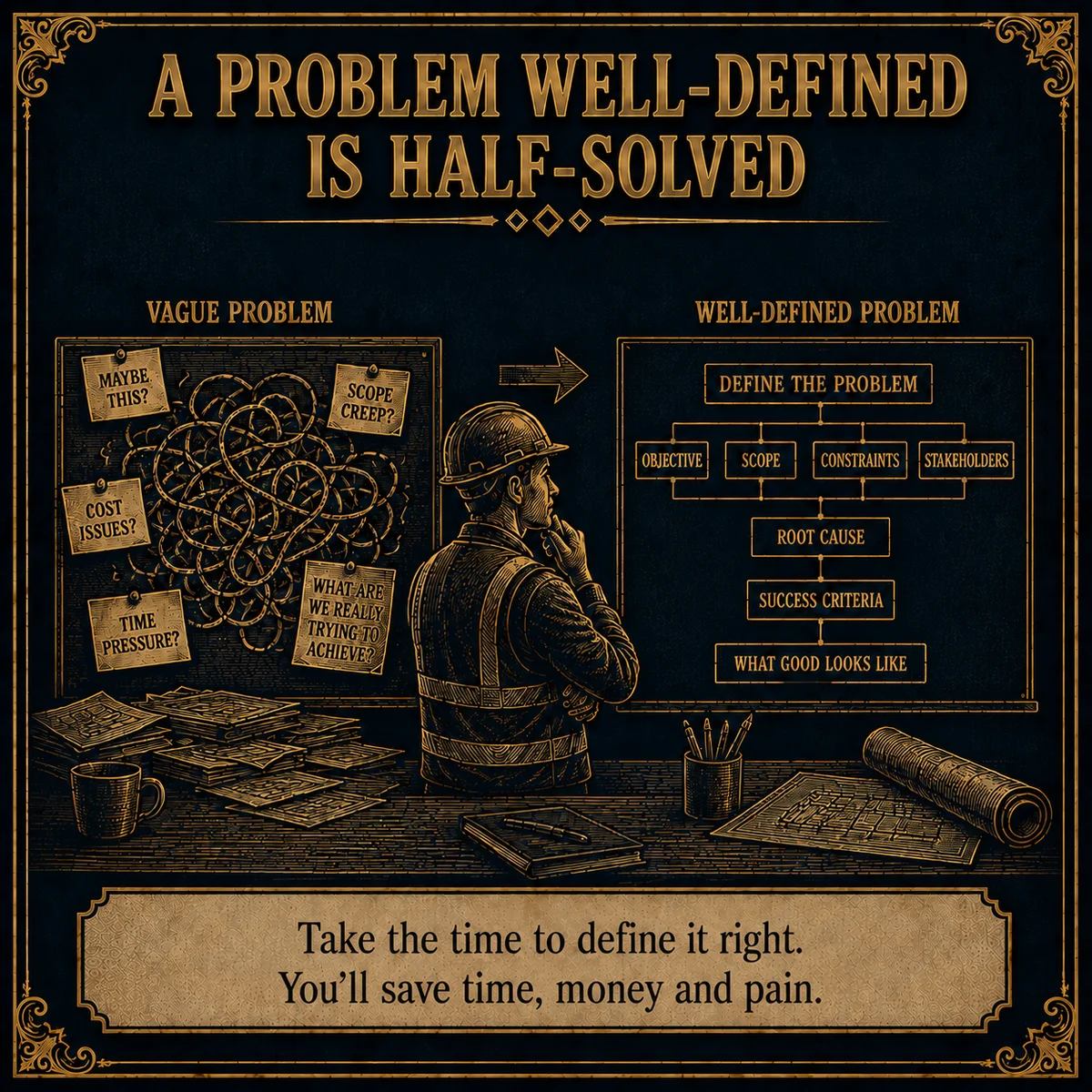
A Problem Well-Defined Is Half-Solved
Define the real problem before investing in the solution.
ON SITE
Before changing a method, detail or sequence, define the physical problem precisely: location, interface, tolerance, access, temporary condition and required finished state.
IN THE OFFICE
Before drafting a notice, variation assessment or recovery plan, separate the event, contractual obligation, causation, evidence, quantum, exposure and decision required.
IN THE BOARD ROOM
Political energy is often wasted because leaders are arguing about different problems.
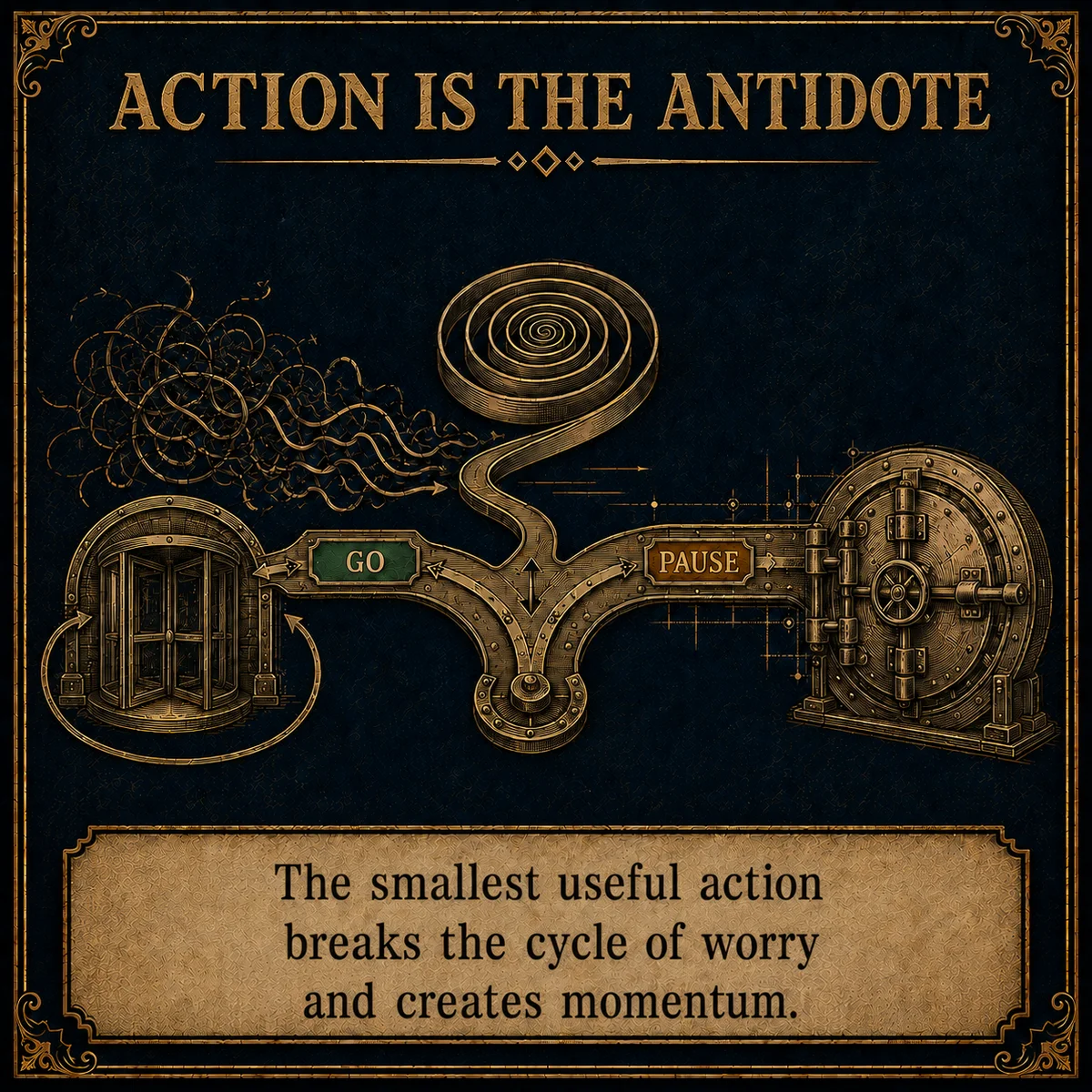
Action Is the Antidote
When uncertainty stalls progress, take the smallest safe reversible step.
ON SITE
When the field is stalled by uncertainty, take the smallest safe reversible step that creates information: expose the interface, survey the level, trial a short section, mock up the detail or isolate the workface.
IN THE OFFICE
Commercial issues often sit open because nobody has the perfect answer.
IN THE BOARD ROOM
When governance is paralysed by uncertainty, sponsor a small reversible move that creates evidence without locking the organisation into a public position.
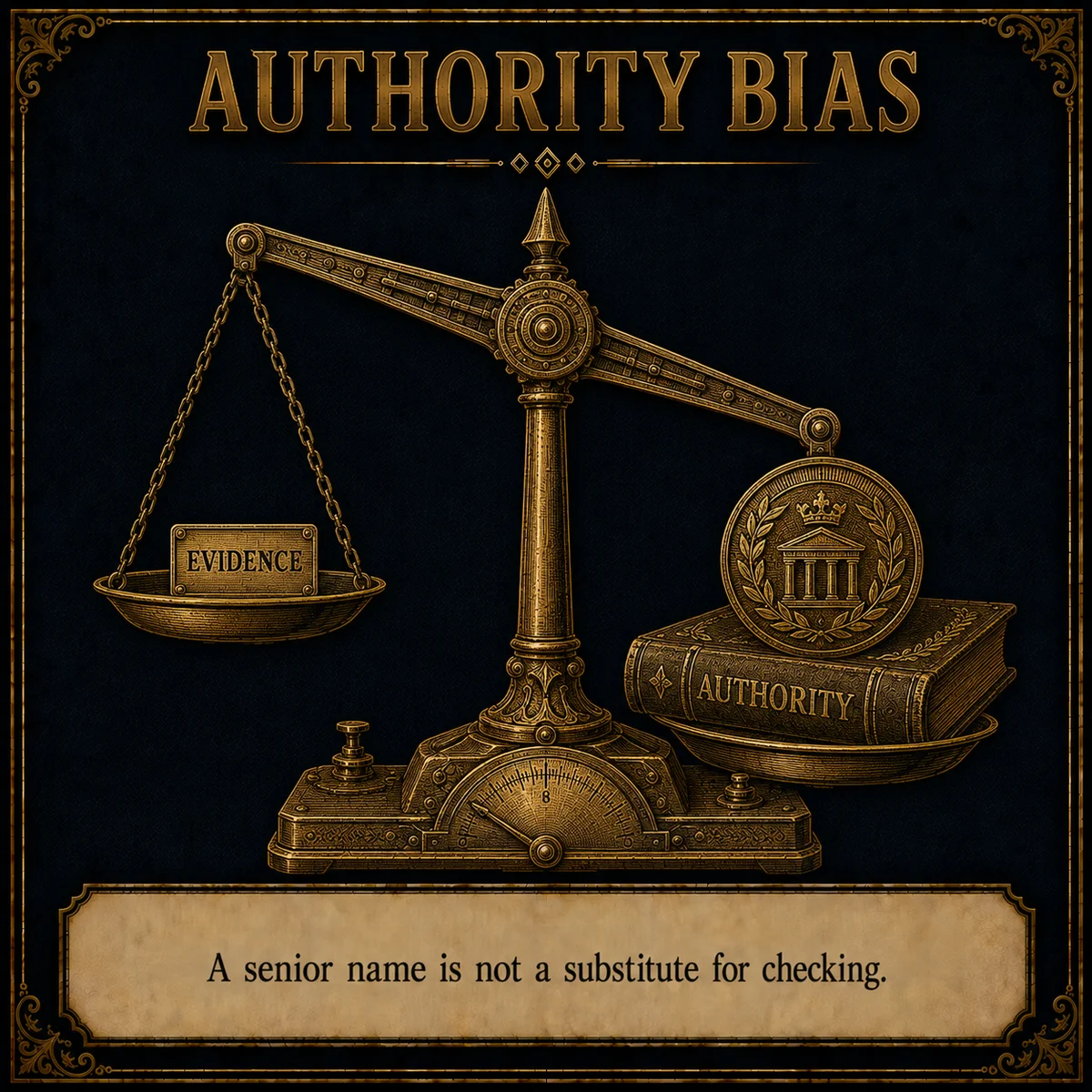
Authority Bias
Do not mistake seniority or confidence for evidence.
ON SITE
A confident instruction from a senior engineer, superintendent or manager does not make a detail technically sound.
IN THE OFFICE
A confident direction from a Project Manager, engineer, superintendent or senior commercial person is not a substitute for delegated authority, contractual entitlement or verified facts.
IN THE BOARD ROOM
Senior voices can dominate a room before evidence is tested.

BATNA
Negotiating strength begins with a credible alternative to no agreement.
ON SITE
Before forcing a field solution, know the practical alternatives if the preferred method fails: resequence, temporary support, alternate access, different plant, revised detail or delayed workface.
IN THE OFFICE
Before a subcontract settlement, variation negotiation or close-out meeting, know what happens if no deal is reached: payment pathway, dispute process, programme consequence, evidence position, replacement options, management time and relationship cost.
IN THE BOARD ROOM
Never negotiate a major settlement, JV issue or client position without understanding the credible alternative.
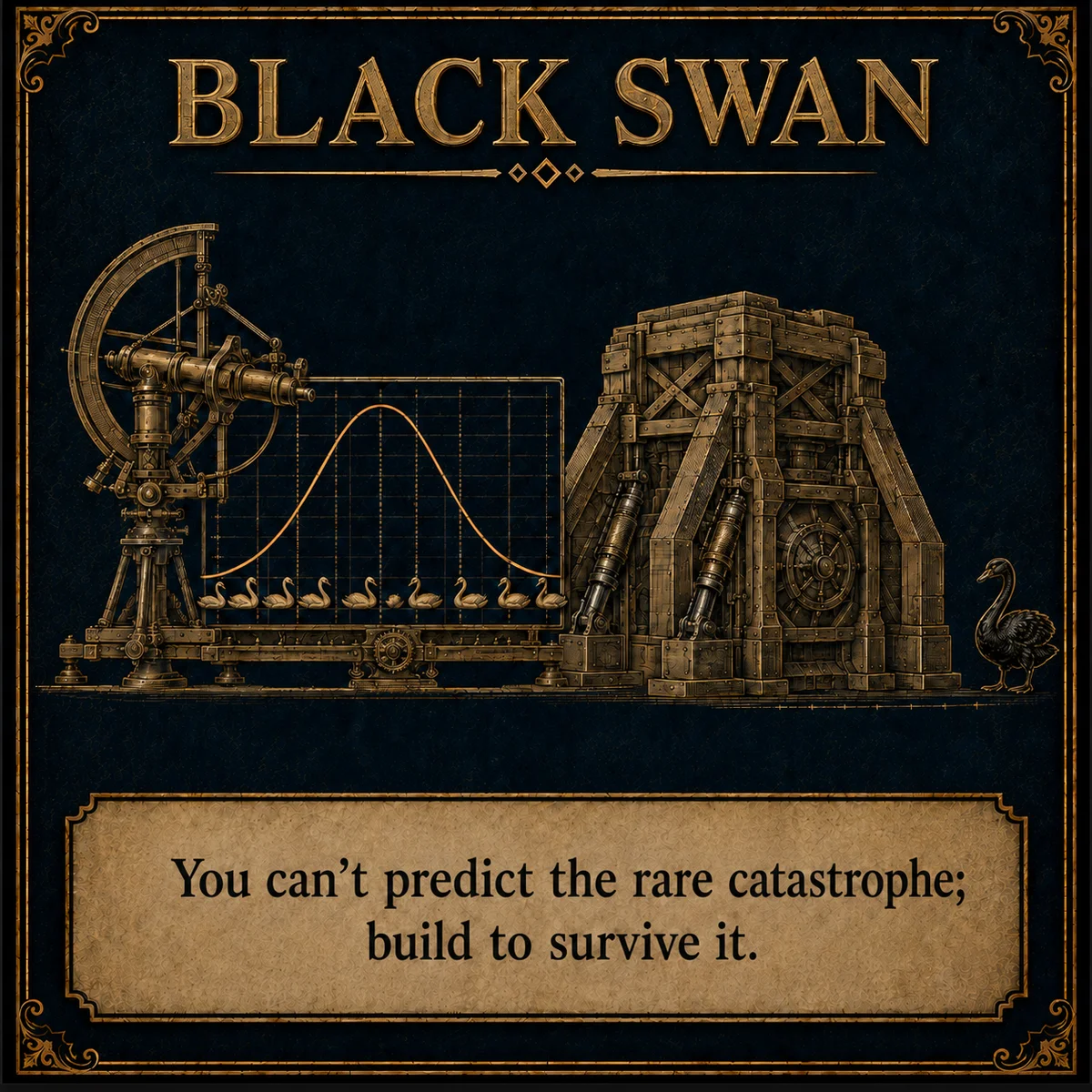
Black Swan
Rare, high-impact events demand resilience rather than false precision.
ON SITE
Plan for recoverability where low-probability events can have severe consequences: flooding, latent conditions, plant failure, unknown services or supplier collapse.
IN THE OFFICE
Floods, insolvencies, design failures, industrial disruption and other low-frequency events can invalidate the assumptions beneath a programme or commercial strategy.
IN THE BOARD ROOM
Boards cannot eliminate rare shocks, but they can build resilience: liquidity, contingency, insurance, delegated crisis authority and strategic options.
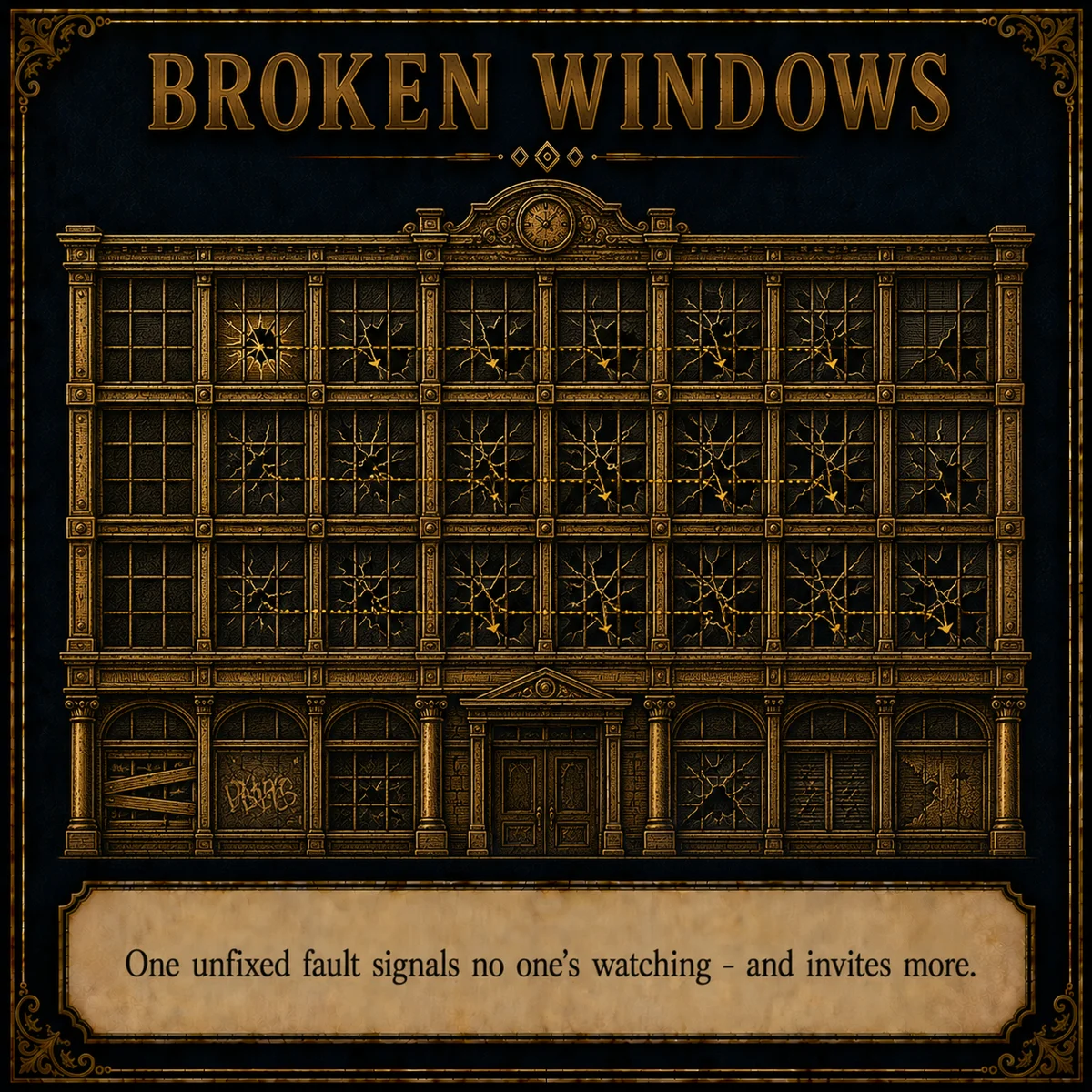
Broken Windows
Small tolerated control failures teach the team what is acceptable.
ON SITE
Small field defects set the local standard.
IN THE OFFICE
One unsigned direction, one late subcontract assessment or one unclosed register item looks harmless.
IN THE BOARD ROOM
Leadership signals what is tolerated.
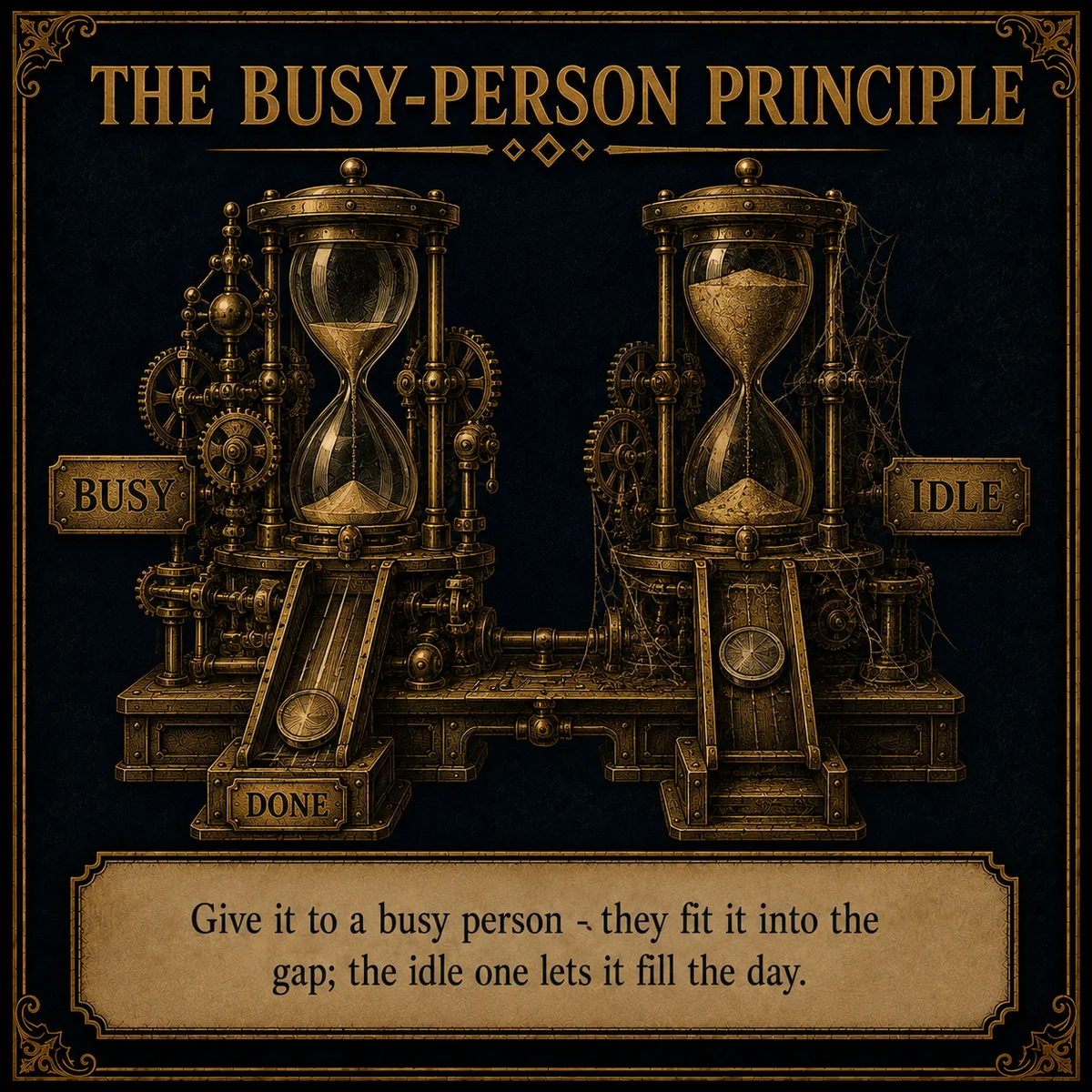
The Busy-Person Principle
Reliable people attract more work because they reliably close loops.
ON SITE
The engineer or supervisor who always solves problems will attract every problem.
IN THE OFFICE
Major projects naturally route urgent work to the people known to respond, decide and finish.
IN THE BOARD ROOM
High performers become magnets for critical work and sponsorship.
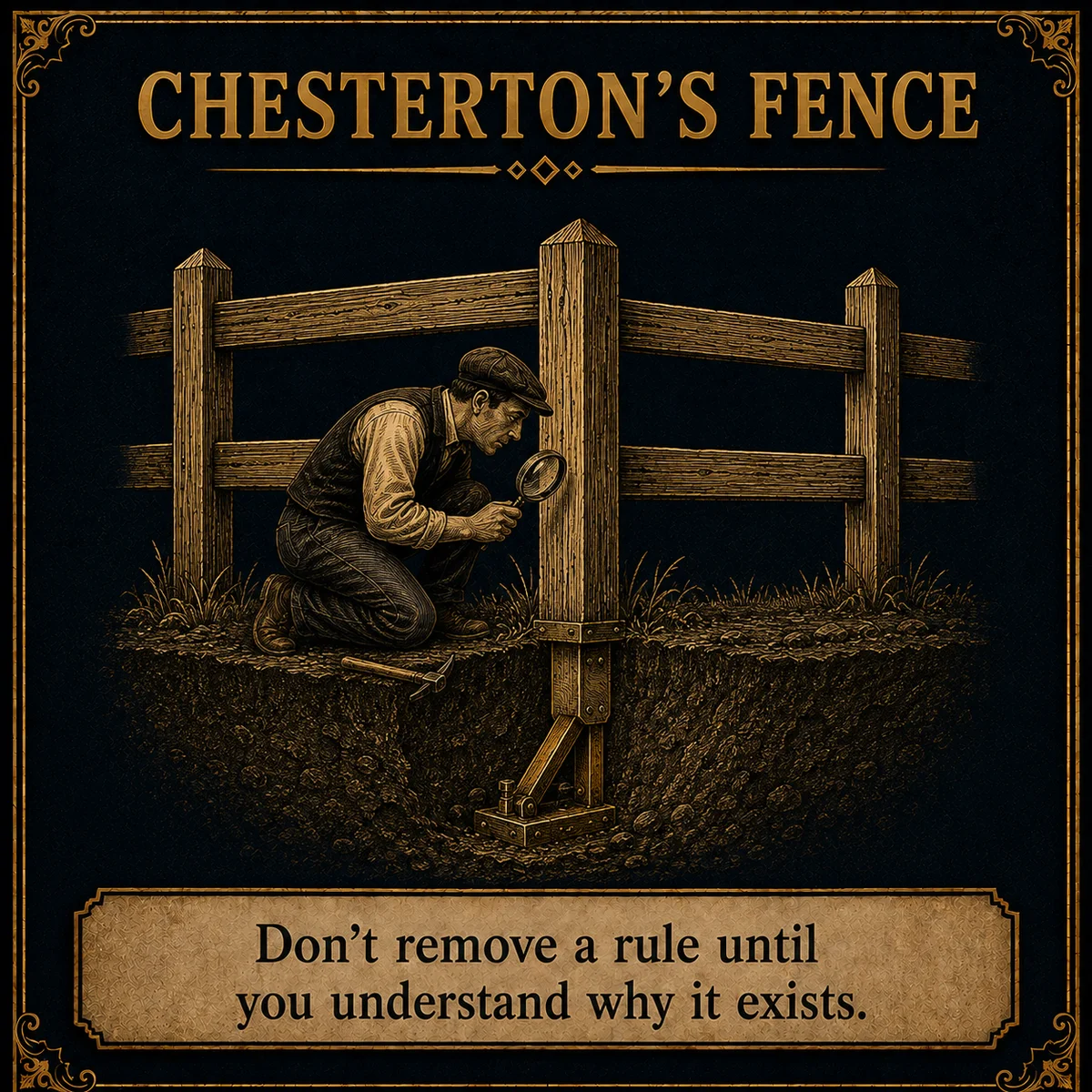
Chesterton’s Fence
Understand why a control exists before removing it.
ON SITE
Do not remove a brace, exclusion zone, hold point, access restriction or temporary-works control until you understand why it exists and what condition permits its removal.
IN THE OFFICE
A hold point, approval gate, delegation, ITP step or reporting requirement may look bureaucratic because the failure it prevents is no longer visible.
IN THE BOARD ROOM
A board may inherit controls that look slow or outdated.
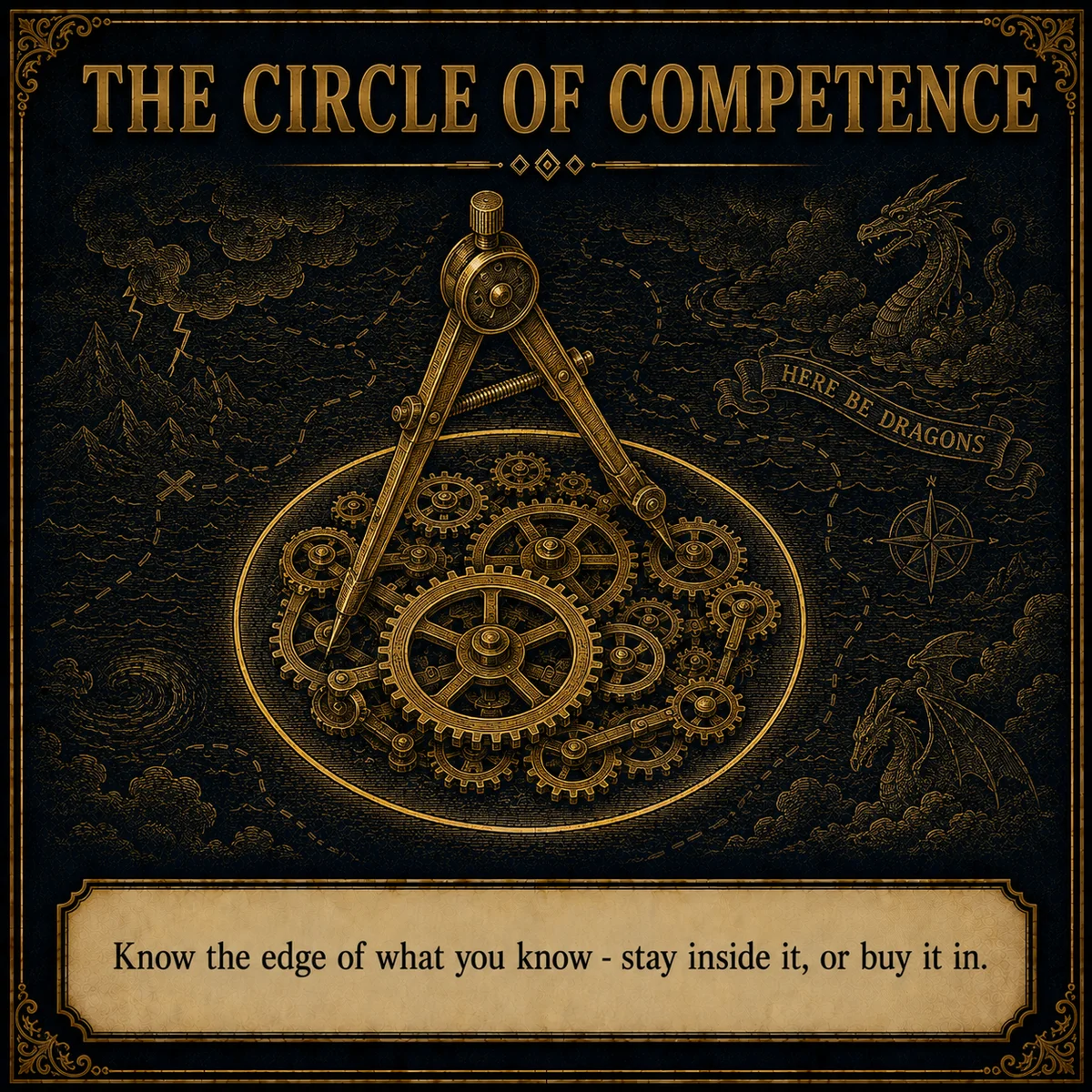
The Circle of Competence
Know what you understand, what you do not and when to escalate.
ON SITE
Know when a field issue needs specialist input.
IN THE OFFICE
A strong CA does not pretend to be a programmer, tax adviser, engineer, lawyer or quantity surveyor when the issue exceeds their competence.
IN THE BOARD ROOM
Executive judgement includes knowing what the organisation does not know.
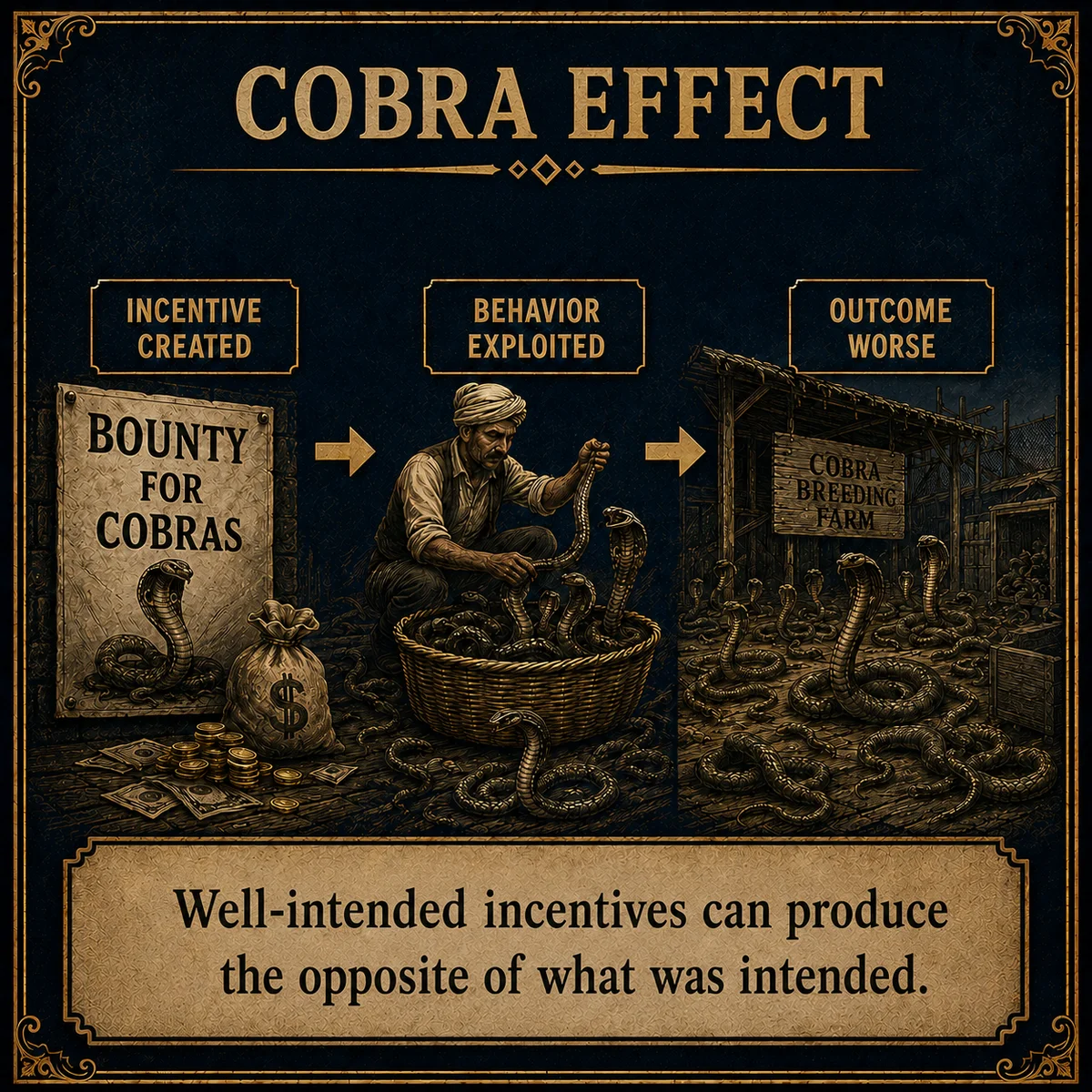
Cobra Effect
A poorly designed incentive can create more of the behaviour it targets.
ON SITE
Site incentives can backfire.
IN THE OFFICE
Targets for cash collection, variations closed, notices issued, forecast accuracy or procurement savings can create gaming if the metric is easier to optimise than the underlying outcome.
IN THE BOARD ROOM
Executive incentives shape behaviour far below the boardroom.
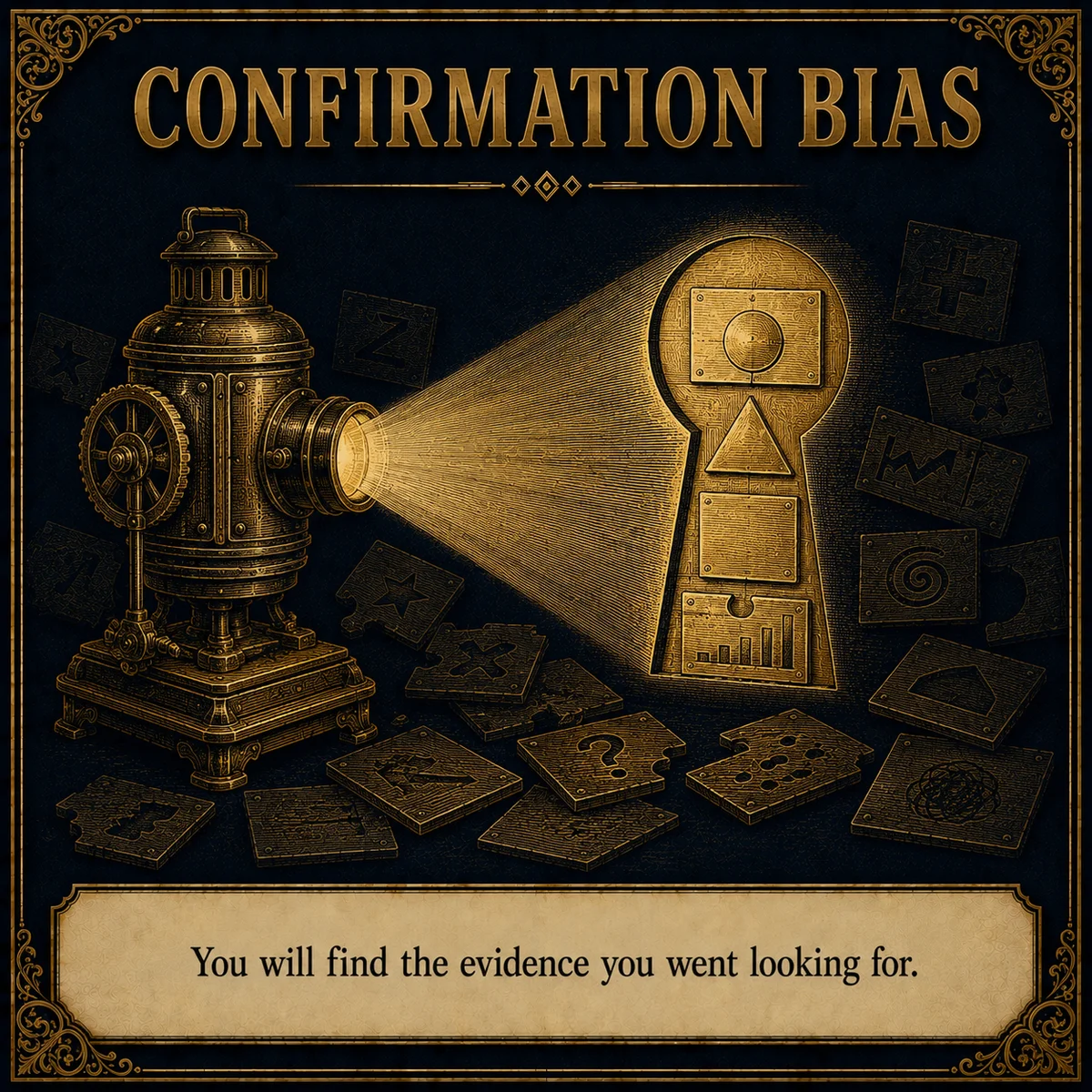
Confirmation Bias
Seek evidence that could prove the preferred position wrong.
ON SITE
Once the team believes a clash is another trade’s fault or a defect is ‘just workmanship’, it will tend to see evidence that supports that story.
IN THE OFFICE
Once a project decides that a variation is included, a delay is excusable or a subcontractor is at fault, later records are easily read through that story.
IN THE BOARD ROOM
Once leadership has backed a strategy, contrary evidence becomes politically expensive.
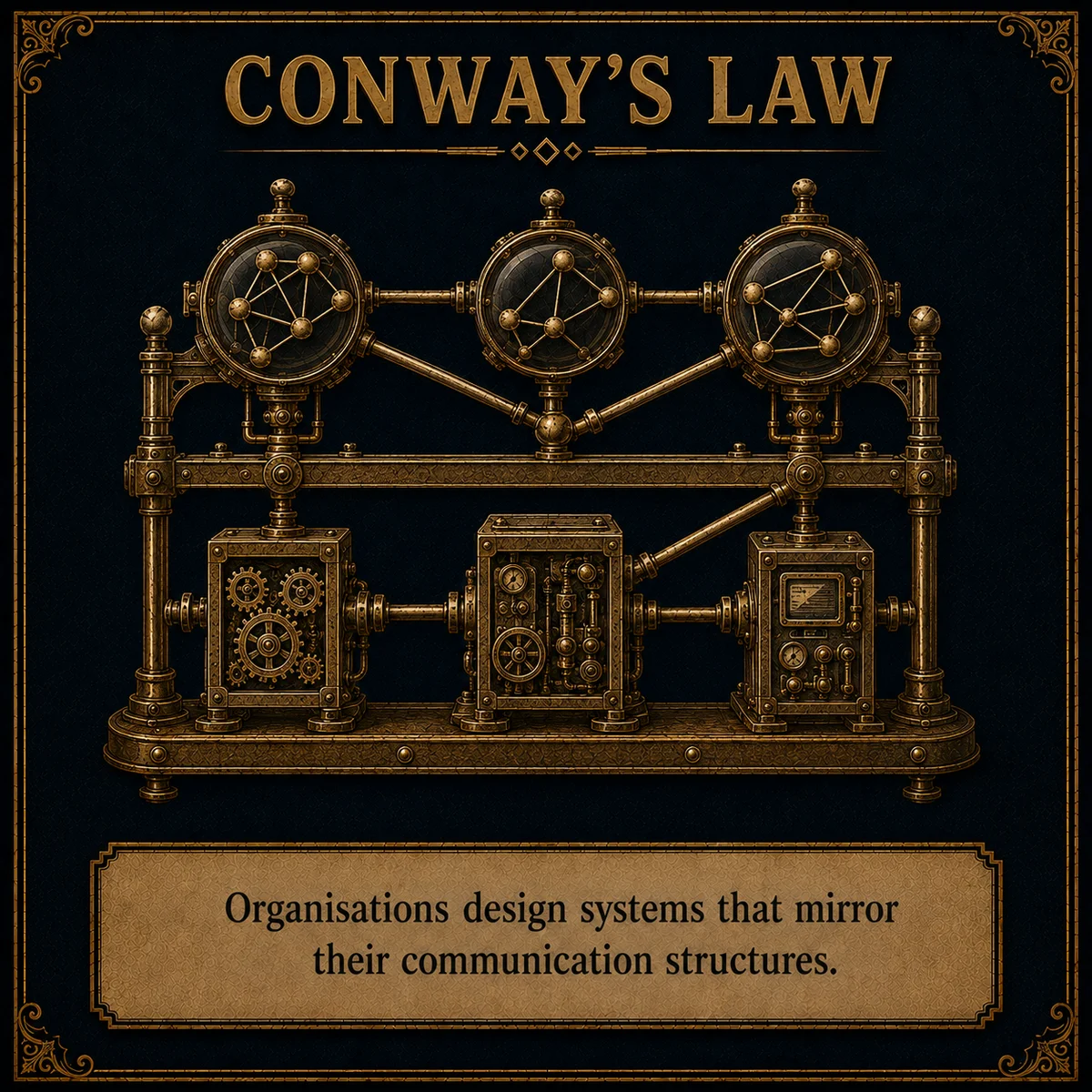
Conway’s Law
The system delivered will reflect the way the organisation communicates.
ON SITE
Physical interfaces often mirror organisational interfaces.
IN THE OFFICE
If design, construction, services, planning and commercial teams operate in silos, their package boundaries, registers and decisions will usually fragment in the same places.
IN THE BOARD ROOM
The project’s structure will mirror the organisation that governs it.
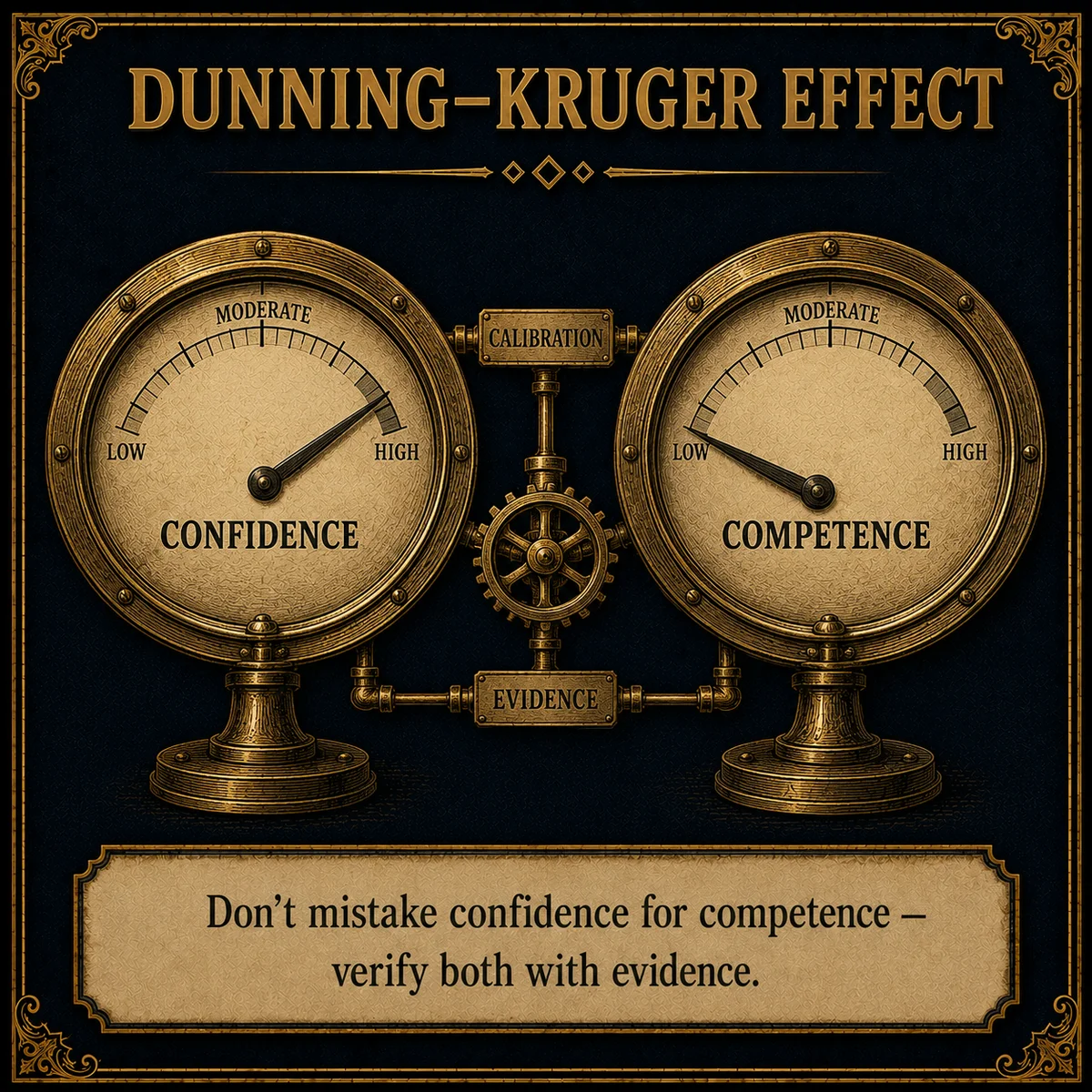
Dunning–Kruger Effect
Confidence is not competence; verify both with evidence.
ON SITE
Simple-looking details often hide sequencing, tolerance and temporary-state complexity.
IN THE OFFICE
Limited experience can make a contractual, technical or quantum issue look simpler than it is.
IN THE BOARD ROOM
Leadership should be wary of certainty unsupported by depth.
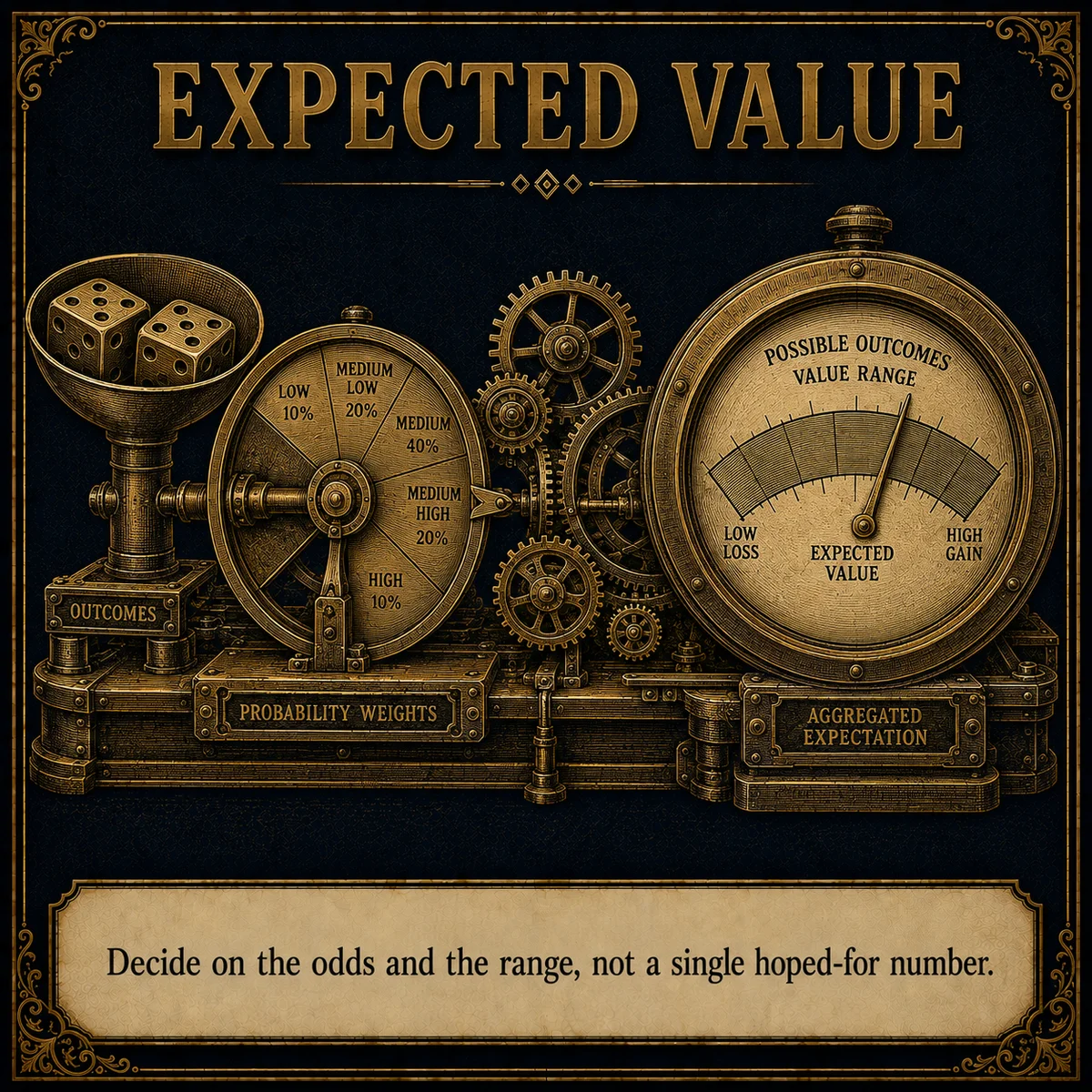
Expected Value
Compare options by probability and consequence, not headline value alone.
ON SITE
Choose field responses by probability and consequence, not by the most dramatic possibility.
IN THE OFFICE
A $2 million claim with a weak evidentiary pathway may deserve less management attention than a $300,000 exposure with a high probability of crystallising.
IN THE BOARD ROOM
Board decisions should compare probability-weighted outcomes, not just headline upside or worst-case rhetoric.
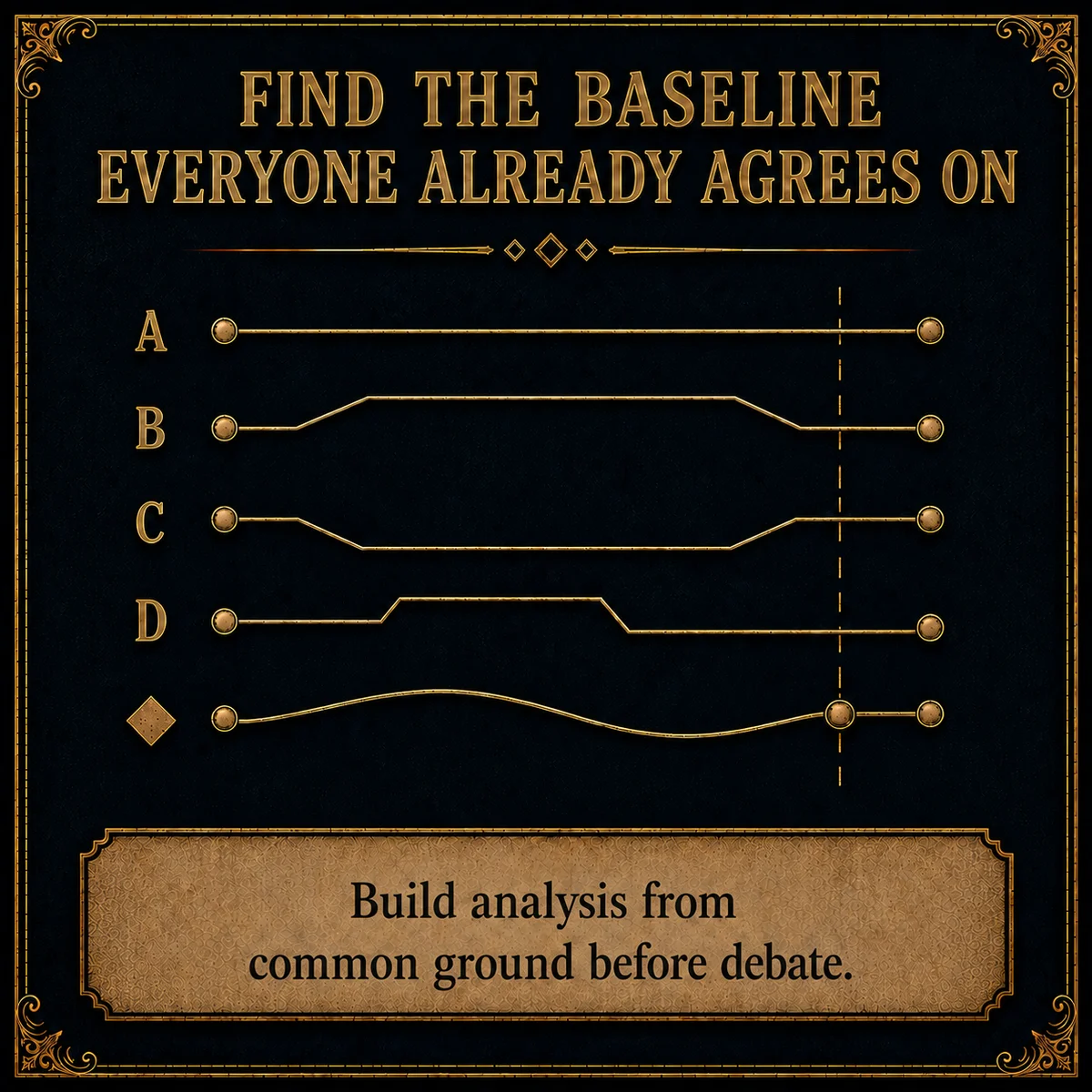
Find the Baseline Everyone Already Agrees On
Start difficult decisions from the strongest shared fact.
ON SITE
When trades disagree about an interface, first establish the common physical facts: current revision, surveyed level, installed condition, access date, agreed datum and required finish.
IN THE OFFICE
When the builder, subcontractor and superintendent disagree on entitlement, start with what is uncontested: issued revision, date, work performed, agreed quantity, programme event or payment already made.
IN THE BOARD ROOM
In politically charged rooms, begin with uncontested facts and common objectives.
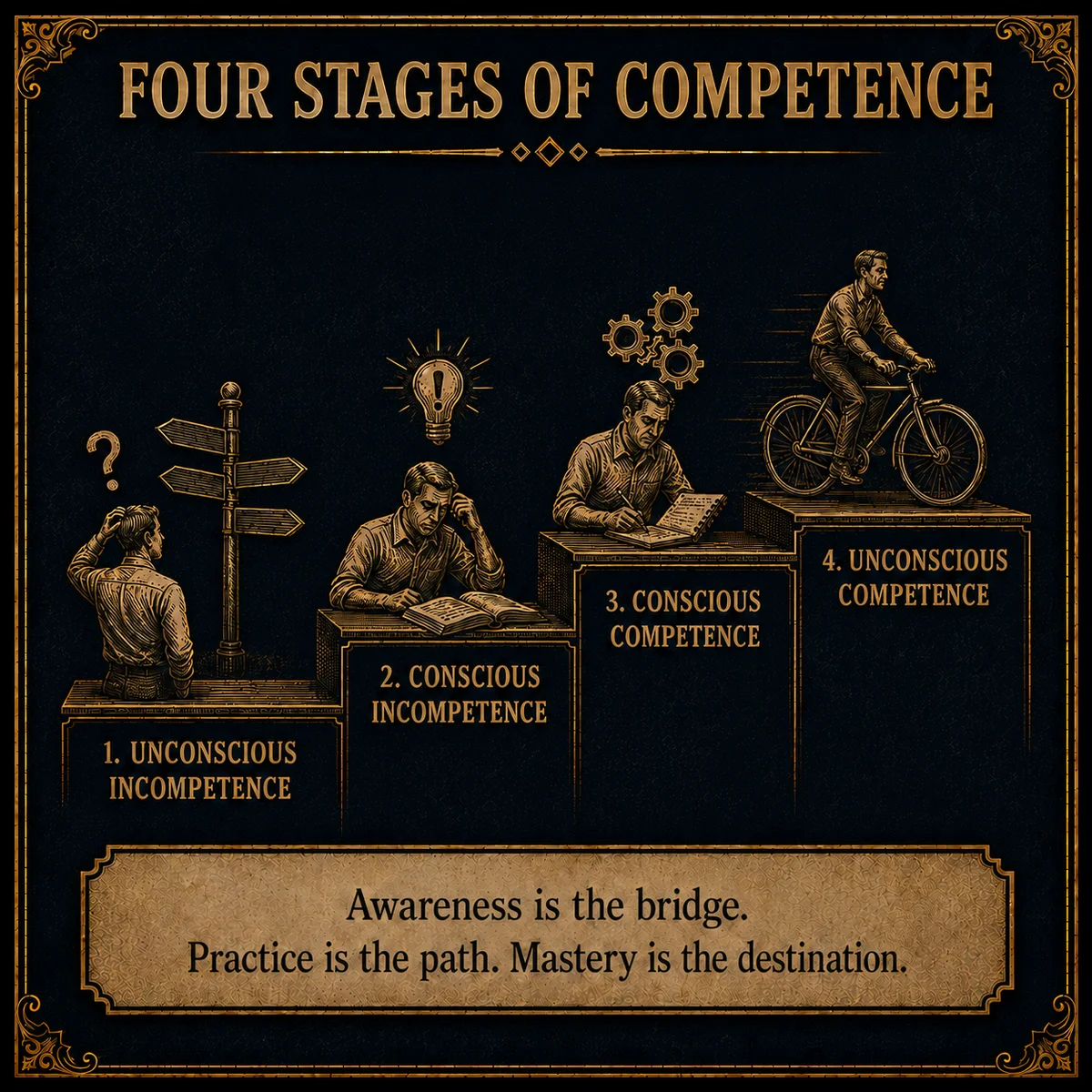
Four Stages of Competence
Capability develops from unawareness to deliberate and then instinctive practice.
ON SITE
Match supervision to demonstrated field competence.
IN THE OFFICE
A graduate who cannot yet see a scope risk needs different support from a CA who sees it but needs a checklist, or an SCA who handles it almost automatically.
IN THE BOARD ROOM
Capability systems should recognise that people need different levels of oversight as they develop.
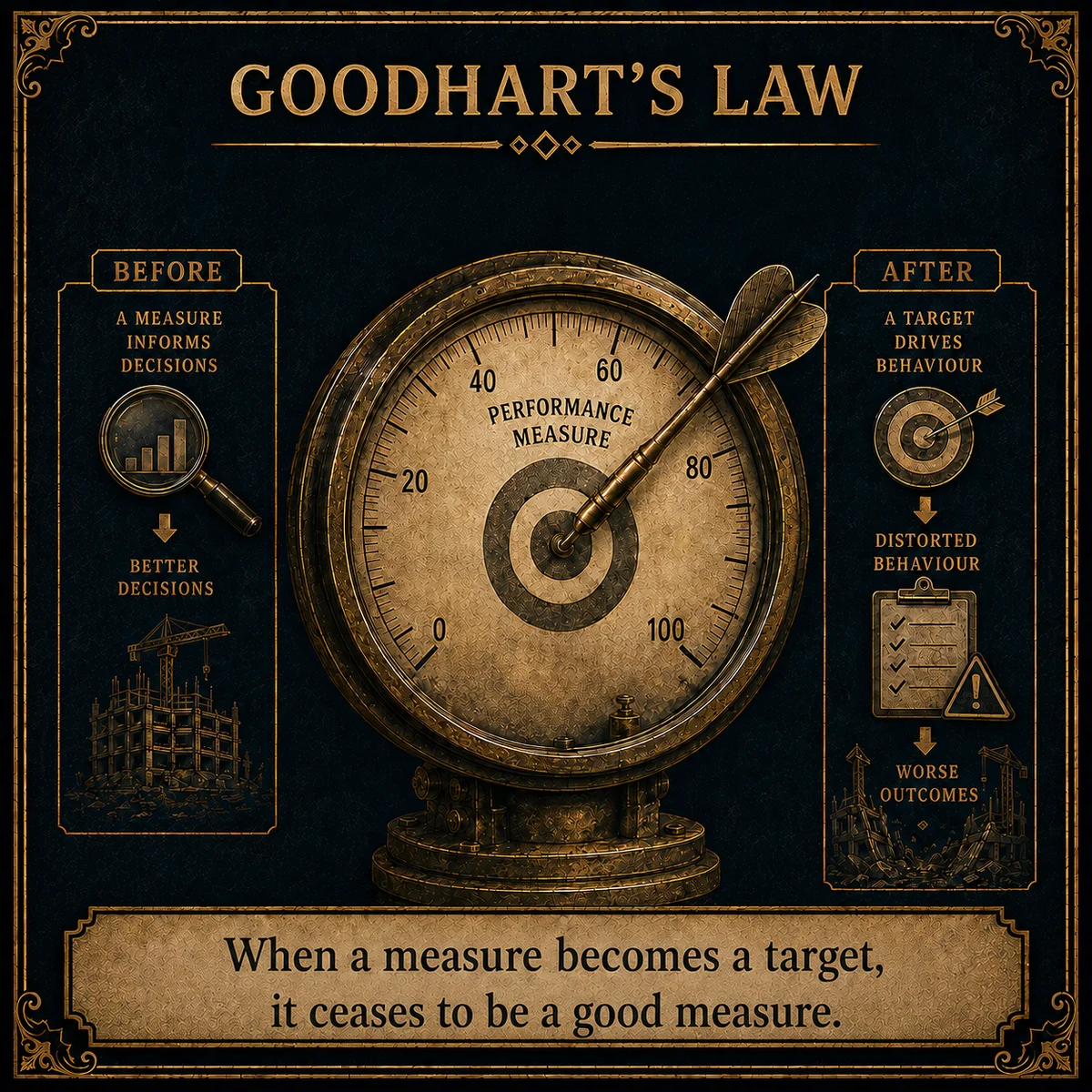
Goodhart’s Law
When a measure becomes the target, it stops being a reliable measure.
ON SITE
If site performance is reduced to one target—metres installed, pours per week or defects closed—the team will optimise the number.
IN THE OFFICE
Judge a team only on notices issued and notice counts rise; judge it only on forecast accuracy and uncomfortable exposure can be deferred or smoothed.
IN THE BOARD ROOM
What leadership measures becomes what the organisation performs for.
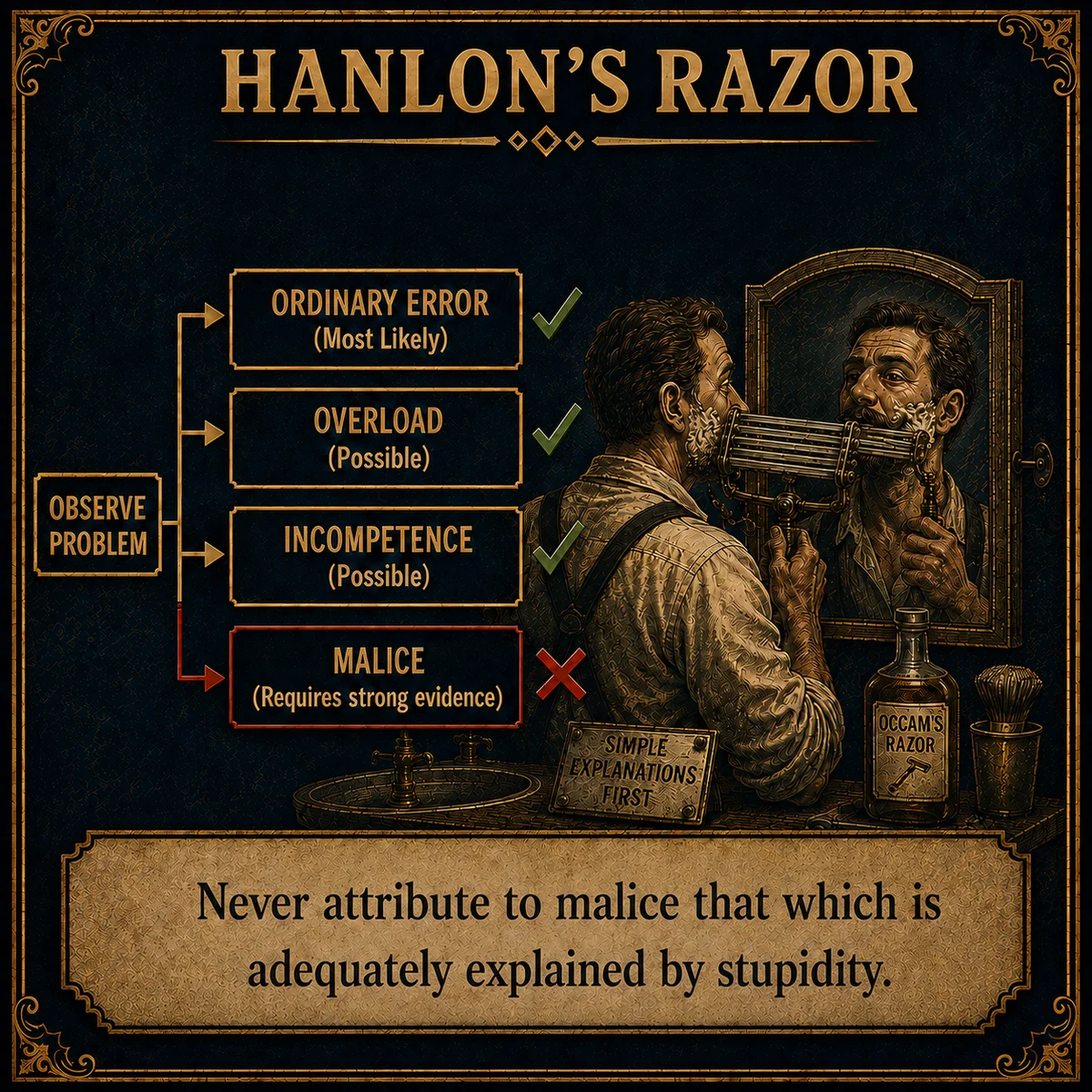
Hanlon’s Razor
Check error, ambiguity and system failure before assuming bad intent.
ON SITE
Before assuming another trade has deliberately blocked you, check for outdated drawings, unclear zones, missing access, poor handover or simple misunderstanding.
IN THE OFFICE
A missed response, contradictory instruction or weak handover may come from workload, unclear ownership or a broken interface rather than deliberate obstruction.
IN THE BOARD ROOM
Do not convert every failure into a character judgement.
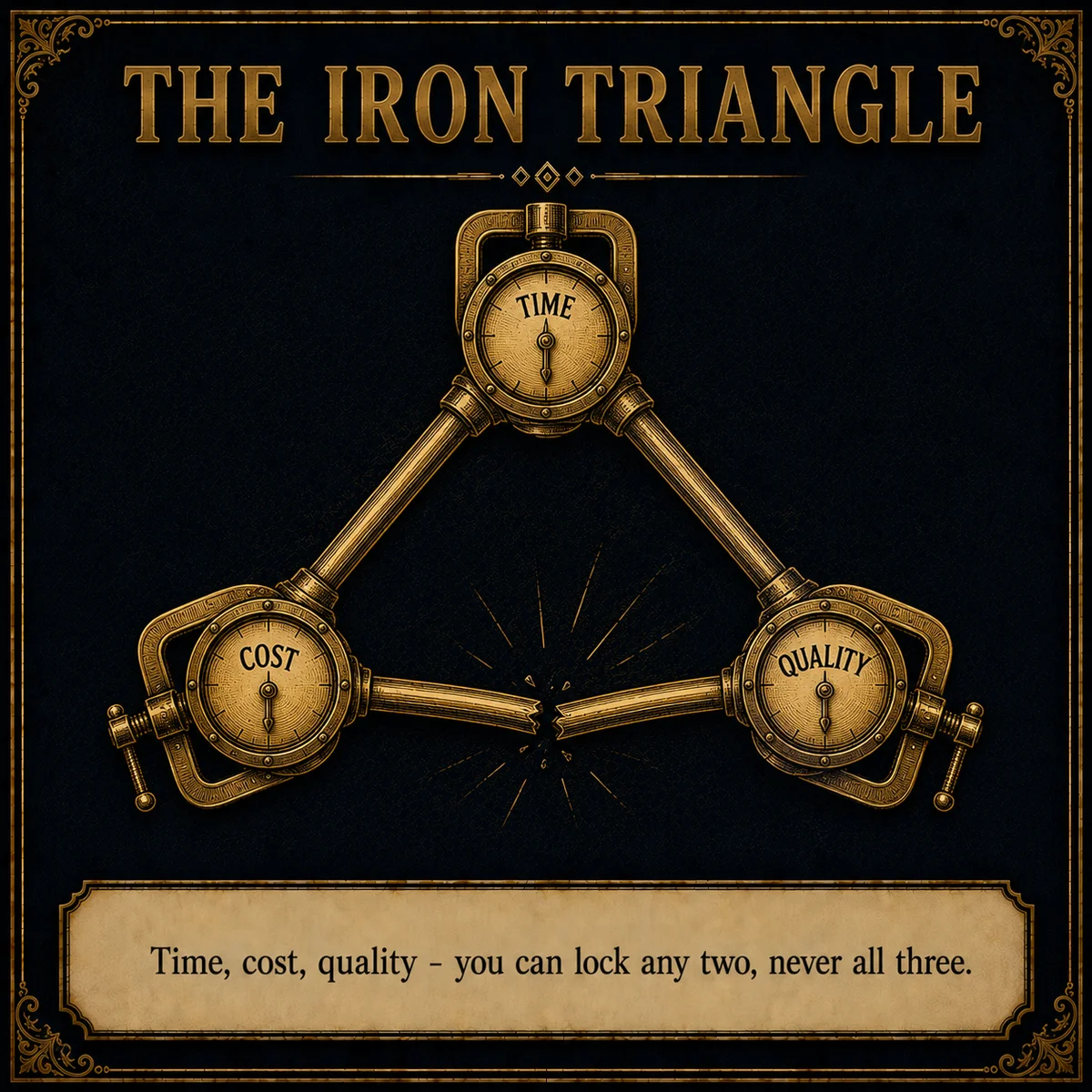
The Iron Triangle
Time, cost and scope are connected; pressure on one moves the others.
ON SITE
Changing time, cost or scope changes the others.
IN THE OFFICE
A direction to accelerate while holding scope, quality, access and cost unchanged is not a complete decision.
IN THE BOARD ROOM
Executives cannot simultaneously demand more scope, less time and lower cost without choosing where pressure lands.
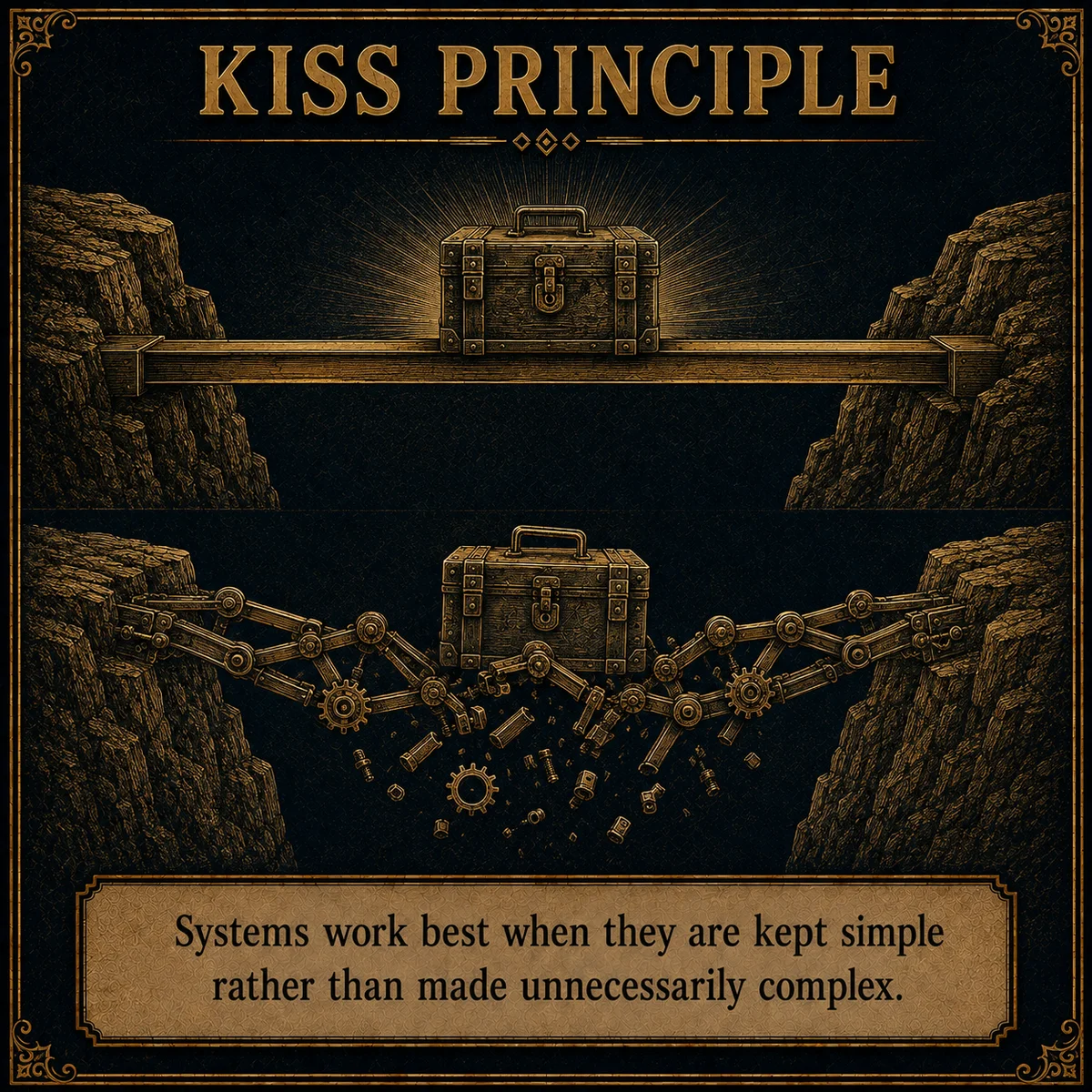
KISS Principle
Make the work as simple as possible, but no simpler than the decision requires.
ON SITE
Prefer details and methods that are easy to understand, set out, inspect and repeat.
IN THE OFFICE
A good commercial brief lets an approver see the issue, contractual basis, evidence, value, options, recommendation and consequence quickly.
IN THE BOARD ROOM
Board papers should make the decision obvious: issue, stakes, options, recommendation and consequence.
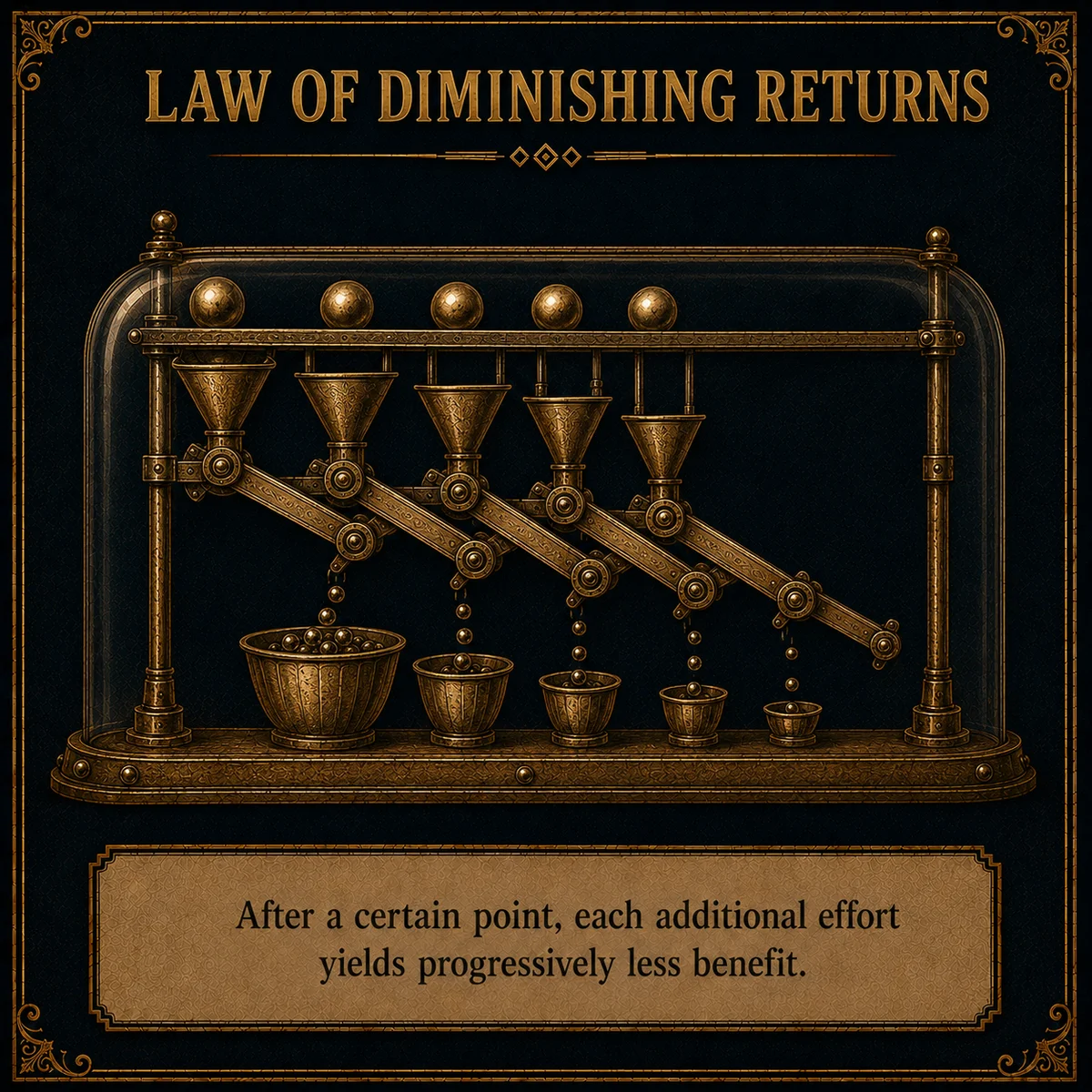
Law of Diminishing Returns
Beyond a point, additional effort produces progressively less value.
ON SITE
Additional engineering effort stops adding value at some point.
IN THE OFFICE
A fifth review, another twenty pages of substantiation or another week pricing a minor variation is useful only if it changes confidence or outcome.
IN THE BOARD ROOM
More governance is not always better governance.
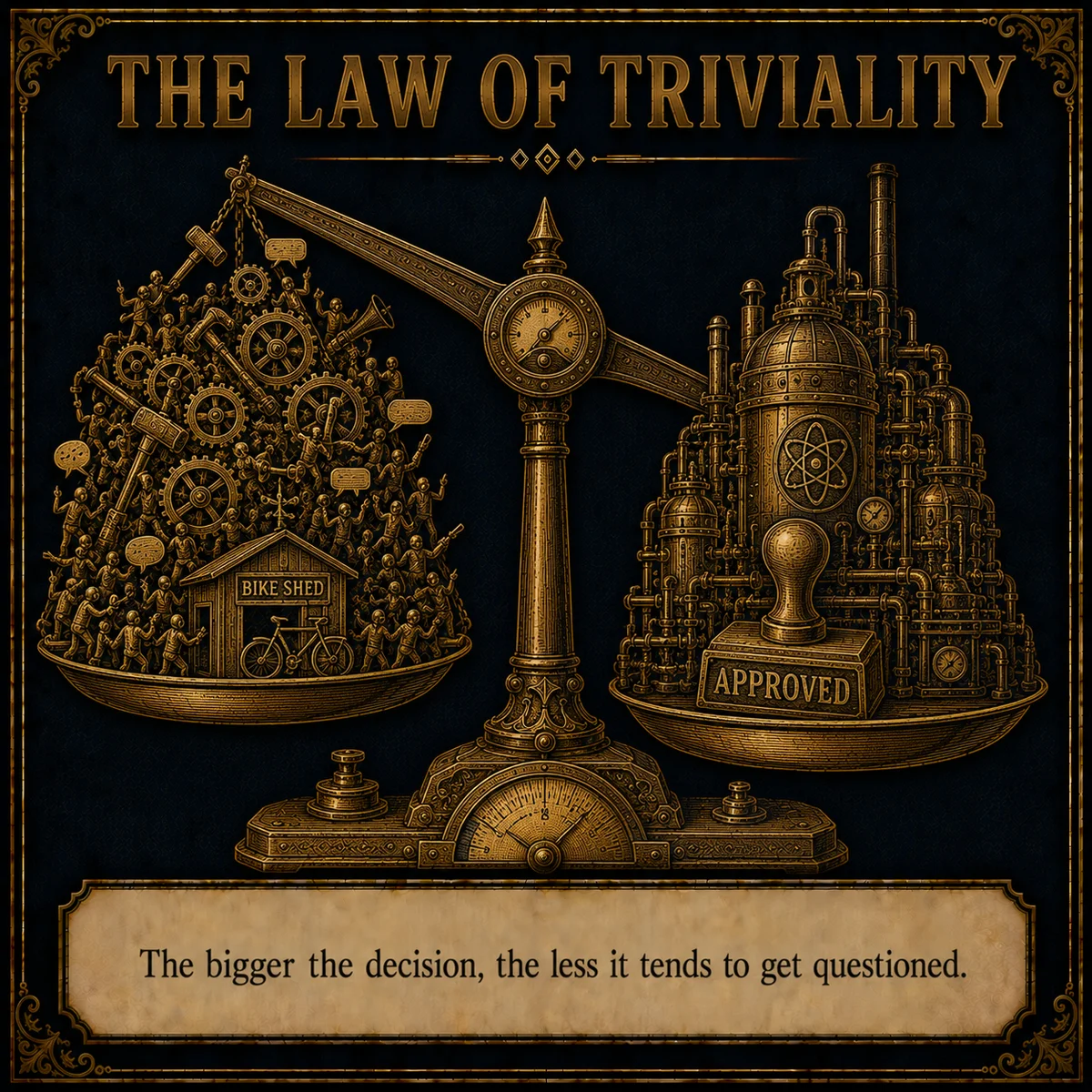
The Law of Triviality
Groups spend the most time on issues that are easiest to understand.
ON SITE
Site teams can spend more time debating easy visible items than difficult hidden interfaces.
IN THE OFFICE
Project meetings can spend twenty minutes on formatting, amenities or a small purchase while a difficult delay or scope exposure gets two.
IN THE BOARD ROOM
Boards can spend disproportionate time on low-risk items because everyone can contribute.
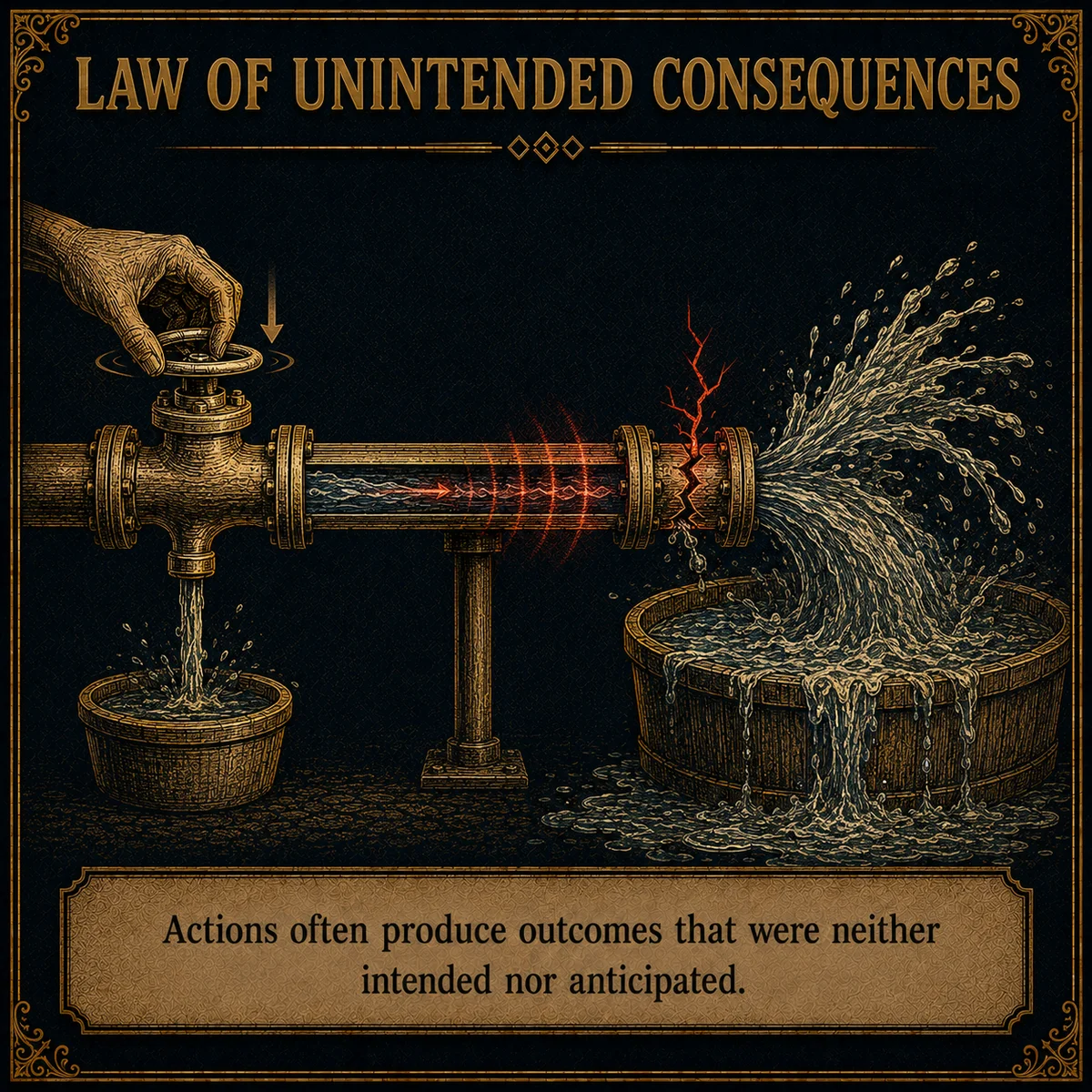
Law of Unintended Consequences
Every intervention changes more than the immediate problem.
ON SITE
A local fix can create downstream problems.
IN THE OFFICE
Withholding payment, directing acceleration, transferring a risk or forcing an early sequence can alter safety, productivity, records, cash flow, subcontractor behaviour and later entitlement.
IN THE BOARD ROOM
Every executive intervention changes incentives and relationships.
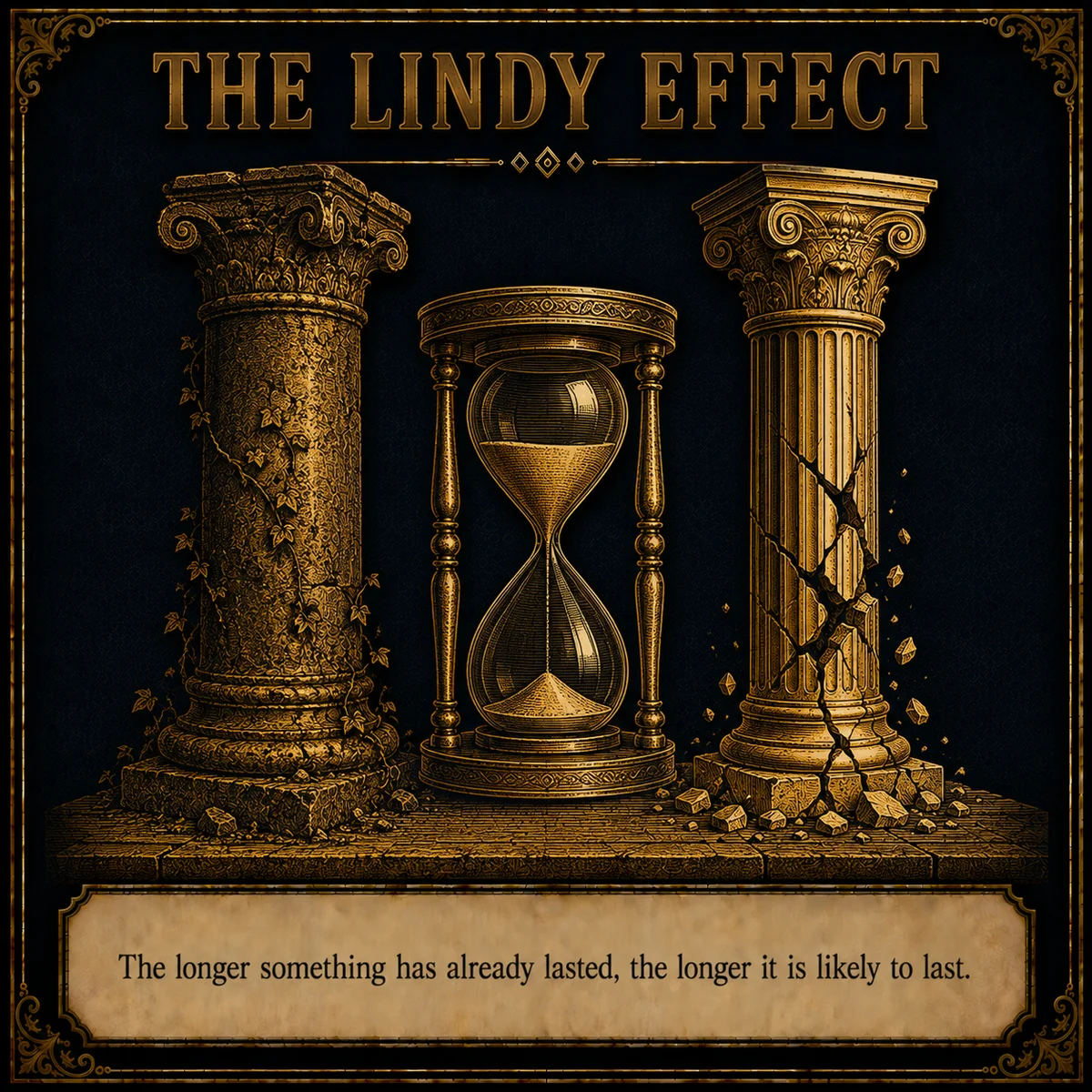
The Lindy Effect
What has survived for a long time has demonstrated a form of durability.
ON SITE
Long-standing field controls often survive because they solve recurring problems: pre-pour checks, test packs, witness points, standard details and proven sequencing.
IN THE OFFICE
Long-standing contract controls, prestarts, hold points and commercial routines often contain lessons from failures nobody on the current project remembers.
IN THE BOARD ROOM
Practices that have survived multiple cycles often carry hidden institutional knowledge.
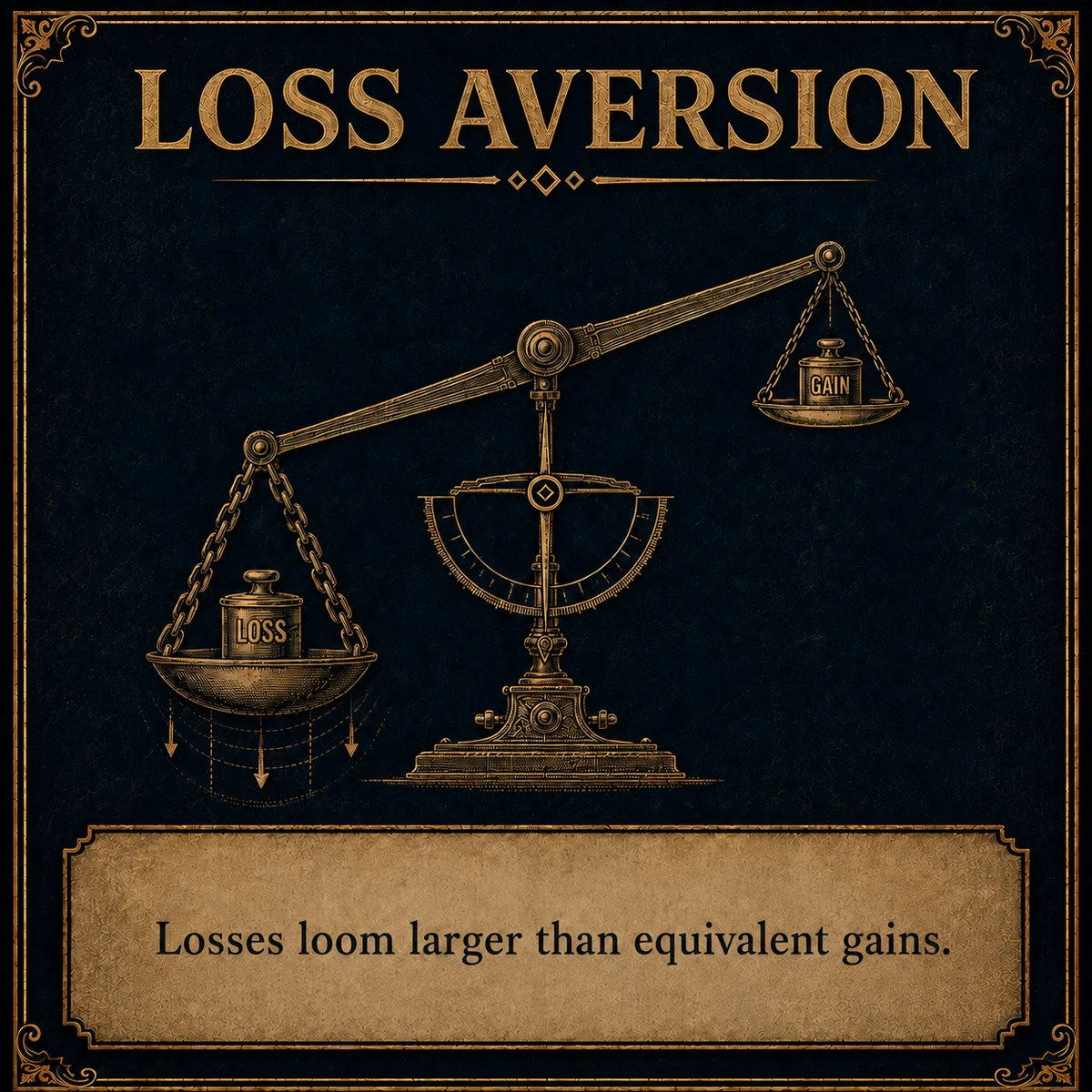
Loss Aversion
People feel a loss more strongly than an equivalent gain.
ON SITE
Teams may resist removing or reworking something already installed because the visible loss feels worse than the future risk.
IN THE OFFICE
A team may keep defending a weak $500,000 position because recognising the loss feels worse than accepting a sensible settlement.
IN THE BOARD ROOM
Leaders may prolong weak projects, disputes or strategies because acknowledging loss is politically painful.
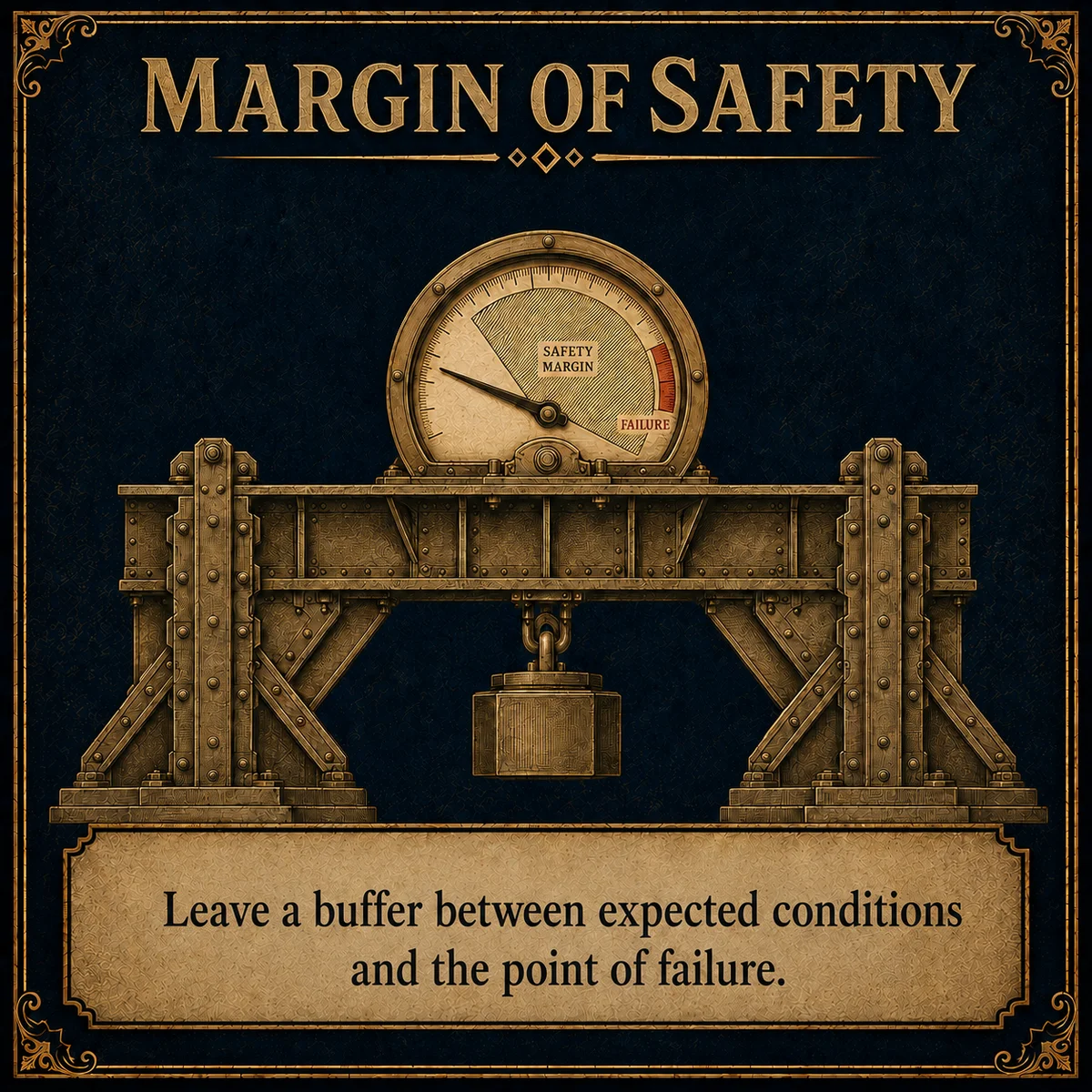
Margin of Safety
Build enough tolerance for normal error, variation and uncertainty.
ON SITE
Build tolerance into temporary works, access, sequencing, clearances and capacities so normal variation does not cause failure.
IN THE OFFICE
Programmes, budgets, procurement dates and approval pathways should not require every assumption to land perfectly.
IN THE BOARD ROOM
Strategic plans need room for forecast error, market movement and delivery variation.
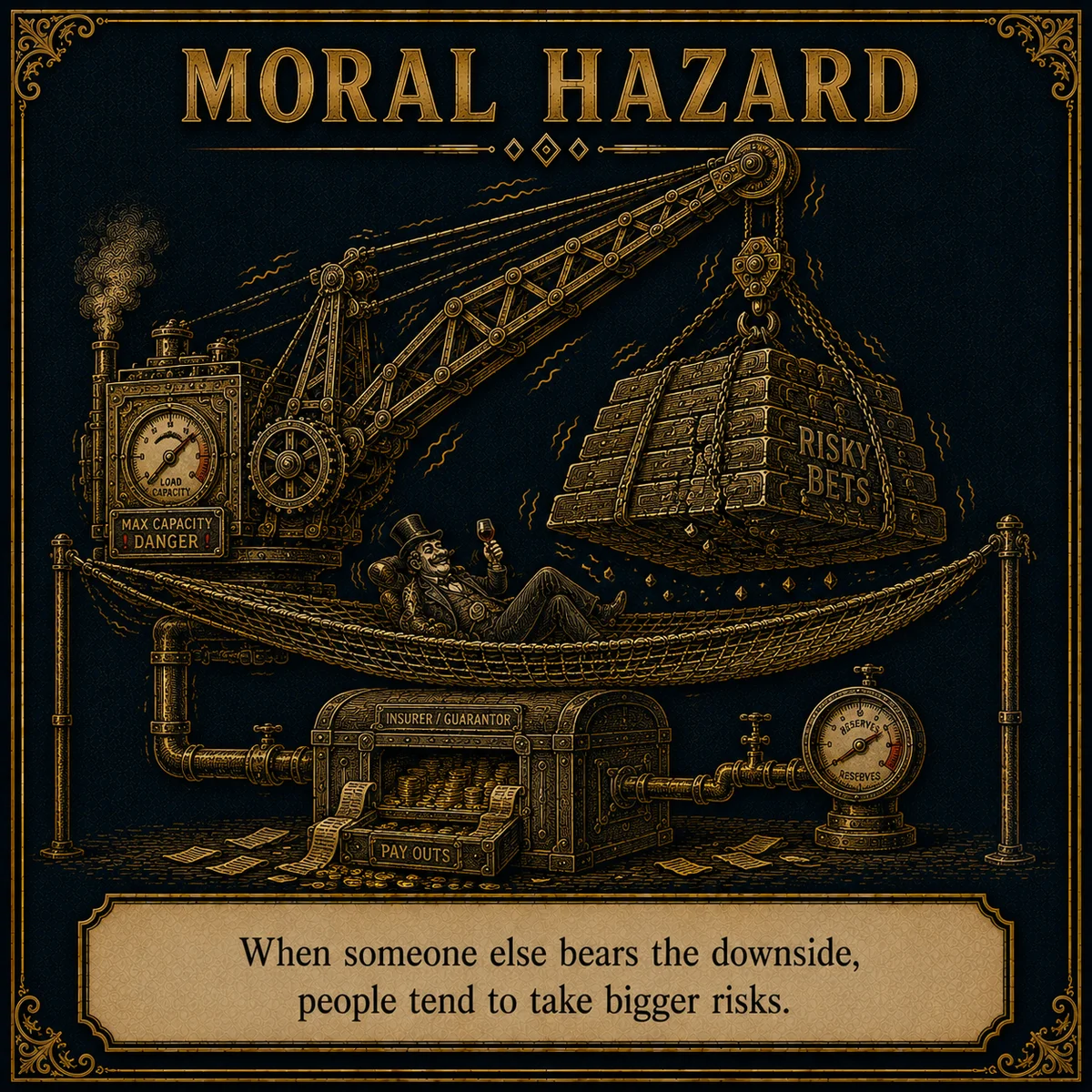
Moral Hazard
Risk-taking changes when the decision-maker does not carry the downside.
ON SITE
Field decisions become riskier when the person choosing the shortcut does not carry the consequence.
IN THE OFFICE
A person can favour an aggressive direction, scope transfer or programme commitment when another package, budget or future team carries the cost if it fails.
IN THE BOARD ROOM
Decision-makers take different risks when others bear the downside.
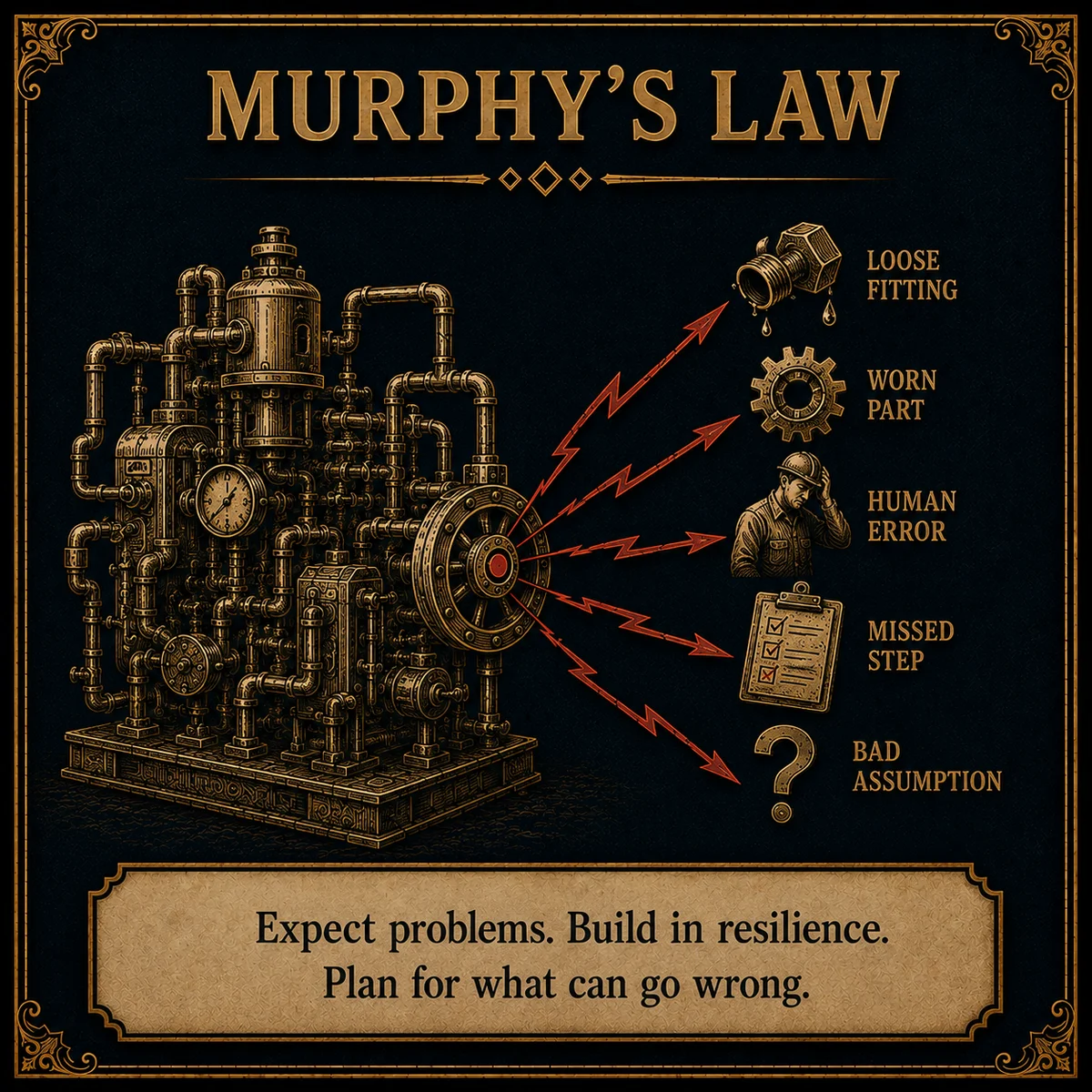
Murphy’s Law
If a failure mode is credible, plan for it before it chooses the timing.
ON SITE
Assume credible failure modes will eventually be tested.
IN THE OFFICE
Assume the missing approval will matter on pour day, the temporary access will be unavailable when the subcontractor mobilises, or the sole supplier may miss the date.
IN THE BOARD ROOM
Governance should assume that credible failures will eventually occur.
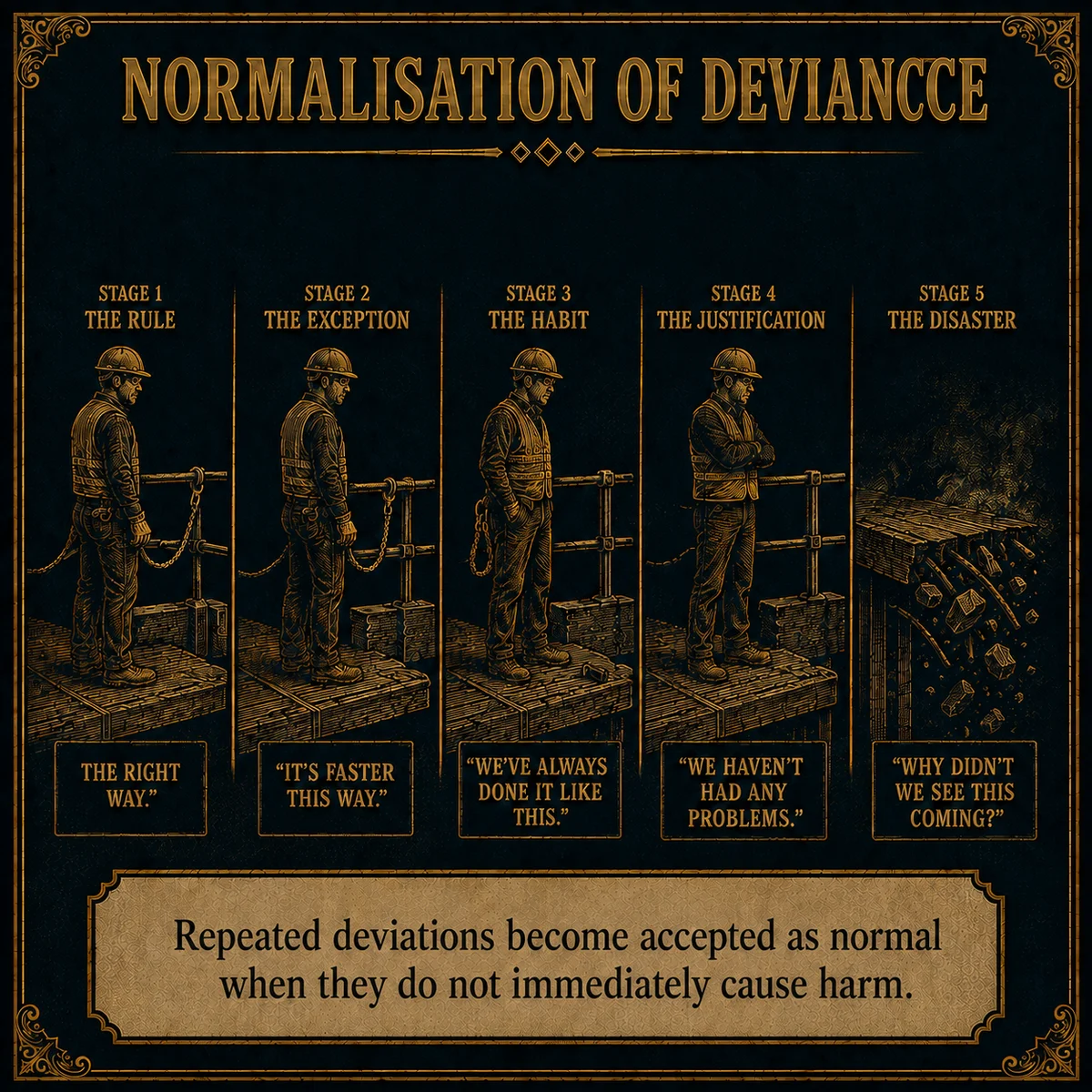
Normalisation of Deviance
A tolerated exception becomes the new standard one repetition at a time.
ON SITE
A shortcut that ‘worked last time’ is still a deviation.
IN THE OFFICE
Work proceeding without approval, late notices, unsupported accruals or bypassed hold points can start to feel normal because nothing bad happened last time.
IN THE BOARD ROOM
Repeated exceptions to governance can become institutional habit because prior breaches did not hurt.

Occam’s Razor
Prefer the explanation that fits the facts with the fewest unsupported assumptions.
ON SITE
When diagnosing a field problem, start with the simplest explanation that fits the evidence: wrong revision, level, set-out, access, sequence or missed interface.
IN THE OFFICE
When a variation or delay narrative requires a chain of speculative motives, undocumented conversations and exceptions, test the simpler explanations first: wrong revision, unclear scope, missed handover, access not provided or an instruction actually issued.
IN THE BOARD ROOM
Political explanations often become more elaborate than the facts.
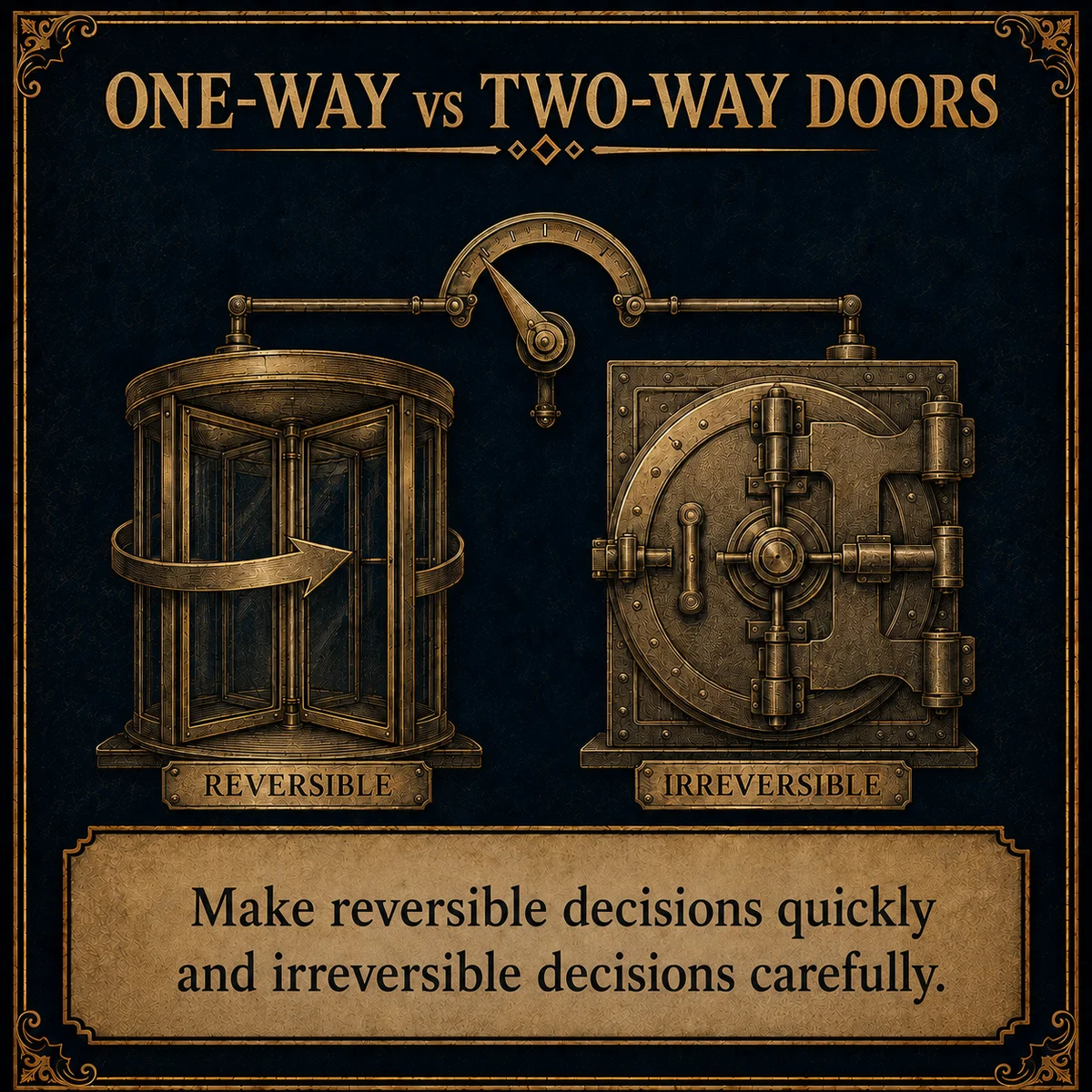
One-Way vs Two-Way Doors
Match decision speed and governance to reversibility.
ON SITE
Treat reversible field decisions differently from irreversible ones.
IN THE OFFICE
A reversible coding change or provisional assessment can usually be made quickly and corrected from new information.
IN THE BOARD ROOM
Reserve heavy governance for decisions that are difficult to reverse: acquisitions, settlements, precedent, restructures and public commitments.
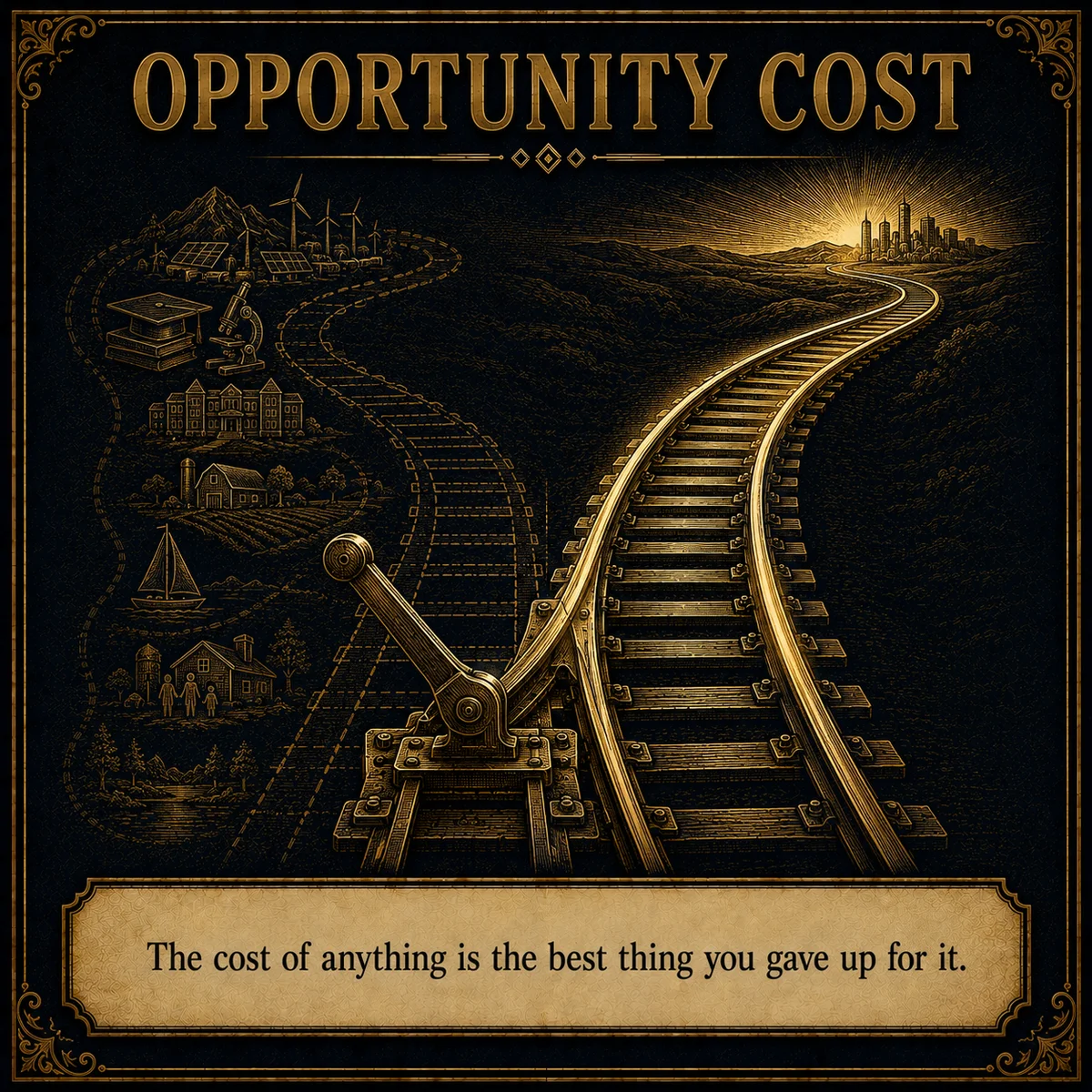
Opportunity Cost
The real cost of a choice includes the best alternative displaced by it.
ON SITE
Every crane hour, possession, shutdown, workface and supervisor has an alternative use.
IN THE OFFICE
Commercial attention is finite.
IN THE BOARD ROOM
Every board decision consumes capital, leadership attention and political bandwidth.
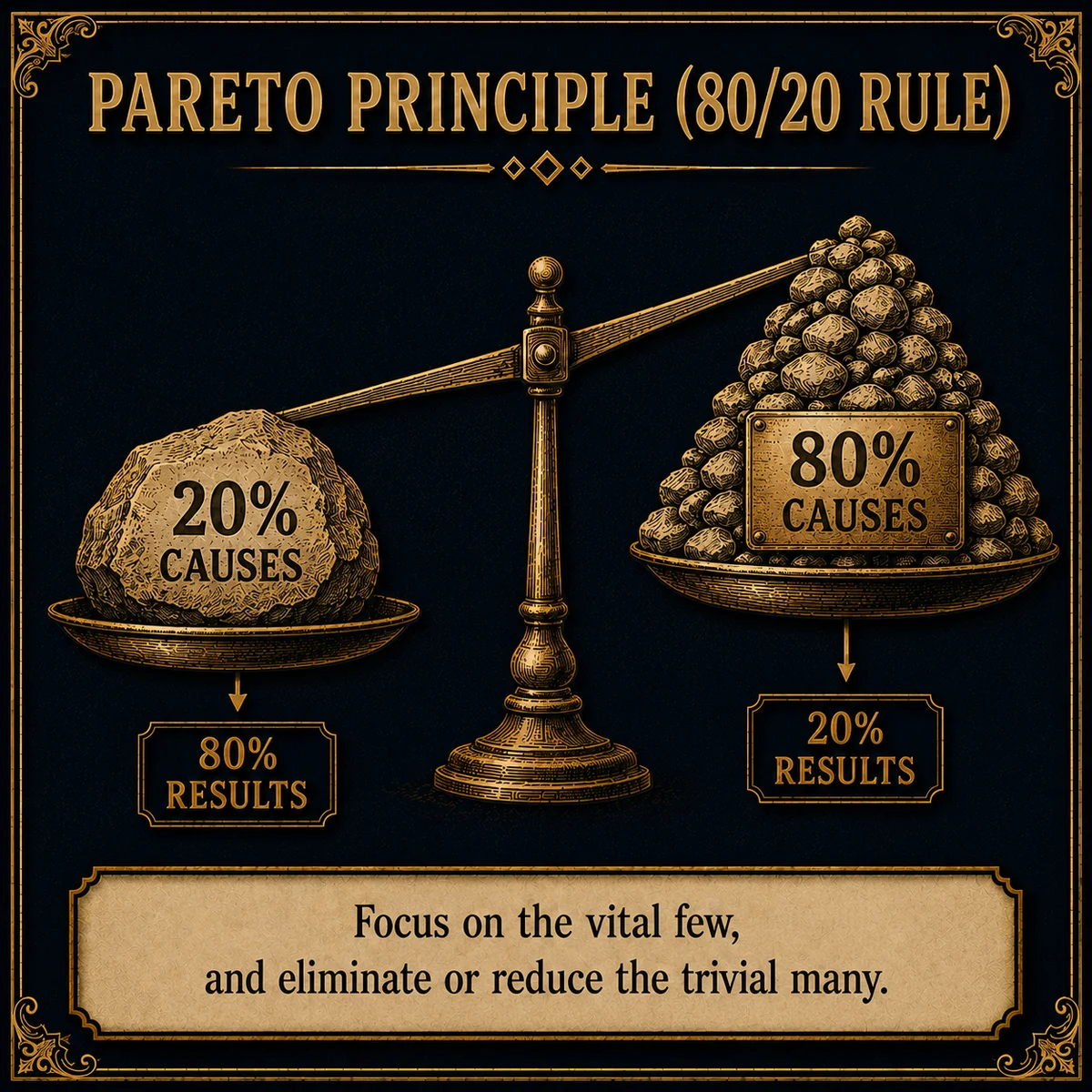
Pareto Principle
A small number of causes often drive most of the outcome.
ON SITE
A small number of recurring site constraints usually drive a large share of delay and rework.
IN THE OFFICE
A package may contain 120 open items, but a handful usually drive most forecast movement, delay exposure or close-out risk.
IN THE BOARD ROOM
A small number of clients, projects, risks and people decisions usually drive most enterprise value.
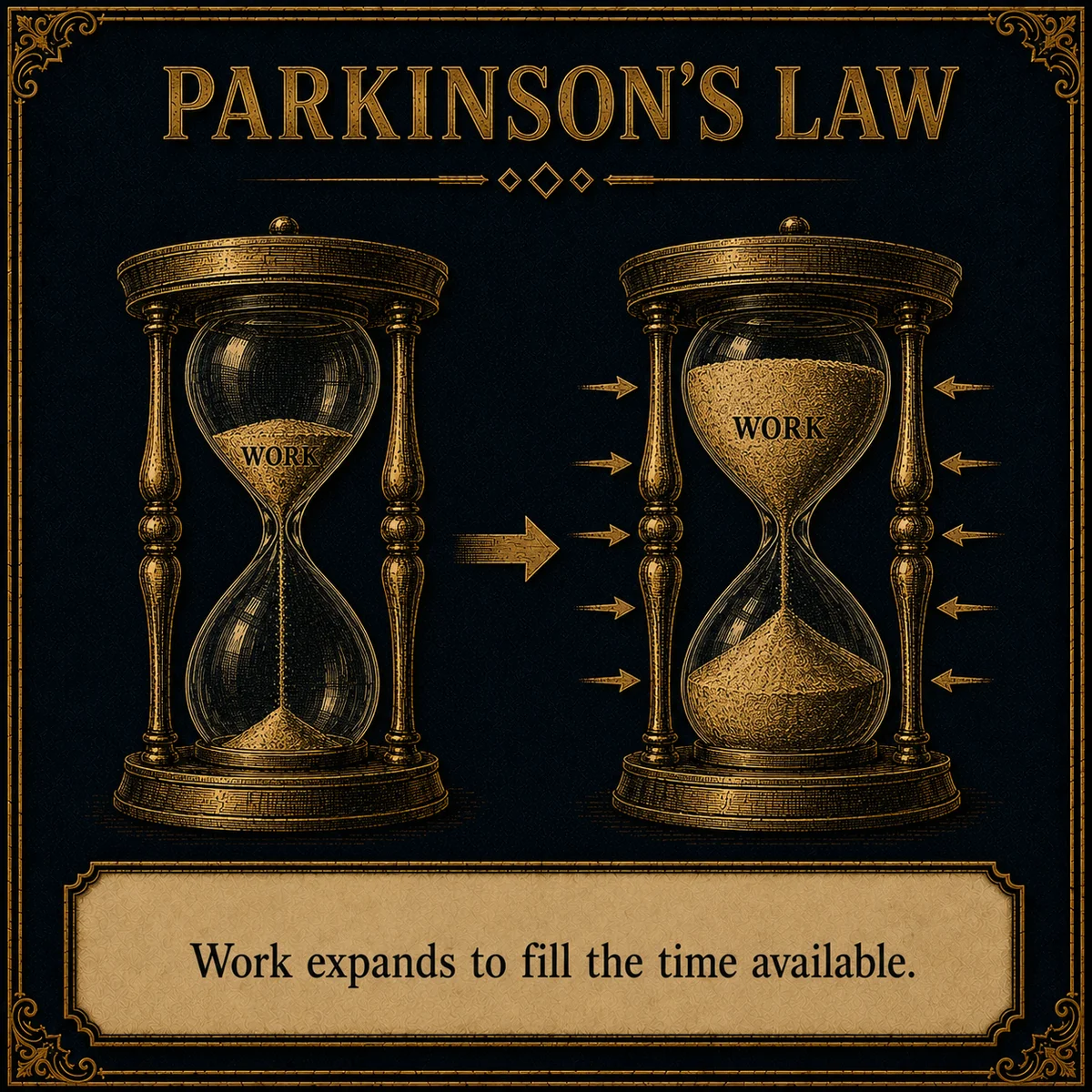
Parkinson’s Law
Work expands to fill the time made available for it.
ON SITE
Field planning and engineering tasks can expand indefinitely when no decision point exists.
IN THE OFFICE
Give an assessment an undefined deadline and it accumulates emails, mark-ups and polish.
IN THE BOARD ROOM
Without deadlines, strategic reviews and governance papers expand until they consume the available time.
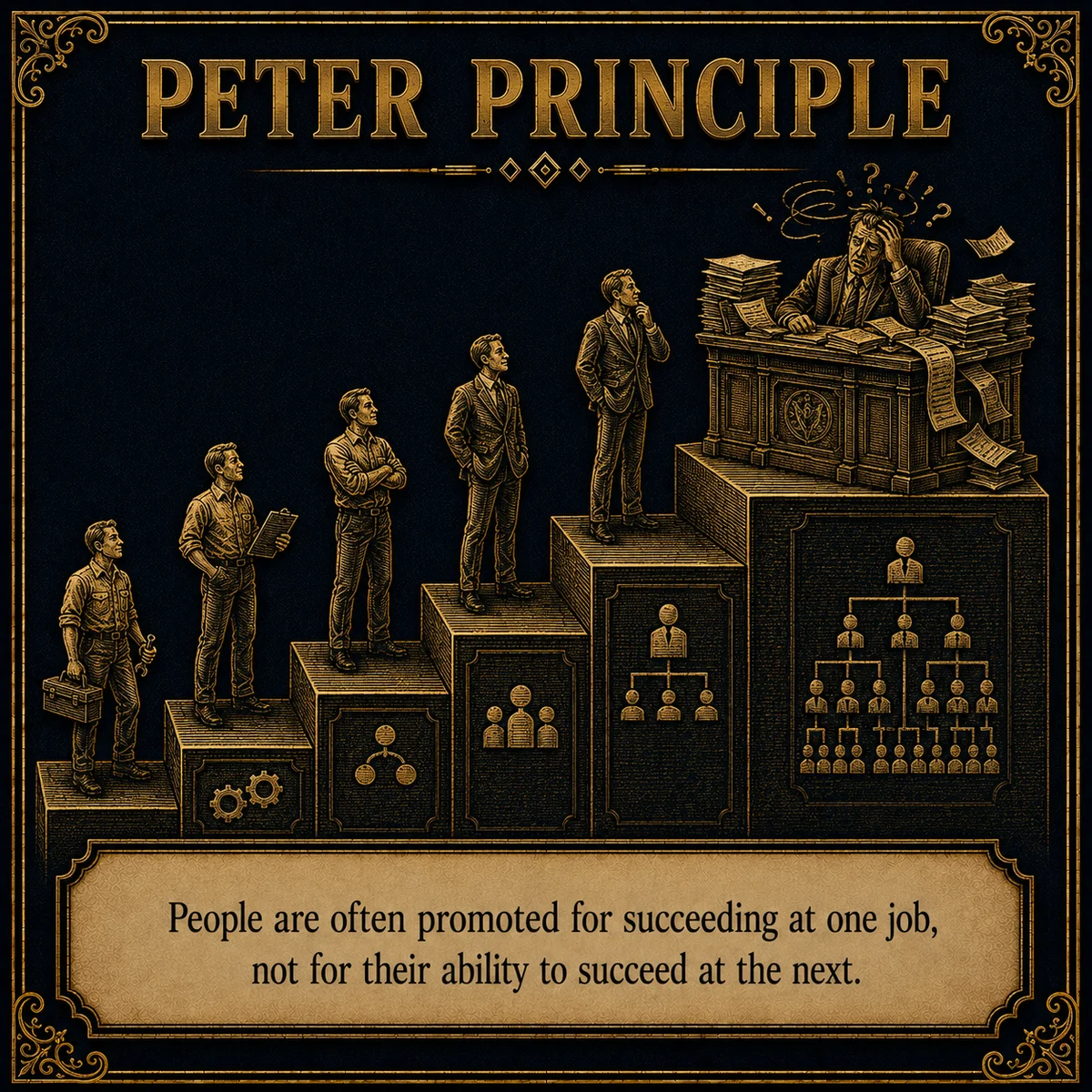
Peter Principle
Success in one role does not prove readiness for the next.
ON SITE
Do not assume the best engineer or supervisor will automatically be the best manager.
IN THE OFFICE
An excellent CA is not automatically an excellent SCA or Commercial Manager; the next role may depend more on delegation, review, coaching, prioritisation and judgement than personal output.
IN THE BOARD ROOM
Promotion can move excellent operators into roles where their strongest skills matter less.
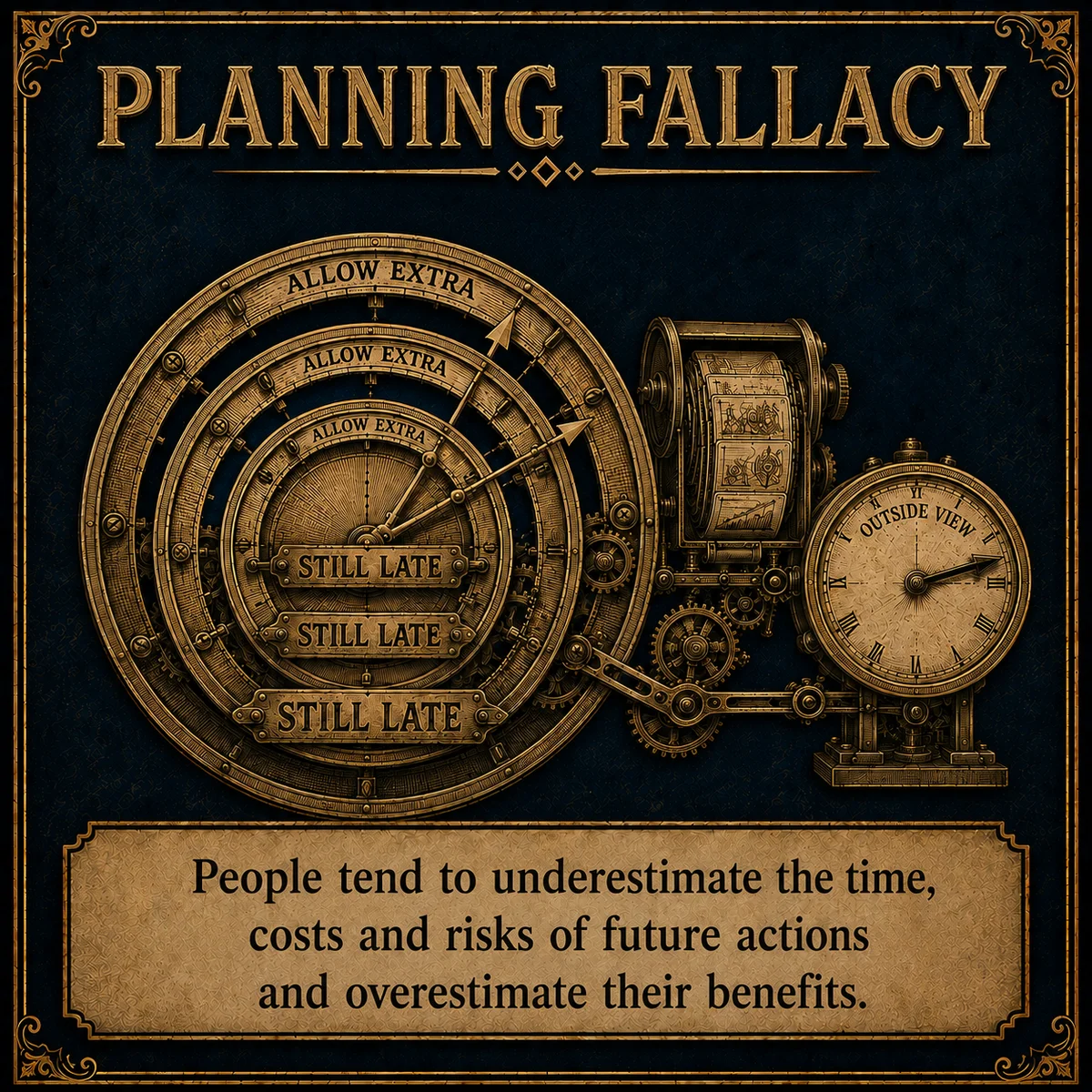
Planning Fallacy
Plans underestimate duration and difficulty when based on the inside view alone.
ON SITE
Do not build field durations only from the perfect intended sequence.
IN THE OFFICE
A detailed construction story can still be optimistic because the team sees its intended sequence more vividly than previous failures.
IN THE BOARD ROOM
Boards hear compelling inside stories about why this project, bid or recovery will be different.
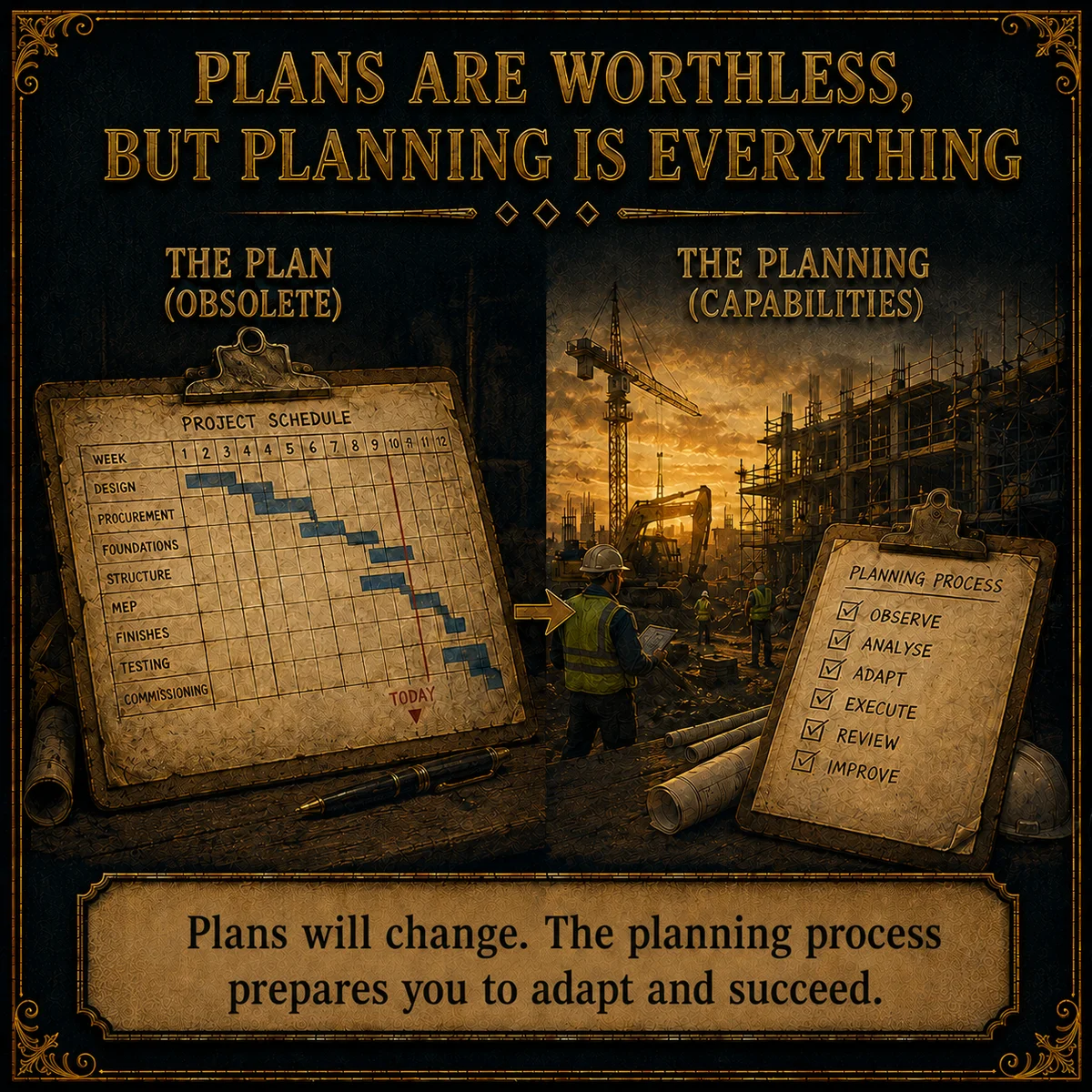
Plans Are Worthless, but Planning Is Everything
The plan will change; the discipline of planning prepares you to adapt.
ON SITE
The exact site plan will change as conditions move, but the act of planning exposes dependencies, constraints, handovers and contingencies.
IN THE OFFICE
A baseline programme, procurement plan or commercial strategy will not survive a major project unchanged.
IN THE BOARD ROOM
Strategic plans will be overtaken by events, but serious planning builds shared understanding of dependencies, triggers and options.
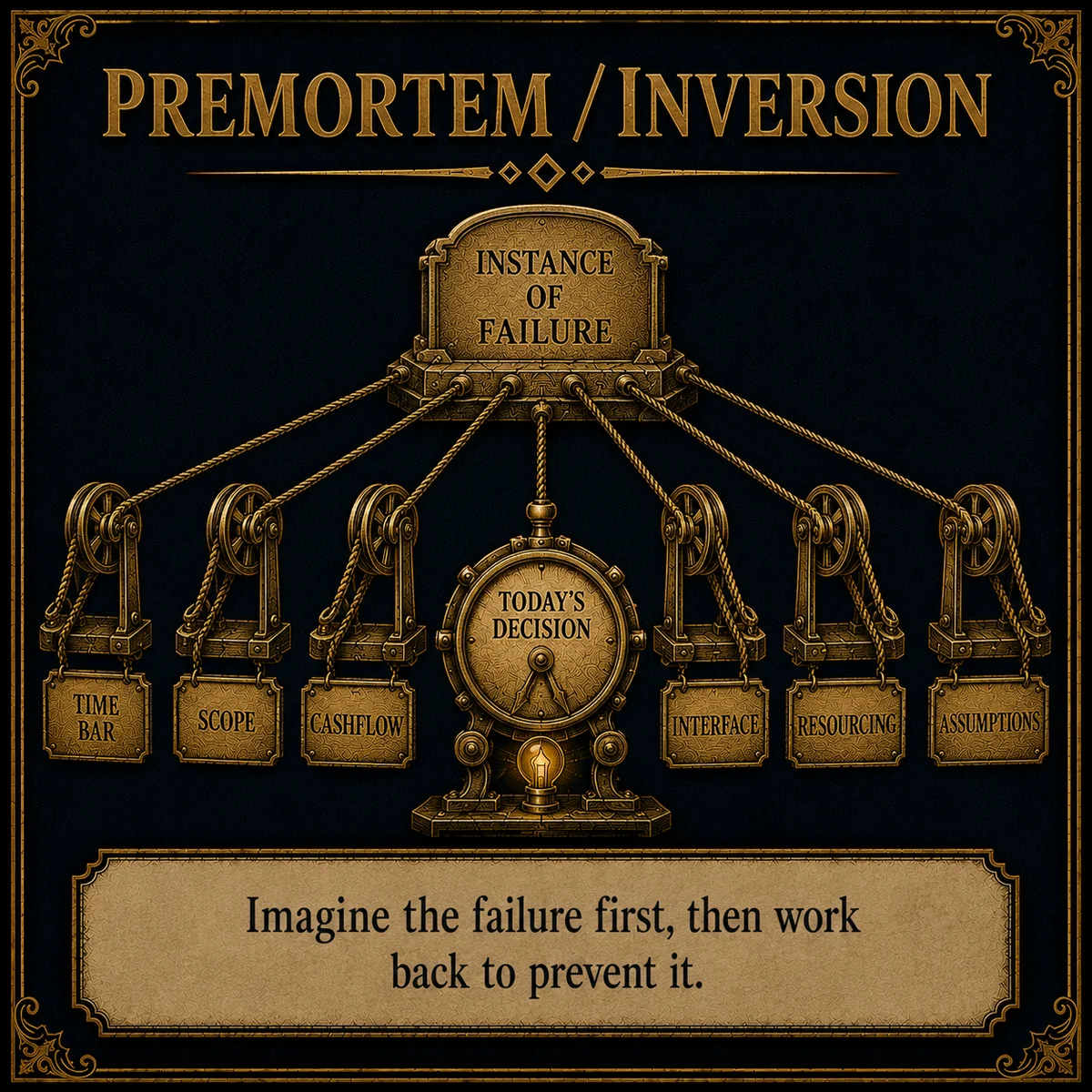
Premortem / Inversion
Assume the outcome failed, then work backwards to find why.
ON SITE
Before starting a critical activity, assume it failed and ask why: missing embed, damaged membrane, no access, late inspection, wrong revision, plant conflict, weather or tolerance stack-up.
IN THE OFFICE
Before committing to a claim, tender recommendation, recovery plan or settlement strategy, imagine the future review explaining why it failed.
IN THE BOARD ROOM
Before approving a major bid, claim, restructure or strategy, imagine the future board review explaining why it failed.
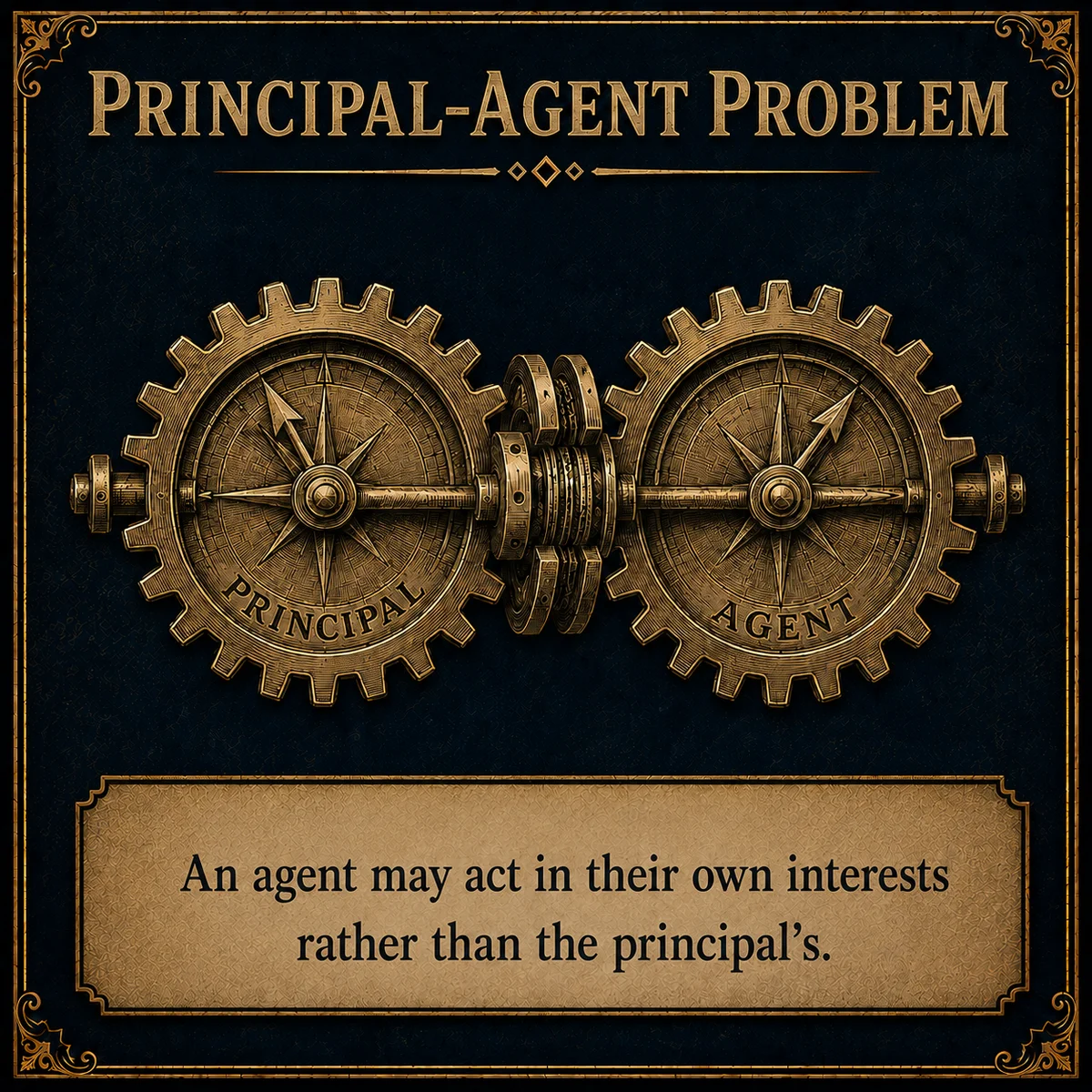
Principal–Agent Problem
Delegated decisions fail when incentives, information and accountability diverge.
ON SITE
Site decisions can optimise one package while harming the project.
IN THE OFFICE
A subcontractor, consultant, JV participant or project team can act rationally for itself while creating a poor outcome for the principal.
IN THE BOARD ROOM
Executives, JV partners, consultants and projects can optimise for their own incentives rather than enterprise value.
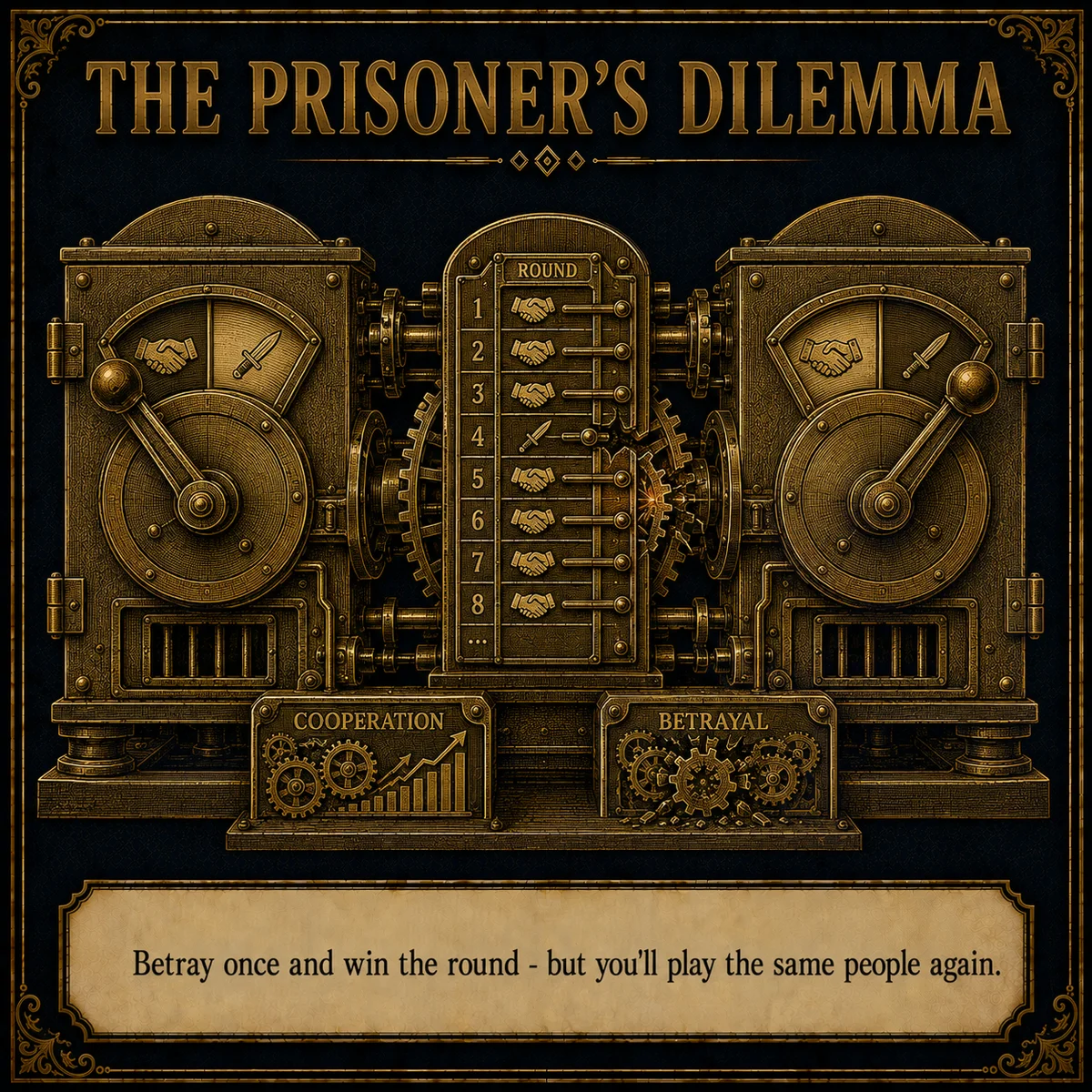
Prisoner’s Dilemma
Repeated transparent cooperation can outperform short-term self-protection.
ON SITE
Trades often protect themselves by withholding information, buffer or access because they expect others to do the same.
IN THE OFFICE
Builder and subcontractor can both end up worse when each withholds information, overstates positions or assumes cooperation will be exploited.
IN THE BOARD ROOM
Long-term client, JV and supply relationships can create more value through credible cooperation, but only when boundaries are enforceable.
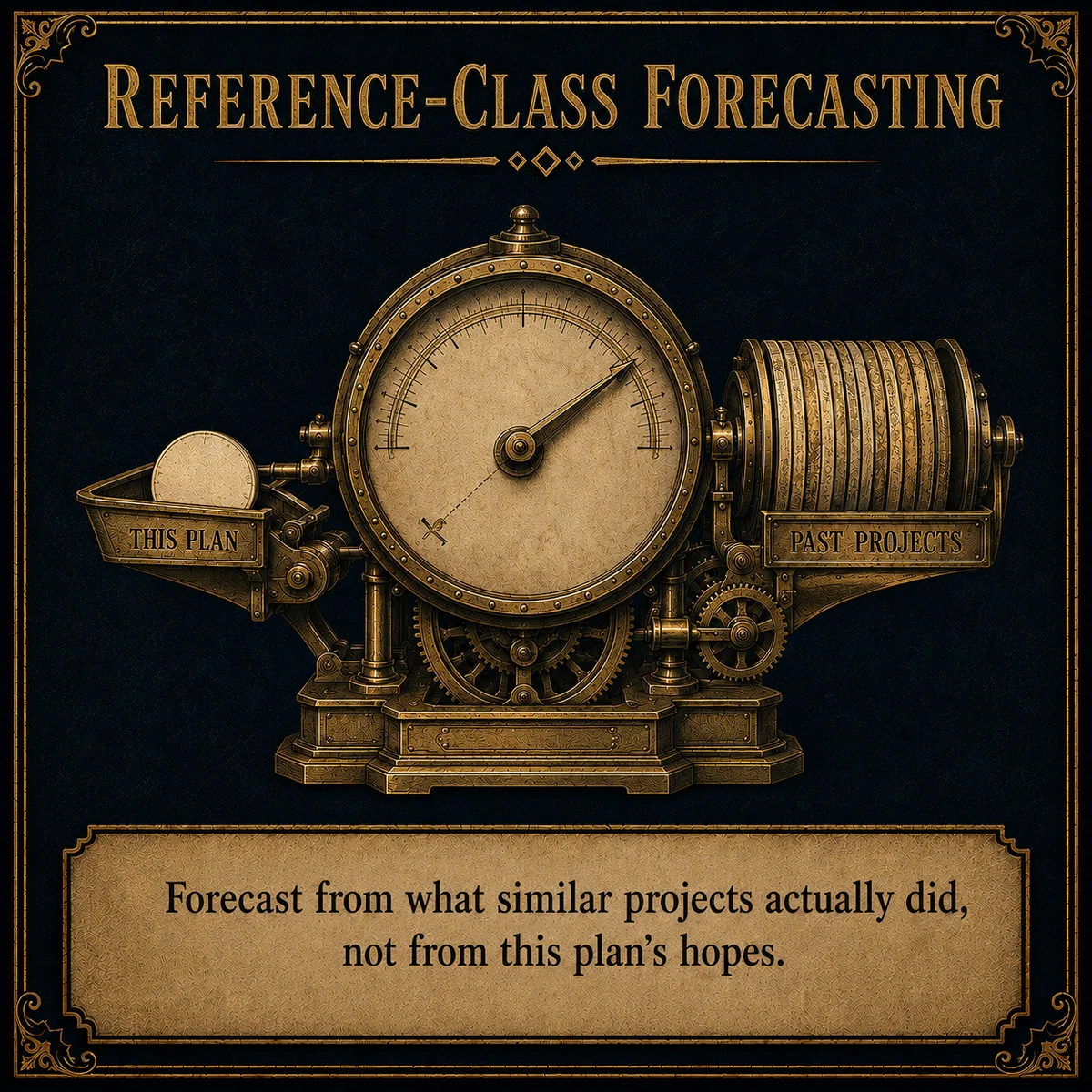
Reference-Class Forecasting
Forecast from comparable outcomes before adjusting for the unique story.
ON SITE
Before believing an aggressive production forecast, compare it with actual outputs from similar crews, geometry, access and conditions.
IN THE OFFICE
Before accepting a package forecast, production target or close-out date, look at what genuinely comparable work actually achieved.
IN THE BOARD ROOM
Require the outside view before approving a forecast or investment.
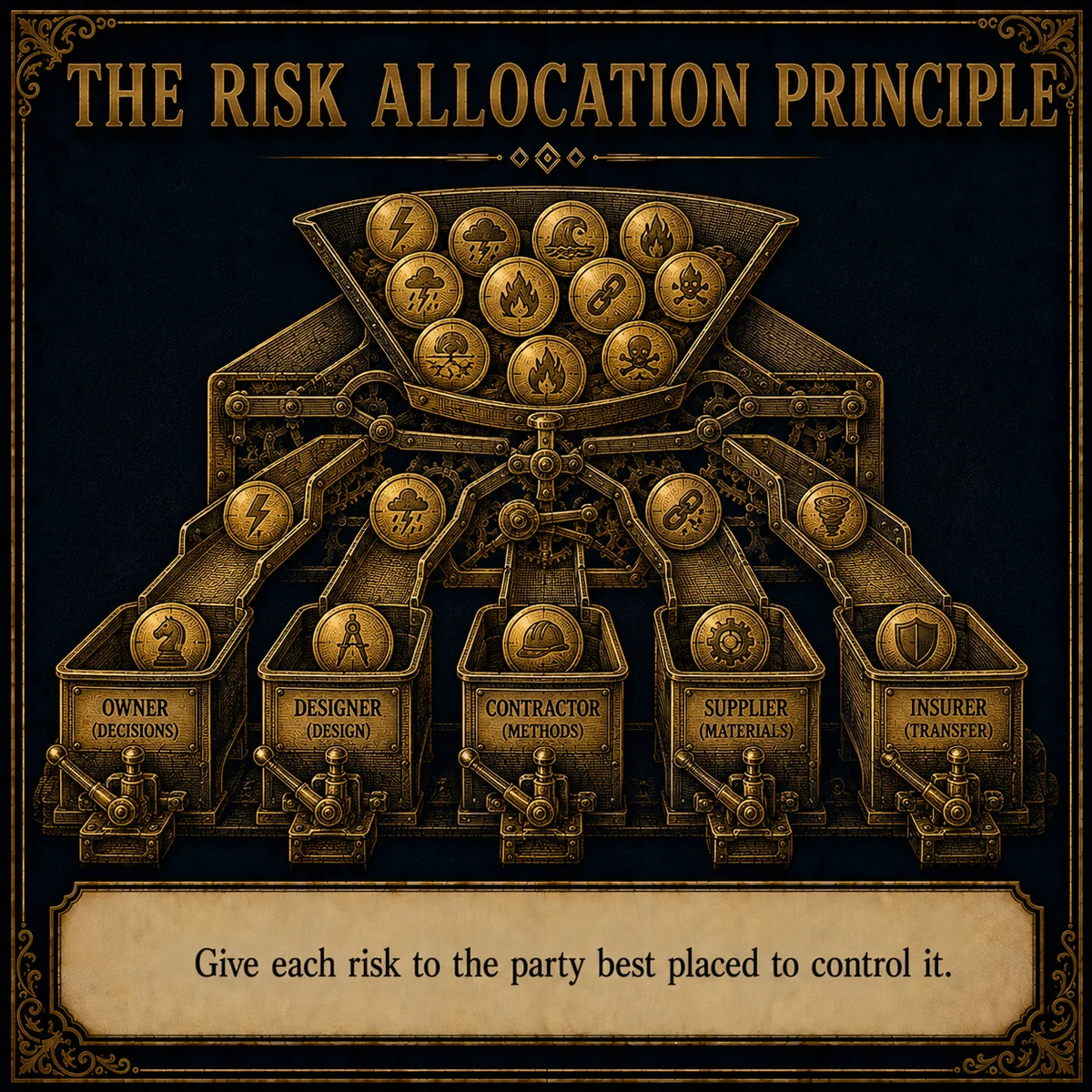
Risk Allocation Principle
Allocate risk to the party best able to control, price and absorb it.
ON SITE
Give physical risks to the party best able to influence and manage them, but recognise that WHS duties cannot simply be contracted away.
IN THE OFFICE
Australian construction contracts can transfer risk in drafting even where practical control remains elsewhere.
IN THE BOARD ROOM
Pushing risk down does not make it disappear.
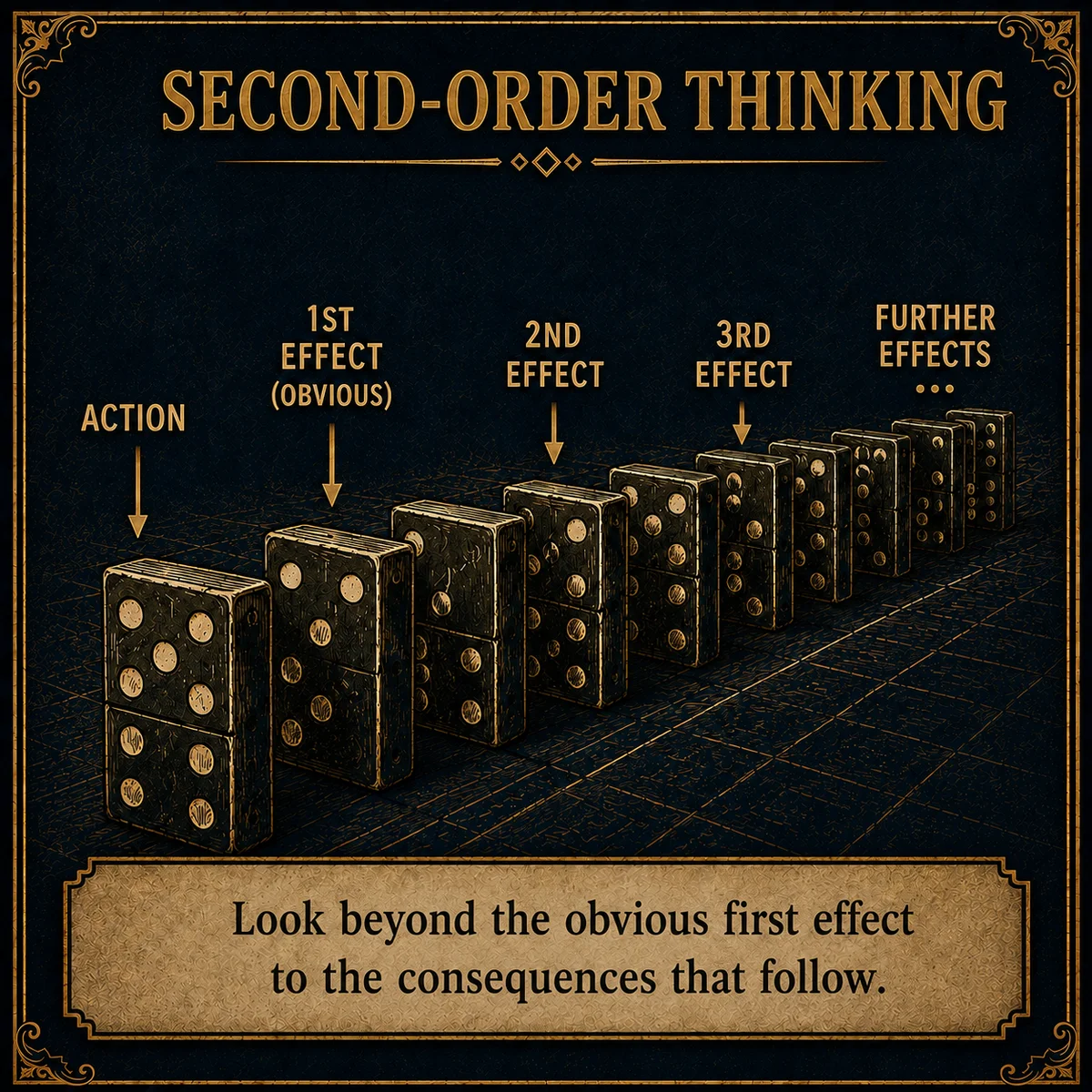
Second-Order Thinking
Judge a decision by what happens after the immediate result.
ON SITE
Ask what happens after the immediate field fix.
IN THE OFFICE
Rejecting a claim may improve this month’s cost report but trigger dispute cost; accelerating a trade may protect one milestone but congest the next area; squeezing a supplier may save procurement dollars but remove future cooperation.
IN THE BOARD ROOM
Ask what today’s executive decision teaches the organisation and how stakeholders will respond next.

Skin in the Game
Judgement improves when the decision-maker shares the consequence.
ON SITE
The person recommending a field solution should remain connected to its outcome.
IN THE OFFICE
Put named ownership beside recommendations, forecasts and approvals so the person exercising discretion remains connected to delivery after the meeting.
IN THE BOARD ROOM
Decision quality changes when leaders remain accountable for the consequences of their recommendations.
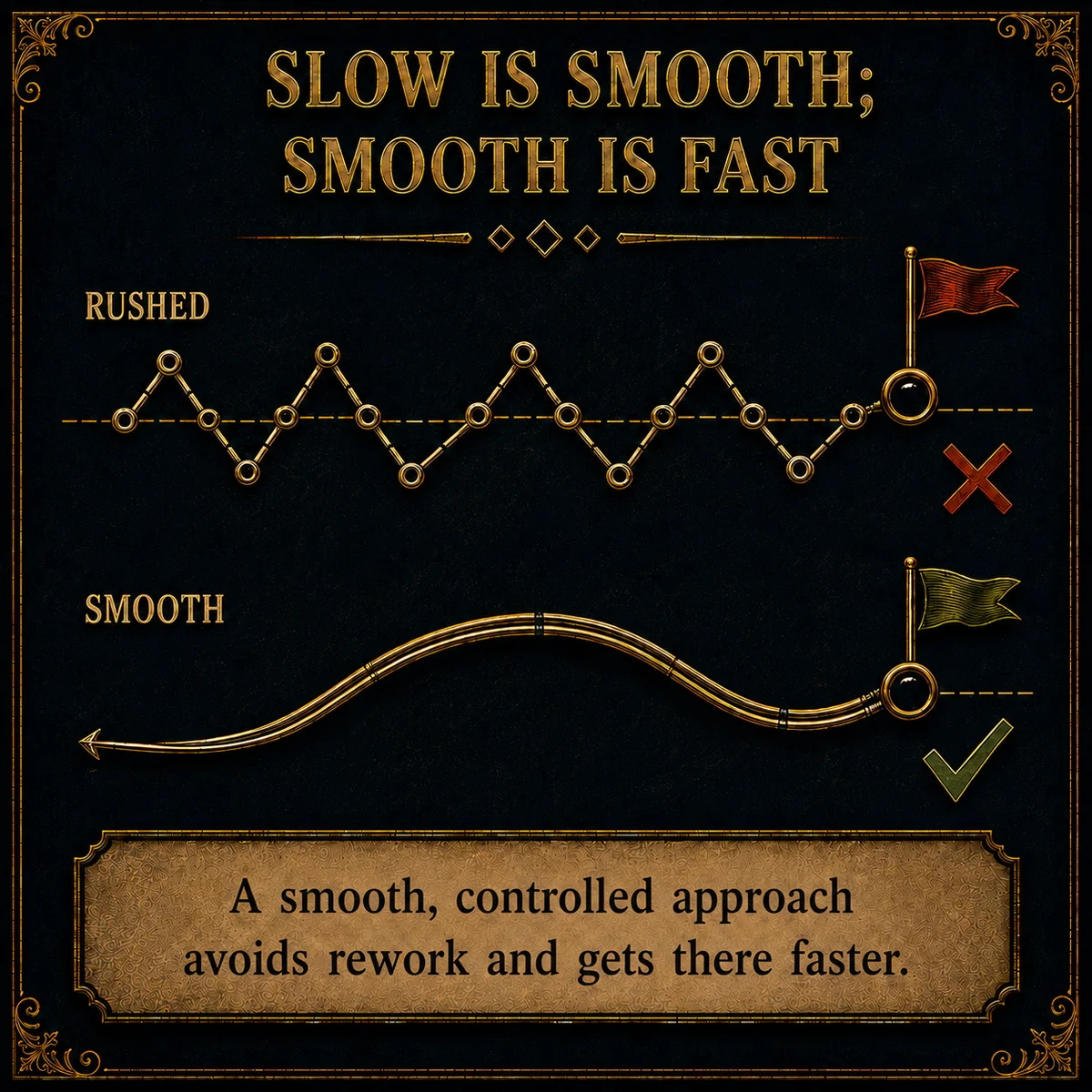
Slow Is Smooth, Smooth Is Fast
Controlled preparation prevents rework and creates speed.
ON SITE
On repetitive or high-risk work, controlled setup creates speed.
IN THE OFFICE
Taking ten minutes to confirm the revision, delegation, scope boundary and meeting objective can be faster than issuing the wrong direction and spending days unwinding it.
IN THE BOARD ROOM
Stable governance rhythms create faster organisations than repeated executive firefighting.
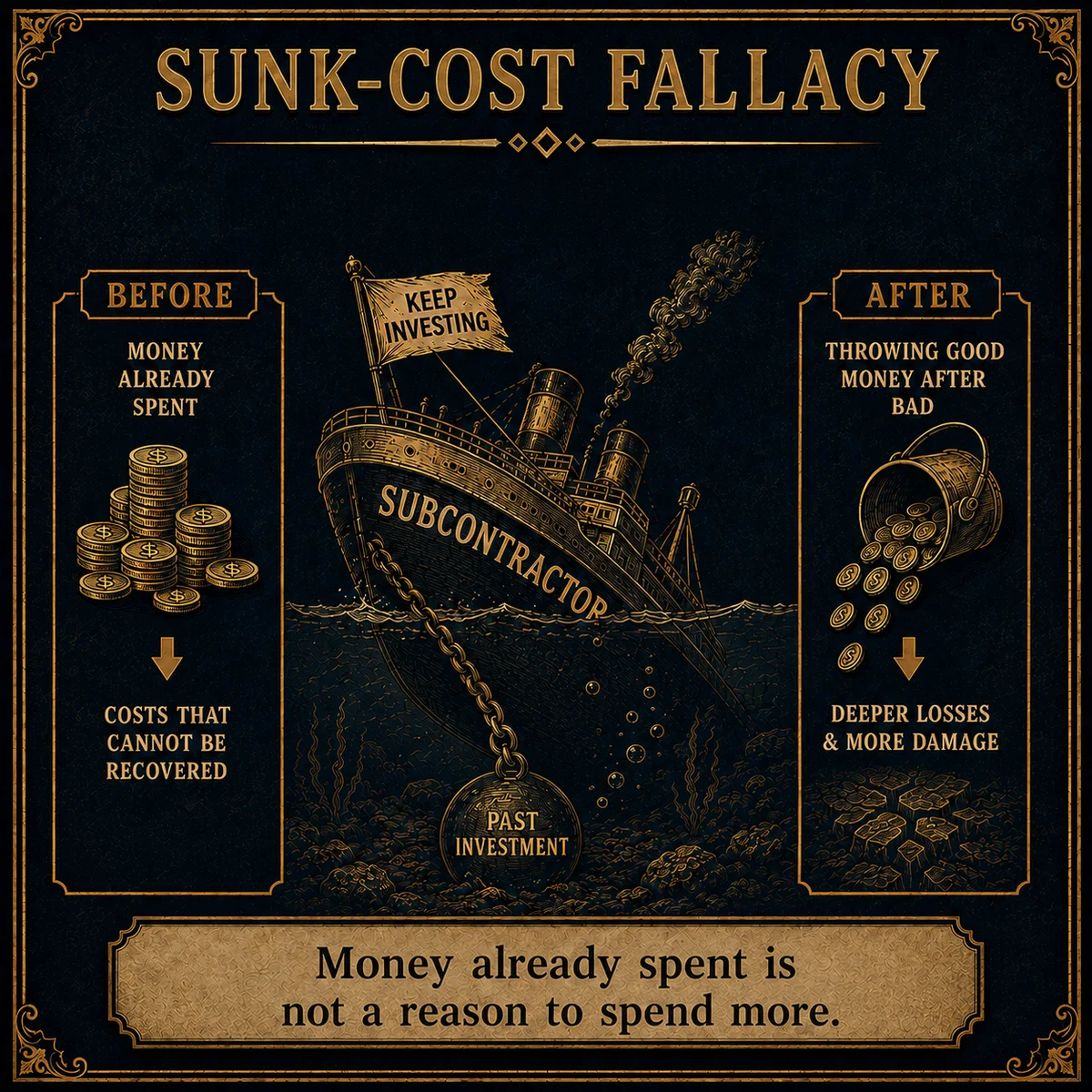
Sunk Cost Fallacy
Past spend is gone; decide from future cost, risk and value.
ON SITE
Past installation effort is not a reason to continue a poor method.
IN THE OFFICE
Money already spent on a flawed design, claim strategy, subcontractor recovery path or system rollout does not make further spend sensible.
IN THE BOARD ROOM
Past capital, reputation and executive sponsorship should not force continued investment in a poor strategy.
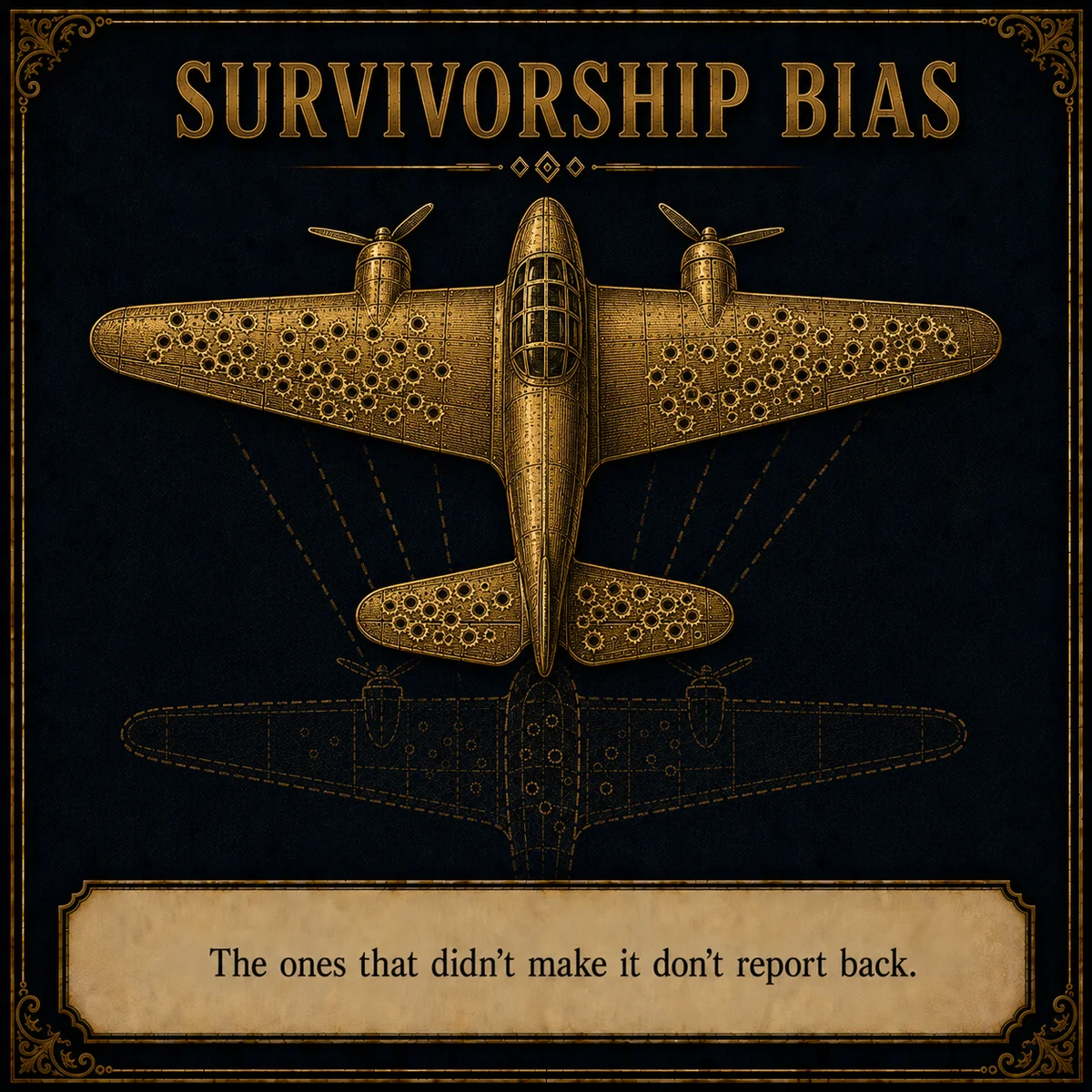
Survivorship Bias
Visible successes exclude the failures that did not survive to be observed.
ON SITE
Do not copy only the methods used on successful projects or completed workfaces.
IN THE OFFICE
Copying only the projects that finished well, claims that settled successfully or people who were promoted hides the failed cases that tested the same strategy.
IN THE BOARD ROOM
Visible success stories create seductive leadership myths.
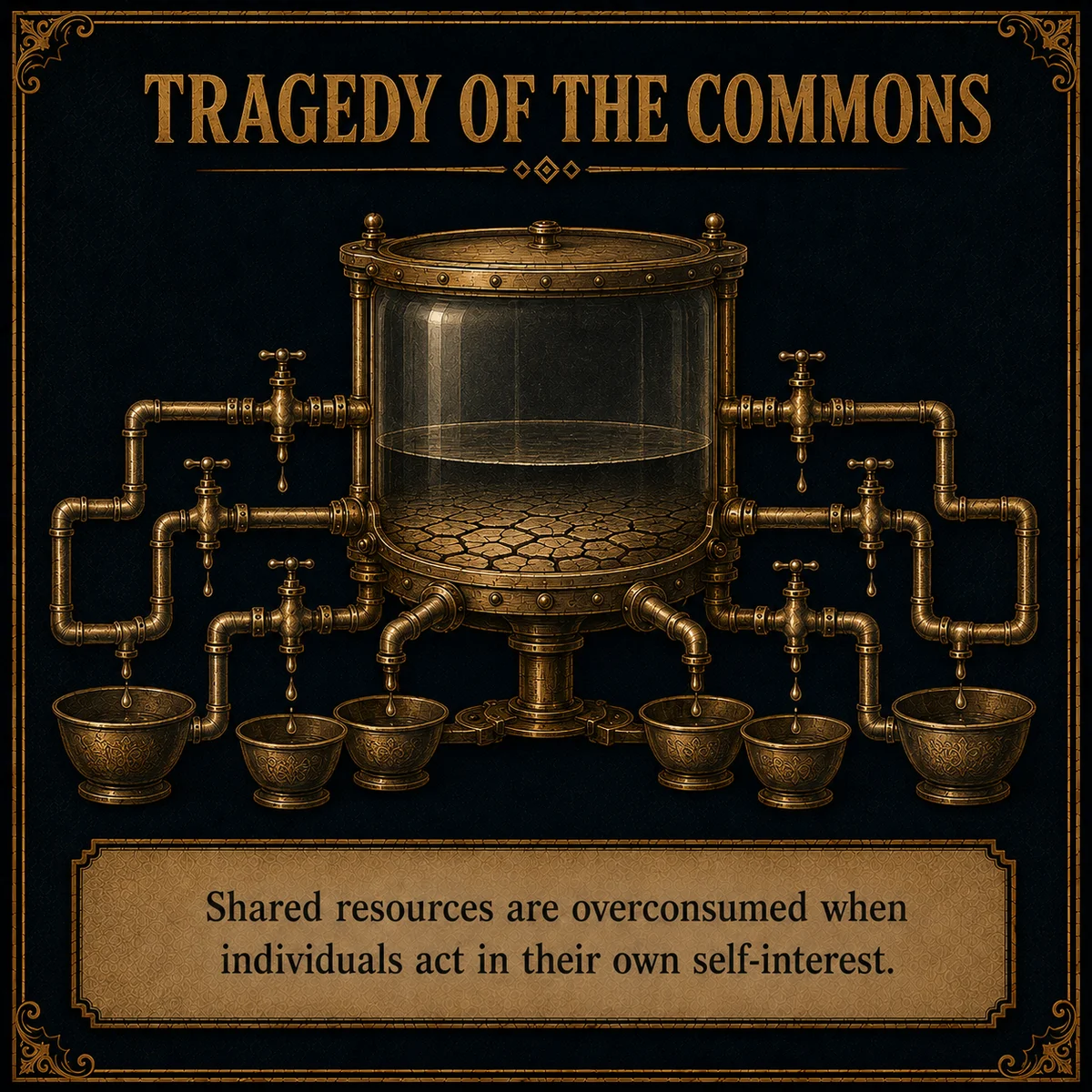
Tragedy of the Commons
Shared resources are depleted when individual benefit is separated from collective cost.
ON SITE
Shared site resources—cranes, hoists, access roads, laydown, possessions, survey control and workfaces—are easily over-consumed by individual packages.
IN THE OFFICE
Float, contingency, laydown area, crane time, possessions, access and senior management attention can be consumed package by package while the whole project carries the loss.
IN THE BOARD ROOM
Shared enterprise resources—capital, executive attention, reputation and scarce capability—can be consumed by projects acting rationally for themselves.
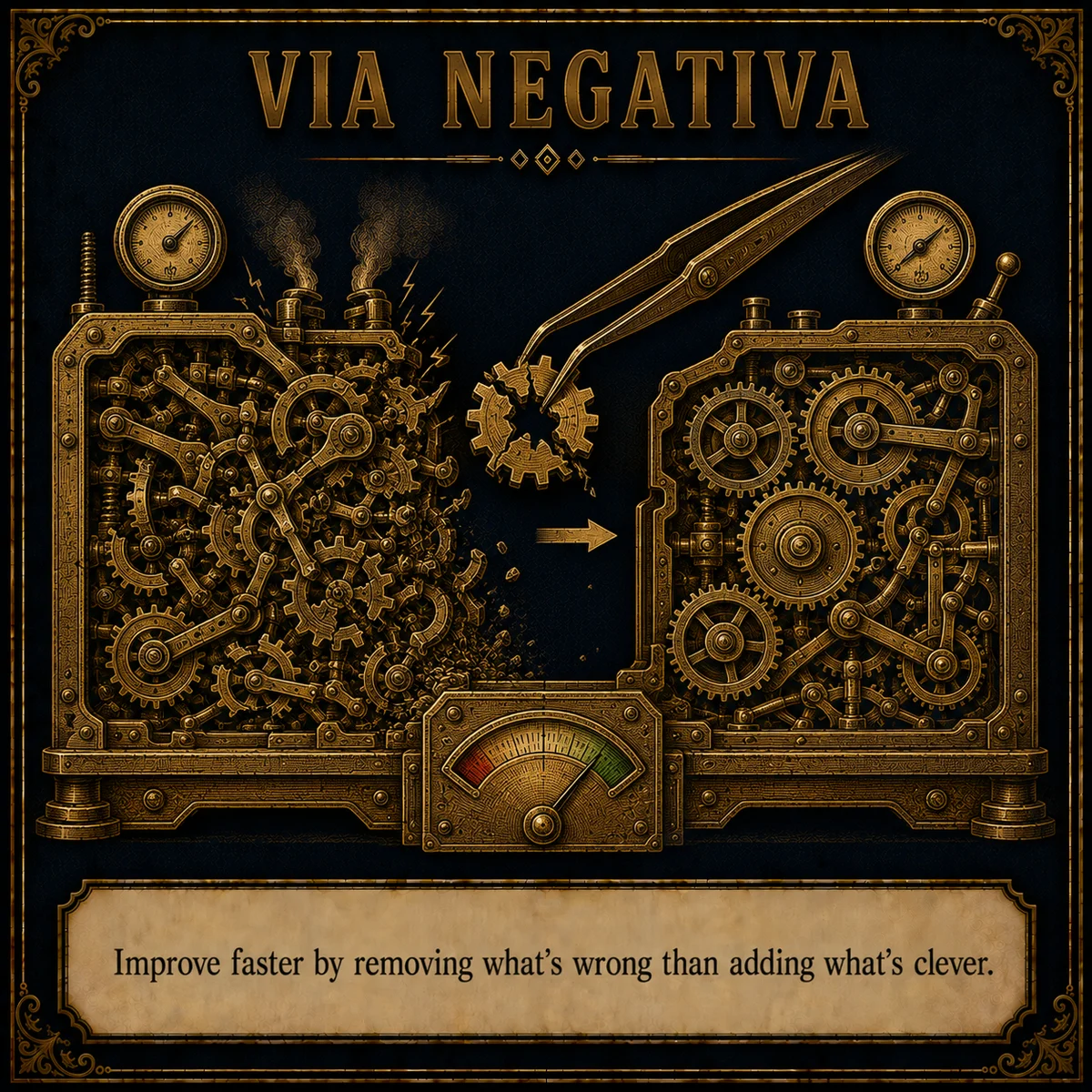
Via Negativa
Improve the system by removing sources of harm before adding more complexity.
ON SITE
Improvement often comes from removing causes of failure rather than adding another process.
IN THE OFFICE
When a commercial process is failing, the instinct is often another register, meeting, approval layer or template.
IN THE BOARD ROOM
Strategic improvement can come from subtraction: fewer priorities, committees, reports, interfaces and conflicting incentives.
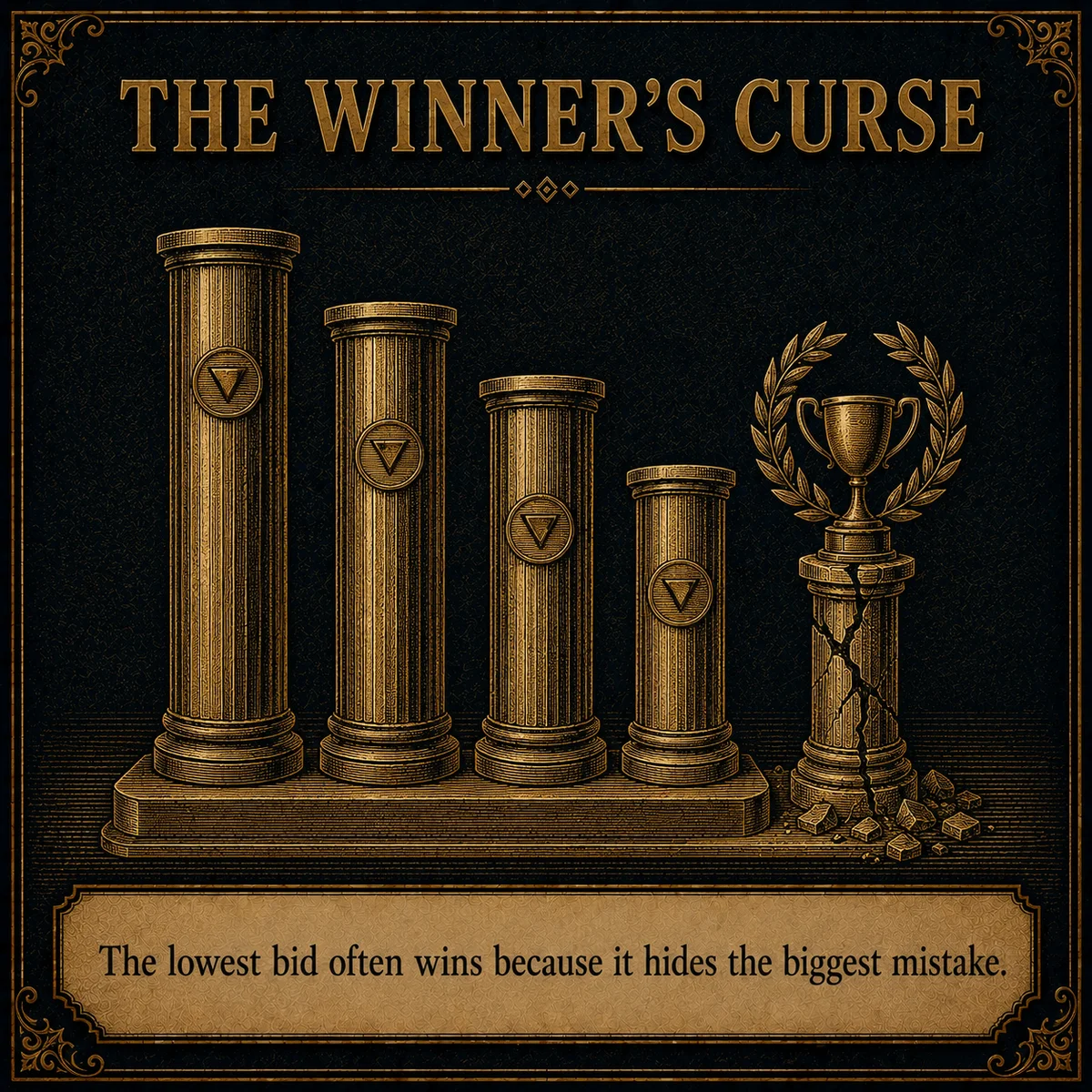
The Winner’s Curse
Winning can mean being the party that made the largest error.
ON SITE
The most aggressive site method or subcontract production promise may ‘win’ because it omitted a constraint.
IN THE OFFICE
A tender far below the market may reflect superior method—or missing scope, bad productivity, misunderstood risk or an unsustainable commercial assumption.
IN THE BOARD ROOM
Winning the bid, acquisition or negotiation can be the moment the organisation discovers it was the most optimistic participant.

Zero-Sum vs Positive-Sum
Not every negotiation has a fixed pool of value.
ON SITE
Not every field interface needs a winner and loser.
IN THE OFFICE
Some entitlement and final-account questions are distributive: one party’s dollar is the other’s dollar.
IN THE BOARD ROOM
Some boardroom negotiations divide fixed value; others can create value through timing, risk sharing, scope redesign, future work or reputation.
